


Journey to Bhutan
1 Week Itinerary in Bhutan
Trip Overview
Day 1 - 3 | Thimphu | Pemako Lodge (2 nights)
Day 3 - 5 | Punakha | Punakha River Lodge (2 nights)
Day 5 - 7 | Paro | COMO Uma Paro (2 nights)
Day 7 | Departure
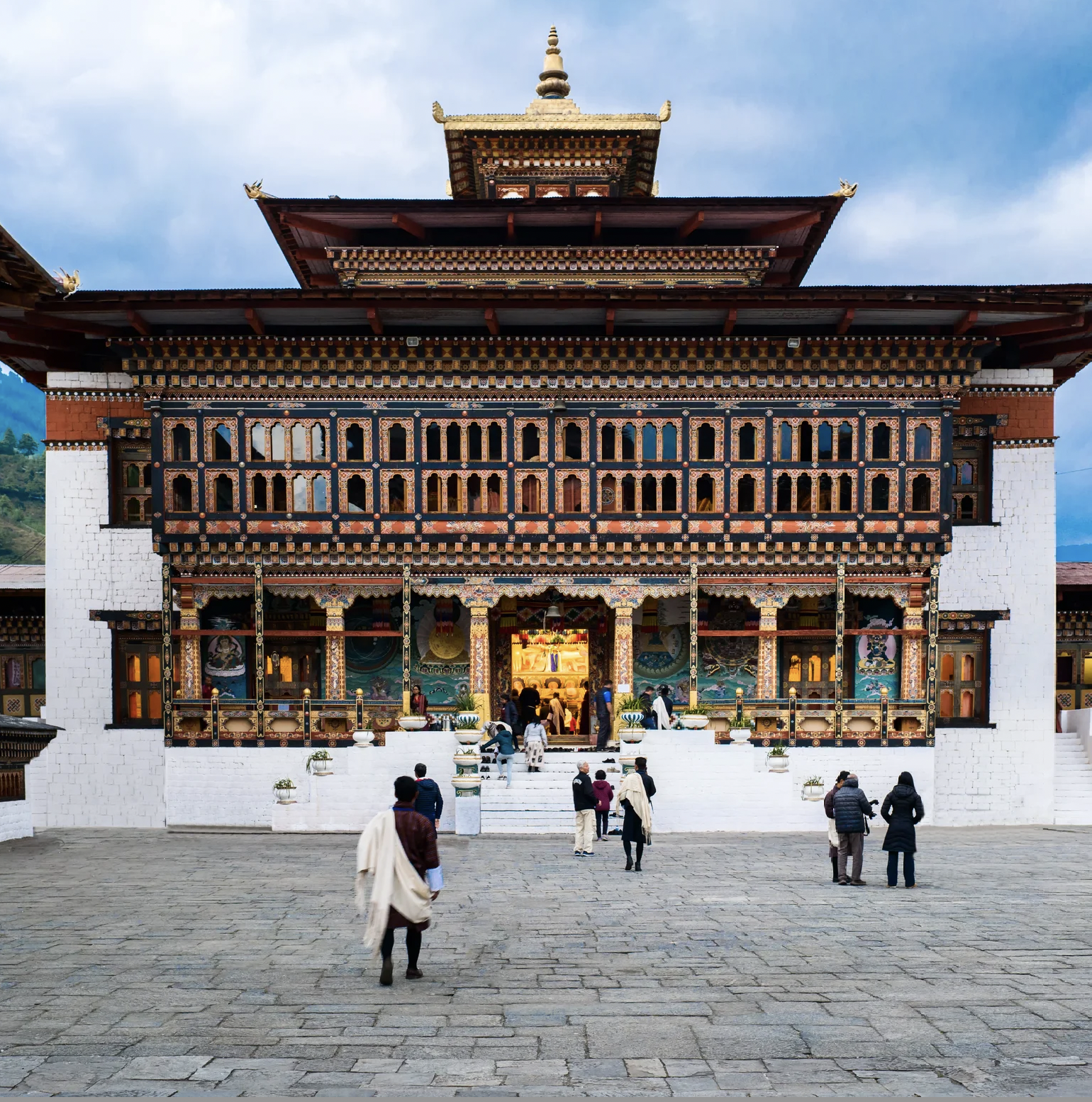
Day 1 | Thimphu
Airport Transfer & Flight to Paro
Private transfer to Dubai Airport in time for your flight to Paro.
Private Transfer to Thimphu
On arrival meet and greet at the Paro International airport and you will be transferred to Thimphu (1 hour drive). Stop at Tamchog Lhakhang for a private tour. Later, check-in to your hotel and take time to acclimate to the new altitude.
About Thimphu
Situated within the city centre and adorned with classical hand-drawn Buddhist murals, Taj Tashi successfully blends Dzong architecture and contemporary design, capturing the essence of modern-day Bhutanese culture. Within walking distance of some of the capital’s most renowned markets, restaurants, and sights, the hotel features 66 spacious rooms and suites with views of the surrounding mountains and townships.
Thimphu Farmers Market
Embark on a multi-sensory experience as you stroll past the vibrant stalls of the Thimphu Farmers Market. Drawing in most of Thimphu’s vivacious residents, the marketplace teems with a range of both local and imported goods and produce. The experience is far more than the items to be bought, but rather about socializing with the colorfully-dressed community, full of Bhutanese fare and flare. Many of the stalls sell fresh organically grown vegetables, ready to be transformed into delicious traditional and contemporary Bhutanese dishes, while the other areas promise a plethora of produce imported from India.
Pemako Lodge | Deluxe Room | Breakfast & Dinner
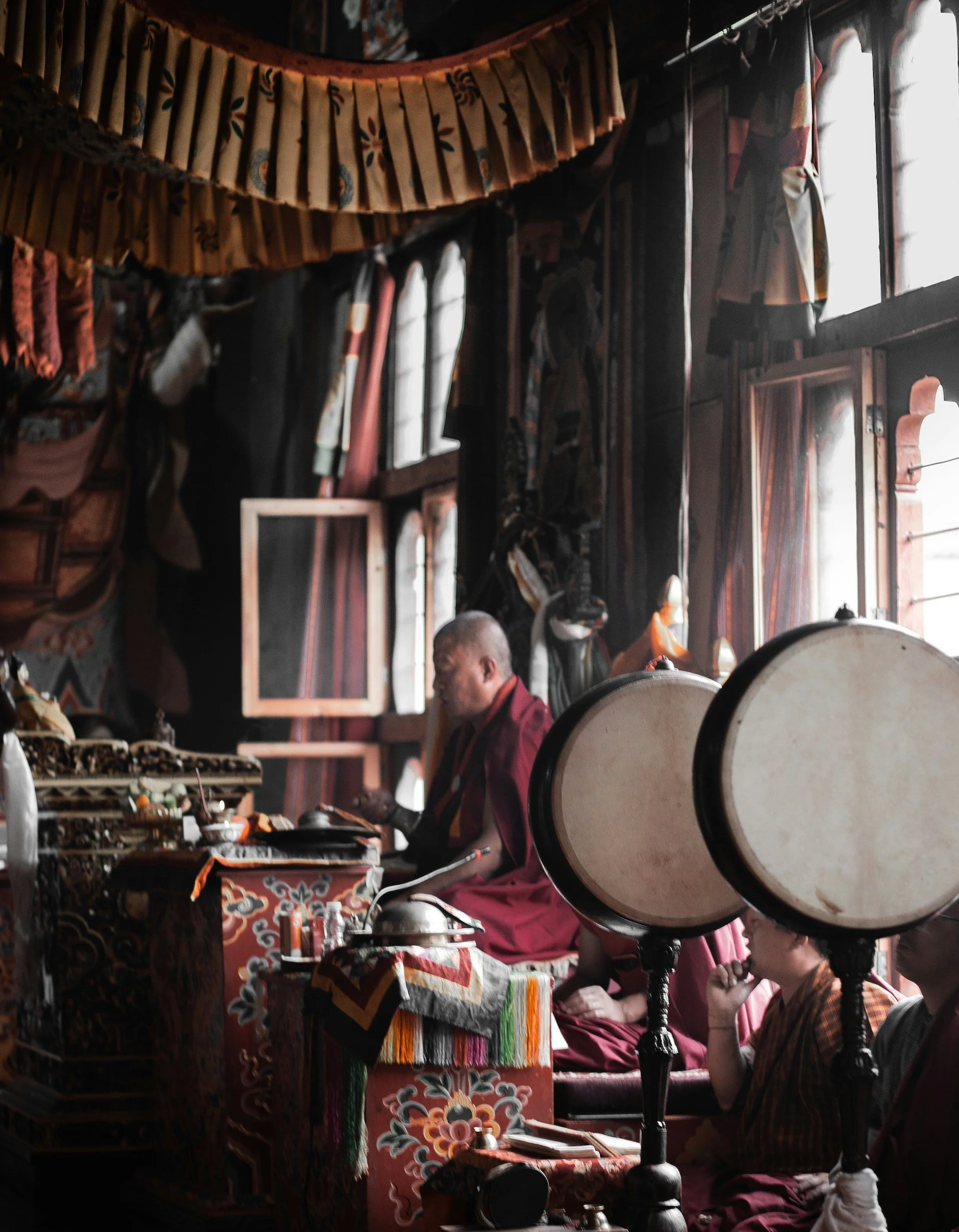
Day 2 | Thimphu
Buddha Dordenma
After breakfast, visit the Buddha Dordenma. This gigantic Shakyamuni Buddha statue is filled with over 100,000 smaller Buddha statues, and like the Buddha Dordenma itself, each are made of bronze and gilded in gold. Standing at an incredible height of 51.5 m (169 ft), Buddha Dordenma is recognized as one of the tallest Buddha statues in the world. The statue fulfills an ancient prophecy dating back to the 8th century CE, revealed by Terton Pema Lingpa, the Religious Treasure Discoverer of the time, and is said to bring peace and happiness to the entire world.
National memorial Chorten
This well-known landmark was built in 1974 in the memory of the third king, Jigme Dorji Wangchuck, who is popularly regarded as the Father of Modern Bhutan. This four-storey structure has become the most visible religious landmark in Bhutan. It serves as an important place of worship for Thimphu residents, as well as devotees from other parts of the country. Found within the temples' scared walls are carvings of mandalas, statues and religious teachings.
Have lunch at a local restaurant or at the lodge.
Royal Textile Academy and Royal Takin Preserve
Weaving is an integral part of Bhutanese culture and tradition. With the aim to conserve, restore, and document this living art, the Royal Textile Academy of Bhutan was set up by the queen mother, Her Majesty Ashi Sangay Choden Wangchuck as a non-government, non-profit organization. Inaugurated in 2001, the academy also educates young students in textiles, fabric design and museum studies. It serves as a centre for travelers, introducing the nation’s masterpieces to its visitors, while preserving Bhutan’s weaving traditions.
Bhutan's national animal is the takin. Legend has it, this large, shaggy, hoofed animal was created by the great Buddhist yogi, Drupa Kunley, otherwise known as ‘the Divine Madman’. This particular species of takin is found only in Bhutan and western Arunachal Pradesh. Located only 10 minutes from Thimphu city is the Royal Takin Preserve. Originally a zoo, until the fourth king decided to disband it since keeping animals in cages did not align with the country’s environmental and religious beliefs, the animals were released into the wild. However, the takin were too tame to survive, and wandered around the streets of Thimphu. This led to the making of the Royal Takin Preserve.
Rest of the day at leisure or stroll through the town.
Pemako Lodge | Deluxe Room | Breakfast & Dinner
Day 3 | Punakha
Private Transfer to Punakha
After breakfast, check-out and private transfer to Punakha (3 hour drive). Stop at Dochu La Pass and Chhimi Lhakhang.
Dochu La is an incredible Bhutanese mountain pass peaking at 3140 m (10301 ft) above sea level. Presenting exceptional views of the snow-capped eastern Himalaya on clear days, the pass links Thimphu and Punakha. Stop to see the Druk Wangyal Chortens, where 108 memorial stupas and chortens stand in honour of Bhutanese soldiers slain in the battle against Bodo militants from India. The Queen Mother, Ashi Dorji Wangmo Wangchuck, commissioned the shrine in 2003 after King Jigme Singye Wangchuck overcame the insurgents.
Located on a round hillock on the edge of the Punakha Valley, Chimi Lhakhang was built in 1499 by the 14th Drukpa hierarch, Ngawang Choegyel. After the site was blessed by ‘the Divine Madman’ the maverick saint, Drukpa Kunley. The temple draws local people to receive blessings from the lama, and it is famously known as the temple of fertility. The Bhutanese bring their new-borns to be named here. The Lhakhang is about a 30-minute walk through fields from the main road.
The Punakha River Lodge
On arrival check in to the lodge and relax over lunch. The Punakha River Lodge, nestled in the lush Punakha Valley along the Mo Chu river, offers a serene escape with luxury tents and suites amidst verdant paddy fields and forested hills. Built in traditional Bhutanese style, the lodge seamlessly blends with its surroundings. Adventure seekers can enjoy activities like rafting, kayaking, and hiking in the picturesque landscape. For relaxation, the spa nestled in an orange orchard offers rejuvenating treatments and yoga sessions. Indulge in traditional Bhutanese hot stone baths for ultimate relaxation. Guests can dine on a fusion of Indian, Tibetan, and Chinese cuisine in scenic spots like the suspension bridge adorned with prayer flags. Punakha River Lodge promises an unforgettable experience for outdoor enthusiasts and those seeking tranquillity amidst Bhutan's natural beauty.
Punakha Dzong
Visit the Punakha Dzong. Constructed in 1637, this was the second dzong in the country, the towering white walls form a lovely contrast to the surrounding greens and blues. The very first National Assembly was held here in 1953, as well as the royal wedding between King Jigme Khesar Namgyel Wangchuck and Queen Jetsun Pema in 2011. It is also the winter residence of the central monastic body, and holds a very important relic over which many wars were fought with the Tibetans. All of Bhutan's kings are crowned here before they can take their throne in Thimphu. Punakha Dzong’s magnificence is especially striking in the spring when the lilac-coloured jacaranda trees are in full bloom.
Punakha Suspension Bridge
Stretching across the Pho Chhu, the Punakha suspension bridge is 180 m (590 ft) in length, making it one of the longest suspension bridges in the country. It connects Punakha Dzong to the surrounding villages, and offers a great view of the glistening stream below.
Punakha River Lodge | Tented Suite | Full-Board

Day 4 | Punakha
Khamsum Yuelley Namgyel Chorten
After breakfast, visit Khamsum Yuelley Namgyel Chorten.This three-storey lhakhang is a recent addition to Bhutan's string of architecturally splendid buildings. Built by Her Majesty the Queen Ashi Tshering Yangdon, it houses representations of the tantric form of Buddhist deities that subjugate enemies and ward off harmful influences on the people of Bhutan. Built for the protection of the country and the present king, Khamsum Yuelley Namgyal Chorten also offers impressive views of the valley below.
Pho Chu River Rafting (for Penny)
The Pho Chu, which translates to ‘male river’, is fed by glaciers in the Lunana region. A favorite amongst thrill-seeking travelers, its 16 km (9.9 mi) course is loaded with 15 different rapids, ranging from class 2 to 4, making it the perfect spot to embark on a rafting adventure. At the confluence between Pho Chu and Mo Chu lies the Punakha Dzong, and thereafter the main river is known as Punatsang Chu. This merger is also where your rafting experience ends. On your rafting journey you will witness breath-taking views of alpine scenery, secluded stretches of serene sparkling water.
Return to the lodge for lunch.
Sangchhen Dorji Lhendrup Nunnery
Afternoon visit Sangchhen Dorji Lhendrup Nunnery where you will experience the blessing ceremony. Perched on a ridge amongst the pine trees gleams the magnificent structure of the Sangchhen Dorji Lhuendrup Lhakhang. This temple houses a 4.2 m (14 ft) bronze statue of Avalokiteshvara, made by local Bhutanese artisans. Other statutes include those of The Buddha, Guru Rinpoche, Zhabdrung Ngawang Namgyel, Tsela Namsum, and the 21 Taras. The temple complex also houses a permanent school of higher learning and a meditation centre for nuns where, apart from religious training, provides vocational training such as tailoring, embroidery, statue making and thangka painting.
Blessing Ceremony
Become immersed in Bhutanese culture, with a Tshewang (blessing) ceremony for personal empowerment, wish fulfillment, and a healthy life. The prayer will be approximately 30-minutes, during which you can make an offering by lighting butter lamps.
Bali Village Walk
Towards the evening, go for a Bali village walk, where you can experience the Ara (local rice wine) brewing. You will have the option to walk (over a 118 m (387 ft) suspension bridge over the Mo Chu) or cycle (on the main road) to the Bali village. The village consists of over 30 households. Villagers there depend on agriculture and grow chillies, beans, slipper gourd, cucumber and eggplant to supplement their income. The agricultural produce is taken to Khuruthang town for sale during the weekends.
Ara Making in Bali Village
At Bali you will visit Aum Tshewang Pem's home where she will demonstrate how Ara (local rice wine) is made. Ara is a traditional alcoholic beverage made from rice, millet or wheat, ara can be fermented or distilled. It is enjoyed at all social functions in Bhutanese life.
Punakha River Lodge | Tented Suite | Full-Board

Day 5 | Paro
Private Transfer to Paro
This morning drive towards Paro (3 to 4 hours' drive). Paro is a historic town, situated at 2250 m (7382 ft,) with many sacred sites and historical buildings scattered through the area. It is home to many of Bhutan's oldest temples and monasteries, the National Museum and the country's only international airport. Mt Jhomolhari (7326 m /24035 ft) reigns in its white glory at the northern end of the valley. Its roaring glacial water plunges through deep gorges to form the Pa Chu (Paro River). Paro is one of the most fertile valleys in the Kingdom producing a bulk of the locally famous red rice from its terraced fields.
On arrival check in and relax over lunch at COMO Uma Paro. Combining Bhutanese tradition with contemporary style, COMO Uma Paro is a cherished resort elegantly positioned on the slopes of the Paro Valley. Nine private villas and 20 luxury rooms flawlessly incorporate colorful local craftsmanship into clean-lined modern design, boasting exceptional views of the forest, mountains, and valley floor. Built from handcrafted stone, wood, and tiles, the rooms feature wooden furniture decorated in vivid floral designs, and hand-stitched bed linen. The resort’s award-winning Bukhari restaurant offers fine dining menus that incorporates both local and international dishes. Additional facilities include an indoor pool with an open-air sundeck, a fully equipped gym, and a yoga studio.
Ta Dzong (National Museum)
Afternoon visit to Ta Dzong. Ta Dzong was a watch tower built to defend Rinpung Dzong during the inter-valley wars of the 17th century. Since 1967, the Ta Dzong has been serving as the country’s National Museum. The museum boasts a fascinating collection of art, relics, religious thangka paintings, natural history, and Bhutan's exquisite postage stamps. The building's circular shape comes from its defensive origin.
Farmhouse Experience
The beauty of Paro Valley is embellished by clusters of old-fashioned yet colorful, decorative and traditionally built farmhouses. A visit to a local farm offers a glimpse into the everyday life of the farmer.
Enjoy the rest of the day at leisure.
COMO Uma Paro | One Bedroom Villa | Breakfast & Dinner

Day 6 | Paro
Tiger’s Nest
Early this morning, take a short drive to Ramthankha, and start your hike to the Taktsang monastery (Tiger’s Nest). Built on a sheer cliff face at a height of 2950 m (9678 ft), the four-hour trek to Taktsang Monastery offers spectacular views. The trail climbs through a beautiful pine forest, many of the trees festooned with Spanish moss and an occasional grove of fluttering prayer flags. Legend has it that Guru Rinpoche, founder of Buddhism in Bhutan, flew from eastern Bhutan on a tigress, bringing Buddhist teachings and meditation to the cliff. This is one of the most venerated and sacred of all Buddhist sights around the world.
Altitude gain: 900 m (2952 ft) | Hiking time: 5 hours
Return to the lodge for lunch.
Visit Phuba Mandala Display Center
In the afternoon if energy permits visit a Phuba Mandala Display Centre. A mandala is a sacred geometric symbol, typically within a circular frame. They can be painted on cloth or created with colored sand or rice on the ground. In Buddhist tradition they are used to focus the mind during meditations. It can represent a spiritual journey to the inner core through the outer layers. Witness skilled monks with many years of training create sand mandalas and learn about their significance.
Towards the evening, stroll thought the Paro town and look for souvenirs to take back home.
COMO Uma Paro | One Bedroom Villa | Breakfast & Dinner

Day 7 | Departure
Airport Transfer
Today you will be transferred to Paro international airport for your onward flight.
Pricing & inclusions
Starting at $7,000 per person
Price per person based on two people in double occupancy.
All Accommodation: As listed in the itinerary at the bottom of each day with the respective room categories.
Private Transport: A dedicated English speaking driver at disposal throughout the trip on both Oman and Bhutan, in 4x4 AC vehicles.
Tours & Activities: Your driver is also a guide in Oman and will accompany you throughout the trip. All activities and tours listed in the itinerary are included, as well as their associated fees and entrances. In Bhutan the tour will be provided as per the itinerary with an English-speaking Bhutanese guide. All entrance and monuments fees are included.
Meals: All breakfasts, some meals, as indicated in the itinerary at the bottom of each day.
Other: City taxes associated with your accommodations. Recommendations for independent exploration and insider tips. Restaurant reservations and coordination.
Exclusions
Flights
Travel insurance (required for this trip)
Tips
Extra tours and guides otherwise not listed
