Galicia:
the end of the earth
10-Day Luxury Journey to Galicia
A Coruña, Santiago de Compostela, Ribeira Sacra, Rías Baixas & VigoExperience the Heart of Galicia: A Coruña to Vigo
Galicia is the Atlantic corner of Spain, with its own language, a Celtic past and a coastline cut by deep sea inlets. The Romans called its western cape Finisterre, the end of the earth. This journey runs nine nights, from the Roman lighthouse in A Coruña to the treasure fleet sunk off Vigo. Between them are the cathedral at the end of the Camino, slate terraces of Mencía above the river Sil and a two Michelin star table at Pepe Vieira.
Duration
10 Days
When
May to Sept
Price
$8,000+ per person excl. flights
Trip Overview
Day 1 to 3 | A Coruña | Noa Boutique Hotel | 2 nights
Day 3 to 5 | Santiago de Compostela | A Quinta da Auga | 2 nights
Day 5 to 7 | Ribeira Sacra | Áurea Palacio de Sober | 2 nights
Day 7 to 9 | Rías Baixas | Pepe Vieira | 2 nights
Day 9 to 10 | Vigo | AC Hotel Palacio Universal | 1 night
Day 10 | Departure from Porto
-
![Signature room with a freestanding bath and floor to ceiling sea view at Noa Boutique Hotel, A Coruna]()
Noa Boutique Hotel, A Coruña
-
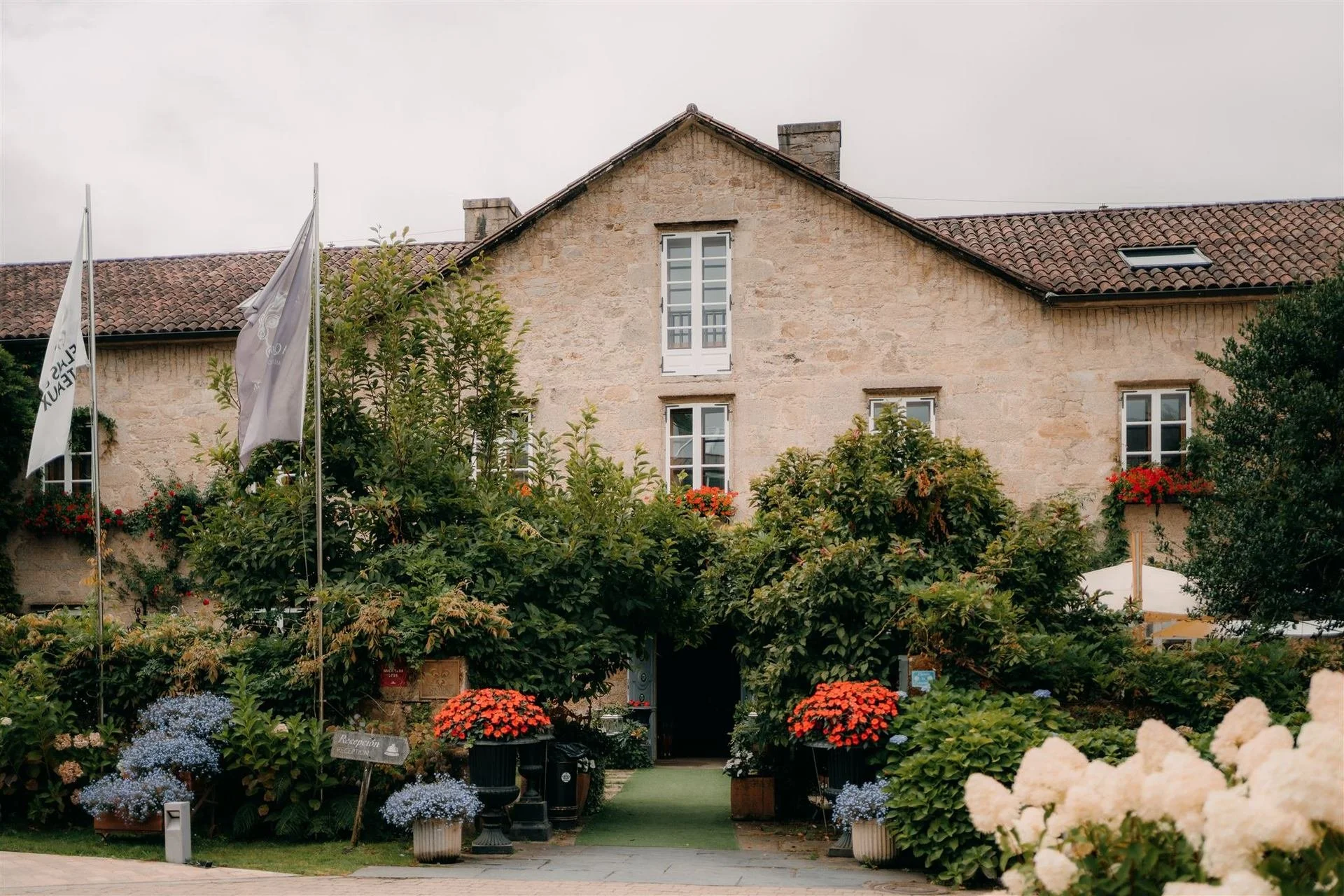
![Granite facade and flowering garden at A Quinta da Auga, Santiago de Compostela]()
A Quinta da Auga, Santiago de Compostela
-
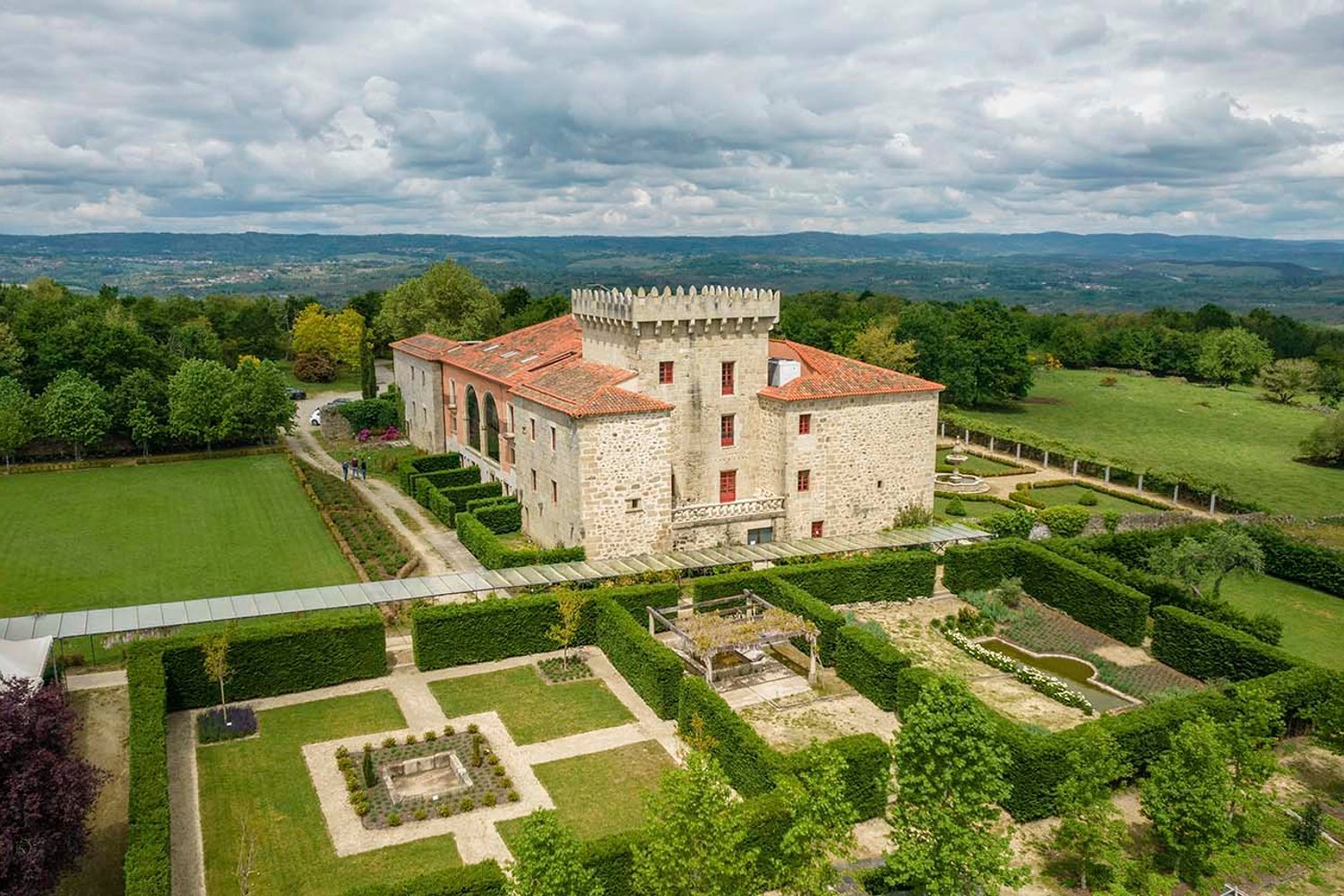
![Aurea Palacio de Sober and its formal gardens from above, Ribeira Sacra]()
Áurea Palacio de Sober, Ribeira Sacra
-
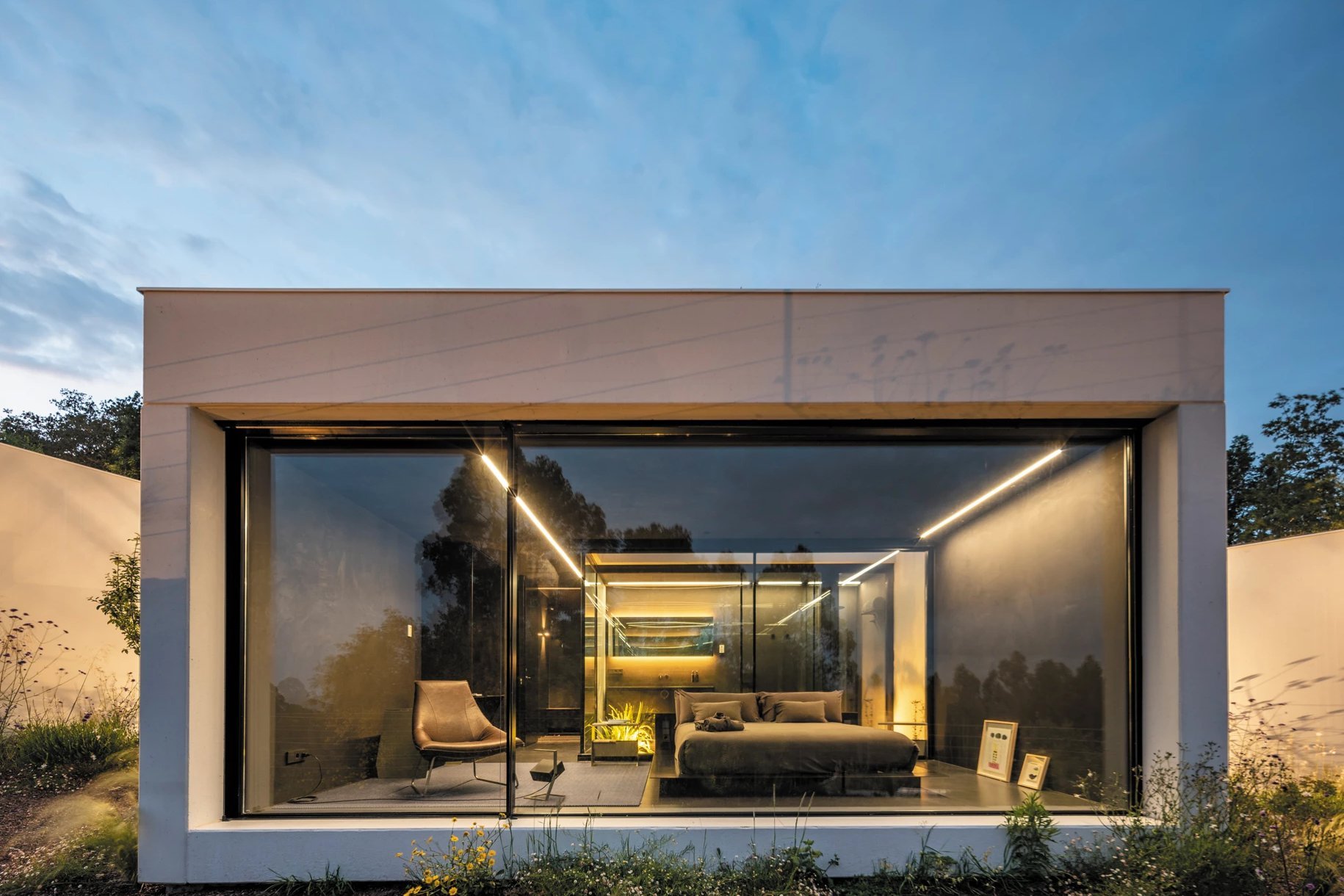
![Glass fronted galpon cabin lit at dusk among the trees at Pepe Vieira, Raxo]()
Pepe Vieira, Rías Baixas
-
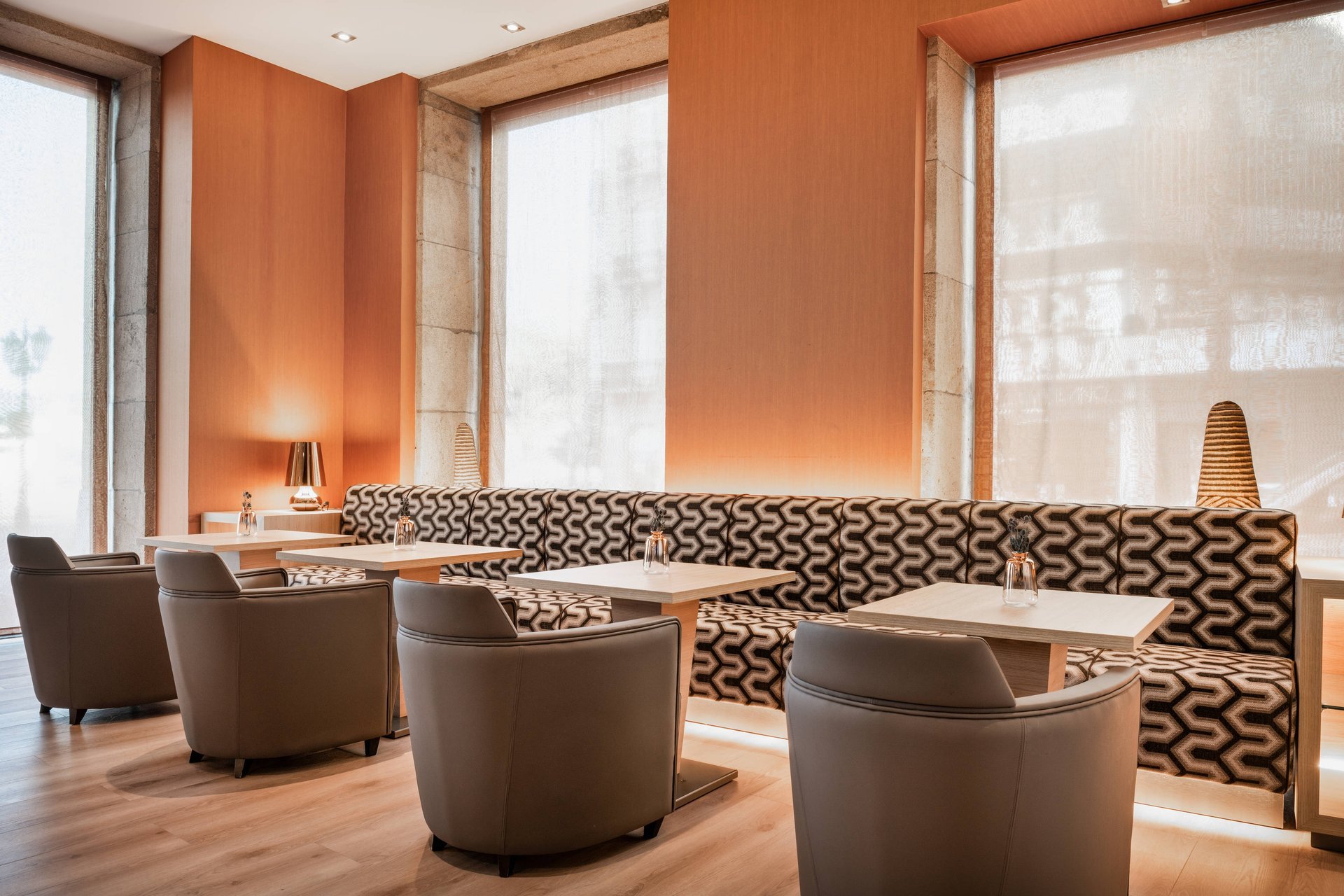
![Lounge with stone framed windows in the 19th century building of AC Hotel Palacio Universal, Vigo]()
AC Hotel Palacio Universal, Vigo
day 1 | A Coruña: Two Armadas
Airport Arrival. Your driver meets you at A Coruña Airport for the private transfer to Noa Boutique Hotel in Santa Cruz, approx. 20 minutes away. You have a dedicated driver for all transfers and excursions throughout the journey.
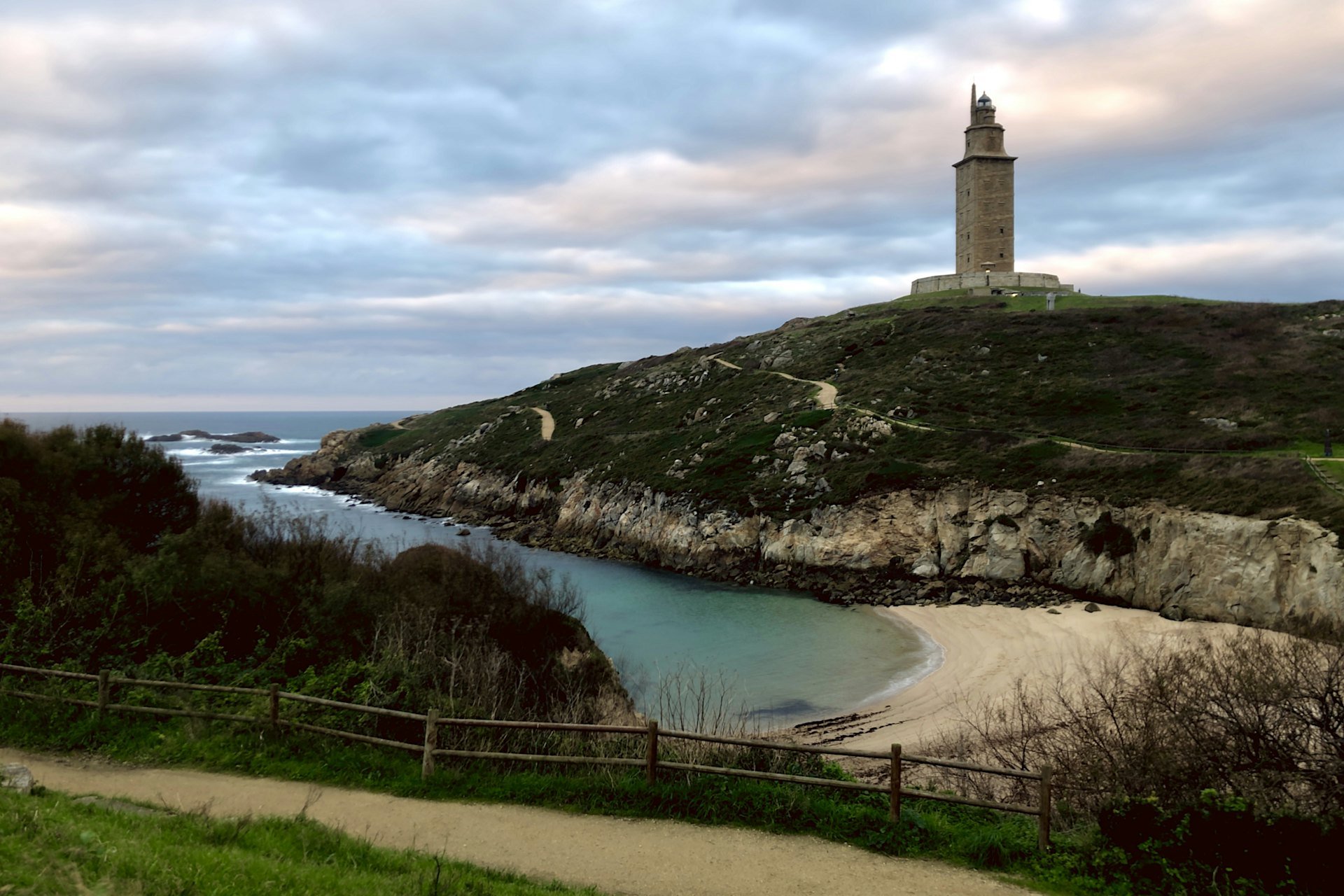
A Coruña has seen two armadas. The Spanish one sailed from this harbour in 1588. A year later the English one arrived under Francis Drake, and María Pita held the city walls against it. The Romans were here first, and their lighthouse still guides ships into port.
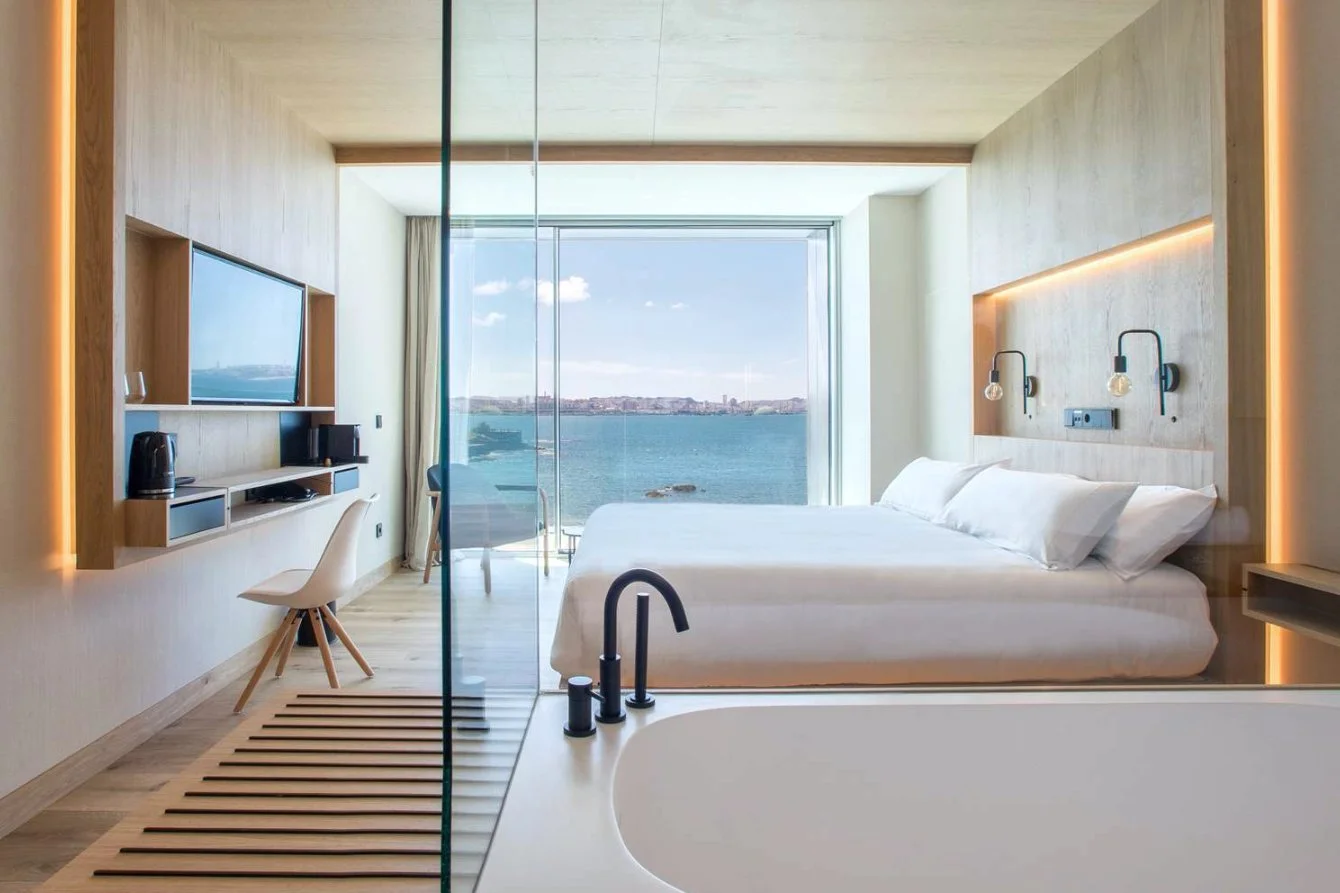
Noa Boutique Hotel. Noa Boutique Hotel has 32 rooms on the harbour of Santa Cruz in Oleiros, about 15 minutes from the centre of A Coruña. Every room has floor to ceiling windows onto the sea, a private terrace and a bathtub. The rooftop has an infinity pool and a Jacuzzi above Santa Cruz Castle, and the spa and gym are downstairs. The restaurant cooks Galician dishes with an Asian accent, and Noa Bar serves small plates on its terrace.
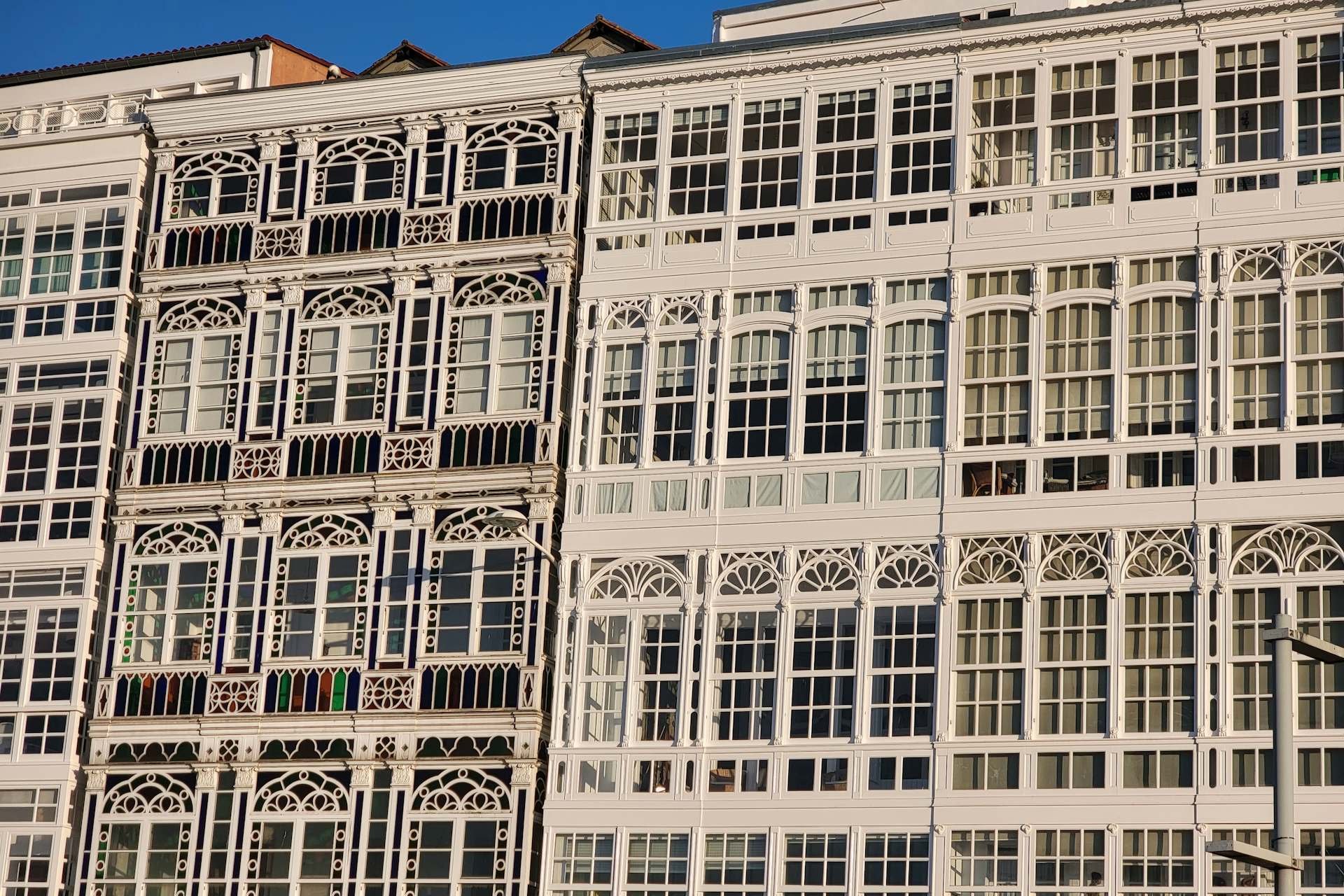
Old Town & Galleries. Walk the Ciudad Vella with your guide, from the Romanesque church of Santiago to the Praza de María Pita, named for the woman who held the walls. The glazed galleries along the Avenida da Mariña earned A Coruña the name City of Glass.
Dinner at Árbore da Veira. Árbore da Veira holds a Michelin star and sits on Monte de San Pedro, above the city and the bay. The cooking is built on Galician produce and fish from the Atlantic.
STAY: Noa Boutique Hotel, Superior Room
day 2 | A Coruña: The Roman Light
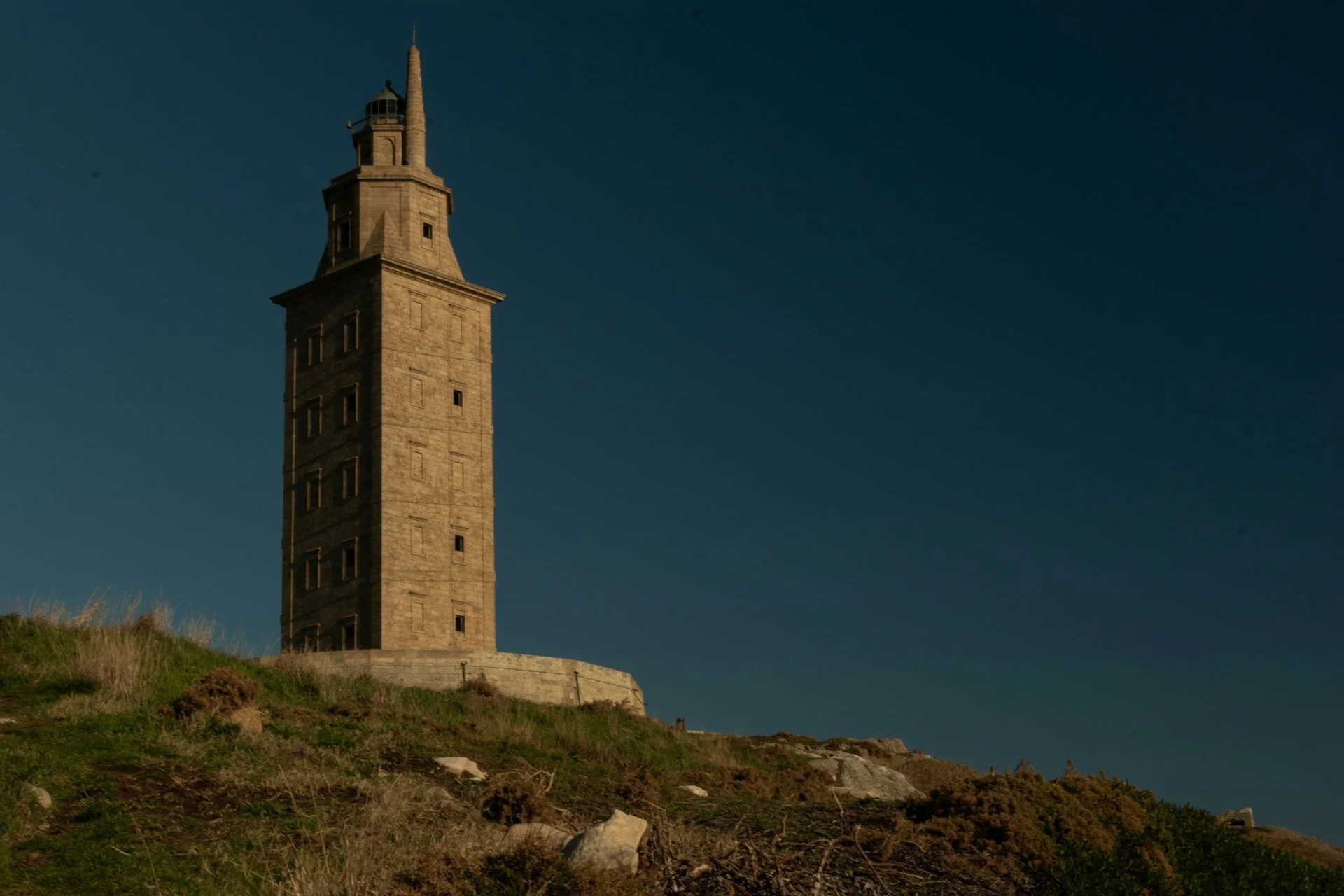
Tower of Hercules. Visit the Tower of Hercules with your private guide. The Romans built it, and it is still lit today as the oldest Roman lighthouse in use and a UNESCO World Heritage Site. Climb the stairs inside the tower to the platform over the Atlantic.
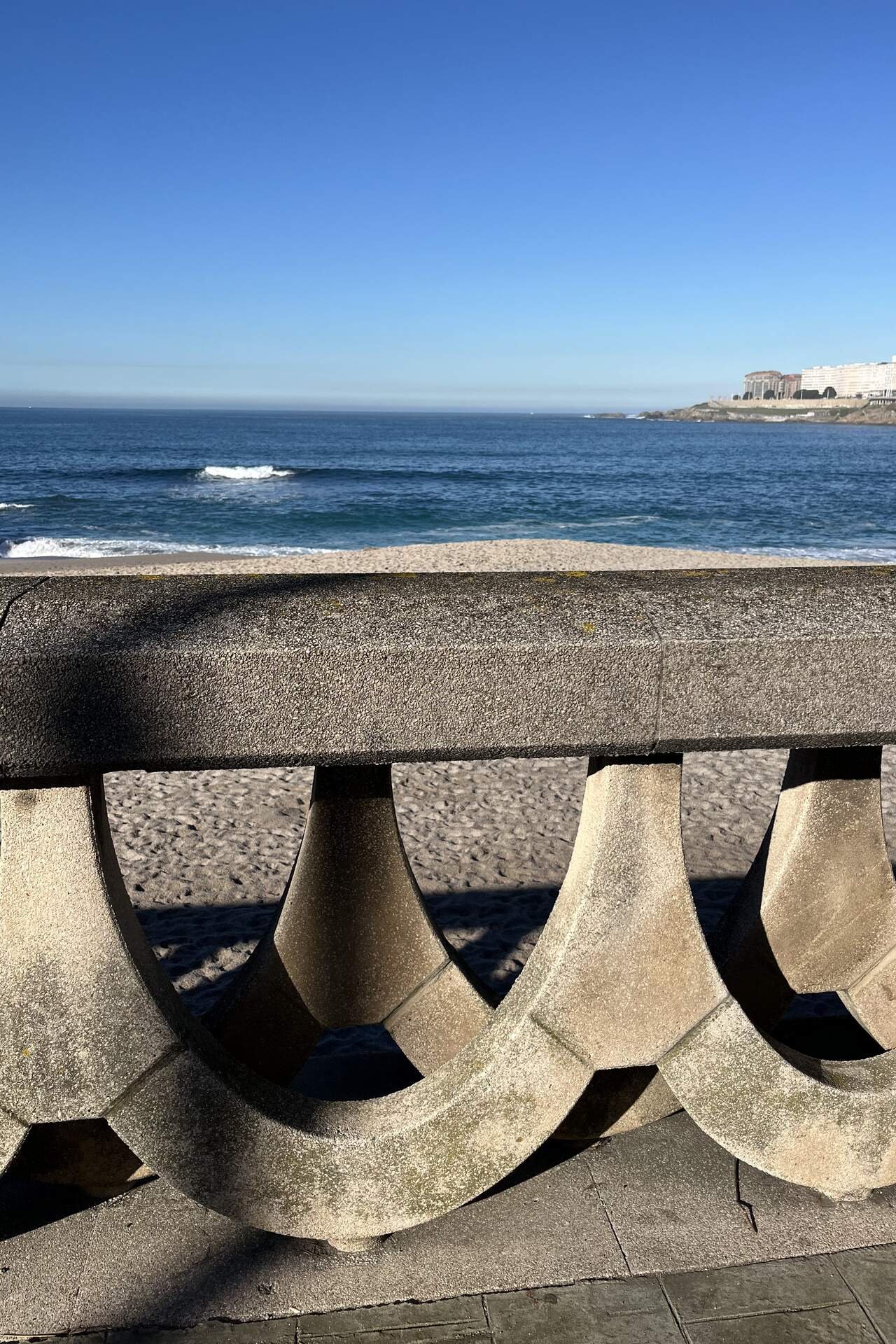
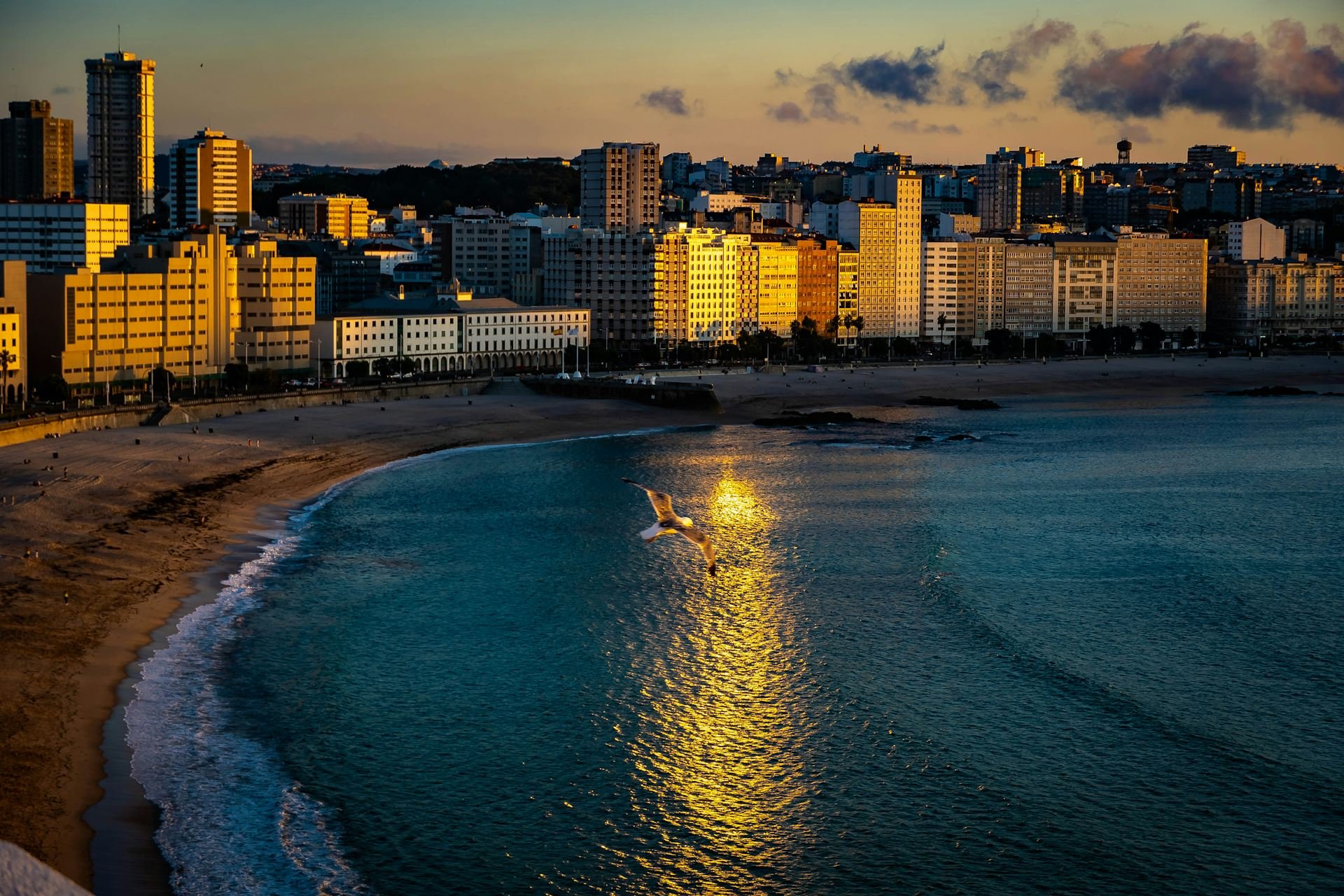
The Paseo Marítimo. Walk the seafront promenade from the tower to the beaches of Orzán and Riazor, along the stone balustrade that frames the bay. A Coruña sits on a peninsula, so the promenade has the Atlantic on one side and the port on the other.
Celtic Galicia. Visit the Castro de Elviña, an Iron Age hill fort on the edge of the city, with the remains of round stone houses. Galicians trace their Celtic heritage to settlements like this one.
Mundo Estrella Galicia. Visit the museum of Estrella Galicia, the beer brewed in A Coruña by the Rivera family since 1906, beside the working brewery. The visit ends with a tasting.
Tapas in the Old Town. Spend the evening on Rúa da Franxa and the lanes around it, where the bars serve pulpo, zamburiñas and empanada with a glass of Albariño.
STAY: Noa Boutique Hotel, Superior Room
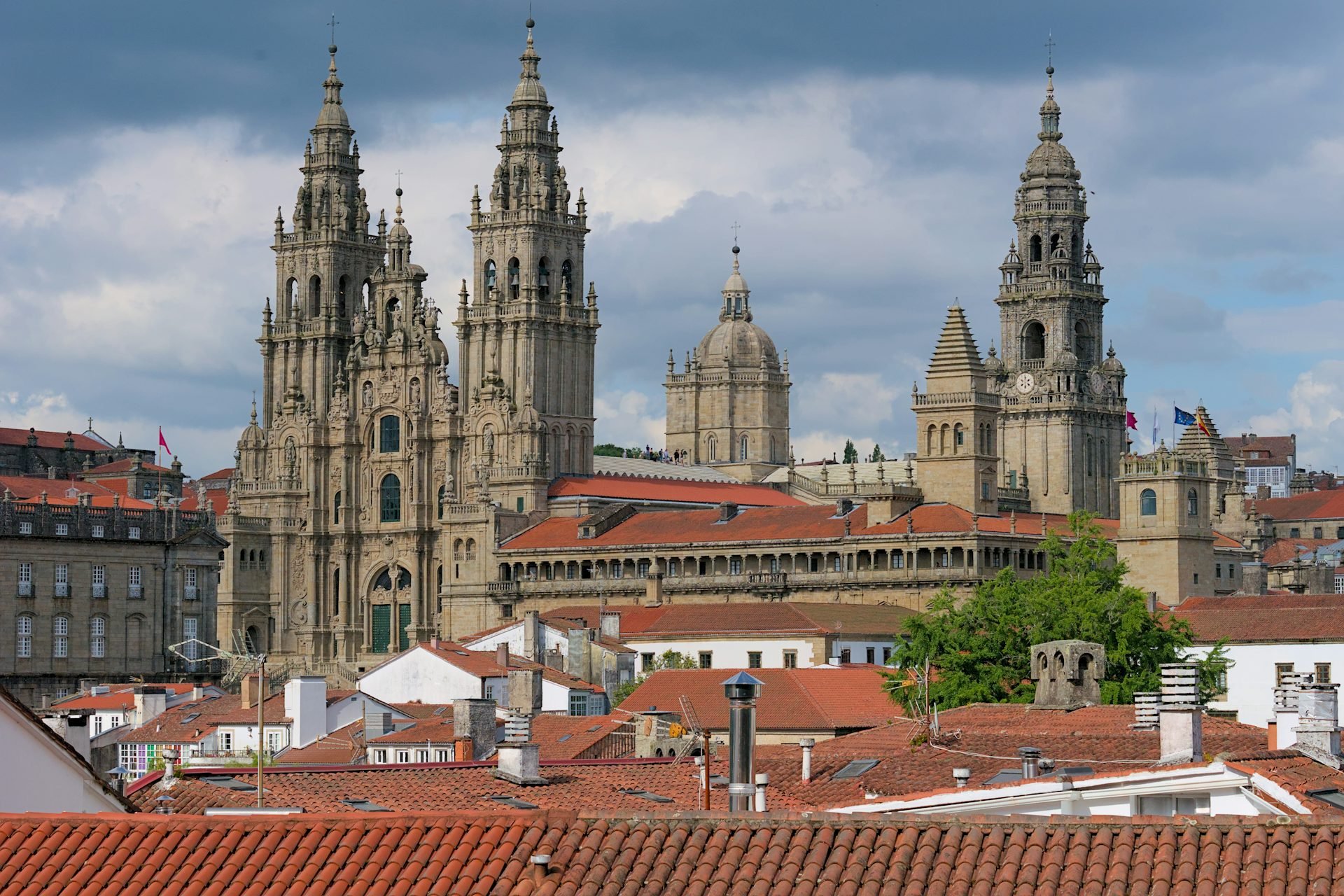
day 3 | Santiago de Compostela: End of the Camino
Private Transfer. Private transfer from A Coruña to Santiago de Compostela, approx. 1 hour.
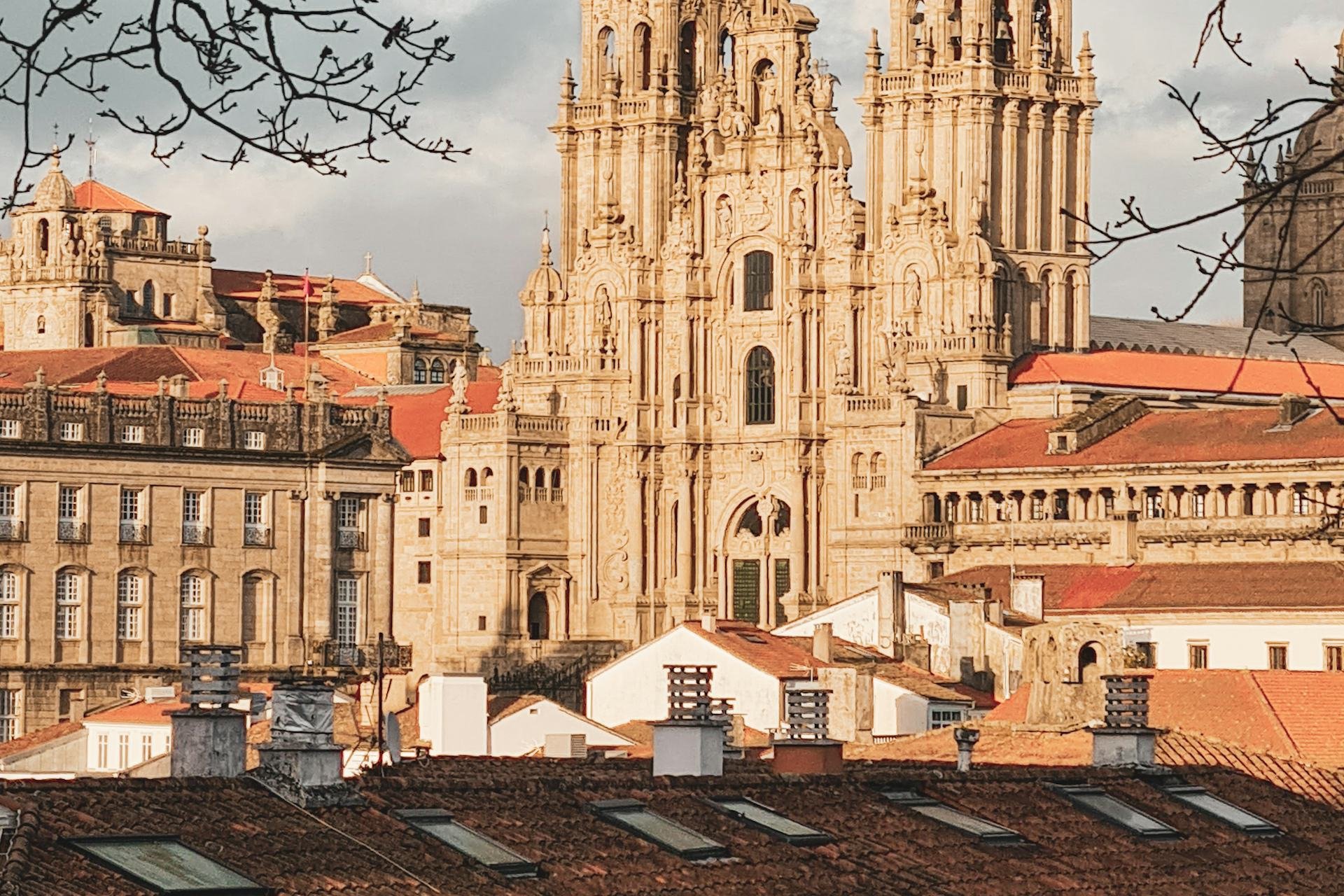
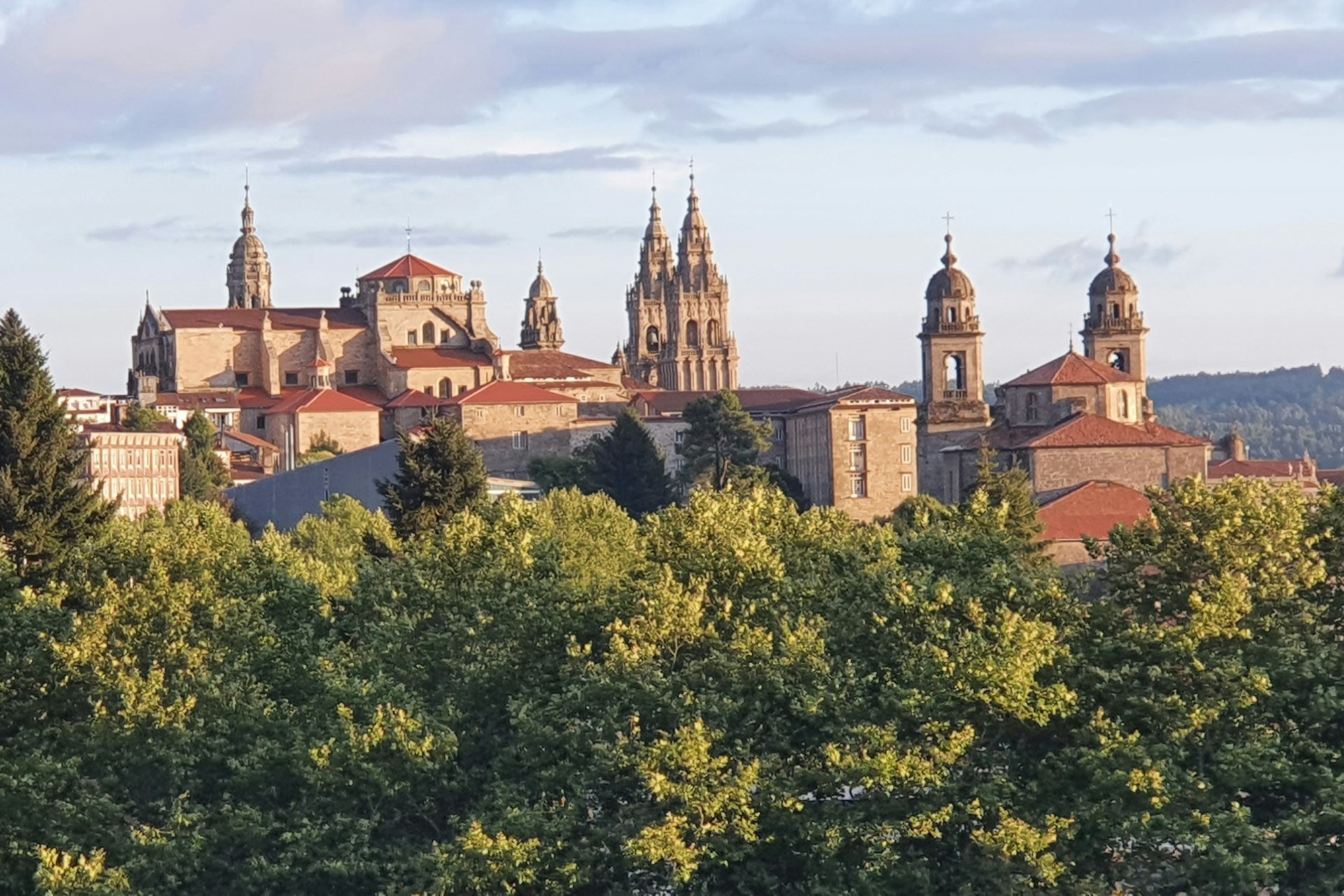
Pilgrims have walked to Santiago de Compostela for more than a thousand years, and they still arrive every day on the Praza do Obradoiro. The old town is a UNESCO World Heritage Site built almost entirely in granite, with arcaded streets running between the cathedral squares.
A Quinta da Auga. A Quinta da Auga is a Relais & Châteaux hotel in an 18th century paper mill on the edge of Santiago, a few minutes by car from the old town. The Lorenzo García family converted the mill and kept its original stonework. The spa has heated pools and saunas, Filigrana serves Galician cooking, and Qcafebar is the casual bistro on site.
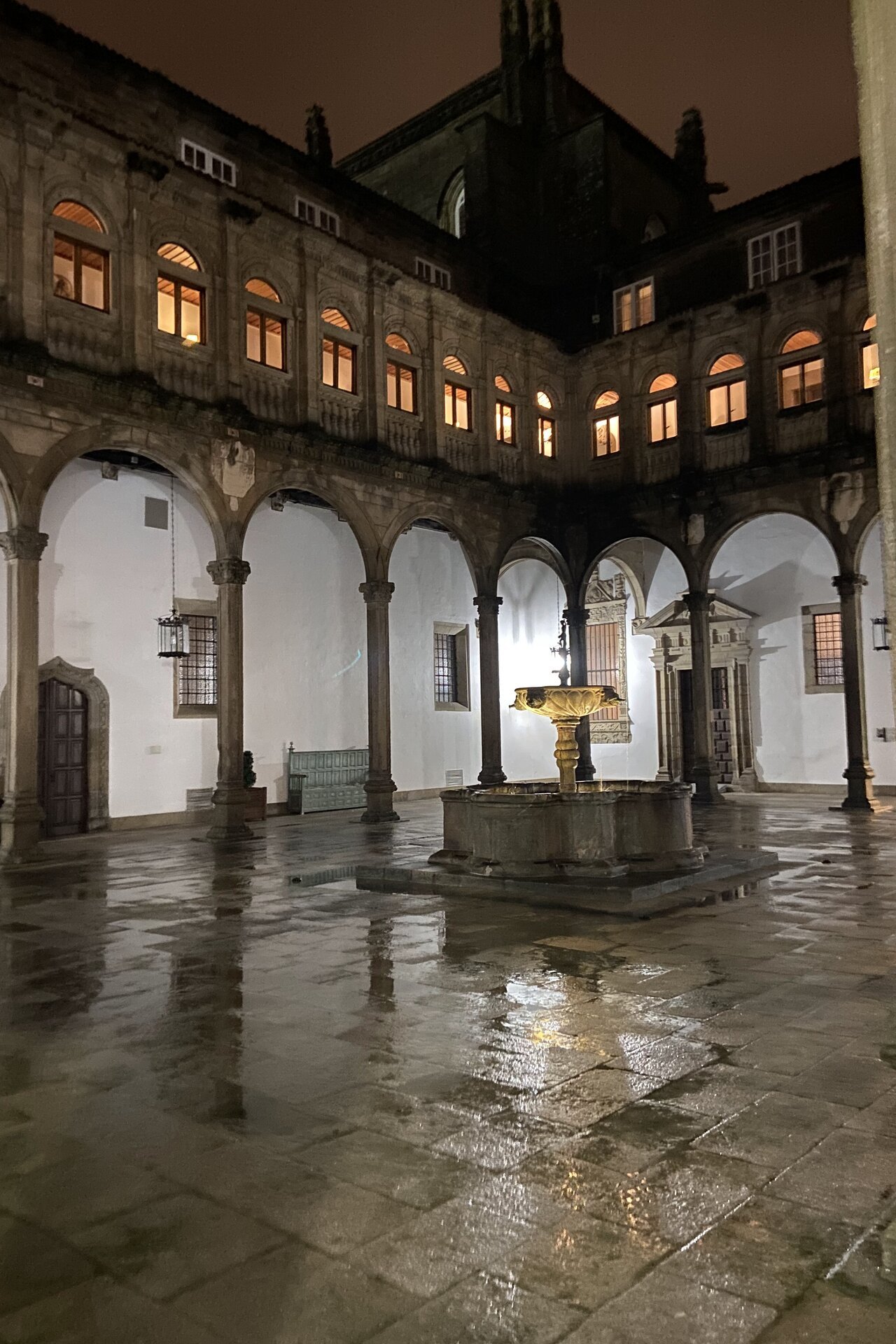
Old Town Walk. Meet your guide for a walk through the old town, covering the Praza do Obradoiro, the arcaded Rúa do Vilar and Rúa Nova, and the Hostal dos Reis Católicos, the pilgrim hospital founded by Ferdinand and Isabella in 1499 and now a Parador. Stop at a pulpería for pulpo á feira, boiled octopus dressed with olive oil, paprika and coarse salt.
Dinner at Casa Marcelo. Casa Marcelo is the Michelin star restaurant of chef Marcelo Tejedor, on Rúa das Hortas just below the Praza do Obradoiro.
STAY: A Quinta da Auga, Classic Double Room
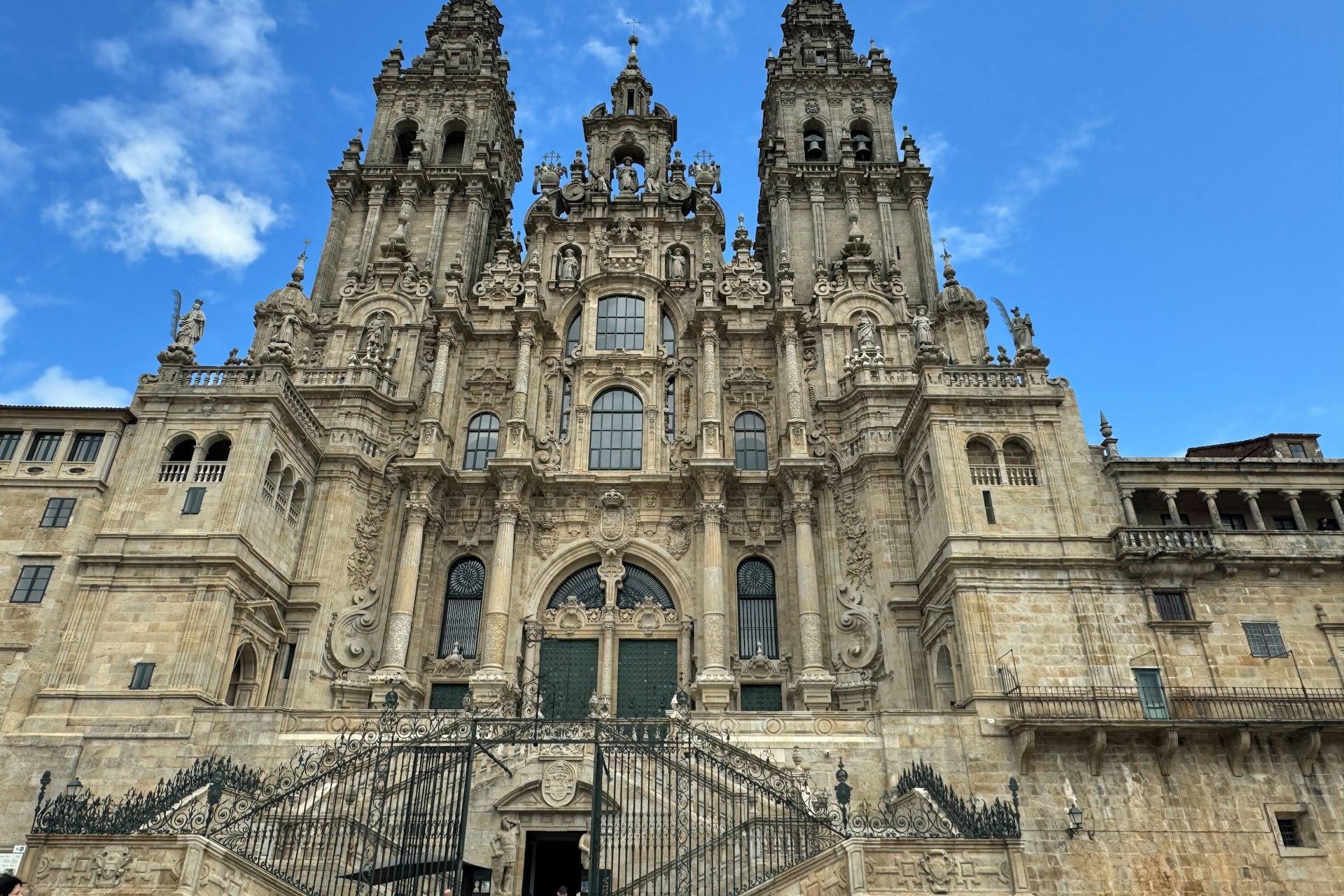
day 4 | Santiago de Compostela: Granite & Inquisitors
Cathedral of Santiago & Rooftop Access. Visit the cathedral with your private guide, through the Pórtico da Gloria, the 12th century Romanesque portal carved by Master Mateo. Then go up onto the rooftops, where a walkway crosses the granite roofs above the square the pilgrims are walking into.
Mercado de Abastos. Walk through the Mercado de Abastos, the granite market halls where the stalls sell percebes, scallops, tetilla cheese and peppers from Padrón. Lunch is at Abastos 2.0, which cooks with what the stalls sold that morning.
The Inquisition in Santiago. Follow the darker history of the city with your guide. From 1574 Santiago was the seat of the Inquisition tribunal for Galicia, the last Inquisition tribunal founded in Spain.
Afternoon at the Spa. Spend the rest of the afternoon in the spa at A Quinta da Auga.
STAY: A Quinta da Auga, Classic Double Room
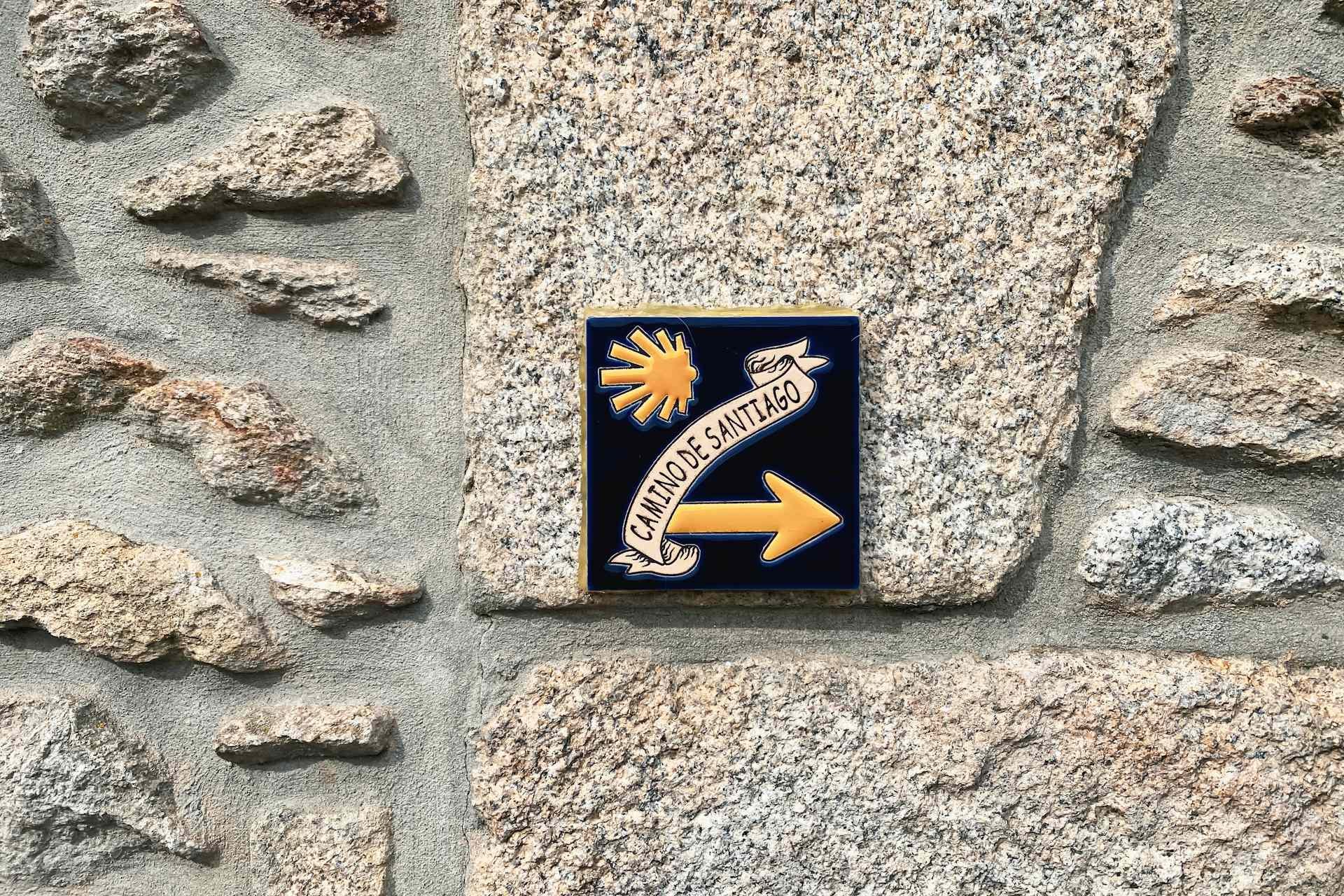
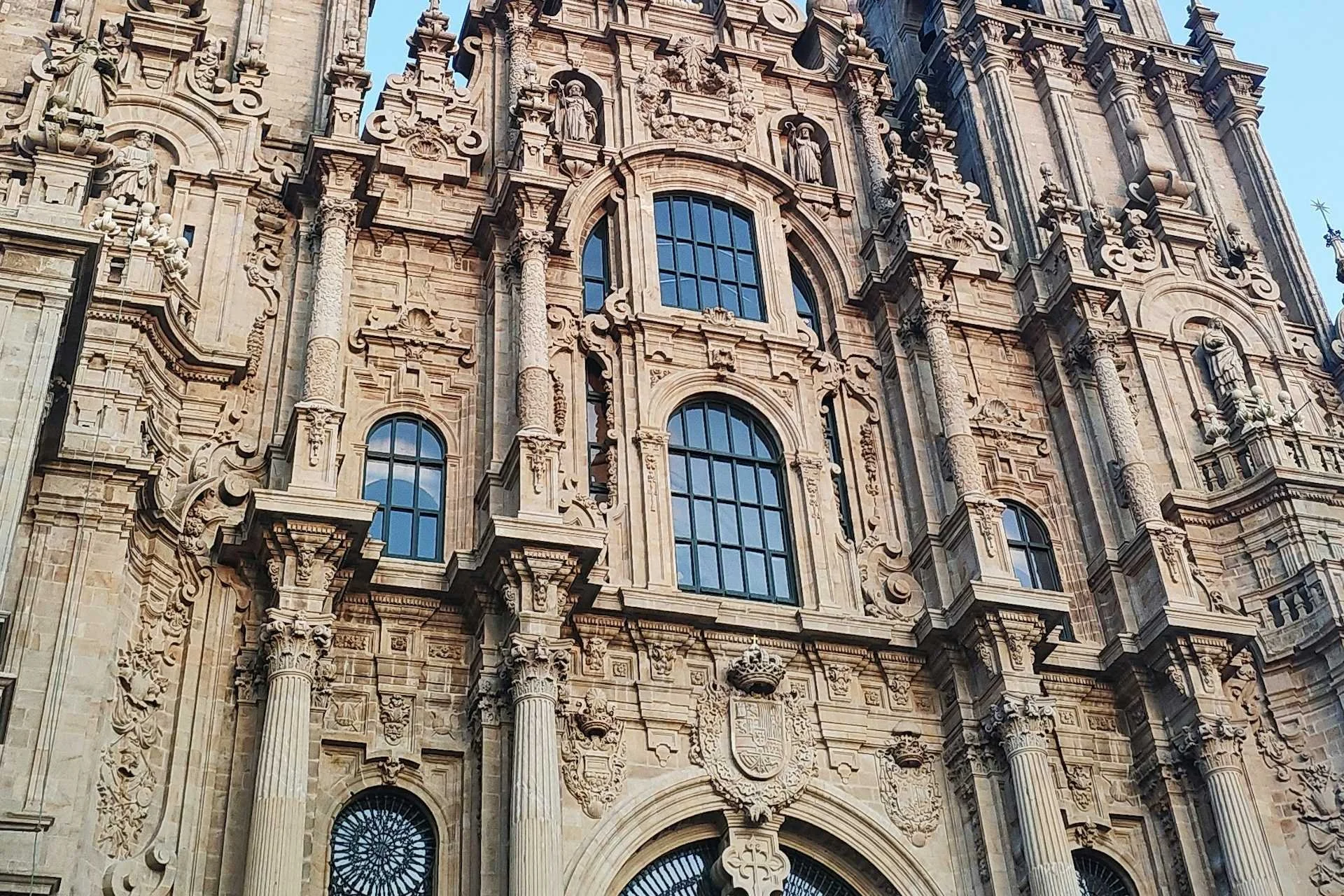
What to Eat in Santiago
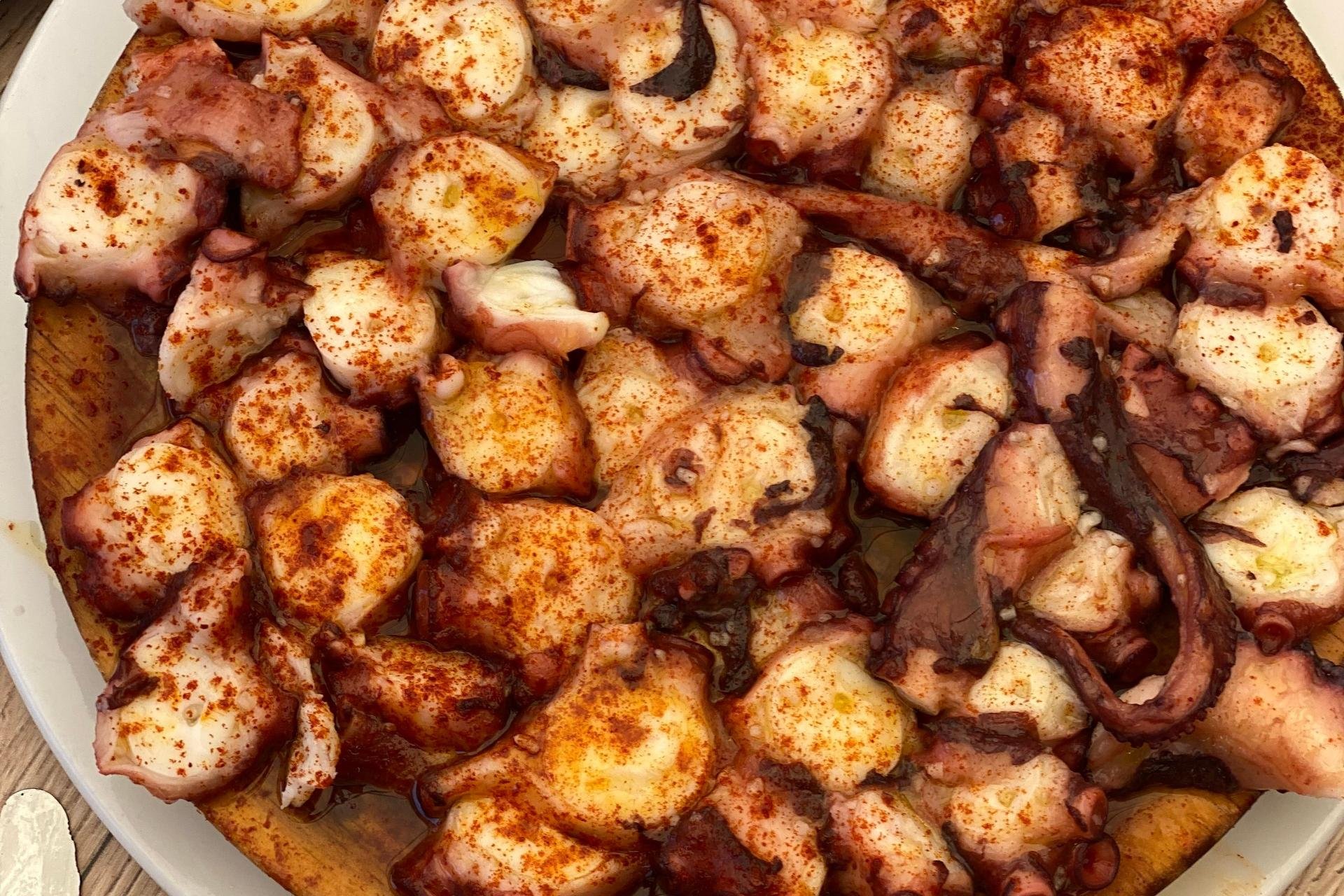
Pulpo á Feira
Octopus boiled in copper pots, cut with scissors onto a wooden plate and dressed with olive oil, coarse salt and paprika. It began as fair food in inland Galicia, and every market town still has a pulpería. It comes with bread and a glass of young red wine.
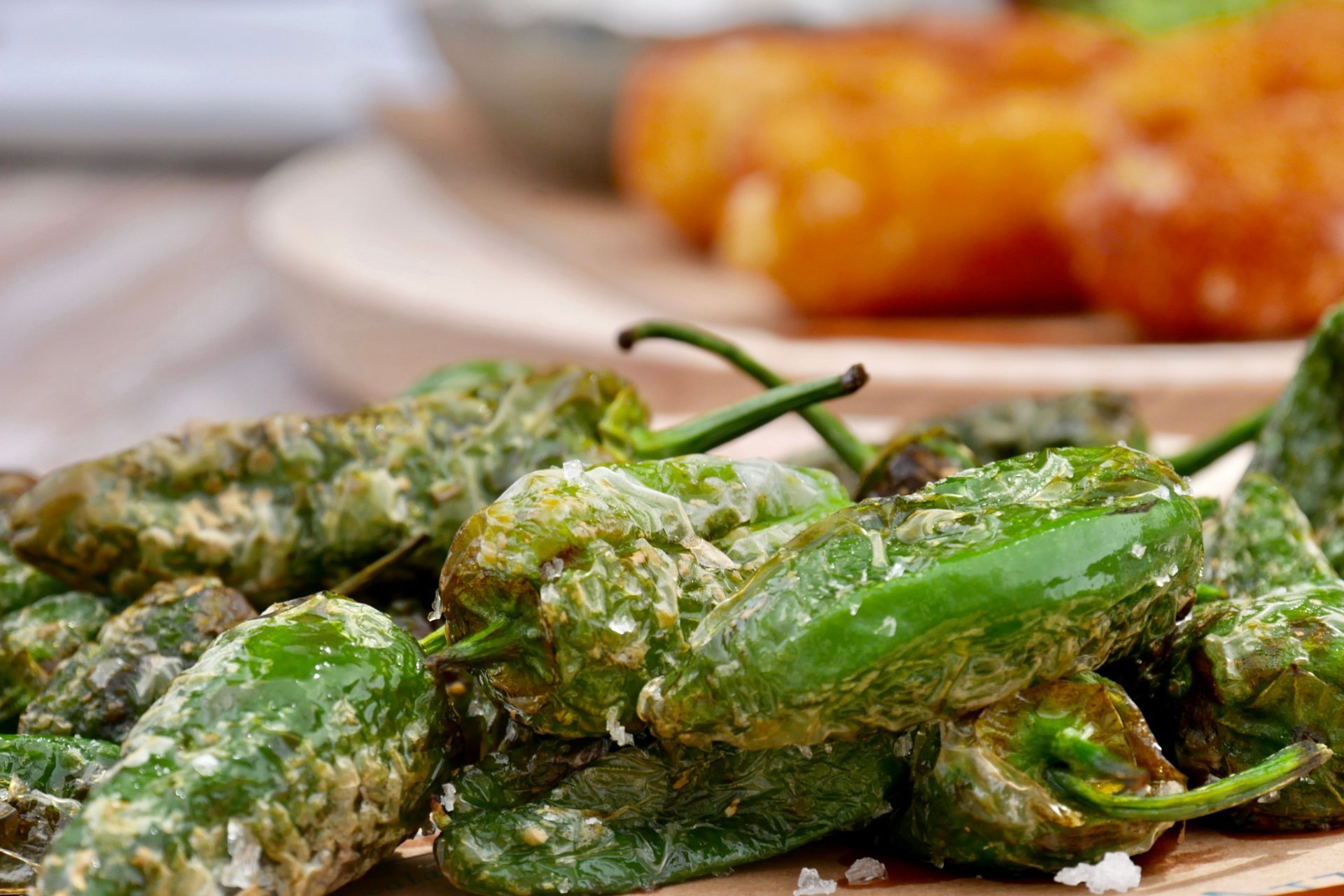
Pementos de Padrón
Small green peppers from Herbón, a parish of Padrón 20 km south of Santiago, fried in olive oil and finished with coarse salt. Most are mild and a few are hot, which explains the Galician saying: os pementos de Padrón, uns pican e outros non.
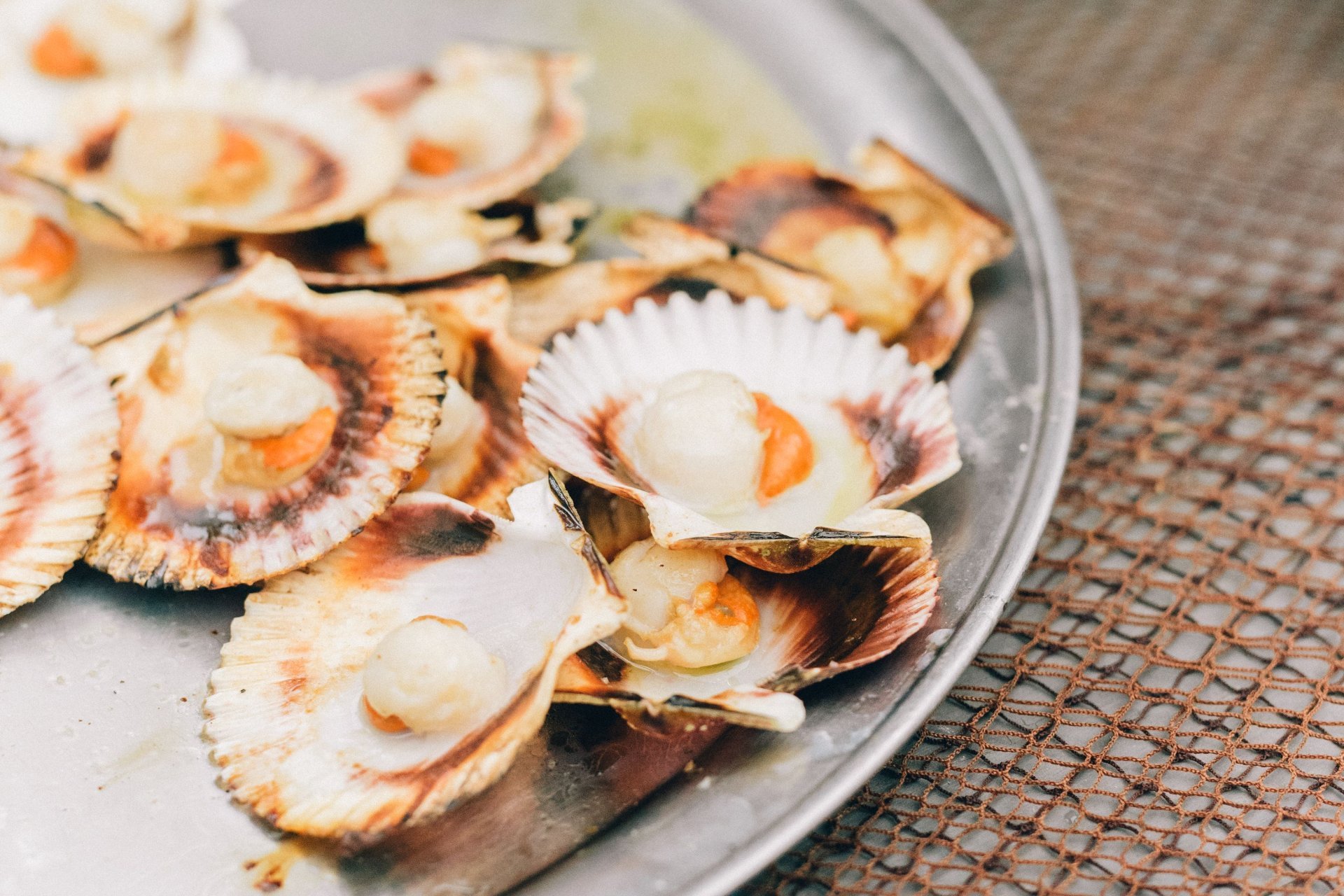
Zamburiñas
Small scallops grilled in the half shell with garlic, parsley and olive oil. They are smaller and sweeter than the vieira, the large scallop whose shell became the symbol of the Camino de Santiago.
day 5 | Ribeira Sacra: Roman Vines
Private Transfer. Private transfer from Santiago to the Ribeira Sacra, approx. 2 hours.
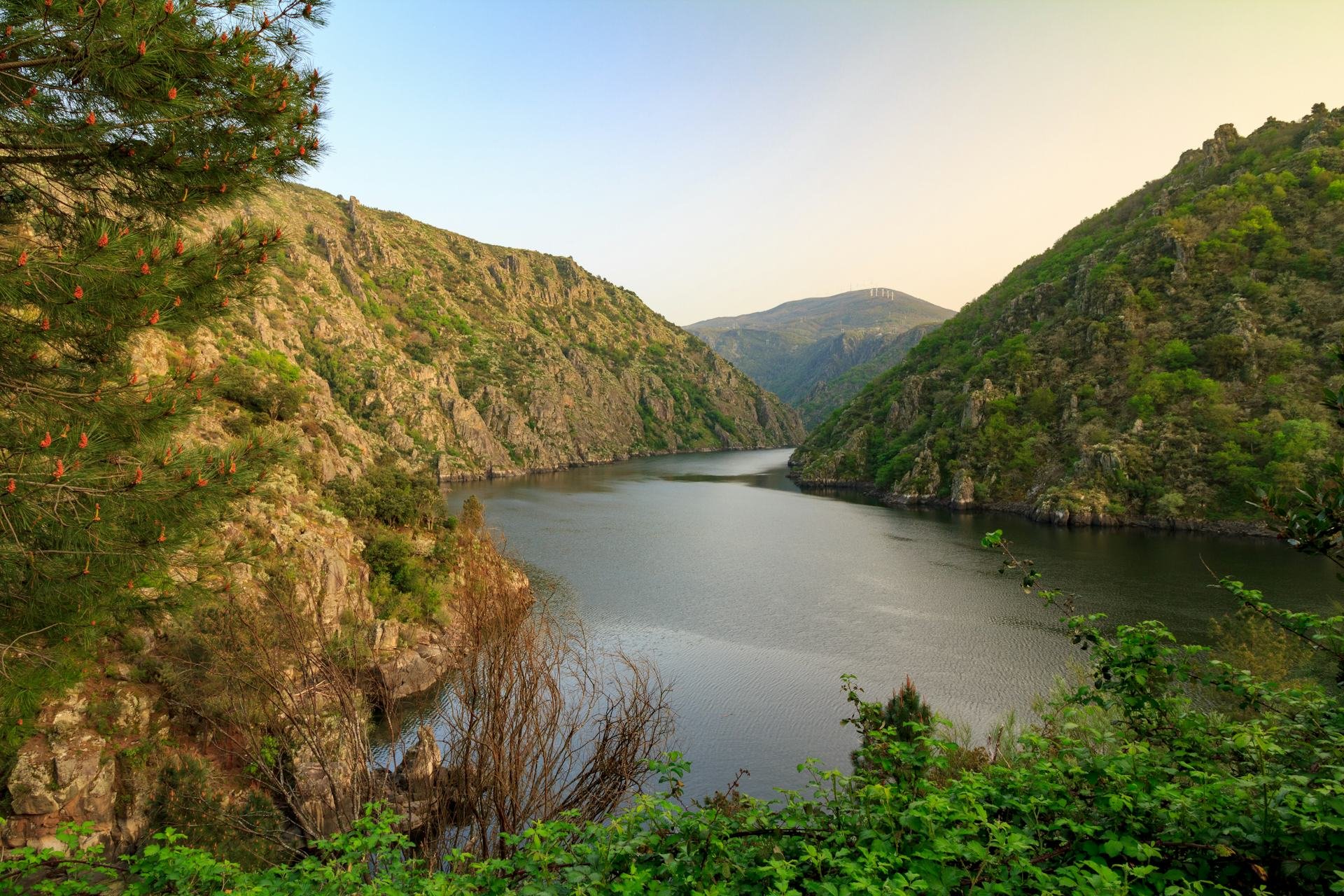
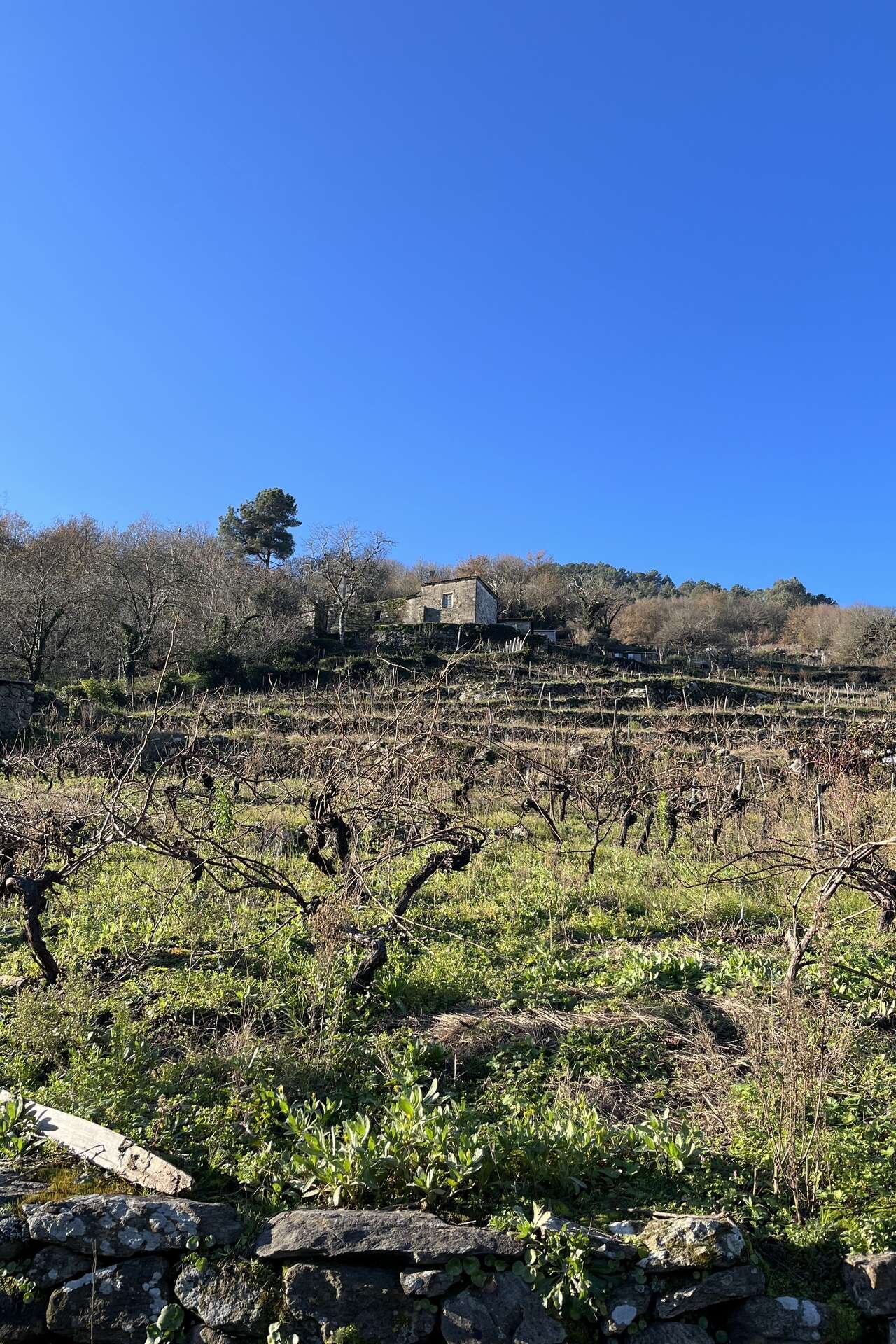
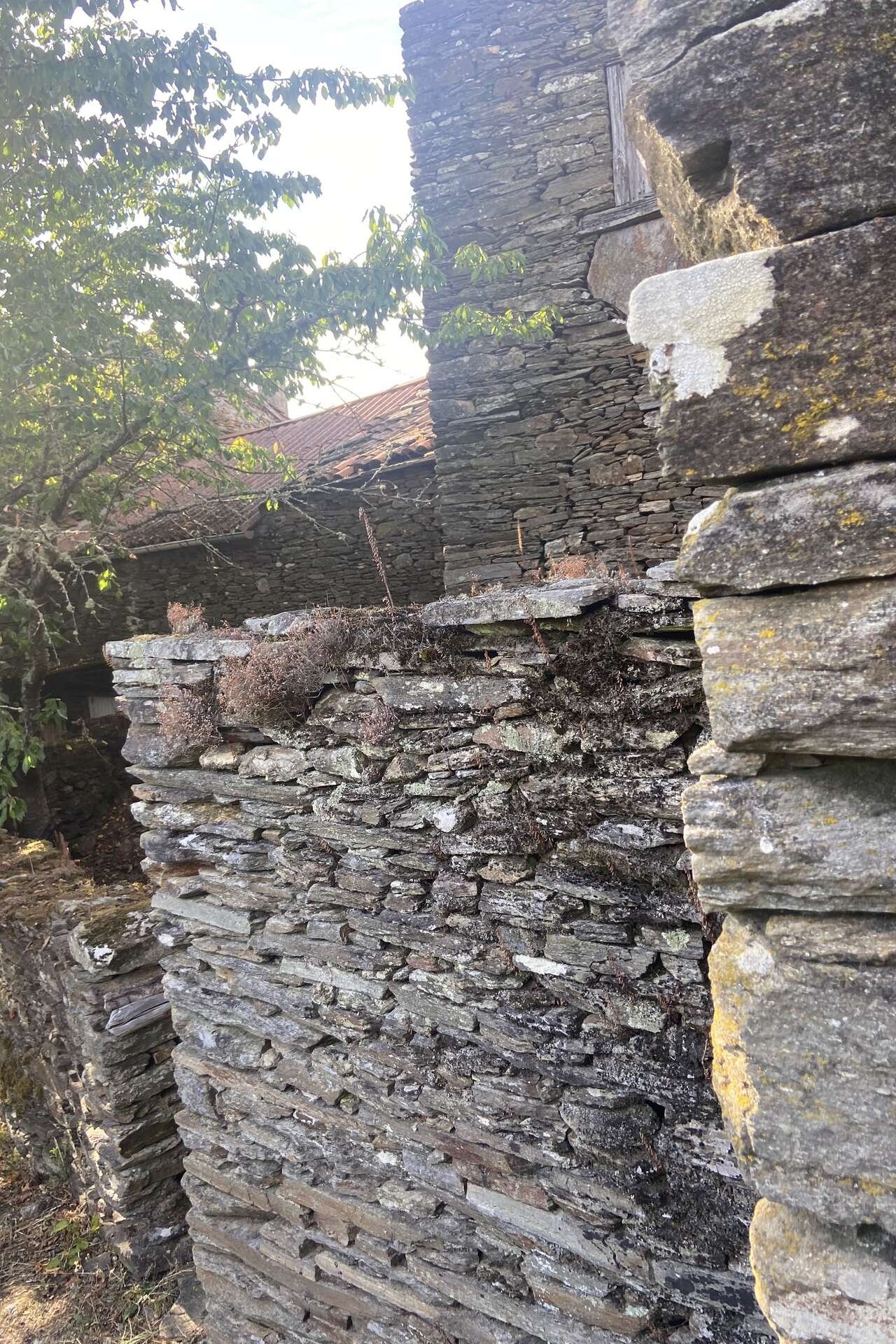
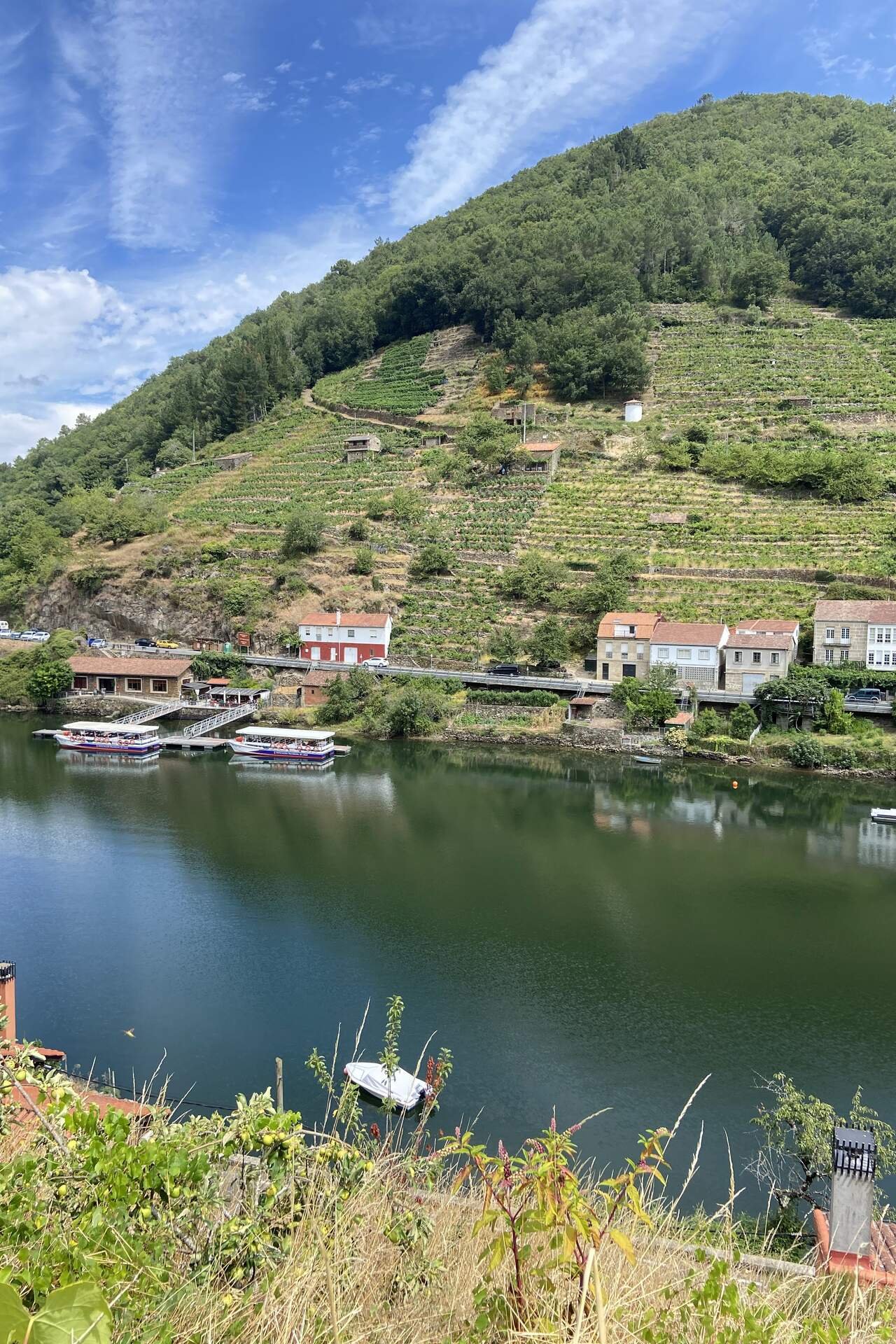
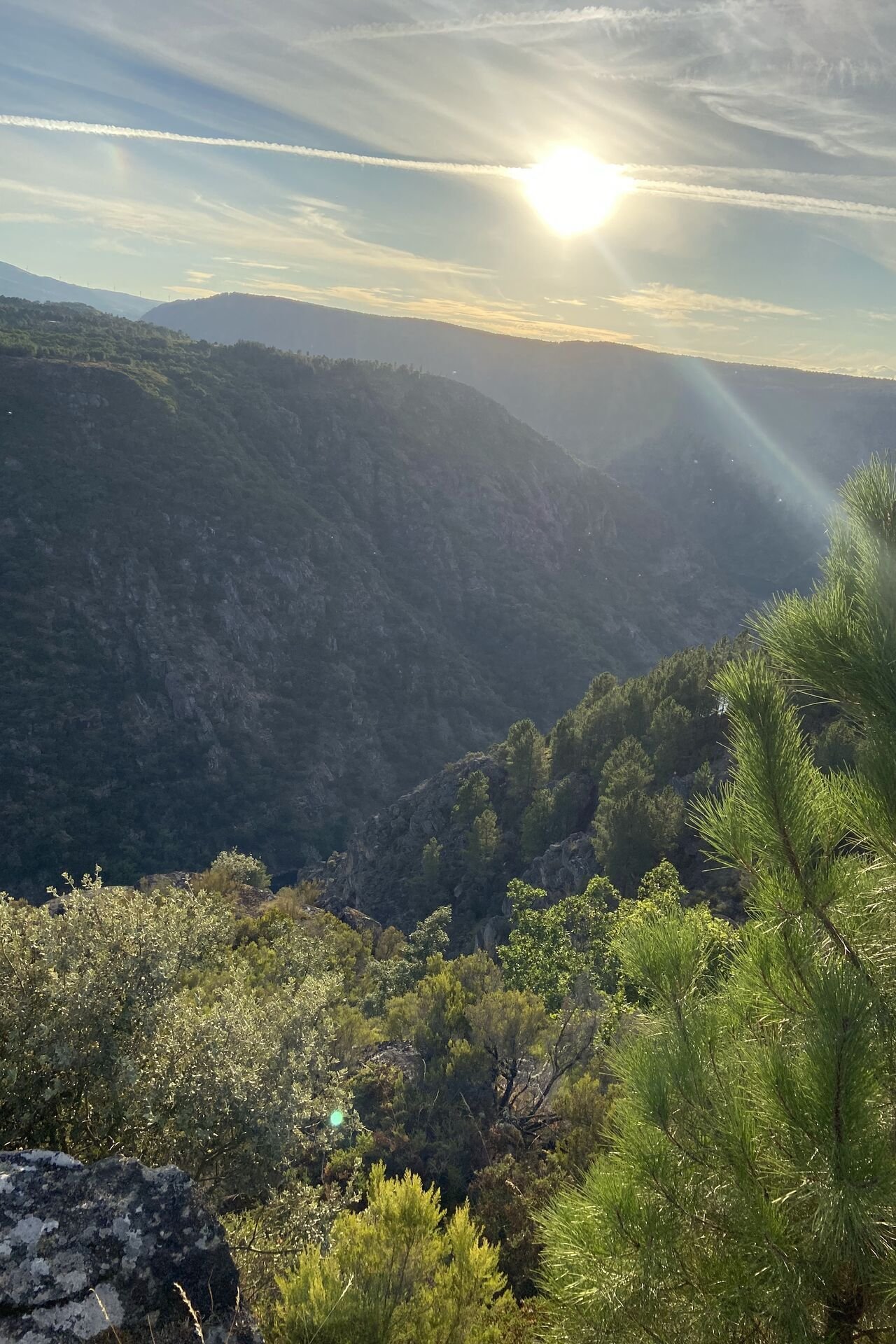
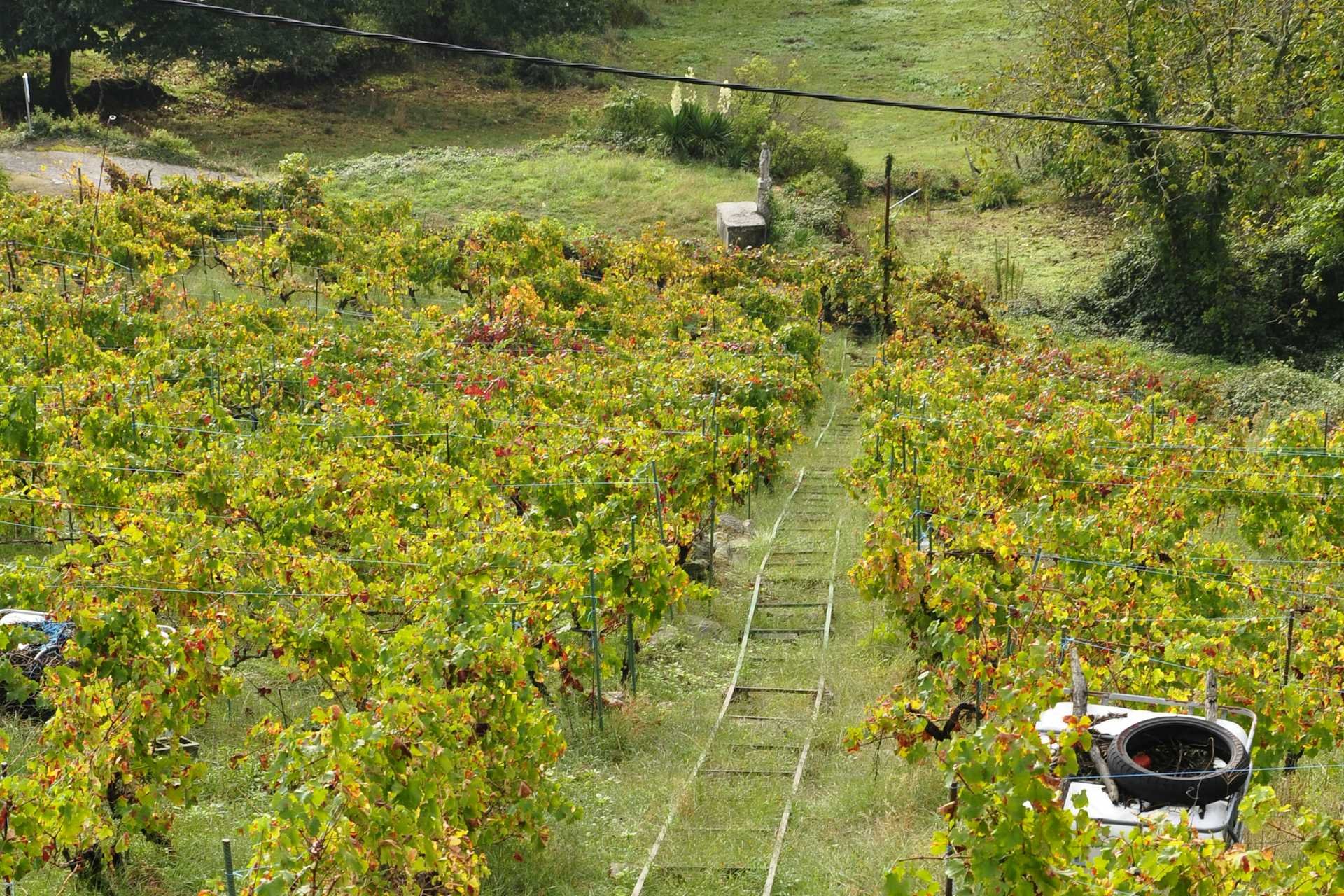
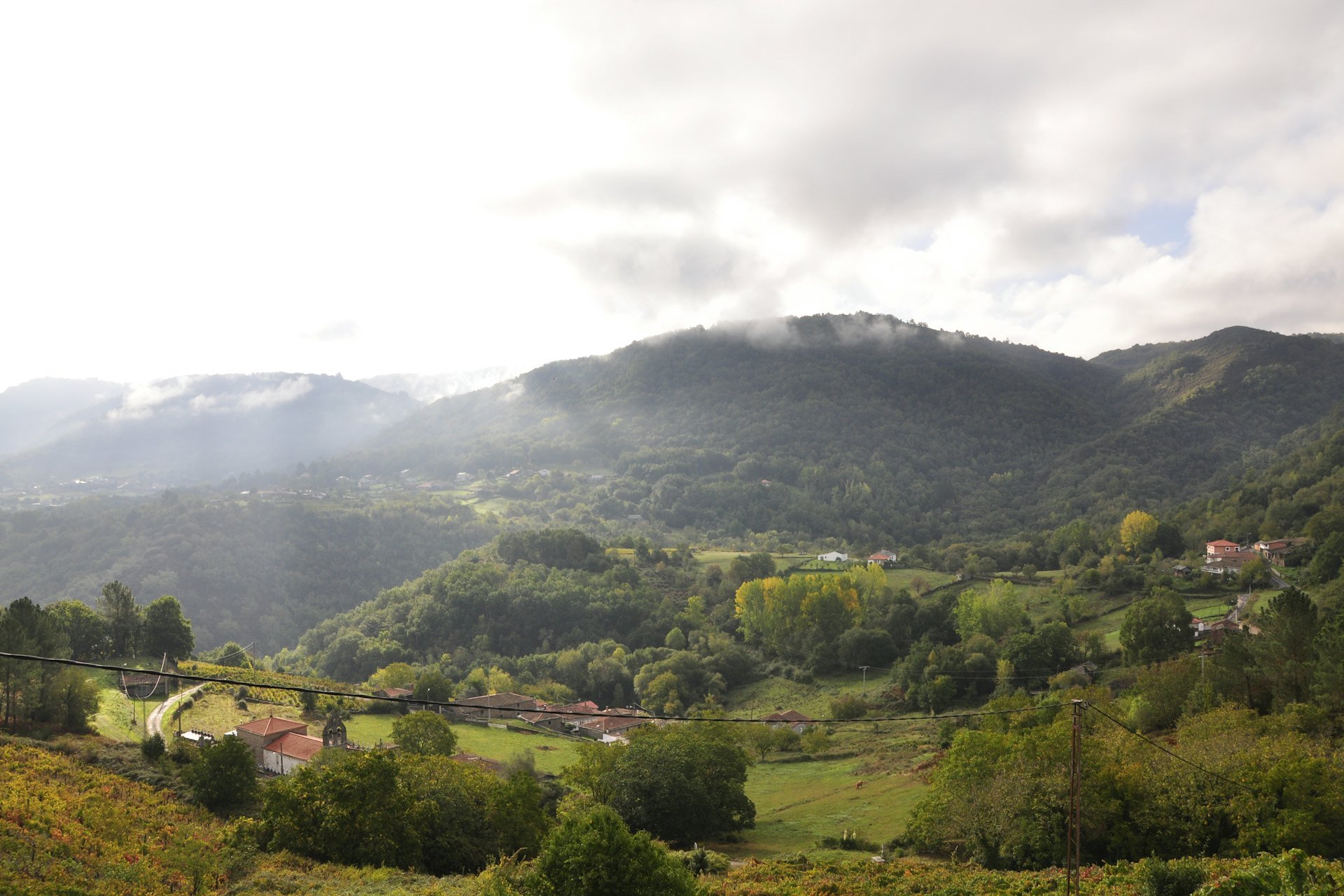
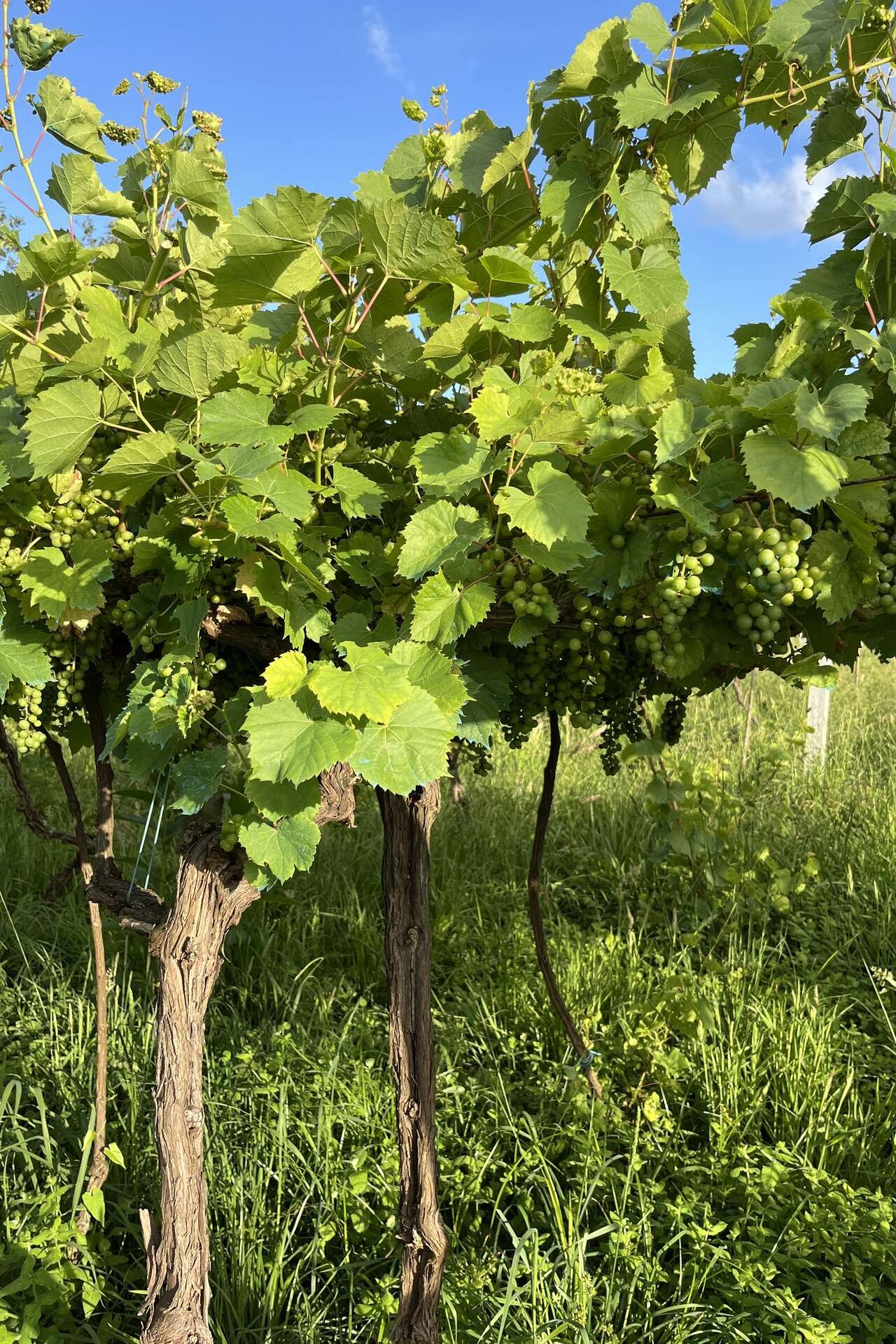
The Ribeira Sacra is wine country on a vertical scale, with vines on slate terraces above the canyons of the Sil and the Miño. Tradition credits the Romans with the first vines, and Roman engineers cut the Montefurado tunnel to mine gold from the Sil. The oldest written record of wine here dates from 876.
Áurea Palacio de Sober. Áurea Palacio de Sober has 43 rooms on the site of the palace of the López de Lemos, lords of Sober from the 12th century. The building was reconstructed in 2010 and keeps the remains of a 12th century wall. Vineyards surround it, the spa looks onto the gardens through glass walls, and the outdoor pool opens in July and August.
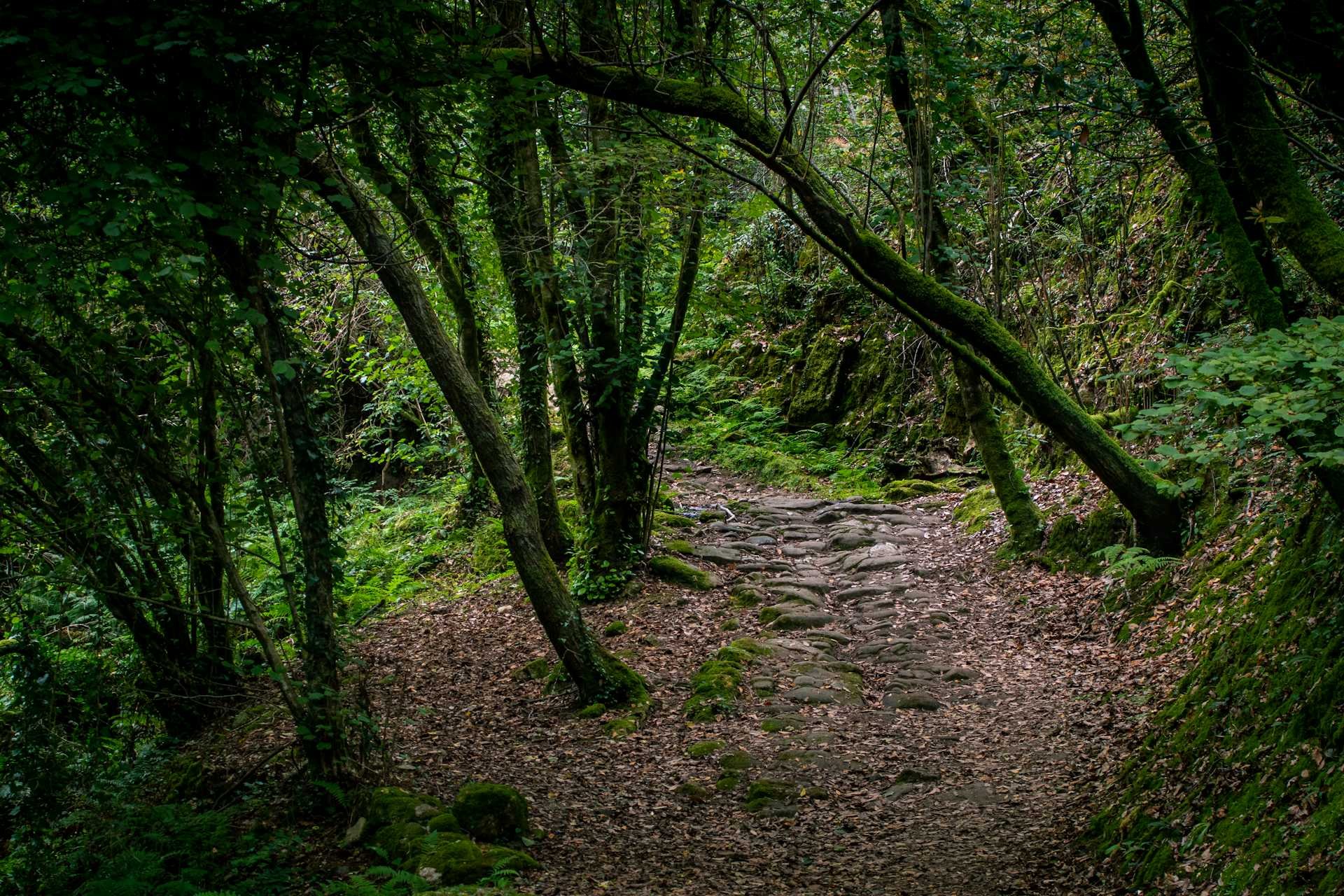
Monasteries of the Sil. Visit the Romanesque monastery of Santa Cristina de Ribas de Sil, set in a chestnut forest above the canyon, and the three cloisters of Santo Estevo.
Balcones de Madrid. Stop at the Balcones de Madrid in Parada de Sil, a walkway on the edge of the canyon with the river several hundred metres below.
STAY: Áurea Palacio de Sober, Deluxe Room
day 6 | Ribeira Sacra: Heroic Wine
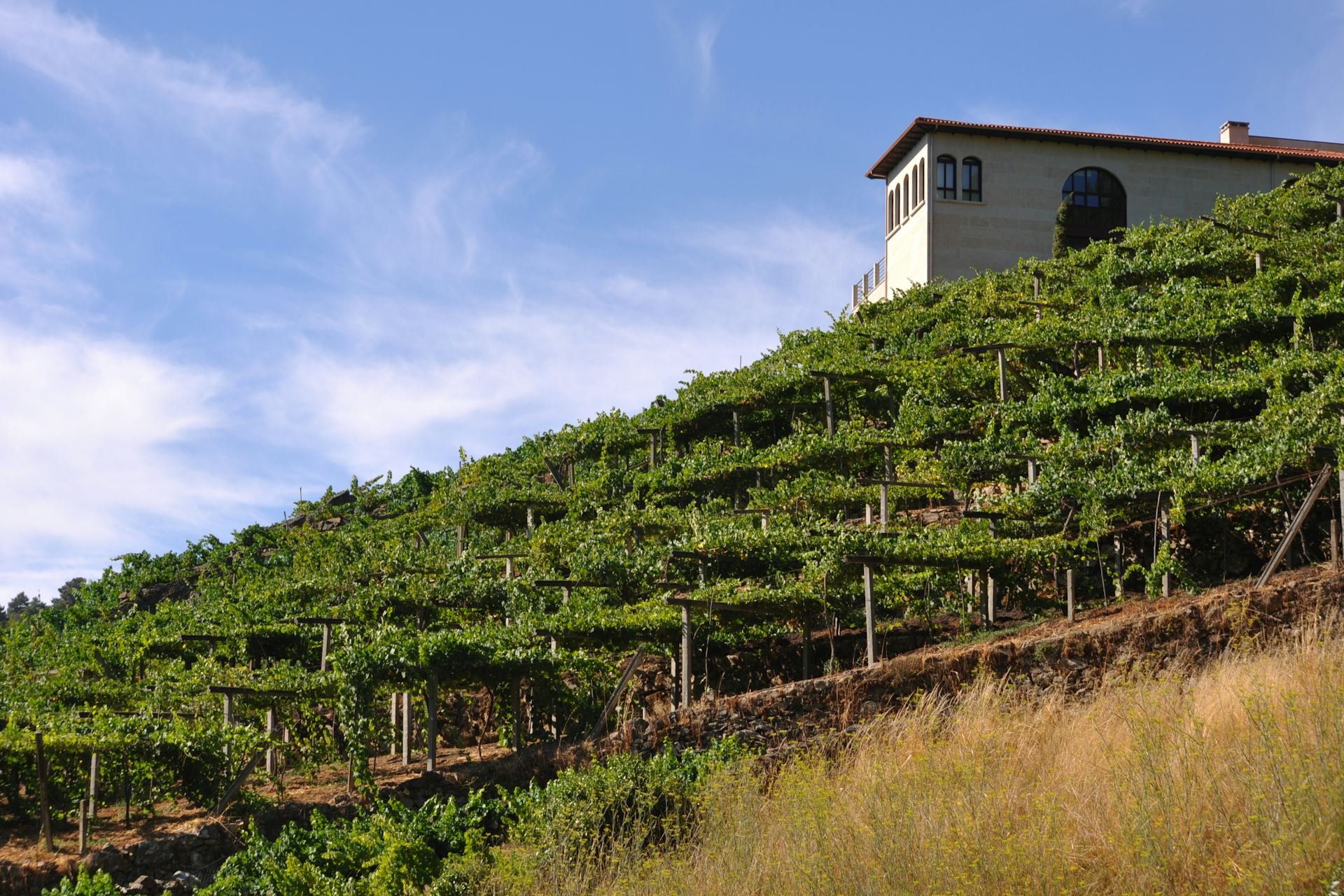
Winery Visit & Tasting. Visit a family winery with the winemaker and walk the terraces, where grapes are picked by hand on slopes too steep for machinery. The local term for it is heroic viticulture. Taste the Mencía reds and Godello whites over lunch at the winery.
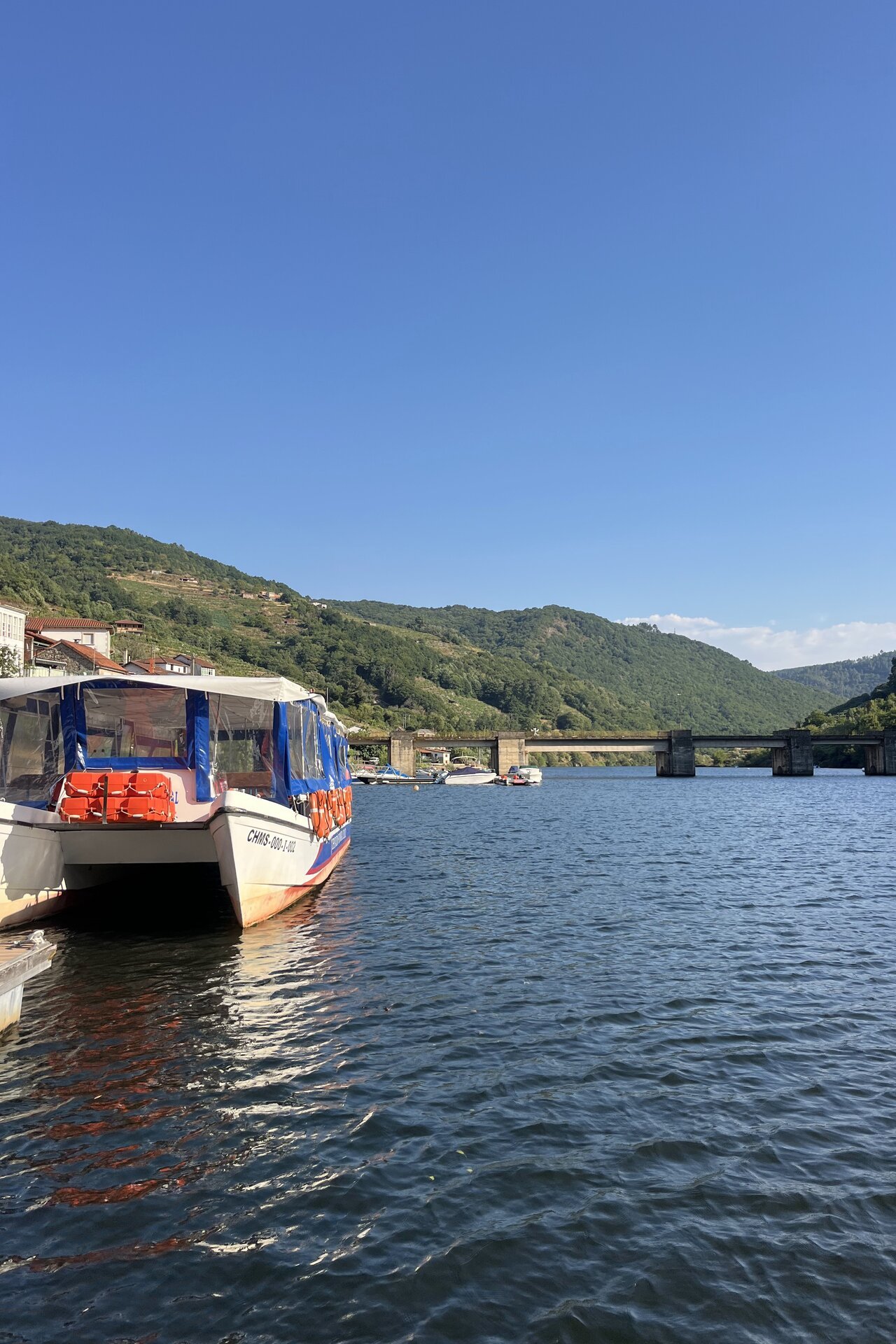
Catamaran on the Sil Canyon. Spend the afternoon on the river Sil by catamaran. The boat sails between the canyon walls below the vineyard terraces.
Dinner at Vértigo. Vértigo is the restaurant of chef Rafa Centeno at the Regina Viarum winery in Sober, a short drive from the hotel. In the 2026 guide it won the first Michelin star in the history of the province of Lugo.
STAY: Áurea Palacio de Sober, Deluxe Room
day 7 | Rías Baixas: Albariño Country
Private Transfer. Private transfer from the Ribeira Sacra to Raxó on the Ría de Pontevedra, approx. 2 hours.
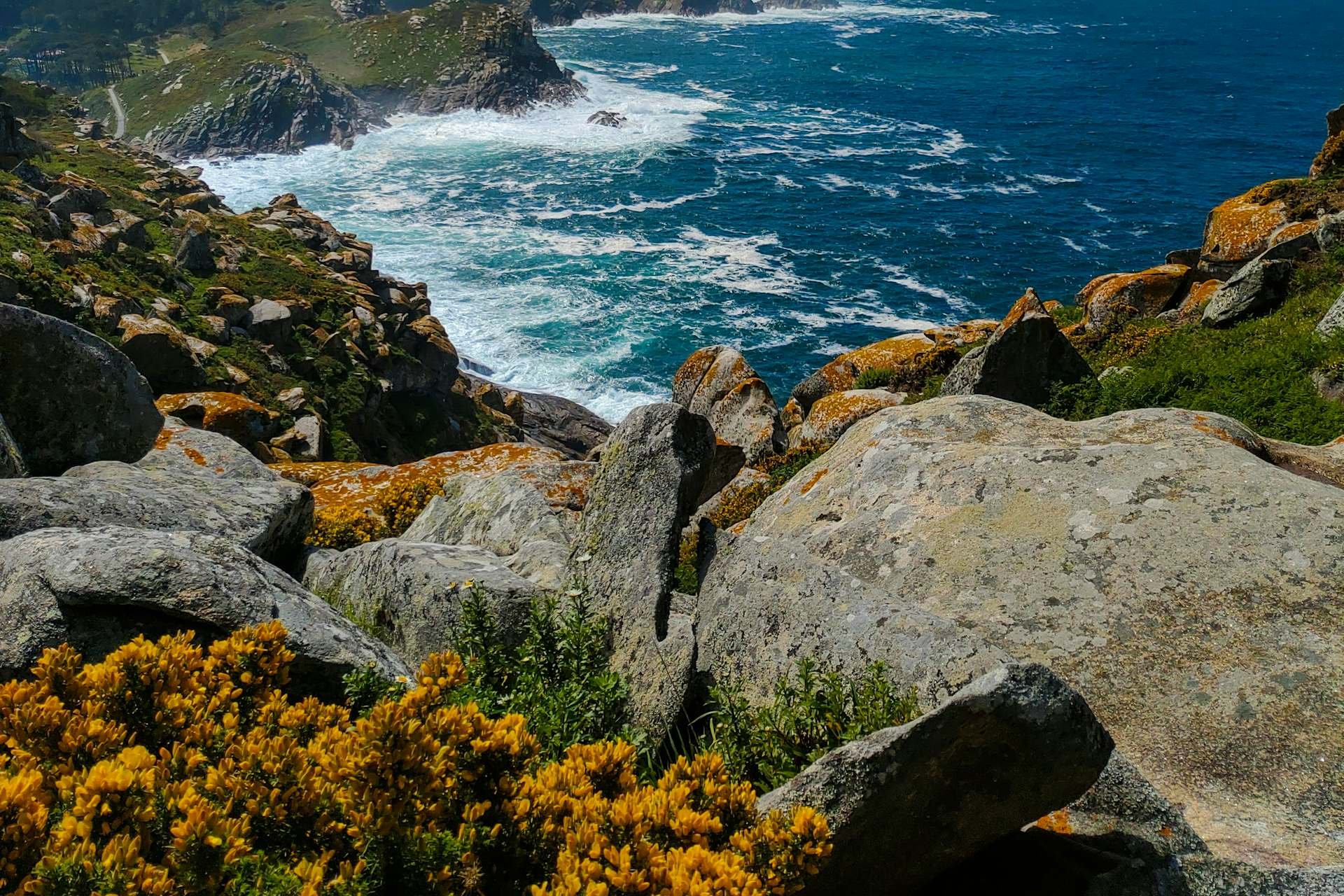
The Rías Baixas are the sea inlets of southern Galicia, between Muros and the Portuguese border. This is Albariño country and the home of the Galician mussel. Gordon Ramsay brought his series Uncharted to the Galician coast in 2024 and spent his time on a mussel boat and at a fish market.
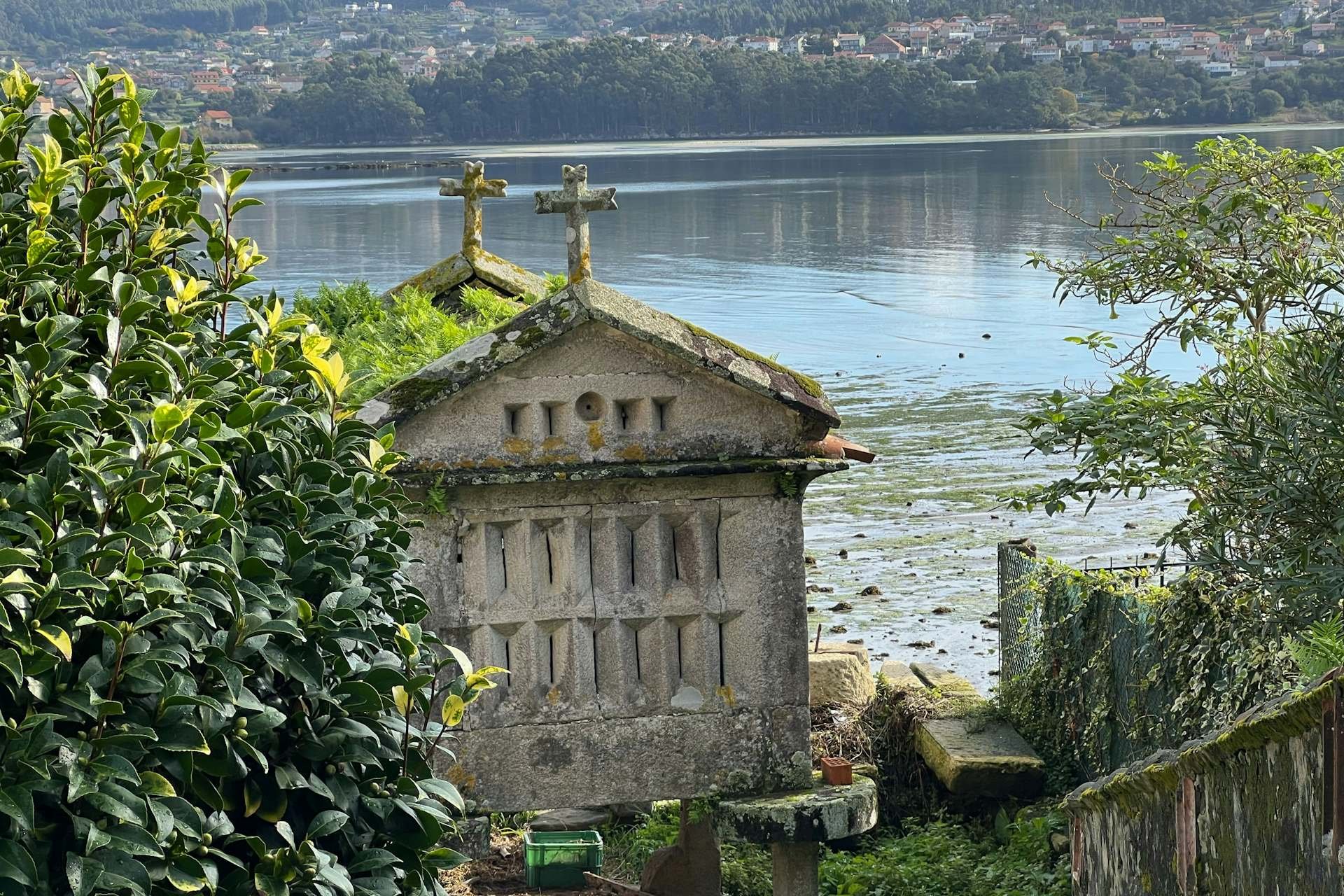
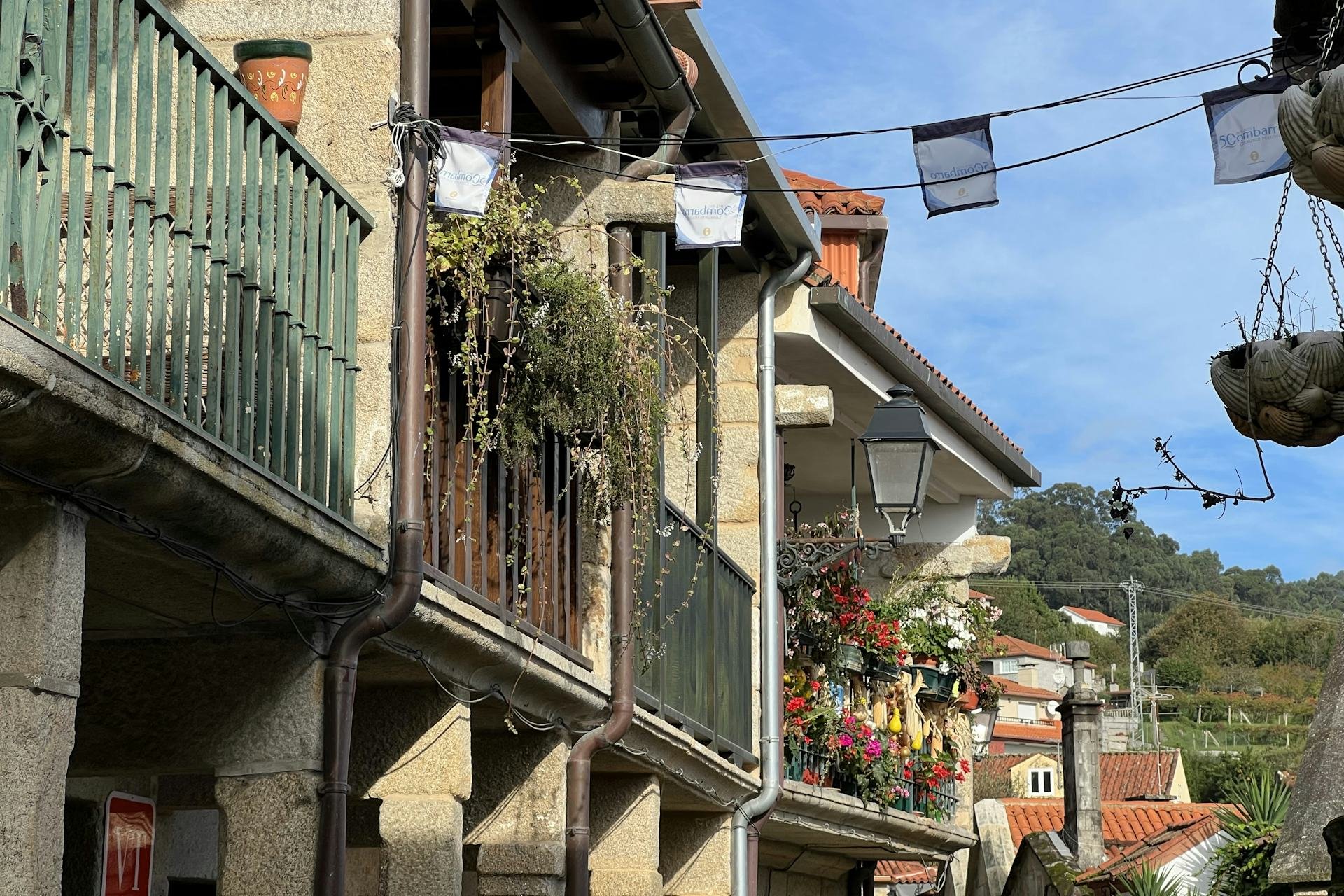
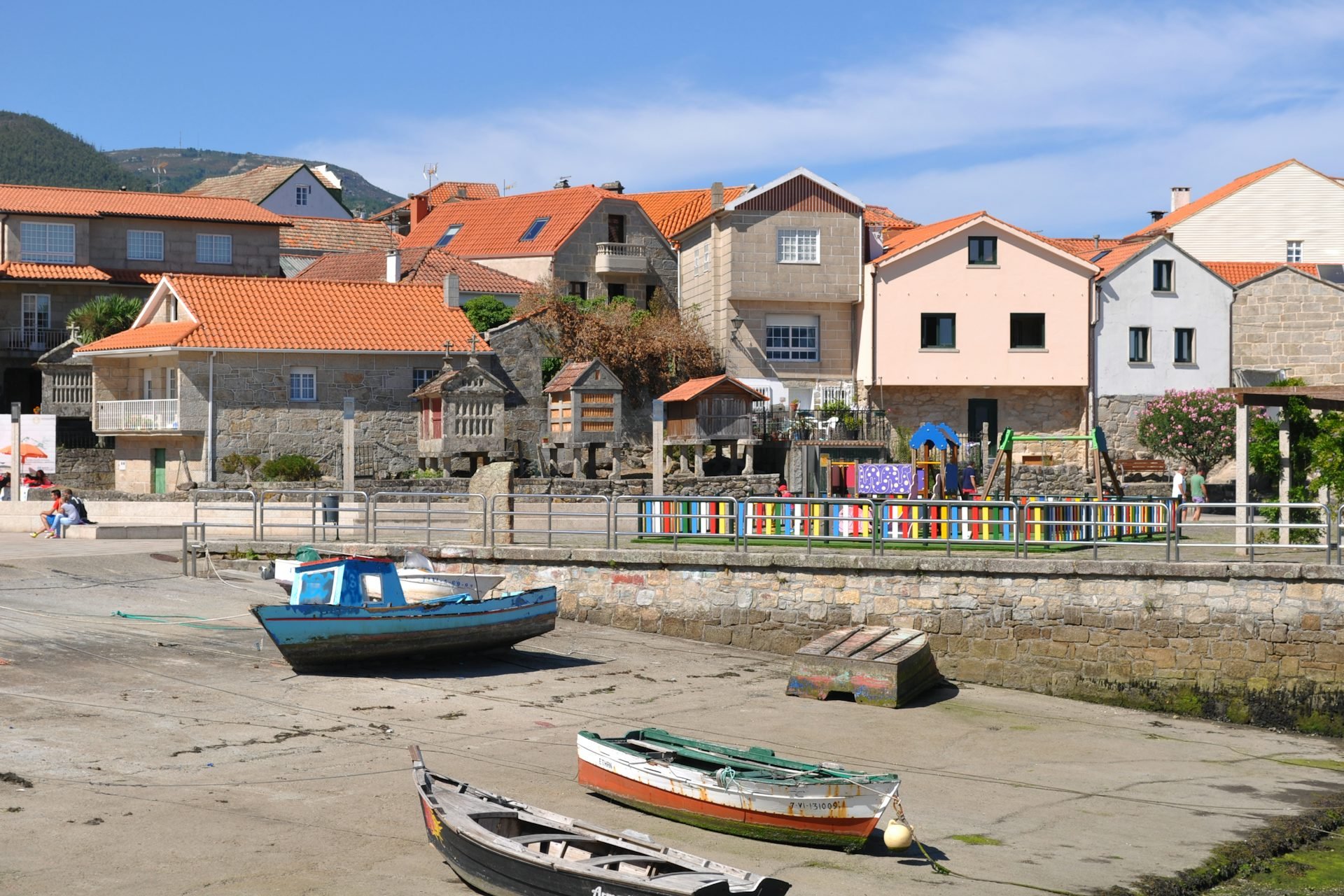
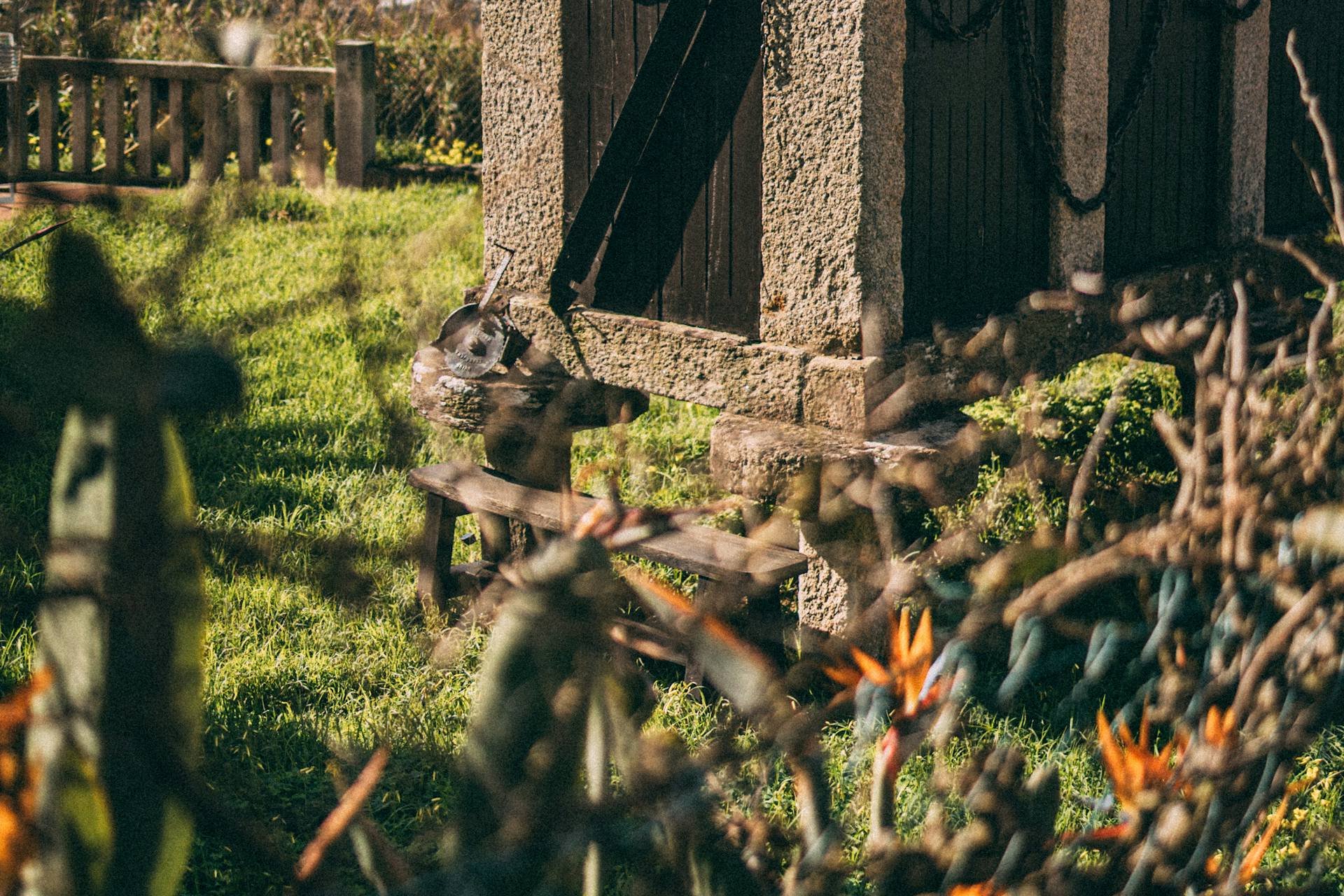
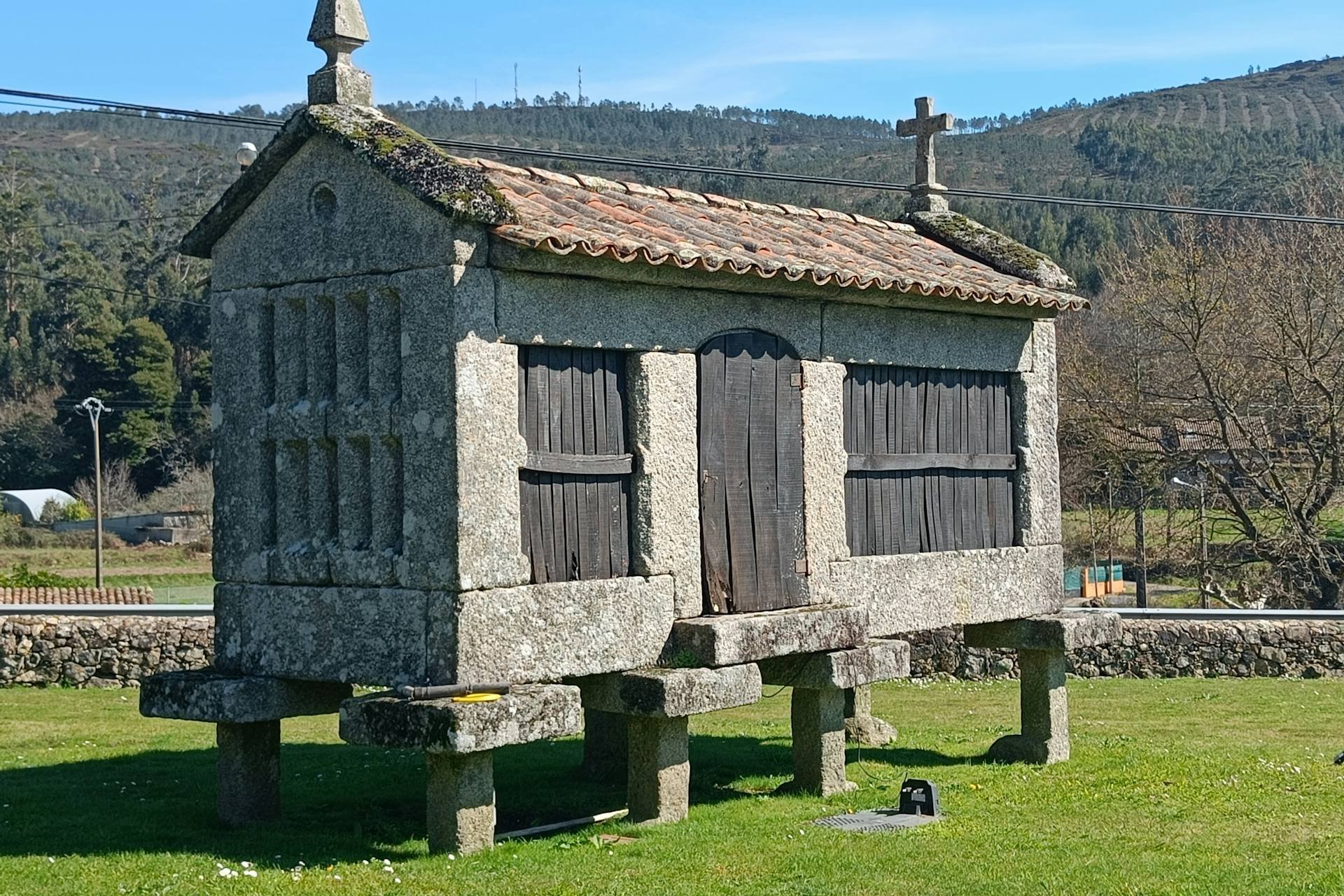
Combarro. Stop in Combarro on the way to the coast, a fishing village where granite hórreos, the raised stone granaries of Galicia, line the waterfront.
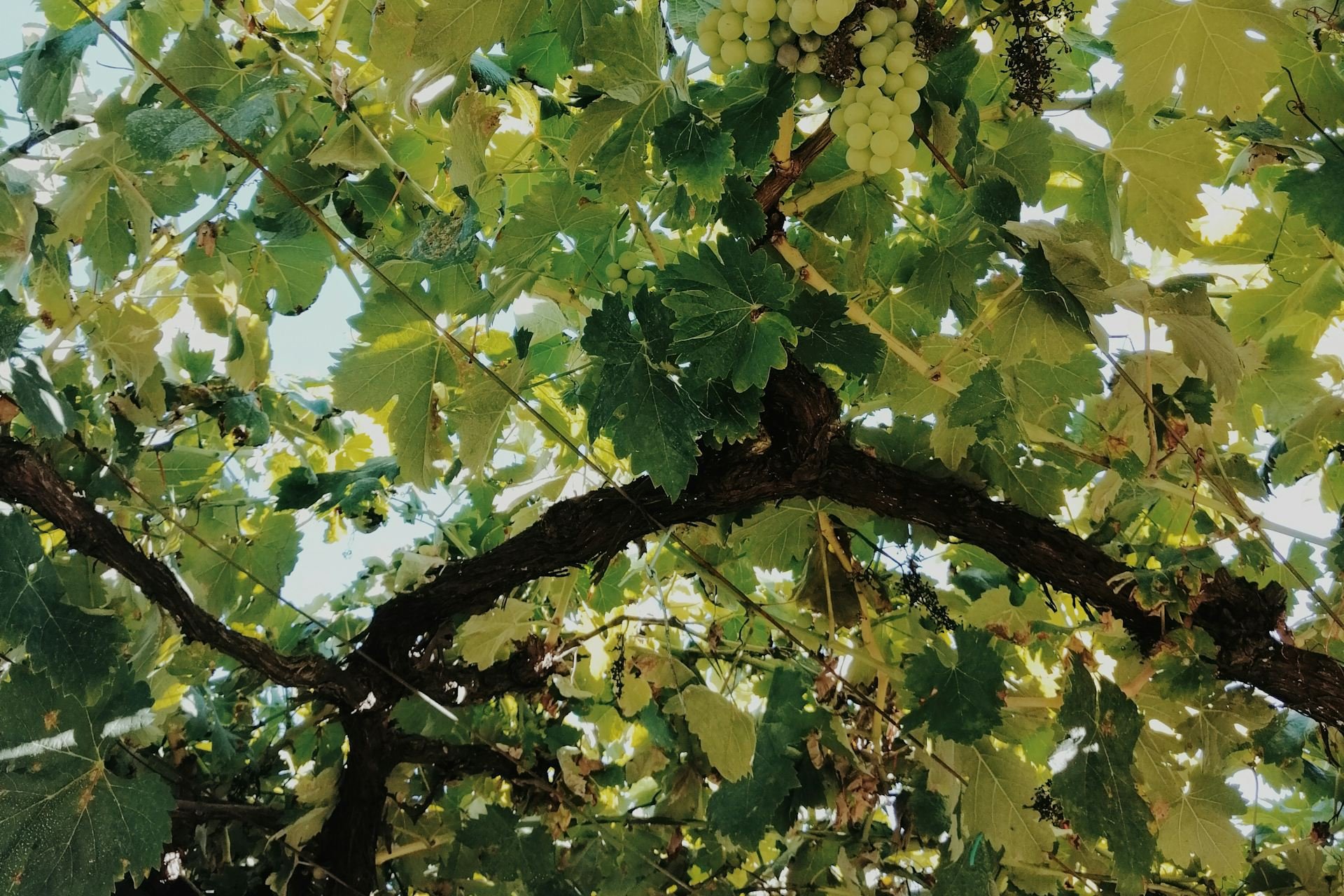
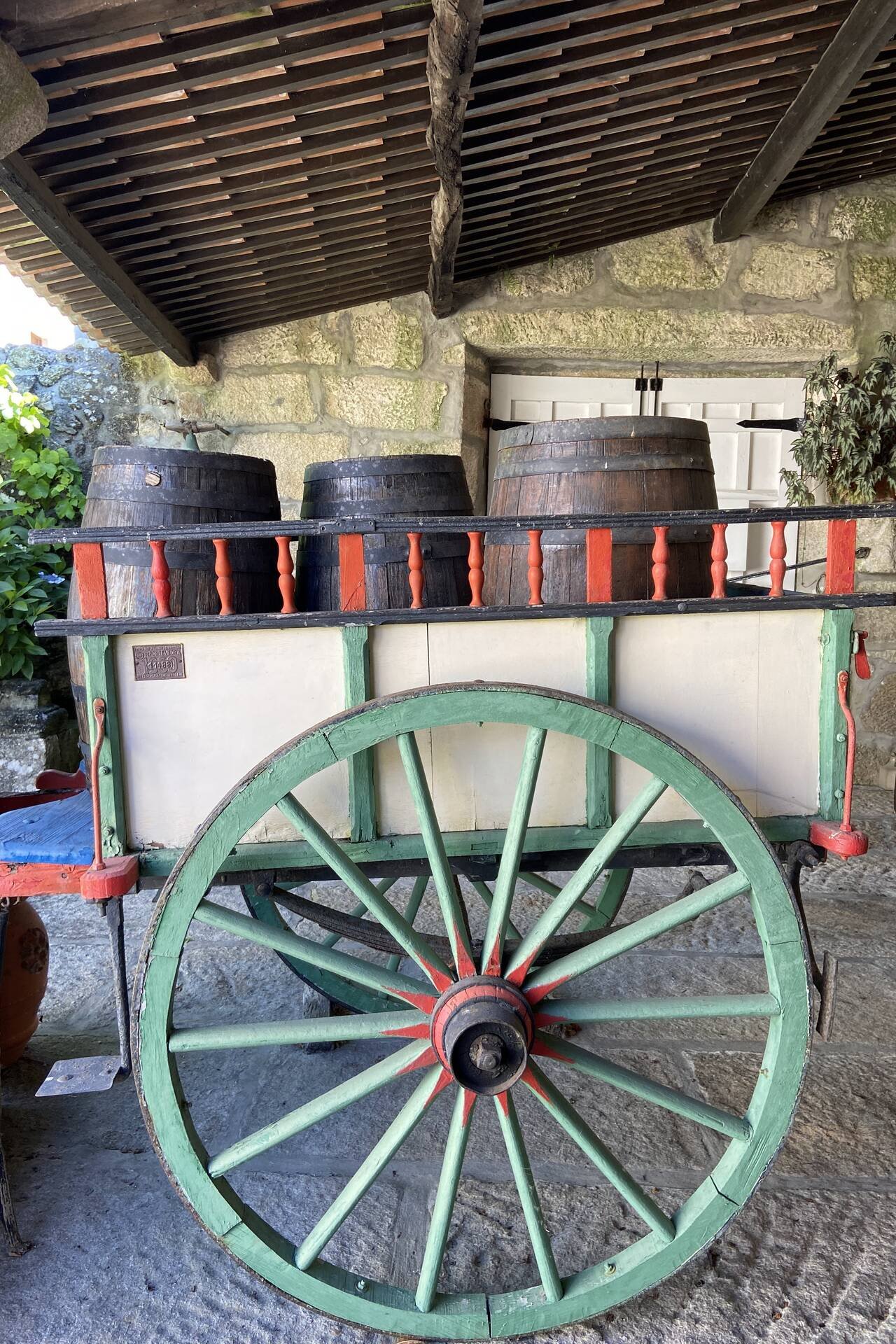
Albariño Tasting. Visit an Albariño winery in the Val do Salnés with the winemaker. The vines grow on high granite pergolas that keep the grapes clear of the Atlantic damp.
Pepe Vieira. Pepe Vieira has 14 suites called galpones, the Galician word for sheds, on the hill above the restaurant and the Ría de Pontevedra. Each galpón is a white cube with a glass wall, a tatami style bed and a black bathroom. The terrace pool looks over the ría, and the wine cellar holds Galician and international bottles.
STAY: Pepe Vieira, Galpón Room
day 8 | Rías Baixas: The Mussel Rafts
Mussel Raft on the Ría de Arousa. Spend a morning on the water with a local mussel farmer, out to the wooden rafts where the mussels grow on ropes. Taste the catch on board.
Pontevedra Old Town. Walk the old town of Pontevedra, a short drive from the hotel and closed to most traffic. The Santuario da Peregrina, the church of the pilgrims, is built on the plan of a scallop shell.
Dinner at Pepe Vieira. Pepe Vieira holds two Michelin stars and a green star for sustainability, with chef Xosé Torres Cannas in the kitchen. The tasting menu is built on Galician produce and seafood from the rías, and it moves from the garden to the cellar and the kitchen before the table.
STAY: Pepe Vieira, Galpón Room
What to Eat in the Rías Baixas
Mexillóns
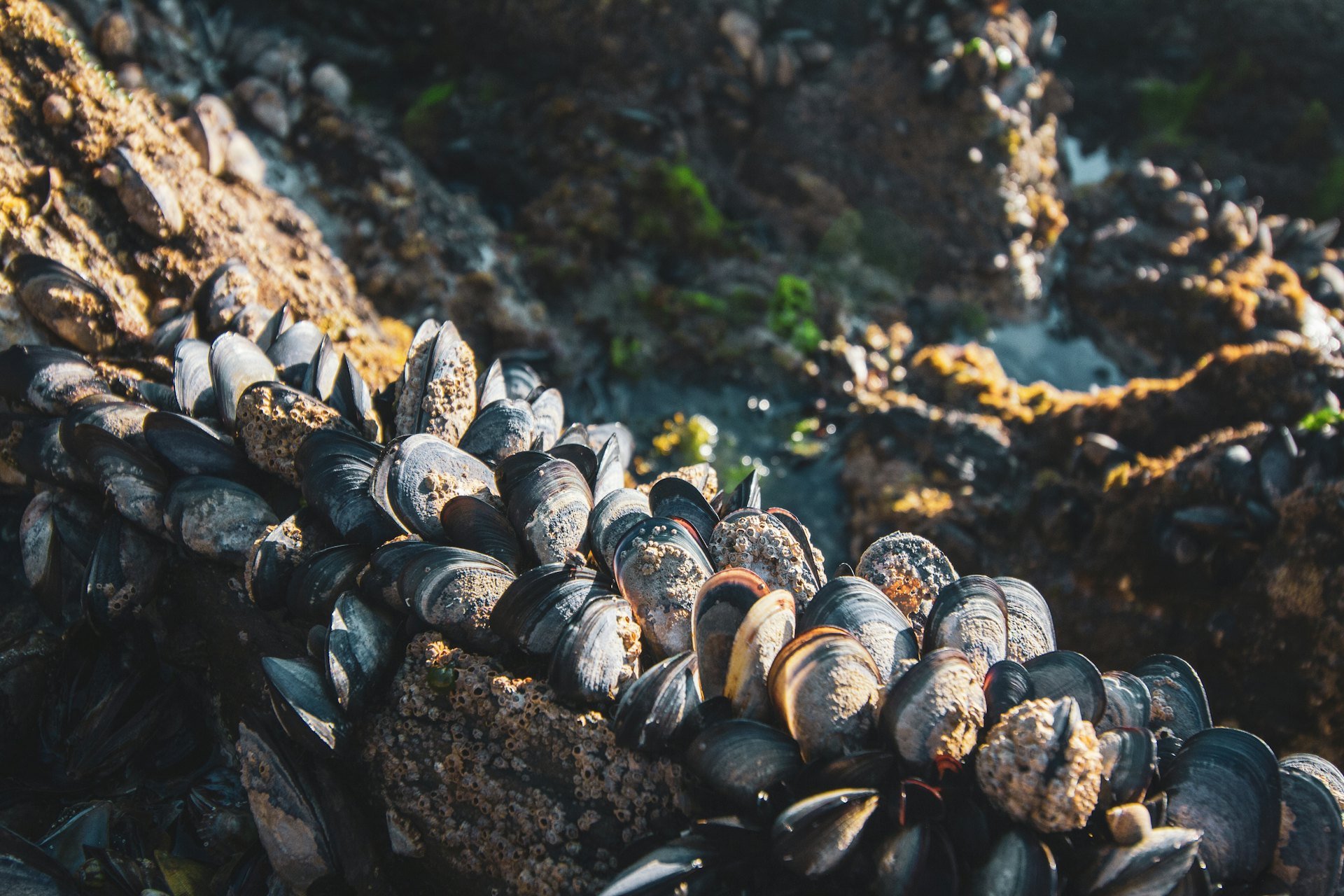
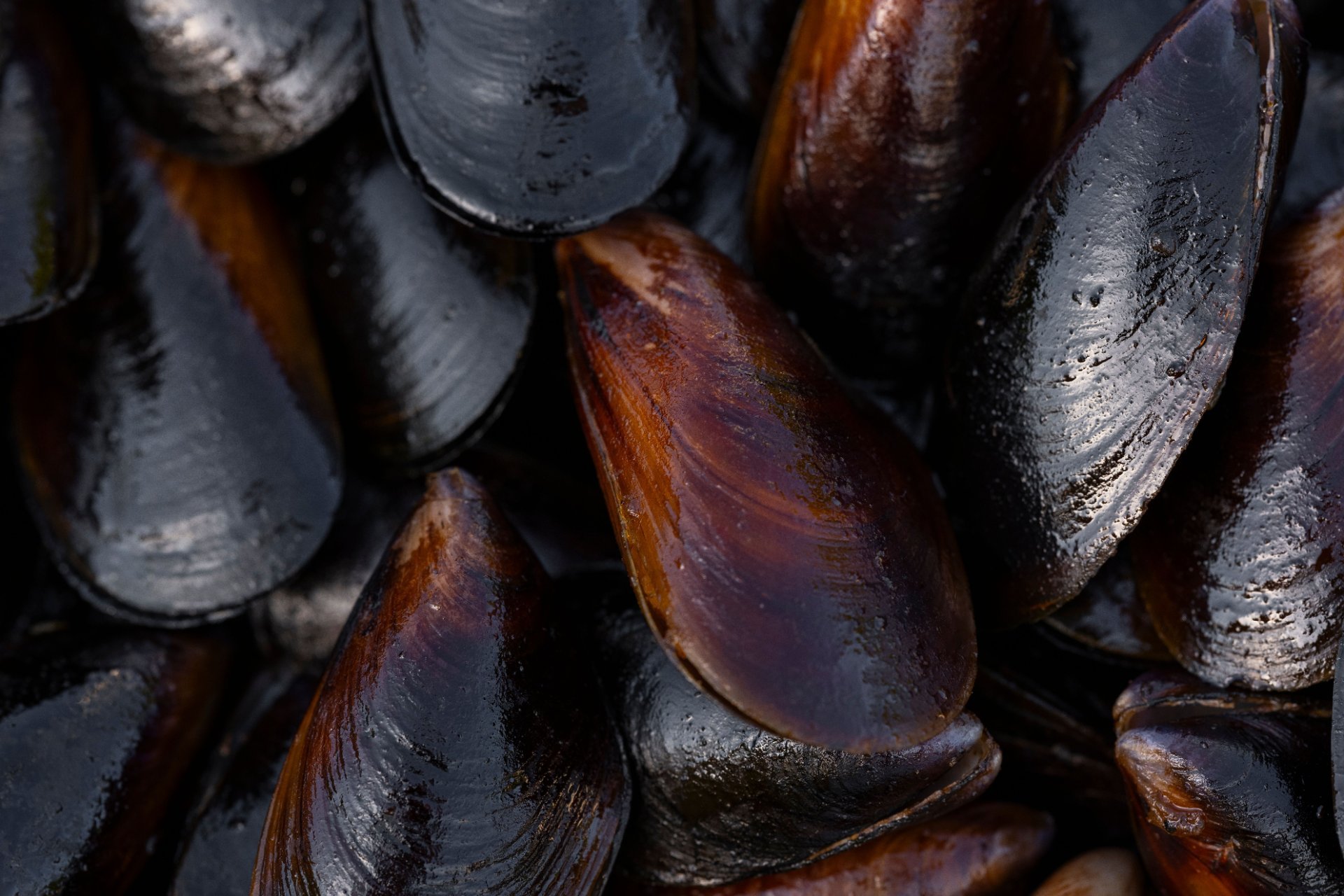
Galicia farms most of the mussels eaten in Spain, on ropes that hang from wooden rafts in the rías. They come steamed with a slice of lemon, or cold in a vinaigrette of onion and pepper.
Ostras
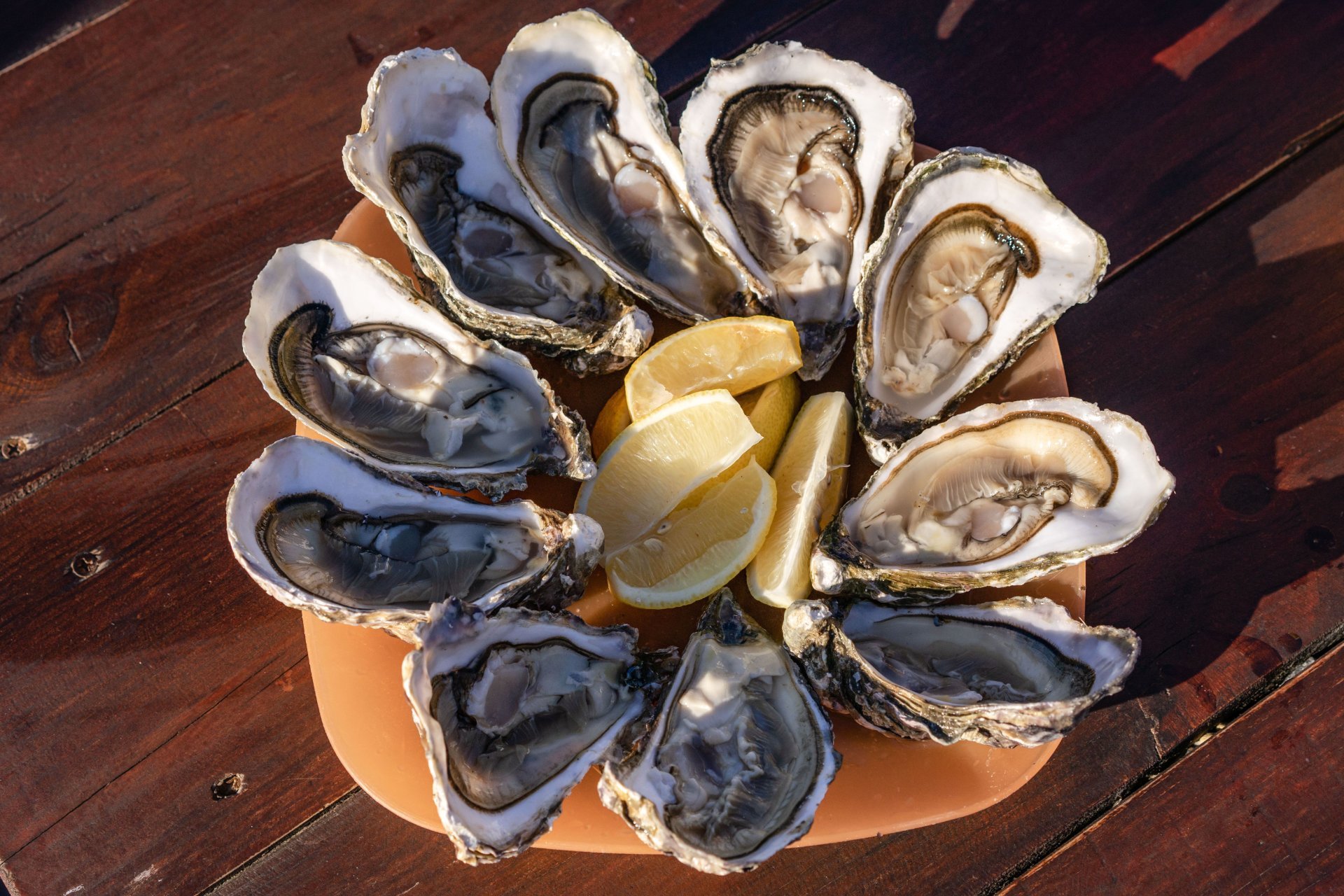
Oysters from Arcade, at the head of the Ría de Vigo, have their own festival every spring. In Vigo the oyster sellers of A Pedra open them to order on Rúa da Pescadería, served raw with lemon.
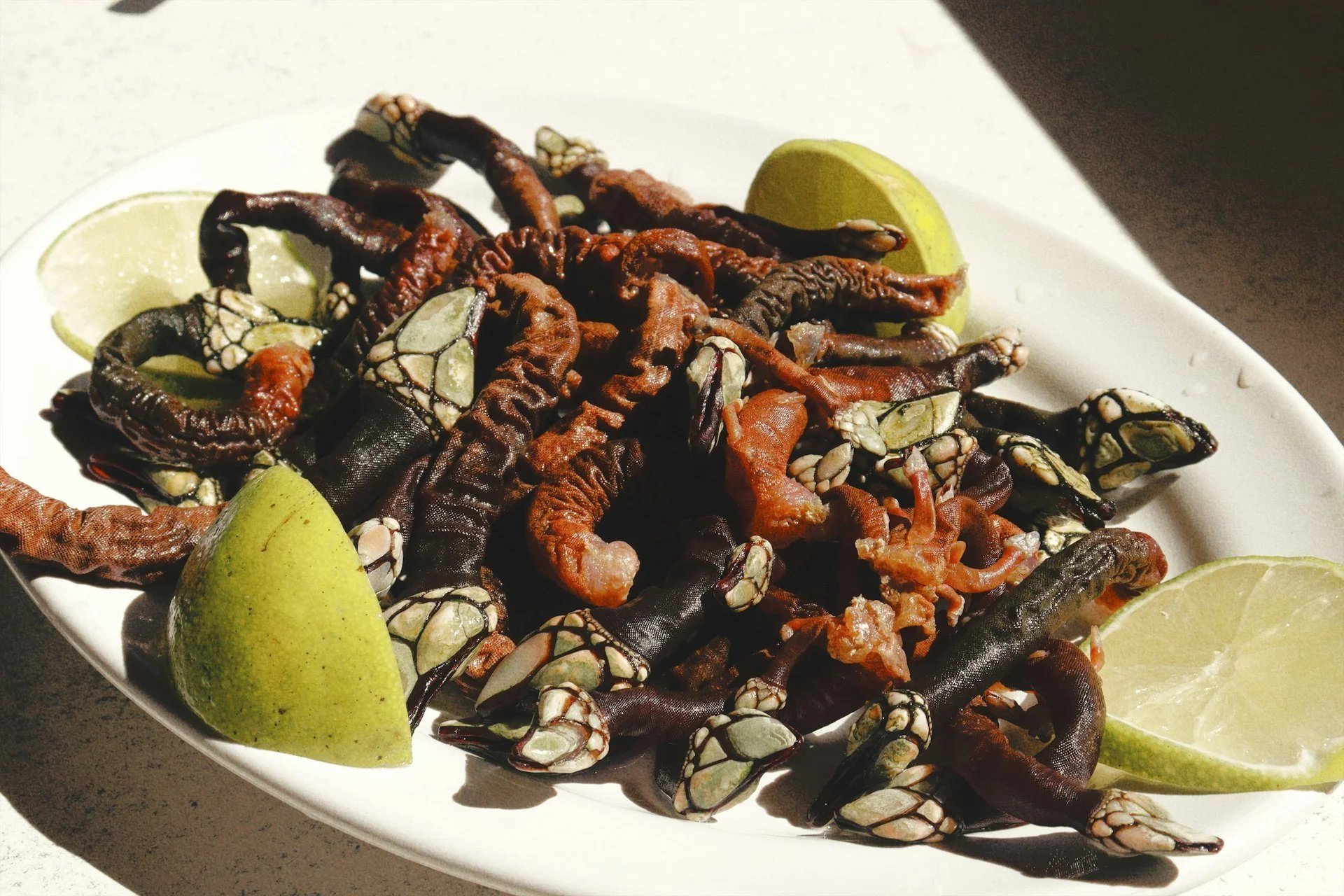
Percebes
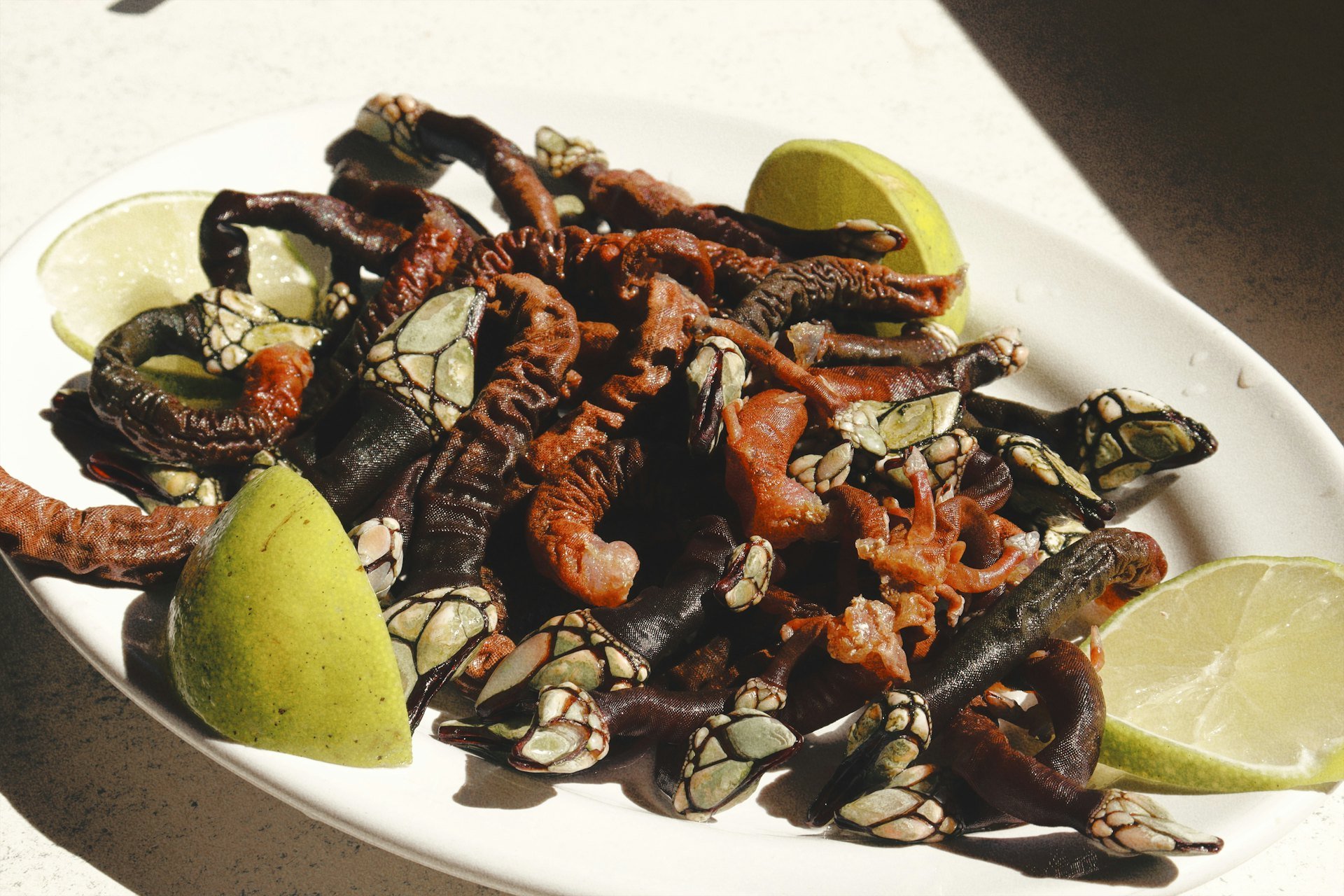
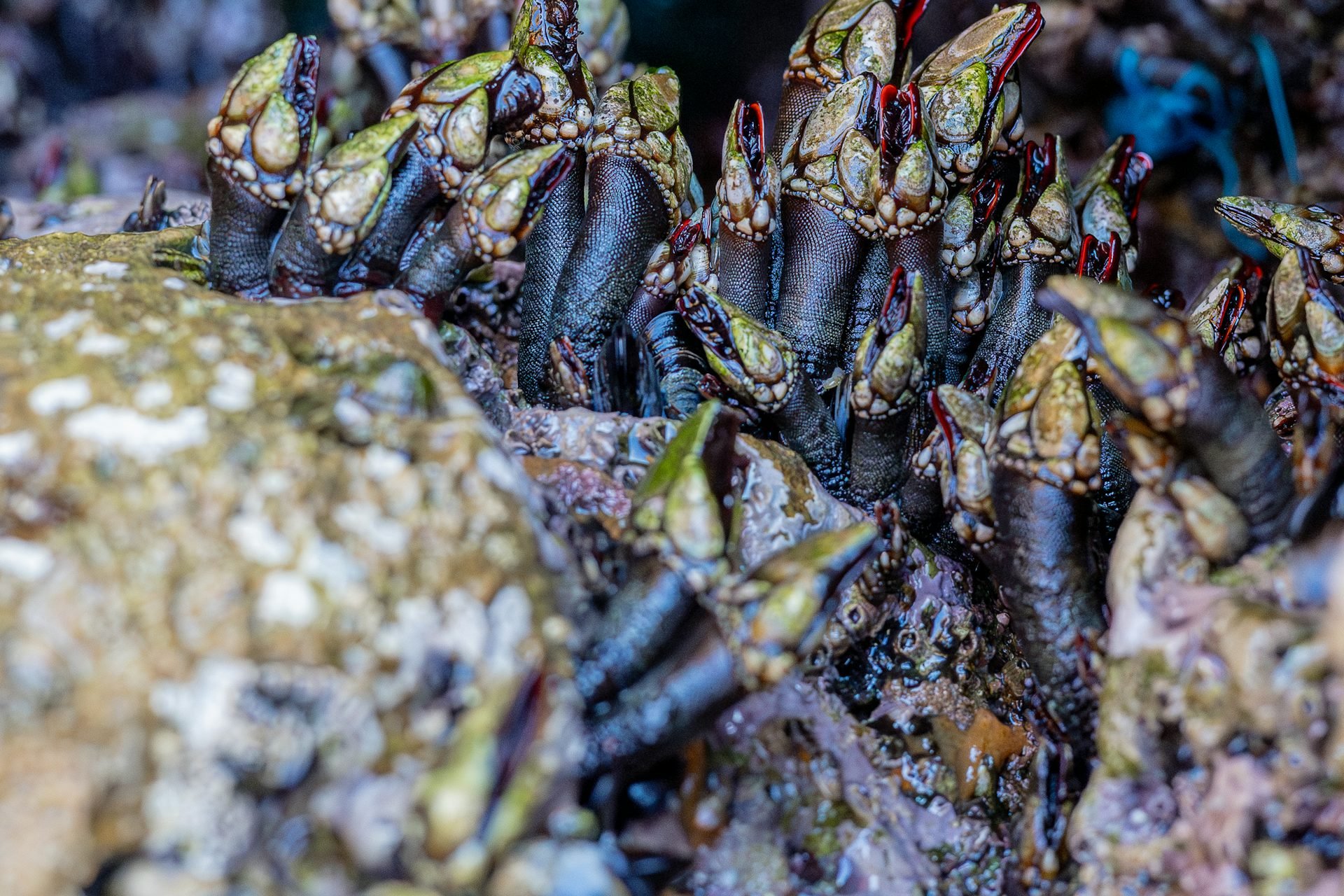
Goose barnacles cut by hand from the rocks of the Atlantic coast, where the percebeiros work between the waves at low tide. They are boiled for a minute in seawater and eaten warm, twisting off the shell to reach the meat.
day 9 | Vigo: The Galleon Gold
Private Transfer. Private transfer from Raxó to Vigo, approx. 45 minutes.
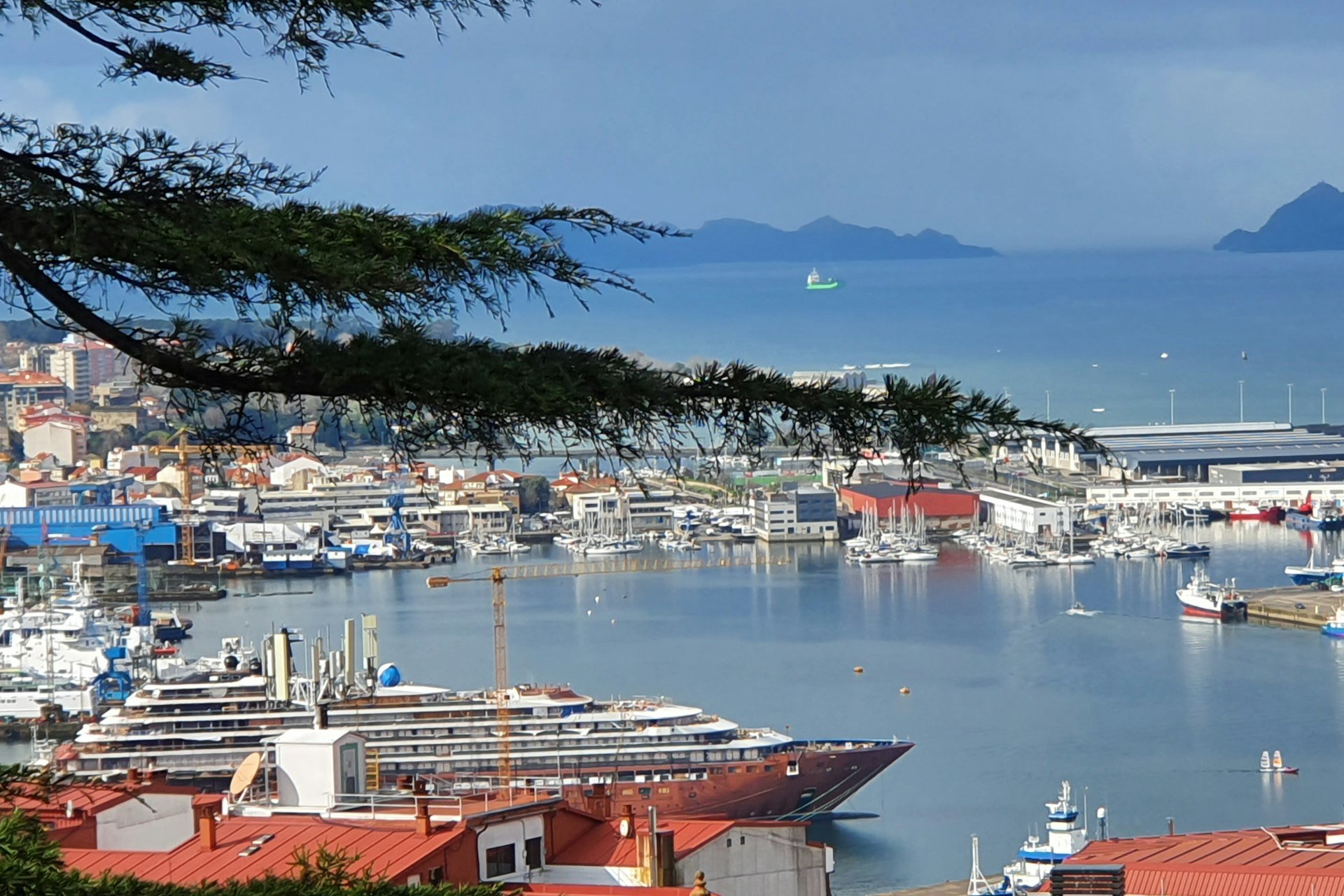
Vigo has one of the largest fishing ports in the world and a treasure story to match. In 1702 an English and Dutch fleet caught the Spanish silver fleet in the strait of Rande, and the galleons that sank there have fed treasure hunts ever since. Jules Verne sent Captain Nemo to collect their gold in Twenty Thousand Leagues Under the Sea.
AC Hotel Palacio Universal. AC Hotel Palacio Universal has 69 rooms in the Hotel Universal building on the Vigo waterfront, designed by Jenaro de la Fuente and completed in 1904. The hotel faces the Ría de Vigo and the marina, a few streets from the old town and the oyster sellers of A Pedra.
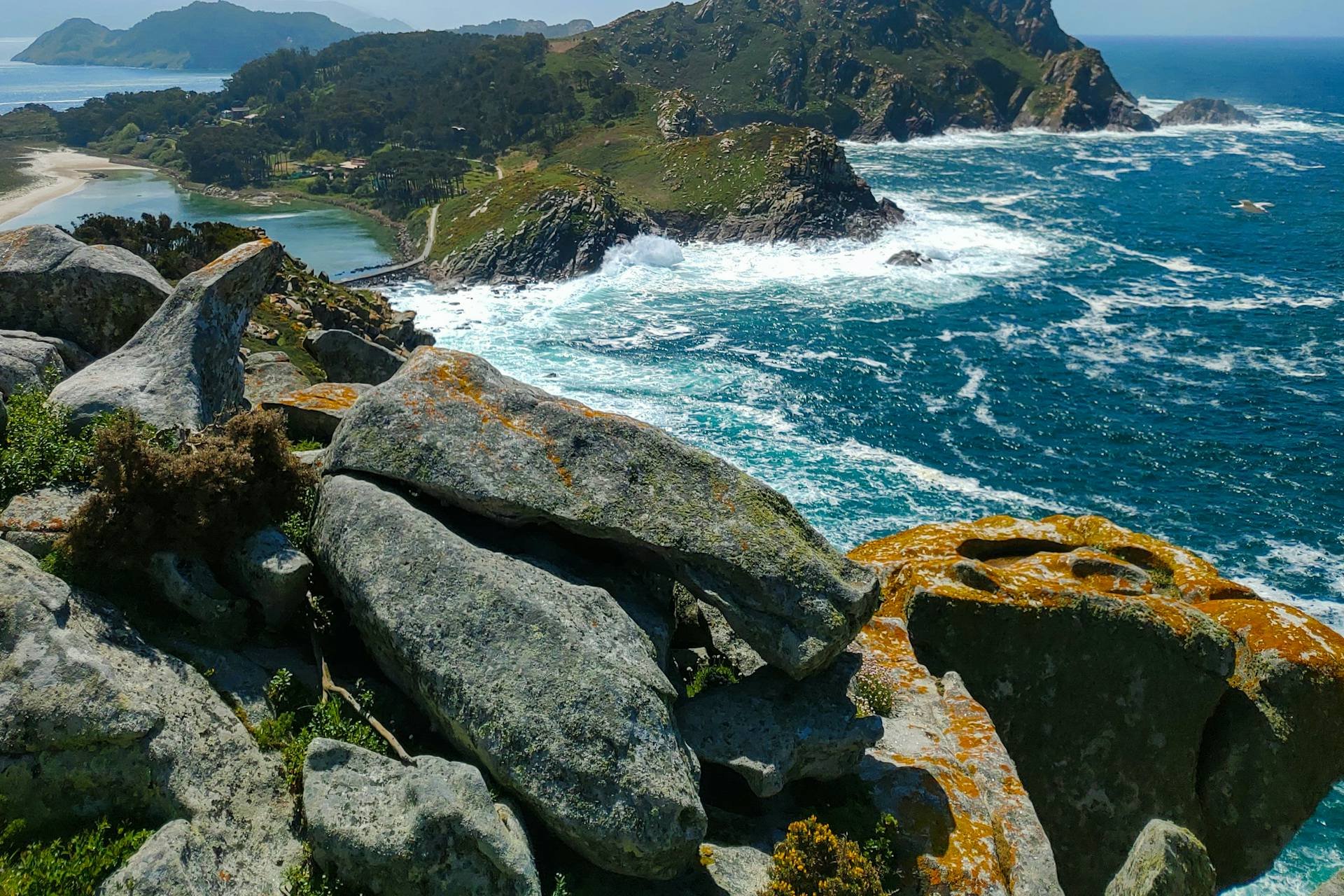
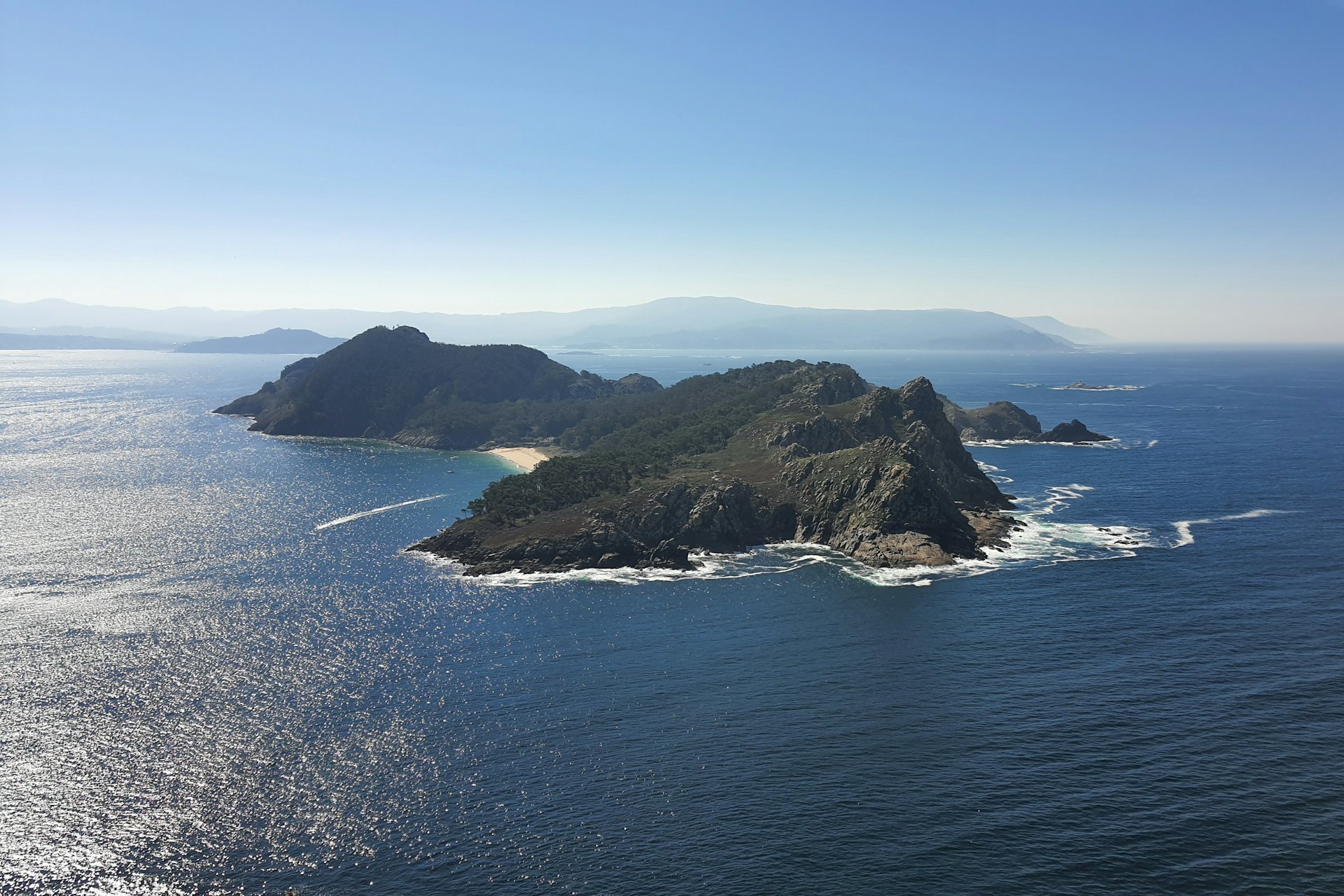
Private Boat to the Islas Cíes. Spend the day on a private boat from Vigo to the Islas Cíes, part of the Illas Atlánticas National Park. Swim off Praia de Rodas and walk the marked trail to the lighthouse on Monte Faro.
Oysters at A Pedra. End the day on Rúa da Pescadería in the old town, where the oyster sellers of A Pedra open oysters to order.
Dinner at Maruja Limón. Maruja Limón is the Michelin star restaurant of Rafa Centeno in Vigo, a few streets from the hotel and the marina. The same chef runs Vértigo in the Ribeira Sacra.
STAY: AC Hotel Palacio Universal, Sea View Room
day 10 | Departure from Porto
Private Transfer. Private transfer from Vigo to Porto Airport, approx. 1 hour 30 minutes, crossing into Portugal over the river Miño.
Continue to Portugal. The journey ends in Porto, where our Portugal sample itinerary begins, with the Douro Valley, Lisbon and the Algarve to follow.
Pricing & Inclusions
See our Booking Terms & Conditions here.
Starting at $8,000 per person
Based on two people in double occupancy and subject to increase depending on itinerary specifics and dates.
Accommodation
2 nights at Noa Boutique Hotel
2 nights at A Quinta da Auga
2 nights at Áurea Palacio de Sober
2 nights at Pepe Vieira
1 night at AC Hotel Palacio Universal
Transport: All private transfers with a dedicated driver, from A Coruña Airport to Porto Airport.
Tours & Activities: All private excursions, tastings and boat days listed in the itinerary, with the entrance fees.
Guides: Private guides in A Coruña, Santiago de Compostela and the Ribeira Sacra.
Meals: Daily breakfast and the meals included in tastings and visits.
Other: City taxes, restaurant reservations and a 24 hour emergency line.
Exclusions
Flights
Travel insurance
Tips

Before You Go
When to Go: Galicia is greener and wetter than the rest of Spain, and the Atlantic keeps the summers mild. The Islas Cíes open for visits at Holy Week and from mid May to mid September, which sets the season for this journey.
Harvest & Festivals: The Ribeira Sacra harvest opens in the second half of September and runs to mid October, with the grapes carried up the terraces by hand. Cambados holds the Festa do Albariño at the turn of July and August, and 2026 was its 74th edition.
Extend the Journey: Walk the last stage of the Camino into Santiago with a private guide, or spend a day on the Costa da Morte, from the cliffs of Fisterra to Corme, where the percebeiros harvest goose barnacles off the rocks of Roncudo. Madrid and Barcelona both have direct flights to Santiago, so either city works at the start or end of the journey. To the south, the Portugal sample itinerary picks up in Porto and the Douro Valley.
Reading List: Five books travel well on this route.
Twenty Thousand Leagues Under the Sea by Jules Verne has the chapter where Captain Nemo collects the galleon gold in the Bay of Vigo.
Books Burn Badly by Manuel Rivas is built around the burning of books on the docks of A Coruña in 1936.
The House of Ulloa by Emilia Pardo Bazán is the classic Galician novel, set in a decaying country manor.
Death on a Galician Shore by Domingo Villar follows Inspector Leo Caldas along the Ría de Vigo.
Cantares Gallegos by Rosalía de Castro founded modern Galician literature, and her house museum is in Padrón, outside Santiago.