Marrakech: The Ultimate Guide
UNPUBLISHED | BY SARAH CASEWIT
Where to eat, shop, visit and unwind in Marrakech, from the medina to the foothills of the Atlas. By Sarah Casewit.
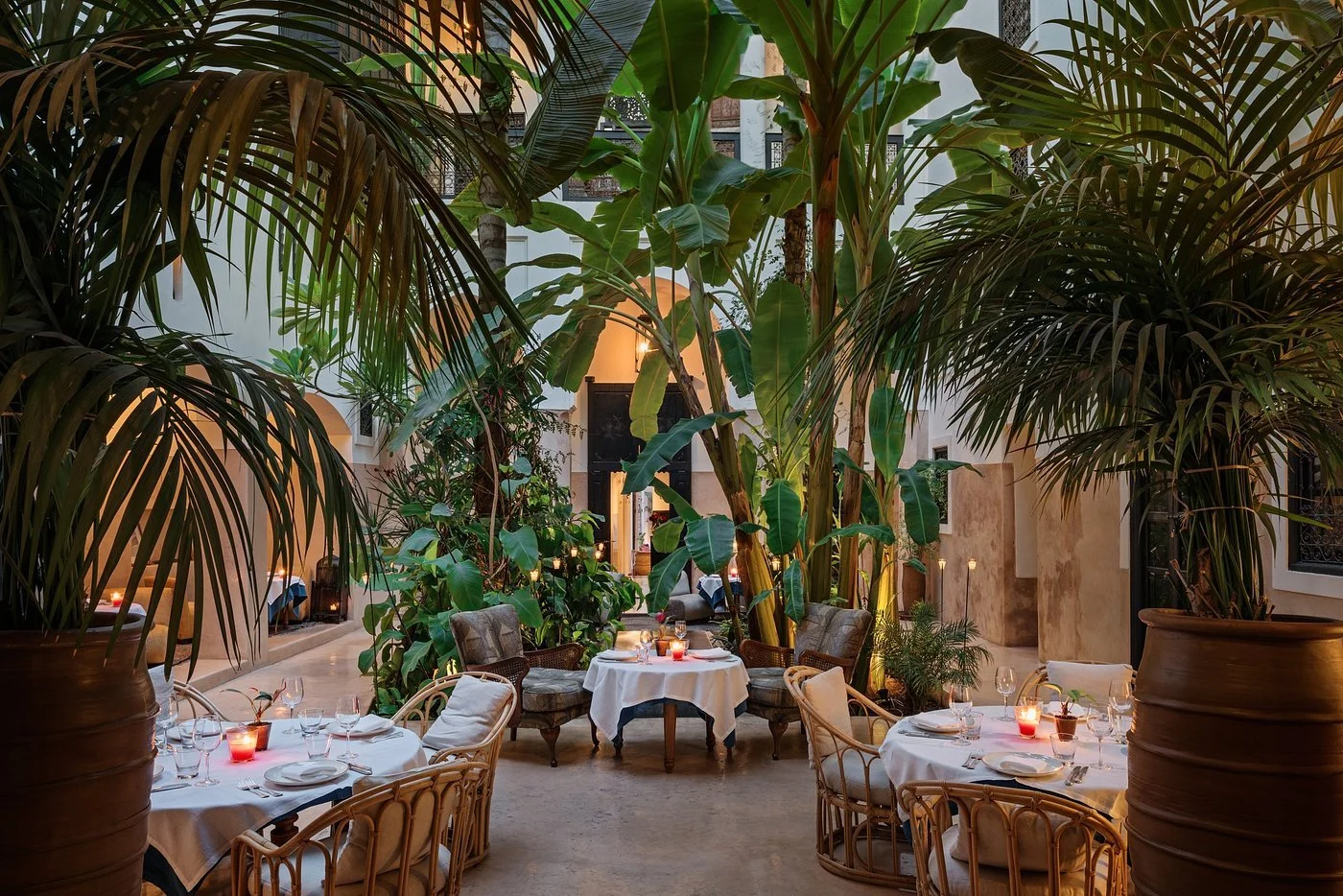
I was born and raised in Marrakech, and this is the city as I would show it to you: one neighborhood at a time. Staying within one part of the city each day means you spend your time walking, eating and discovering instead of sitting in traffic. Every chapter covers where to eat, what to see, where to shop and where to unwind in that part of town, in the order I would do it.
Start with the electric bike ride on your first morning so you understand how the city fits together, then choose the neighborhoods that suit your pace. The medina chapters come first, then the new town, then the design district of Sidi Ghanem and the countryside beyond the city.
The restaurants, cafés, museums and shops in this guide are there for you to enjoy. The experiences marked Arranged by Sarah Casewit are different. They are private, they are built around you, and they depend on relationships I have spent more than sixteen years building with the guides, riders, artists, cooks and families who make this city what it is. They are not listed anywhere to book, and they are available only when you travel with us.
Good to know before you go
Prices are in Moroccan dirhams (Dh). Hours, prices and exhibitions change, so confirm before you go.
Active mosques and zawiyas (Sufi shrines) in Morocco are open to Muslims only. Where I suggest a prayer or a recitation, it is for those who can enter. Everyone else can take in the architecture and the atmosphere from outside.
Reserve restaurants ahead, especially for dinner, weekends and anywhere with a view.
Dress modestly in the medina and at every religious site, and carry small notes and coins for tips and taxis.
The Seven Saints of Marrakech
Marrakech is called the city of the Seven Saints, Sab'atu Rijal. These seven holy men lived between the 12th and 16th centuries, and their tombs became a pilgrimage circuit that was formalized in the 17th century under Sultan Moulay Ismail. Tradition gives each saint a day of the week, starting on Tuesday. Their shrines are spread across the city, so I have placed each one in the neighborhood chapter where you will find it.
Start Here: Your First Morning in Marrakech by Electric Bike
Before you settle into one neighborhood, get the whole picture. An electric bike covers in one morning what would take days on foot, and it takes the effort out of the heat and the distances between the medina, the gardens and the new town.
Marrakech by electric bike, with a private guide | ARRANGED BY SARAH CASEWIT
On your first morning, your own guide meets you at your riad and takes you across the whole city by electric bike. In one morning you ride from the Koutoubia and the souks to Jemaa El Fna, out to the Jardin Majorelle and the Menara gardens, with stops for fresh juice and mint tea along the way. We set the route, the pace and the stops around what you want to see, so by lunchtime you know the layout of the city and which neighborhoods you want to come back to.
My tip: Go early, before the heat. Everything else in this guide becomes easier once you have seen how the city fits together.
Ben Youssef, Rahba Kedima and Jemaa El Fna: The Historic Heart of the Medina
This is the oldest part of the medina, with remains going back to the 12th century. My route starts in the north with two of the Seven Saints, runs past the Medersa Ben Youssef, down through Rahba Kedima, the old square where grain was once traded, and ends at Jemaa El Fna and the Koutoubia at sunset.
Breakfast
1112 Marrakech, 12 Talaa Ben Youssef. A 300 year old riad named after the date carved into its ceiling, the year 1112 of the Islamic calendar. Twelve teas, each from a different region of Morocco, served with sweet and savory bites based on old family recipes. Tea from 45 Dh, regional plate from 110 Dh, pastry selection 185 Dh.
Visit
Medersa Ben Youssef, Place Ben Youssef. The largest Quranic school in Morocco, dating to the 16th century and one of the great monuments of the city. A courtyard with a long water basin opens onto the prayer hall, framed by marble columns and cedar doors. Zellige, carved plaster and carved wood show the full skill of the craftsmen of the time. Upstairs, the small student rooms are arranged around interior light wells.
Maison de la Photographie, 46 Rue Ahl Fes. Vintage and rare prints, postcards and photographs, anonymous and famous, that tell the story of Morocco from 1879 to the 1950s. Finish with tea on the rooftop café. Open daily 9:30am to 7pm. Entry 80 Dh, 50 Dh for Moroccans and residents.
Experience
Musée du Parfum, 2 Derb Cherif, Rue Diour Saboun. Founded by Abderrazzak Benchaabane, ethnobotanist and creator of the Jardin Majorelle's own perfume. A visit takes you through distillation and the perfume organ, the tiered shelves of essences a perfumer composes from.
Your own perfume, composed in the medina | ARRANGED BY SARAH CASEWIT
A private session to build a scent that is yours alone, from Moroccan rose, orange blossom, saffron, jasmine and amber, guided by a perfumer who knows these ingredients from the plant to the bottle. You leave with your perfume and its formula.
The Seven Saints: the northern medina
Zawiya of Sidi Bel Abbès, north medina, near Bab Taghzout. Sidi Bel Abbès (died 1204) is the patron saint of Marrakech and the most loved of the seven. He was known for his devotion to the poor and the blind, and his zawiya still feeds those in need every day. Muslims only inside; the street and the square in front are open to all.
Zawiya of Sidi Ben Slimane al Jazuli, north medina, just south of Sidi Bel Abbès. Mohammed Ben Slimane al Jazuli (died 1465) wrote the Dalail al Khayrat, the book of blessings on the Prophet that is recited across the Muslim world. His tomb was built by the Saadian dynasty in the 1520s, and you can spot it from the street by its green tiled pyramid roof.
My tip: Thursdays at 5pm: for those who can enter, join the collective recitation of the Dalail al Khayrat at al Jazuli's zawiya. Arrive a little early and dress for the mosque.
Mausoleum of Qadi Ayyad, near Bab Aylan, eastern medina. Qadi Ayyad (died 1149) was one of the great jurists and scholars of the Maliki school and the author of al Shifa, a classic work on the life and character of the Prophet. His tomb stands close to the gate of Bab Aylan.
Lunch: four budgets, four moods
Almisbah, Rue Azbezt, near the Ben Youssef Mosque. The brick vaulted dining room dates to the Almoravid period and is one of the oldest structures still standing in the medina, uncovered during restoration. The menu is built around meat: mechoui, braised lamb shank with onions and pears, chicken and quince tagine. Average check 200 Dh.
L'Mida, 78 bis Derb Nkeb, Kaïma, Place des Épices. Elegant arches and a Mediterranean leaning menu built around a roast chicken that people reserve ahead for. Average check 250 Dh.
Mandala Society, 20 bis Rue Koutoubia. Healthy, creative cooking with Levantine influences, specialty coffee and good lighting, a few steps from Jemaa El Fna. Average check 250 Dh.
Afternoon
Riad Yima, 52 Derb Aarjane, Rahba Lakdima. Artist Hassan Hajjaj's studio, boutique and tea room, two minutes from the spice square. His pop art takes consumer imagery and turns it into something Moroccan: sardine can lanterns, stamped babouches, oil drum stools. Madonna, Billie Eilish, Alicia Keys and Eric Cantona have all sat for his camera. Order a mint tea and browse.
Jamaa El Fna Museum of Intangible Heritage, Jemaa El Fna, former Bank Al Maghrib building. Housed in the former Bank Al Maghrib building, designed in 1922 by architects Auguste Cadet and Edmond Brion. It tells the story of the square's oral heritage, its UNESCO listing and the storytellers who still perform there. Two large Jacques Majorelle canvases hang in the main hall. Open 10am to 6pm, closed Tuesday. Entry 40 Dh, 20 Dh for Moroccans and residents.
Shopping around Place des Épices
Marrakech Mon Amour, Place des Épices. Chic, modern souvenirs that are clearly from here: multicolored haik tote bags, canvas cabas, caps, ceramic mugs and home fragrance, all carrying the shop's name.
Oubaïch, 35 bis Rue Bab. Fine cotton voile, linen, silk, crêpe and velvet, hand embroidered in traditional ders, randa and tekerir stitches and made into robes, blouses, kimonos and trousers.
Sunset: Maghrib at the Koutoubia
Koutoubia Mosque, Avenue Mohammed V, facing Jemaa El Fna. The 12th century Almohad mosque whose minaret has been the landmark of Marrakech for more than 800 years. For those who can enter, pray maghrib here. The adhan rises over the square at sunset and the whole city seems to pause with it. Arrive before the call, as the rows fill quickly. Non Muslim guests can watch the moment from the gardens around the mosque, then walk into Jemaa El Fna as the evening stalls light up.
Dinner with a Koutoubia view
DADA Marrakech, 2 Place Jemaa El Fna. A 4,000 m² modernist concrete building turned into an art gallery, restaurant and coworking space. Raw concrete, zellige, mirrors and touches of orange, a nod to the fresh juice stalls on the square below. Open daily 9am to 11pm.
Les Jardins de Bala, rooftop of Les Jardins de la Koutoubia hotel. Indian food done well on a rooftop facing the minaret, with a spritz by the infinity pool.
Kabana, Kissariat Ben Khalid, 1 Rue Fatima Zahra. Where the Marrakech crowd goes out. Sushi and briouates on the same menu, cocktails that carry the room and a DJ from 10pm to 2am, at the end of a dead end alley off a kissariat.
Dar El Bacha and Mouassine: Palaces, Gardens and Galleries
Dar El Bacha is the most elegant quarter of the medina. Merchants once lodged their caravans here for the night, and the area still carries that trading history in its palaces, galleries and antique dealers. Mouassine, next door, is home to Le Jardin Secret, the Musée de la Musique and two of the Seven Saints.
Breakfast
Bacha Coffee, inside the Dar El Bacha palace. An Art Deco patio with cycad palms and Victorian style alcoves. More than 200 arabica coffees from 33 countries, roasted to order. The signature is raspberry cinnamon croissants with house chantilly, sea salt sugar and crushed vanilla pod; they also serve khlii omelettes and truffle scrambled eggs. Open 10am to 6pm, closed Monday. Coffee from 44 Dh, breakfast 160 to 310 Dh.
My tip: They do not take reservations. Arrive right at opening or after the lunch rush.
Visit
Dar El Bacha, Musée des Confluences, Rue Dar El Bacha. The former residence of Thami El Glaoui, named pasha of Marrakech in 1912. Closed for decades, it was restored by the Fondation Nationale des Musées and opened to the public in 2018. Carved cedar doors, stained glass, zellige floors and painted ceilings surround a central garden with a marble fountain. The museum shows 200 objects from Patti Birch's collection of 5,000, across Islamic, Asian, African, pre Columbian and Judeo Moroccan art. Open 10am to 6pm, closed Monday. Entry 60 Dh, 25 Dh for Moroccans and residents, 15 Dh under 18.
Shopping
Galerie Dar El Bacha and Galerie Espace Créateurs, Rue Dar El Bacha. Sister addresses with a tight selection: handwoven rugs displayed as art, plus lighting, pottery and decor.
Laly, near Dar El Bacha. Elevated everyday Moroccan clothing in quality fabrics, with traditional details used with restraint.
Khalidoun Art, 52 Rue Mouassine. An antiques dealer open for more than 30 years, with everything from rare Amazigh necklaces worth six figures to monumental antique doors.
Lunch
Le Jardin, 32 Souk El Jeld, Sidi Abdelaziz. Where Dar El Bacha meets Riad Laarous. An 18th century riad with a green tiled courtyard full of plants and a 1960s feel. The menu splits between Moroccan classics (couscous, tagine, pastilla) and international dishes (Caesar salad, burgers, grilled fish, pasta). Go up to the mezzanine for the Norya Ayron clothing boutique. Average check 250 Dh.
Afternoon
Le Jardin Secret, 121 Rue Mouassine. Several thousand square meters left abandoned for decades, then restored over eight years. The Islamic garden follows the classical plan: a fountain at the crossing of two zellige paths that divide four planted beds, still watered by a centuries old khettara, the underground channel system. A second, exotic garden leads to the pavilion. Entry 100 Dh, tower 40 Dh, reduced rates for residents and under 24s.
Banksy Universe Marrakech, 16 Derb Sidi Ali Ben Hamdouch. An unofficial permanent exhibition by Galerie NoBorder across two floors: stencil reproductions and works from private collections, up to a rooftop inspired by Banksy's Walled Off Hotel in Bethlehem. Open Tuesday to Saturday, 10am to 7pm. Entry 100 Dh, 50 Dh for Moroccans and residents, free under 12.
The Seven Saints in Mouassine
Zawiya of Sidi Abdelaziz Tabba, north of the Mouassine mosque. Sidi Abdelaziz Tabba (died 1508) was a disciple of al Jazuli and carried his Sufi teaching forward. His shrine gives its name to the Sidi Abdelaziz quarter, right by Le Jardin.
Zawiya of Sidi Abdellah El Ghazwani, Moul Ksour, Ksour quarter, just northwest of Jemaa El Fna. Sidi Abdellah El Ghazwani (died 1528) was Tabba's disciple and a teacher in his own right. Marrakchis call him Moul Ksour, the master of the Ksour, the quarter that grew around his shrine.
Early evening concert
Musée de la Musique, Derb El Hammam, Mouassine. A restored riad devoted to the musical traditions of Morocco. Its early evening concerts start at 6pm and rotate between Andalusian music, the Amazigh music of the Rwaïss and Gnawa, followed by tea on the roof terrace. Museum open daily 10am to 7pm. Entry 40 Dh, 30 Dh for Moroccans and residents.
My tip: The concert schedule changes by season, so check the museum's site or have us book it for you.
Spa
Les Bains de Tarabel, 8 Derb Sraghna, Dar El Bacha. The spa of Riad Tarabel, open since 2007. The hammam ritual runs from a sea salt and bitter orange foot bath through black soap, gommage and a seven plant ghassoul wrap. Massages include relaxing, tonic, draining and hot stone; facials include a honey and orange blossom anti aging treatment and a prickly pear, argan and neroli serum. Hammam ritual 500 Dh, massages 850 to 950 Dh, facials 500 to 850 Dh.
Dinner
Les Jardins du Lotus, 9 Derb Sidi Ali Ben Hamdouch. Tables around a tiled pool and orange trees on a checkerboard marble floor. Mexican Canadian chef Clarisse Jolicoeur cooks seasonal international dishes: tuna tostadas, salmon tartare, lobster rigatoni, fish tacos and quesadillas grilled in harissa butter. Average check 600 Dh.
Bab Doukkala: Local Medina Life, Design Shopping and a Cooking Class
Bab Doukkala faces Dar El Bacha and is still largely off the tourist circuit. The good addresses sit between the vegetable market, the carpenter, the butcher and the fishmonger. Come here if you want to see the everyday rhythm of the medina.
Vintage mopeds, bicycles or a sidecar | ARRANGED BY SARAH CASEWIT
Choose how you want to see the old city. A vintage moped ride winds through the back streets of the Mellah to the Kasbah ramparts and, at sunset, crosses the medina to a small hidden river before returning after dark. A guided bicycle ride takes families through the traditional markets and the royal palace gardens, with seats for young children. Or a vintage sidecar with a driver who builds the route around you, in the city or out to the Agafay desert, with a stop at the 16th century zaouia of Tamesloth and lunch in the stone desert.
Visit
Maison Denise Masson, 49 Derb Zemrane, between Dar El Bacha and the Bab Doukkala mosque. Behind an ordinary wooden door at the end of an alley is a garden of more than 1,000 m² inside yellow walls. This was the last home of Denise Masson, born in 1901. She entered a Carmelite convent, left to become a nurse, worked in Tunis and Rabat and settled in Marrakech in 1930 to run the medina's tuberculosis clinic, staying until her death. She devoted her life to studying the Quran and to dialogue between the three monotheistic faiths. Her French translation of the Quran was published in 1967 in the Bibliothèque de la Pléiade under the name D. Masson, which hid the fact that the translator was a woman. Her former wing tells her story and the rest of the riad hosts photography exhibitions. Open Tuesday to Saturday, 10:30am to 1pm and 2pm to 6pm. Entry 50 Dh, 30 Dh for students, Moroccans and residents, free under 18.
A private Moroccan cooking class | ARRANGED BY SARAH CASEWIT
In Morocco the real keepers of the recipes are the dadas, the women who have cooked in the great family houses for generations. In a historic riad in Bab Doukkala, a dada teaches you step by step how to make the dishes you have been eating all week, starting with the ingredients of the season. We can also arrange a Jewish Moroccan cooking class, or a longer program over several days for serious cooks.
My tip: Do this early in your stay. Once you have made your own tagine, you will order differently for the rest of the trip.
Spa
Les Bains du Lotus, 200 Arset Aouzal. A short walk from Maison Denise Masson, in an Art Deco riad. A hammam with steam bath that combines traditional Moroccan rituals with current therapeutic treatments, delivered by professional masseuses, therapists and estheticians. Afterward, a rooftop terrace with a private solarium or the large pool in the central patio. Hammam and 50 minute massage from 700 Dh.
Lunch
Flowers by Dar Marjana, 15 Derb Sidi Ali Tair. A new rooftop done entirely in pink with 1970s decor. Finnish chef Richard McCormick draws on years of travel for a sharing menu: labneh with olive caramel, preserved lemon, pomegranate and candied walnuts; grilled octopus with baghrir, avocado, corn and Mexican chili; cauliflower with toasted sesame purée, couscous and tomato pomegranate jam; schnitzel style chicken with ras el hanout and harissa egg cream. For dessert, prickly pear panna cotta or chocolate mousse with saffron, coconut and argan oil. Lunch menu 290 Dh, or à la carte.
Shopping
Along the main street from Dar El Bacha to the Bab Doukkala mosque, in walking order.
Valérie Barkowski, 142 Arset Aouzal. Bed, table and bath linen, bags, babouches and accessories in a pared back, elegant setting. Known for pillowcases embroidered with short phrases.
Mustapha Blaoui, 144 Arset Aouzal. Behind a small wooden door, an essential Marrakech address and a meeting point for designers. For more than 50 years he has sourced rugs, lighting, ceramics and decor from the country's master artisans, and the city's top palace hotels furnish through him.
Boutique 170, 170 Arset Aouzal. Concept store and design studio mixing ready to wear (including easy dresses and shirts by designer Barbara T), vintage pieces, craft objects, accessories and candles.
Little Marrakech, 202 Route Abdelaziz. Handmade childrenswear from birth to eight years, 100% Moroccan. The latest collection is in cotton gauze, embroidered by a women's cooperative in Tamesloth. Also sold at its boutique at the Beldi Country Club.
Dinner in three historic houses
Noujoum by IZZA, 46 Sidi Ahmed Soussi. IZZA is a group of riads holding a contemporary and digital art collection reported to be worth more than €5 million. Its rooftop restaurant, Noujoum, pays tribute to the American decorator Bill Willis, whose archives are shown in the ground floor bar that bears his name. A planted, jungle style rooftop hung with Sebastião Salgado photographs, where chef Ahmed Elhardoum cooks local produce. Average check 450 Dh.
Dar Moha, 81 Rue Dar El Bacha. A green patio around a zellige pool in a house once owned by Pierre Balmain. Chef Moha Fedal gives tradition a modern hand: pigeon pastilla with cinnamon, foie gras couscous with argan oil, sea bass tagine with a vegetable mosaic, chakhchoukha with apple and saffron, melon couscous with thyme honey. Average check 800 Dh.
Dar Marjana, 15 Derb Sidi Ali Tair. A 19th century palace and a Marrakech institution for 40 years. At the end of a lantern lit alley it opens onto a colorful Arab Andalusian patio where the evening starts with an aperitif, followed by dinner in an intimate room with low tables, candlelight, live musicians and a belly dancer. Generous traditional cooking from family recipes. Set menus 550 Dh or 726 Dh.
Kasbah, Mellah and Riad Zitoun: The Palace Quarter
The southern medina is the most visited part of the old city and the least representative of daily medina life, but it is essential. The Bahia and El Badi palaces, the grand remains of Morocco's earlier dynasties, are both here, along with the old Jewish quarter and two of the Seven Saints.
Visit
Slat Al Azama Synagogue, Rue Talmud Torah, Mellah. The Mellah, the former Jewish quarter, starts beside Place des Ferblantiers, the best place to begin exploring. Its white and blue synagogue is still standing and open to visitors.
Bahia Palace, 5 Rue Riad Zitoun El Jdid. A 19th century Arab Andalusian palace spread over 8,000 m², home to viziers and sultans before it became the residence of Maréchal Lyautey during the protectorate.
El Badi Palace, Kasbah. A 16th century Saadian palace, now monumental ruins with sunken orange groves and long reflecting pools.
Monde des Arts de la Parure (MAP), 39 and 40 Ksibat Nhass, Kasbah. A 1,400 m² museum of 3,000 pieces of jewelry, adornment and ceremonial dress from more than 50 countries. Founders Marlène and Paolo Gallone began collecting in India more than 30 years ago. The building took five years: three levels around an octagonal light well, built by stonecutters, carpenters, zellige artisans, plasterers and masons from 180,000 terracotta bricks and solid cedar beams, designed by Michel Charrière and Joseph Achkar, who restored the Hôtel de la Marine in Paris. Shams, a Lebanese restaurant, sits in the hanging garden by Marius Boulesteix. Open Tuesday to Sunday, 10am to 5pm. Entry 100 Dh, 70 Dh for Marrakech residents.
Dar Si Saïd, 8 Rue de la Bahia. A late 19th century palace of 2,800 m² with colorful zellige, painted cedar doors, carved plaster, marble fountains and lush gardens. It became the National Museum of Weaving and Carpets, but the earthquake weakened its walls and it has stayed closed for reinforcement work. Admire it from the outside for now.
The Seven Saints at the southern gates
Zawiya of Sidi Youssef Ben Ali, outside Bab Aghmat. The first saint of the traditional circuit. Sidi Youssef Ben Ali (died 1196) lived with leprosy and became known for his patience and his care for others. His shrine stands just outside the southeastern gate of Bab Aghmat, and the district around it carries his name.
Mausoleum of Imam Souhaili, cemetery outside Bab er Robb. The last saint of the circuit. Abderrahman Souhaili (died 1185) was an Andalusian scholar from Málaga, known for his commentary on the biography of the Prophet. He is buried in the cemetery that bears his name, just outside Bab er Robb beside the Kasbah.
Lunch
Mazel, Place des Ferblantiers. A terrace on one of the liveliest squares in the medina, open all day. Specialty coffee, bowls, pitas, couscous and tagines. Simple and consistently good. Average check 150 Dh.
La Famille, 34 Derb Jdid, Riad Zitoun El Jdid. Lunch in a garden of whitewashed arches and brushed grey cement floors planted with orange trees, bougainvillea and jasmine. It feels like the countryside in the middle of the medina. Vegetarian menu that changes daily with the market. Average check 200 Dh.
BlackChich, 1 Derb Nakouss, Riad Zitoun El Jdid. An African and Amazigh kitchen over three floors in Sahelian colors and patterns, with Tamegroute glazed ceramics. The menu runs from a camel burger and vegan salads to Moroccan rfissa and seffa, beef mafé, chicken yassa, Kenyan red curry and Jamaican ramen. Average check 250 Dh.
Shopping
Hanout, 15 Rue Riad Zitoun El Jdid. Designer Meriem Nour takes traditional Moroccan tailoring and turns it into polished, easy to wear clothing with a relaxed London influence. Sophisticated pieces made for women who move between the medina and European capitals.
Akéwa, 58 Riad Zitoun Lakdim. A fully African point of view: bomber jackets, kimonos, Peter Pan collar shirts, embroidered sweatshirts, handbags, travel bags and slippers, cut from wax fabric from Mali, Senegal, Guinea, Mauritania and the DRC. Every piece is one of a kind.
La Boucherie Concept Store, 126 Riad Zitoun Lakdim. Created by a Belgian graphic designer with a sharp sense of humor. Tees and sweatshirts parody big brands and pop culture ("Yves Saint Quoi?", "Enjoy Cous Cous"), displayed as if in a real butcher's shop: red and white branding, a butcher's display case, fake parsley and tees on ham shaped hangers.
Ysha, 62 Riad Zitoun Lakdim. The name means life in Arabic and woman in Hebrew. Founders Audrey and Myriam work with dozens of women in Tamesloth who hand embroider their dresses, tunics, shirts and kimonos. Fair prices for the quality.
Dar Bouchaïb, 7 Derb Baïssi, Kasbah. On the Kasbah's main street and at 8,000 m², one of the largest bazaars in Marrakech: ceramics, jewelry, rugs, mirrors, furniture and lighting, from a ceramic dish to a Beni Ourain rug, Fes babouches or Atlas wool throws. Fixed, competitive prices. The rug hall covers more than 3,000 m² with over 50,000 rugs arranged by region and color.
Drinks at sunset
DarDar Rooftop, 4 Rue Riad Zitoun Lakdim. The best sunset address in the medina, two floors above the old city with a 360° view over the palaces and gardens, facing the Koutoubia. Chiseled chandeliers, saffron zellige tables, rattan chairs and beige banquettes. House cocktails include the Sunset Spritz, Kulchi and Yallah. Resident and guest DJs, and later in the evening belly dancers, percussionists and a magician.
Dinner
Villa Aaron, 7 Rue Ibn Roch, Kasbah. A 1920s house that belonged to a Jewish Marrakech family and is named after its former owner. You are received as in a grand family home, with period tableware and furniture and old world hospitality. Live music with a changing lineup. Average check 450 Dh.
Majorelle: The Garden, the YSL Museum and Design Boutiques
No stay in Marrakech is complete without the Jardin Majorelle and the Musée Yves Saint Laurent. Design boutiques, galleries and restaurants have opened all around them, which makes this an easy full day on foot.
Visit
Jardin Majorelle, Rue Yves Saint Laurent. Yves Saint Laurent and Pierre Bergé discovered the garden in 1966 on their first trip to Marrakech and bought it in 1980, saving it from a hotel project. A set route takes you through trees, cacti and exotic plants, past pools, channels and fountains, and around buildings painted in bright colors led by Majorelle blue, including the painter's studio. The Musée Pierre Bergé des Arts Berbères inside holds more than 600 everyday Amazigh objects. New this year, the Pavillon Temporaire in the Villa Oasis garden is the first exhibition space about the garden and its history, open until it is replaced in 2027. Online booking required. Entry 170 Dh, 75 Dh for Moroccans and residents.
My tip: Book the first slot of the morning, and buy the combined ticket with the YSL museum.
Lunch
Eat at the Café Majorelle inside the garden, or walk a few meters to one of these two.
Villa Majorelle, Rue Yves Saint Laurent. Between the garden and the YSL museum, this house was once the painter's greenhouse, then the home of antiques dealer Adolfo de Velasco, whose parties older Marrakchis still talk about. The survivor from that era is a false pepper tree said to be more than 600 years old, still growing through the main room. Now a tea room with a Majorelle blue garden serving simple Moroccan cooking. Average check 200 Dh.
Moro, corner of Avenue du 11 Janvier and Rue Yves Saint Laurent. A shaded courtyard around an orange tree, a tall wooden table on Singer sewing machine legs, pale banquettes, grey marble bistro tables and chairs in green and black check. An air conditioned room serves savory tartines all day. Average check 200 Dh. After lunch, stay for the concept store: high ceilings, a vintage dentist's cabinet as the reception desk and Napoleonic plaster moldings used as display stands for perfume, fashion, accessories and decor.
Visit
Musée Yves Saint Laurent, Rue Yves Saint Laurent. The façade is a stack of cubes in Tetouan brick laid like the weave of a fabric; inside, the courtyard is smooth and curved like a silk lining, with the YSL initials at its center. Until 5 January 2027, Yves Saint Laurent en scène traces his lifelong love of the stage, from the cardboard theater of his childhood in Oran to his work with Roland Petit and the costumes for Zizi Jeanmaire. Online booking required. Entry 140 Dh, or 330 Dh combined with the Jardin Majorelle; 55 Dh for Moroccans and residents, 135 Dh combined. It’s small and underwhelming to those who have been to larger YSL exhibits in Paris and NYC.
Shopping and galleries
Khalid Fine Arts, 6 Rue Houdhoud. Melehi, Belkahia, Binebine, Rabii, Chaïbia, Regragui and many more of Morocco's major painters. Khalid El Gharib has collected African and contemporary art, Moroccan above all, for nearly 20 years. What hangs on the walls is a small part of the collection, and his advice on choosing a piece is excellent.
33 Rue Majorelle, 33 Rue Yves Saint Laurent. The essential shopping stop in the area: more than 200 m² and around 40 Moroccan designers. Cosmetics, jewelry, bags, home linen, decor, clothing for women, men and children, stationery, hats, scarves, throws and candles.
Baba, Rue Yves Saint Laurent, opposite 33 Rue Majorelle. British Indian designer Jaimal Odedra, a Royal College of Art graduate who styled for Givenchy Homme and Bollywood, designs menswear and womenswear drawing on Moroccan and Indian influences. Natural materials, artisan production and precise finishing in clean, relaxed and elegant lines.
Mina Binebine, Résidence El Mirador, Rue Yves Saint Laurent. The newest arrival. Her signatures include white cotton blouses finished with randa embroidery along every outer seam, tailoring in every form (shorts, trousers, skirts), coats and her favorite piece, the corset, in many variations.
Emile Garcin, 6 Rue Houdhoud. Luxury real estate, for anyone who leaves wanting a pied à terre in Marrakech.
Guéliz: Art Deco, Galleries and the New Town
A century ago Guéliz did not exist. Beyond the ramparts there were only fields, orchards, olive groves and palms. That changed in 1912 with the French protectorate and Maréchal Lyautey, who set out to build a new town on European planning principles. He gave the project to Henri Prost, winner of the Prix de Rome, and to landscape architect Jean Claude Nicolas Forestier. The idea was to leave the medina and its residents undisturbed and give European newcomers a place to live. The first step was the grand boulevard linking the two, today's Avenue Mohammed V.
Brunch
Blue Ribbon, 96 Rue Mohamed El Beqal. In the back courtyard of an Art Deco building, a steady crowd of regulars and young professionals who would be at home in London, New York or Barcelona. It exists because of its farm, where organic vegetables are grown with real care. An American style coffee shop with sourdough, donuts, banana bread and cookies, and from 9am eggs Benedict, granola bowls, bagels, brioche French toast with seasonal fruit and fresh juices.
Art galleries
Very little of the neighborhood's 1930s architecture survives. These galleries occupy some of what is left.
Comptoir des Mines Galerie, 62 Rue de Yougoslavie. A 1932 building with the simple, elegant architecture of early Guéliz. Left empty for years, it became an exhibition space for Moroccan artists before the Compagnie Marocaine des Objets et Œuvres d'Art took over the whole building. The project was started by Hicham Daoudi to show the artistic spirit of the African continent.
Loft Art Gallery, 60 Boulevard Mansour Eddahbi. The Marrakech outpost of the Casablanca gallery and one of the newest openings in the city.
Imprimerie Régionale, 68 Boulevard Mansour Eddahbi. This print works opened in 1945 and stopped printing decades ago, yet nothing has moved: the machines and the drying lines in the darkroom are still in place. Artist Laila Hida, founder of Le18, and curator and publisher Hicham Bouzid have given it a second life, restarting screen printing and risograph work, promoting books from publishers in the Global South and opening the space to art.
L'Blassa Art Space, 38 Rue Tarik Ibn Ziad. In the raw basement below a coworking space, showing young contemporary artists from North Africa, the Levant and the Gulf, with a mission to make art accessible and affordable.
La Galerie 38, 64 Rue Tarik Ibn Ziad. Group and solo shows bringing together Moroccan and African artists with international names such as Kendell Geers, Soly Cissé and Dominique Zinkpé.
Lunch
Amal Women's Training Center, just off Rue de Yougoslavie, Guéliz. My favorite lunch with a purpose. Amal is a nonprofit that trains women from disadvantaged backgrounds for careers in the kitchen, and its restaurant is where they learn. Trainees and chefs cook a menu that changes every day, with four starters, four mains, two desserts and fresh seasonal juices, Moroccan or international. Every Friday is couscous, as in every Moroccan home, and it is the busiest day of the week. All of the revenue goes back into training. Lunch Monday to Saturday, noon to 3:30pm.
My tip: Go on a Friday for the couscous, and arrive early.
La Trattoria, 179 Rue Mohamed El Beqal. Excellent Italian cooking in the last Art Deco interior in Guéliz that still captures old Marrakech. In the late 1960s, Talitha and Paul Getty honeymooned in Marrakech and invited their friend, decorator Bill Willis. A cultured jet set followed, and Willis restored their palaces: Villa Oasis for Pierre Bergé and Yves Saint Laurent, the Palais de la Zahia for the Gettys, Dar Zuylen for the Rothschilds, and La Trattoria. Built in 1930, the villa is one of the few Guéliz buildings to survive development, and the owner has kept Willis's work exactly as it was: a garden house around a patio cooled by a pool. Fresh pasta, bread and focaccia daily, market produce and fish of the day. Continuous service daily, noon to midnight.
My tip: It is often full, so reserve.
Shopping
Fadila El Gadi, Passage Ghandouri, 61 Rue de Yougoslavie. From the embroidery workshops of her childhood in Salé to international runways, Fadila El Gadi designs modern, comfortable cuts carrying exceptional embroidery and passementerie. A contemporary, cosmopolitan take on Moroccan luxury, with a wide range of accessories.
De Velasco, 4 Avenue Hassan II. Stylist Sana Redwani's collection of caftans, gandouras, tunics and silk velvet jackets with colorful linings, all hand embroidered, finished with antique necklaces and embroidered clutches. A full floor of menswear.
Sook Paris, Rue des Vieux Marrakchis. A playful mix of Moroccan craft and Parisian style: fashion made in Marrakech, plus well priced jewelry and accessories.
Lalla, 35 Boulevard Mansour Eddahbi. Known for its bags. On trestle tables against white walls and retro furniture: leather clutches and bags in a python effect patchwork print, evening clutches, oversized totes and crossbody bags, alongside small runs of vintage accessories and books.
Marie Bastide, 32 Rue de la Liberté. A curved, all white space worth seeing for itself. The ground floor holds the artisan collection (silk scarves, raffia baskets, quilted leather purses, carved wooden animals), the basement shows photographs and illustrations, and the mezzanine is the design studio.
Villa Some, 76 Boulevard Mansour Eddahbi. A 1930s house given over to Moroccan design and craft: ceramics, wooden tableware, lighting, small furniture, paintings, bags, dresses and tunics by Some and designers including Fanny Lopez, Clara Dupeu, Ysha and Kaouka, with new names brought in regularly.
Parmi Les Fleurs, 44 Rue Tarik Ibn Ziad, behind Carré Eden. Florist Michel Darciaux builds arrangements of amaryllis, hydrangeas, orchids, roses and proteas, plus potted plants and vases, to any brief and any budget.
Spa
Caudalie Boutique Spa, 6 Rue de la Liberté. The full Caudalie range of vegan skincare made from grape extracts, from Premier Cru to Vinoperfect. Book a treatment rather than just shopping the shelves.
Dinner
Mizaan, 255 Avenue Mohammed V. On the historic avenue where Guéliz meets the medina, Mizaan brings both worlds together. Architect Yacine Sidali pairs bejmat tiles, clay and carved plaster with the granito terrazzo of the new town, all in curves. Open Sunday to Wednesday, noon to midnight; Thursday to Saturday, noon to 2am.
Speakeasy 08:08, inside Mizaan. Reached through the kitchens and open to members and their guests. A private club built around music and art, with Samy Snoussi's plaster hands above the bar and photographs set into alcoves shaped like rampart openings. Live music, DJ sets and food, with the sound and the programming ahead of the hype. Open Thursday to Saturday, 10pm to 2am. Ask about the Secret Table, a monthly guest chef dinner in the speakeasy kitchen.
Le Grand Café de la Poste, corner of Boulevard Mansour Eddahbi and Avenue Imam Malik. Jacques Majorelle and Maréchal Lyautey are said to have dined together at this café, which also served as a postal relay. For a century it was the heart of Guéliz. In 2005, after twelve years closed, Studio KO restored it and kept its original carved plaster frieze and checkerboard floor. A colonial setting with classic French cooking.
Sahbi Sahbi, 37 Boulevard Mansour Eddahbi. Relief glazed terracotta tiles, patterned wooden ceilings, raw zellige and woven leather seating: Moroccan craft at its most modern. The name means soulmates in darija. Run entirely by women, it serves exceptional Moroccan cooking in an intimate room that feels like dinner in a grand private home.
Sidi Ghanem: The Design District of Marrakech
Sidi Ghanem is an industrial zone northwest of the city, and on first sight it is not pretty. Roadworks have left trenches in its two streets, and in places the sidewalks are broken or missing. It once held only canneries, flour mills and bottling plants. In less than ten years it has become the center of contemporary Moroccan design, with workshops, showrooms, galleries, antique dealers and boutiques across nearly 200 hectares. There are still sidewalk grills, and there are also cafés that look like they came out of a design magazine.
My tip: Wear flat shoes, keep your driver with you for the day and bring a list. Most showrooms ship worldwide.
Breakfast
Jajjah, 114/116 Rue Principale, Sidi Ghanem. Hassan Hajjaj built this place to match his work, and the name is Hajjaj spelled backward. Green and white cement tiles, yellow walls, red and white Maison Gatti chairs, lanterns made from recycled Zakia tomato paste tins and banquettes made from plastic crates. The 400 m² space is a tea room, boutique and gallery, open 8:30am to 6:30pm. A full Moroccan breakfast costs 39 to 59 Dh: msemen, batbout, mint tea, fried eggs, olive oil, jben and orange juice. On the way out, the boutique sells tees, babouches, totes, coffee, tea and honey in Jajjah tins, and prints of his photographs.
Lunch
Iki, 308 Sidi Ghanem. A real Japanese experience. Chef Shoki Yokoyama cooks, and the service follows omotenashi, the Japanese art of hospitality. Choose chirashi sushi, chicken cutlet don or tempura don, each with miso soup, dessert and Japanese tea. Lunch menu 180 to 240 Dh.
Visit
Rigotang, 228 Sidi Ghanem. This gallery grew out of the artist residency Cyrielle and Julien run at their riad in the medina, Riad Jardin Secret. The riad is decorated throughout with carved plaster, painted wood ceilings, zellige and tadelakt, and guests share it with photographers, sculptors and painters in residence. Past residents have left a panoramic fresco by Victor Cadene, ceramics by Inès Longevial and drawings by Nina Koltchitskaia. When the riad could hold no more, the couple opened the gallery.
Coffee break
MFF (Marrakech Fine Food), 114/116 Sidi Ghanem. A coffee roaster first. A large Joper roaster stands at the entrance, and all the coffee is 100% arabica from South and Central America, the Caribbean, Africa, Asia and Oceania. Taste at the bar, then have your choice ground from 200 grams. House shortbreads, wafers in verbena, matcha, mint and vanilla, pastries, and teas and infusions loose, in bags or in metal tins.
Shopping for the home
Côté Bougie, 396 Sidi Ghanem. A small brand with the range of a much bigger house. Craft collections made with the Serghini potters, Marrakech coppersmiths and a raffia cooperative in Essaouira, and scents including amber, orange blossom, jasmine, Majorelle mandarin, fig, oud, dates, and mint and tea, in soy wax with organic cotton wicks. Look for the collaboration with Maison Sarah Lavoine on the Tamtam model.
ARzen, 327 Sidi Ghanem. Traditional coppersmithing combined with goldsmith technique, which makes it the place for a refined gift. Steel, copper, nickel silver and brass worked by hand in contemporary lines. You can watch the ten or so artisans in the workshop, and materials and sizes can be made to order.
Chabi Chic, 435 Sidi Ghanem. One of the great success stories of Moroccan craft, founded in 2013, with shops in Sidi Ghanem, the medina, Majorelle, Guéliz and the Beldi Country Club. Contemporary tableware, mostly ceramic and entirely handmade.
Magasin Général, 281 Sidi Ghanem. Crystal and cut glassware, midcentury leather and metal trunks, 1930s croquet and backgammon sets and crochet cushions. Specialists in antique maps and photographs of Morocco from the late 19th and early 20th centuries, plus furniture, lamps and tableware sourced in Belgium, France and England.
Shopping for fashion
Virginie Darling, 437 Sidi Ghanem. Founded nearly ten years ago with leather bags finished to the standard of the big fashion houses. It now makes shoes, including the Tata Rock sandals, and ready to wear from leather biker jackets and linen jumpsuits to sequined sweatshirts and very well cut tees.
Lalla, 280 Sidi Ghanem. The Guéliz brand's second address, a boutique, showroom and design studio in one. Known for color and for terry cloth bags lined with wax print. New collections appear here first, with the designer's picks of jewelry, accessories and books and pop ups from international brands.
Stella Cadente, 314 Sidi Ghanem. Well known among Paris fashion followers for bright color: fluorescent pinks, strong blues, jade greens and plenty of feathers. The boutique and showroom carry the full range.