
Uzbekistan:
the new silk road
Khiva · Bukhara · Samarkand · Tashkent
Itinerary Outline
Khiva | Farovon Hotel | 2 nights
Bukhara | Mercure Bukhara | 2 nights
Samarkand | Kosh Havuz Hotel | 2 nights
Tashkent | The Intercontinental | 2 nights
day 1 | Khiva
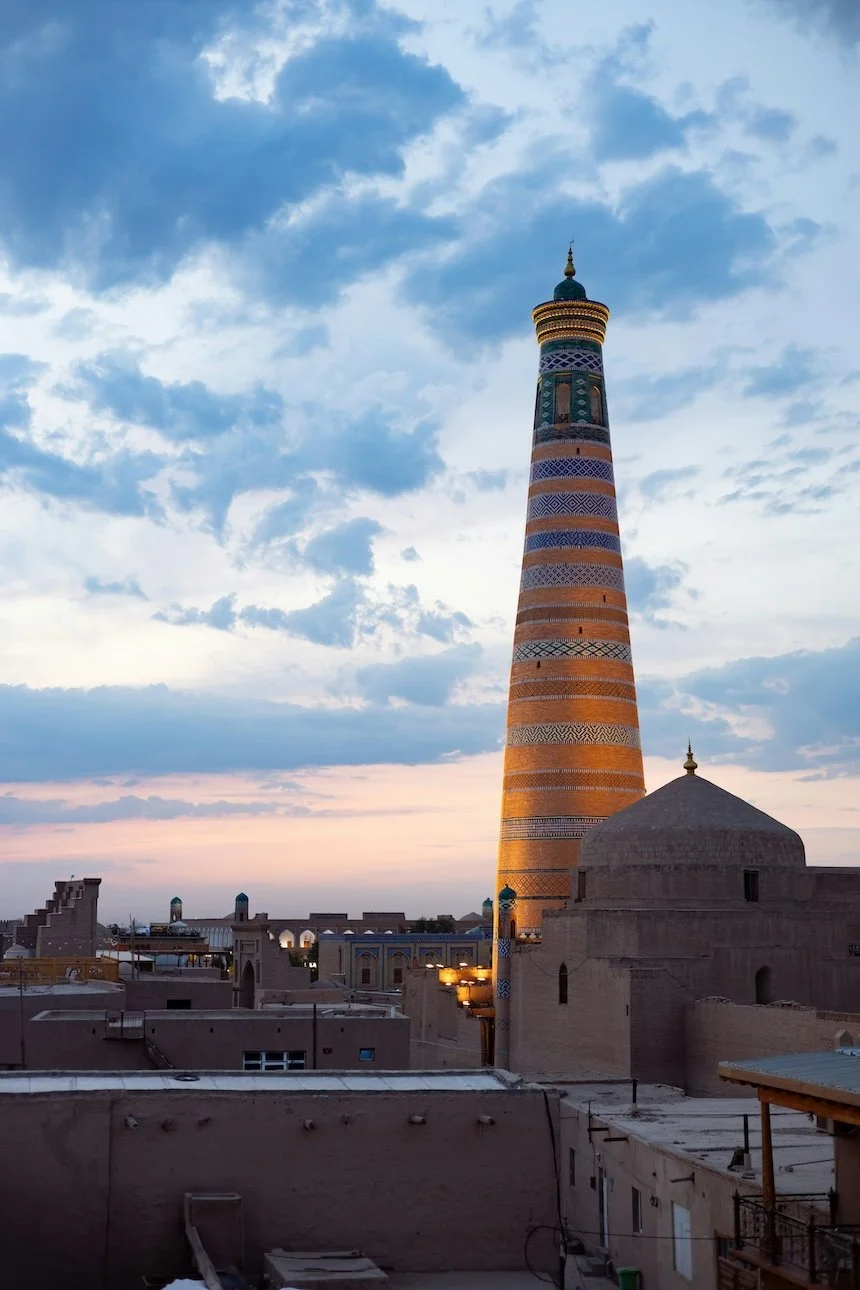
Khiva stops you. The walled inner city, Ichan Kala, is one of the great preserved cities of the ancient world and it looks exactly like what it is: a Silk Road capital that survived everything. No cars. No crowds in the early morning. Turquoise tilework. Minarets that have been standing for centuries.
Itchan Kala. Walk through its gates and you are immediately inside centuries of Silk Road history. Madrassas, minarets, palaces, and mosques concentrated in a compact, largely car-free space. This is not a reconstruction. It is the real thing.
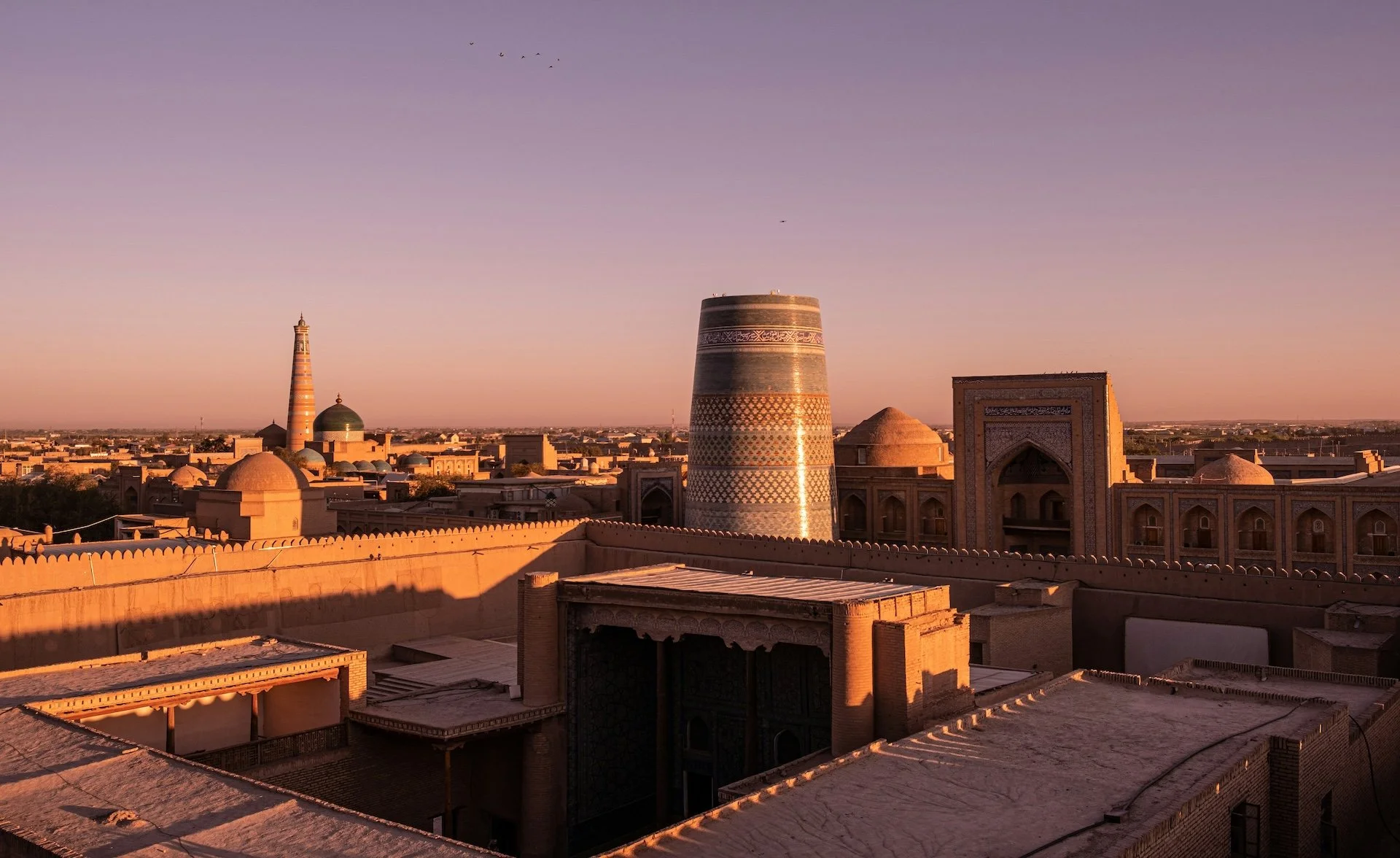
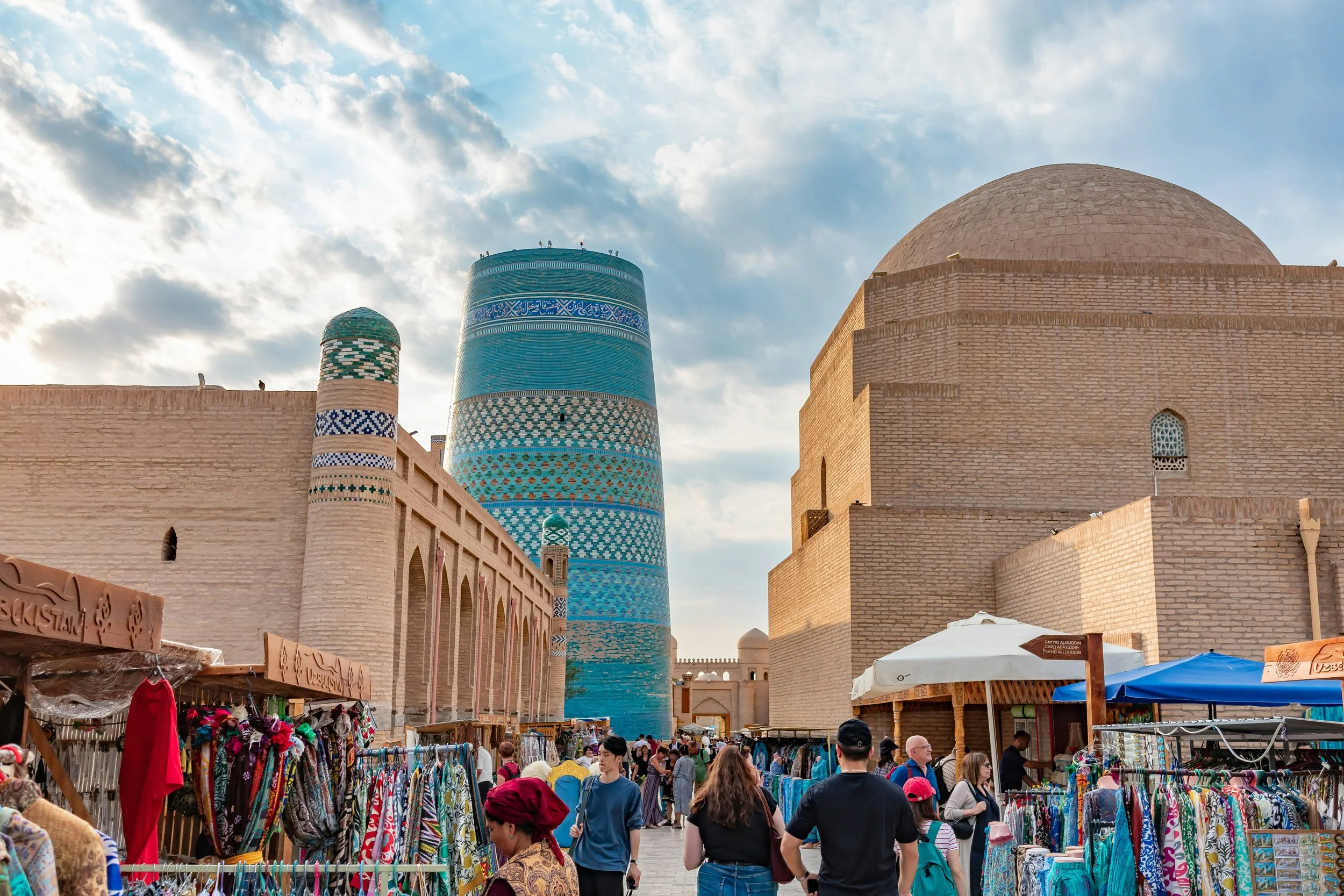
Kalta Minor Minaret. Commissioned in the 19th century and never finished. Its distinctive scale and bold turquoise tilework make it one of the most recognizable structures in Uzbekistan.
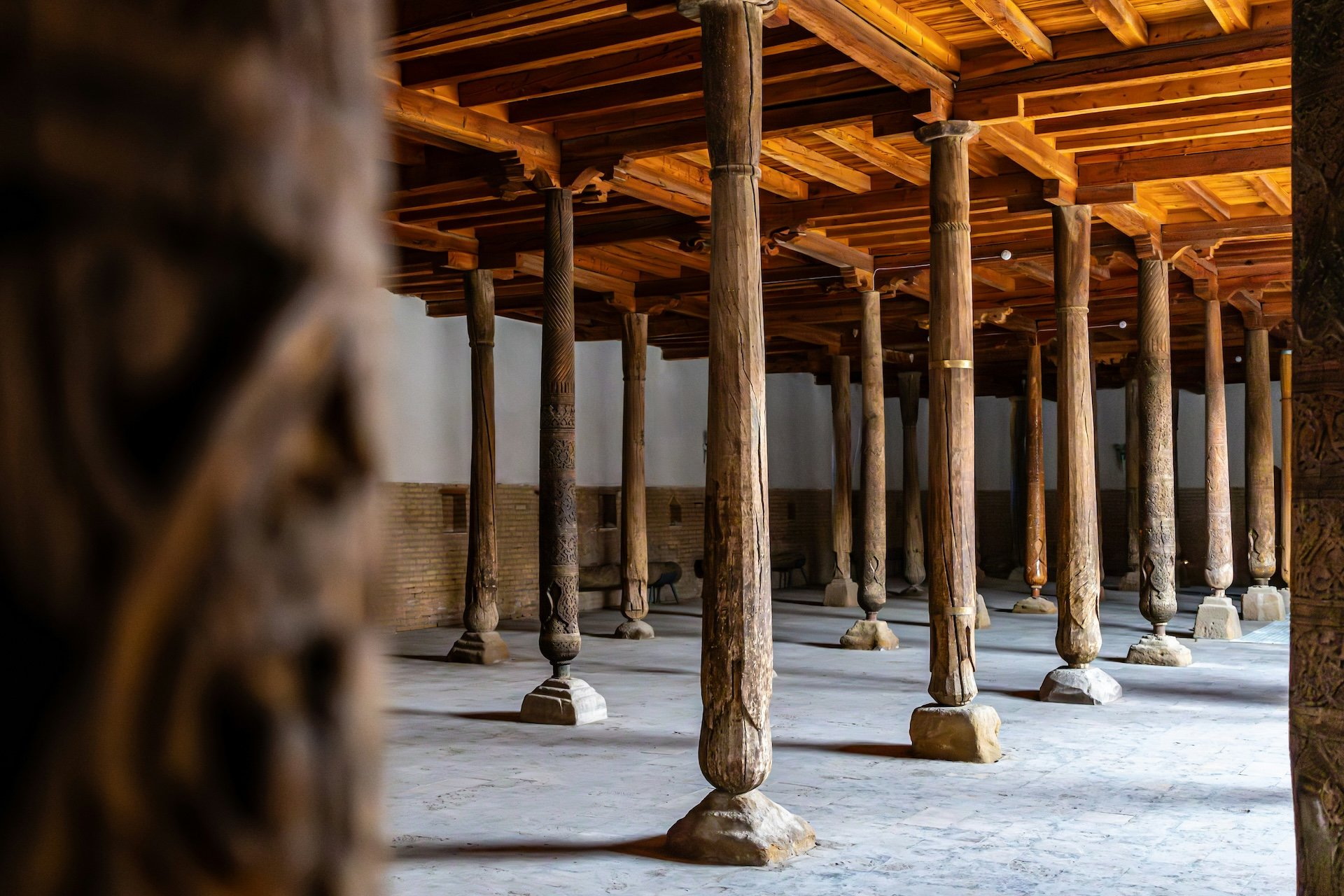
Juma Mosque. 218 carved wooden columns, each one unique, sourced from different periods spanning over a thousand years. The interior is dim, forest-like, and unlike any mosque you have been in before.
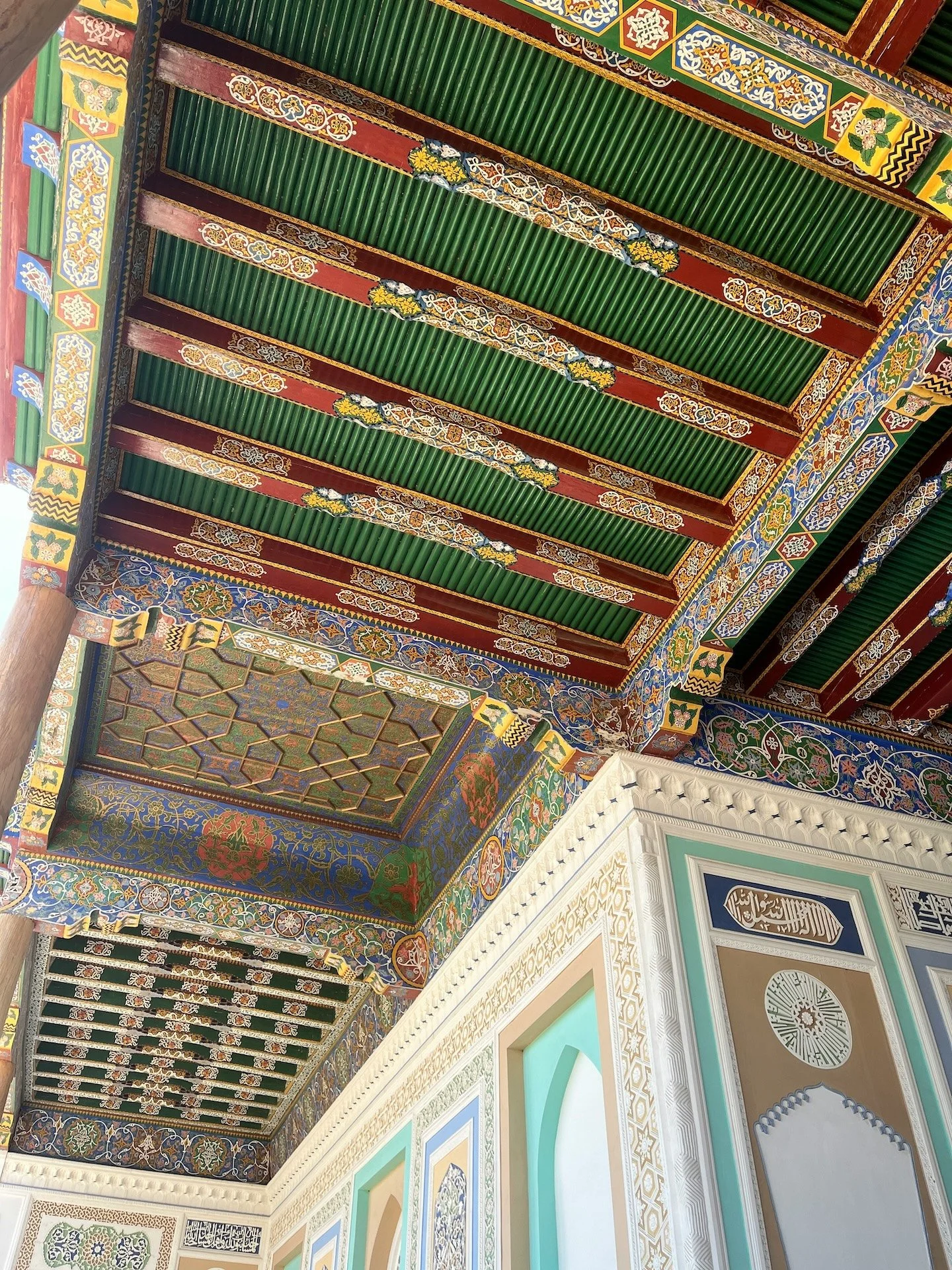
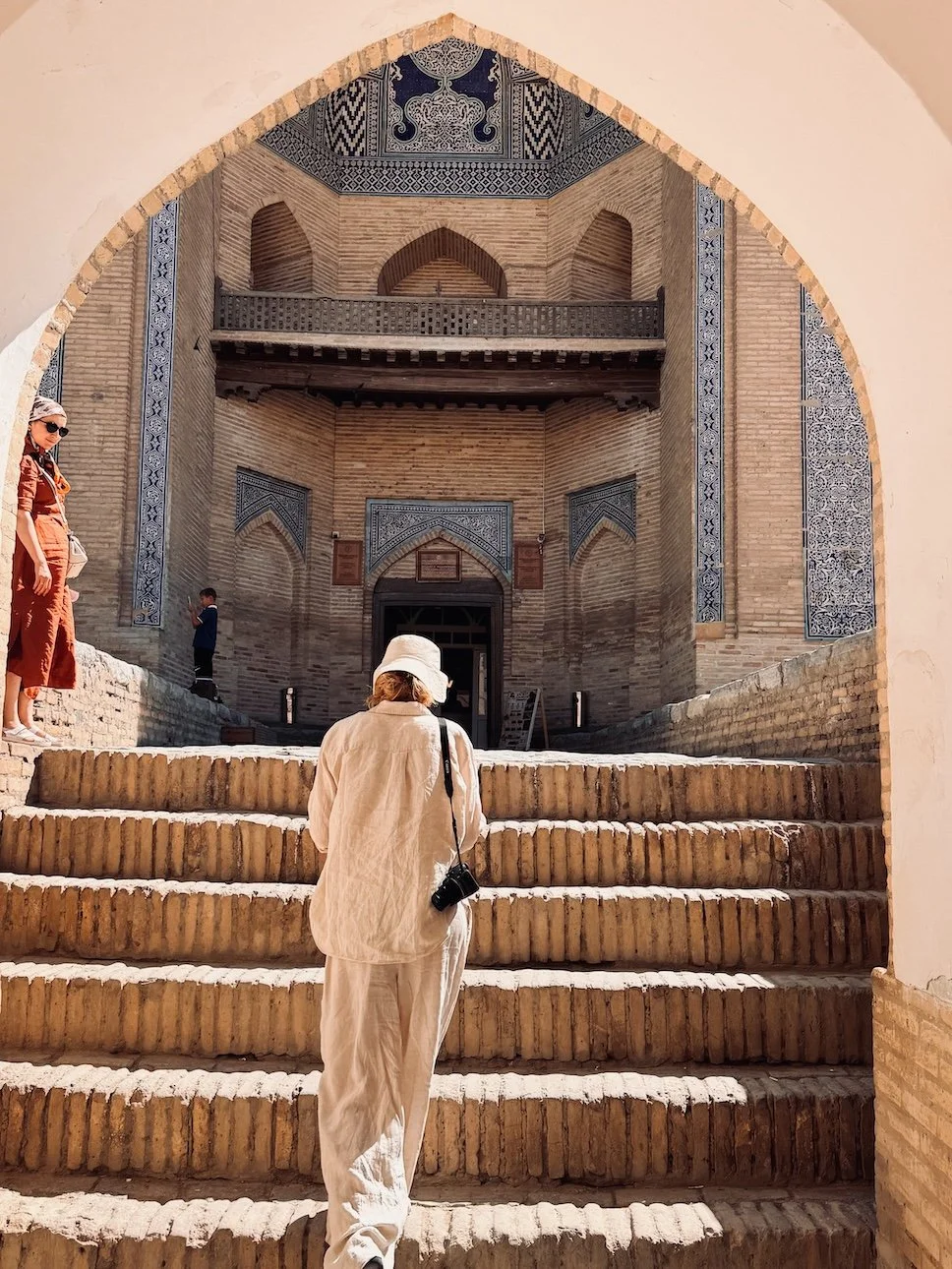
Tosh Hovli Palace. A 19th century royal residence with some of the finest tilework and carved wood in Khiva. The harem quarters, ceremonial courtyards, and reception halls make the architecture legible in a way that textbooks cannot.
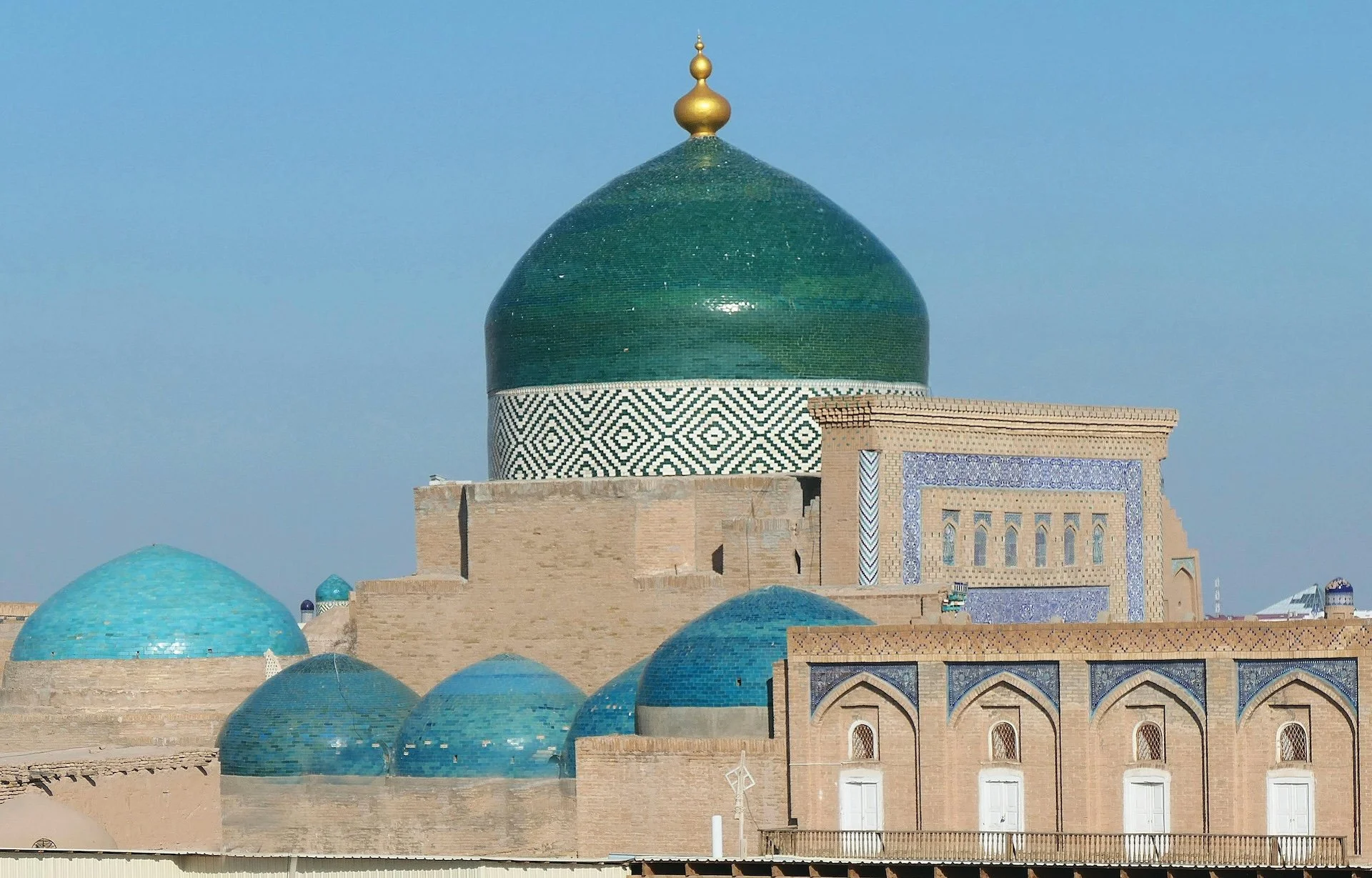
Pahlavon Mahmud Mausoleum. The resting place of Khiva's beloved poet, wrestler, and patron saint. An active pilgrimage site, not a monument. Its interior is covered in deep blue and turquoise tilework and the atmosphere is noticeably different from everything around it.
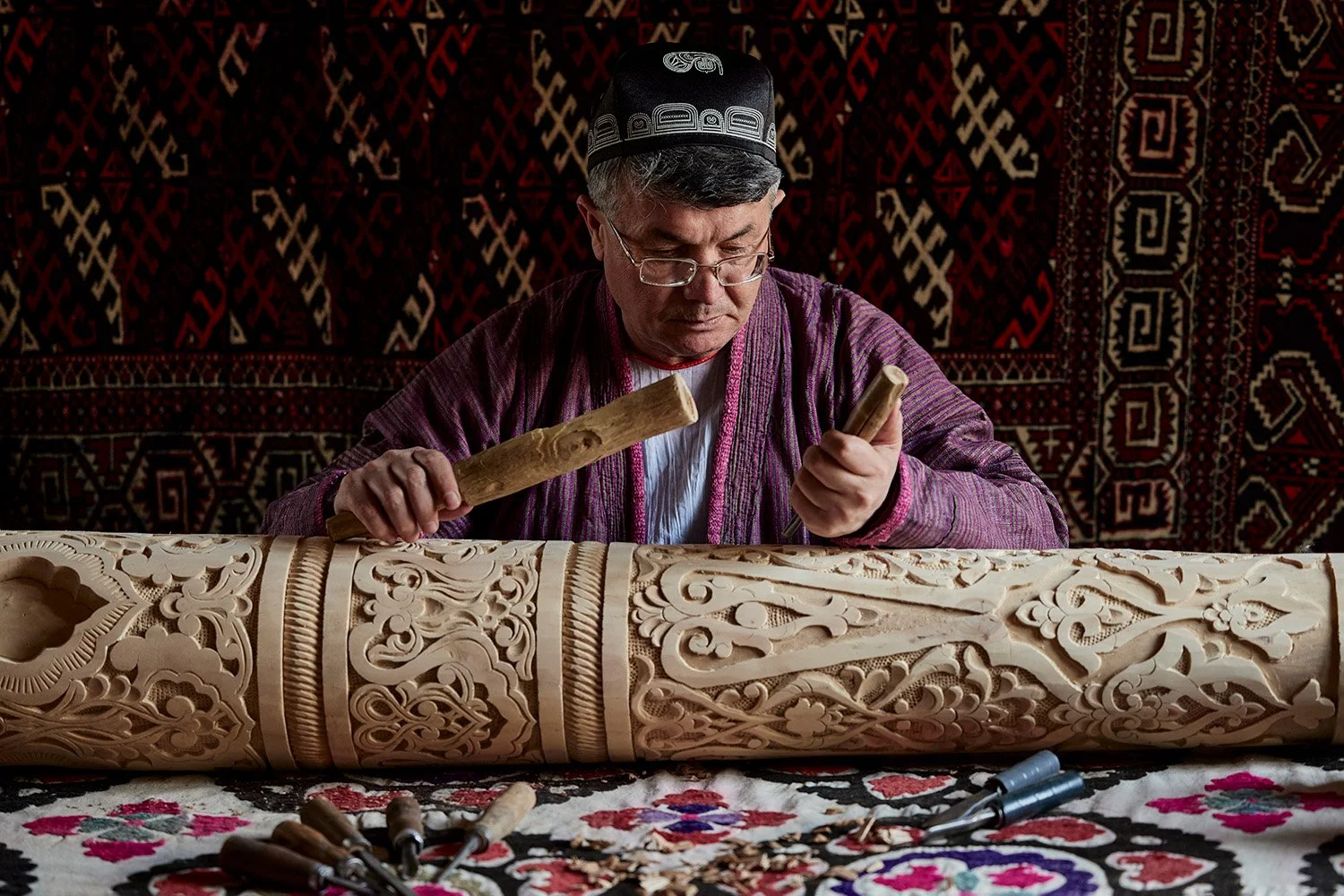
Wood Carving Workshop. Artisans demonstrating techniques passed down through generations. The same craft that built the mosques, still running.
Farovon Hotel | Breakfast
-
![]()
Itchan Kala
-
![Kalta Minor Minaret]()
Kalta Minor Minaret
-
![Juma Mosque]()
Juma Mosque
-
![Tosh Hovli Palace Khiva]()
Tosh Hovli Palace
-
![Pahlavon Mahmud Mausoleum]()
Pahlavon Mahmud Mausoleum
-
![]()
Wood Carving Workshop
Khiva’s Famous Dishes
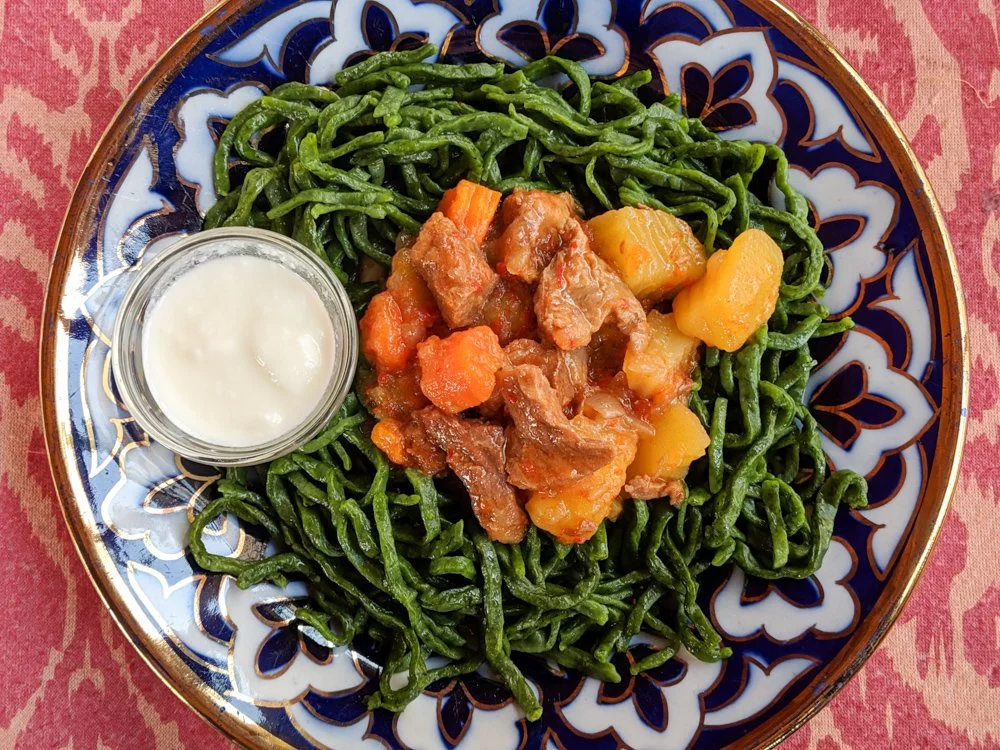
Shivit Oshi
A Khiva specialty of bright green noodles topped with beef stew, found almost exclusively in the city. The green comes from fresh dill blended into the dough itself. "Shivit" means dill in Uzbek. It's served with a stew of meat, peppers, tomatoes, onions, potatoes, and carrots, with yogurt or sour cream on the side.
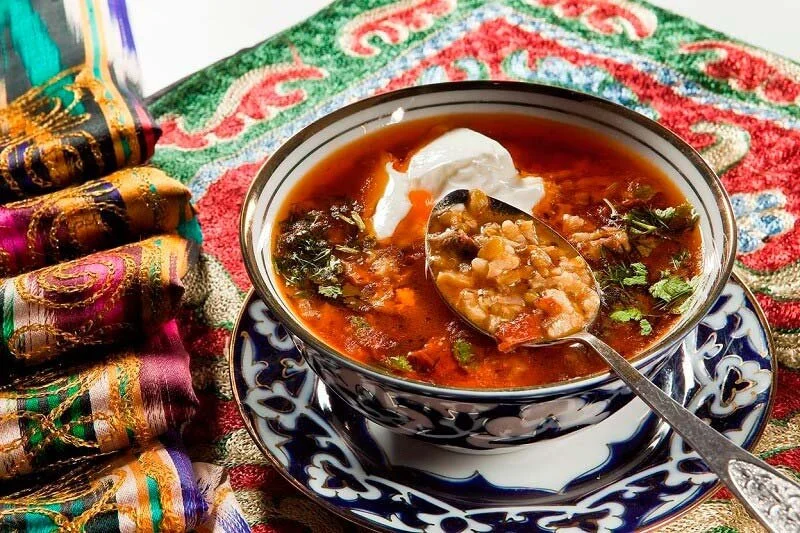
Mastava
A thick rice and lamb soup that functions as a full meal, particularly common in Khorezm. Built on a base of tomato, onion, and carrot with bone-in lamb, it is finished with fresh herbs and a dollop of sour cream or katyk (fermented milk). Heartier and more broth-forward than plov, it is what locals eat at home.
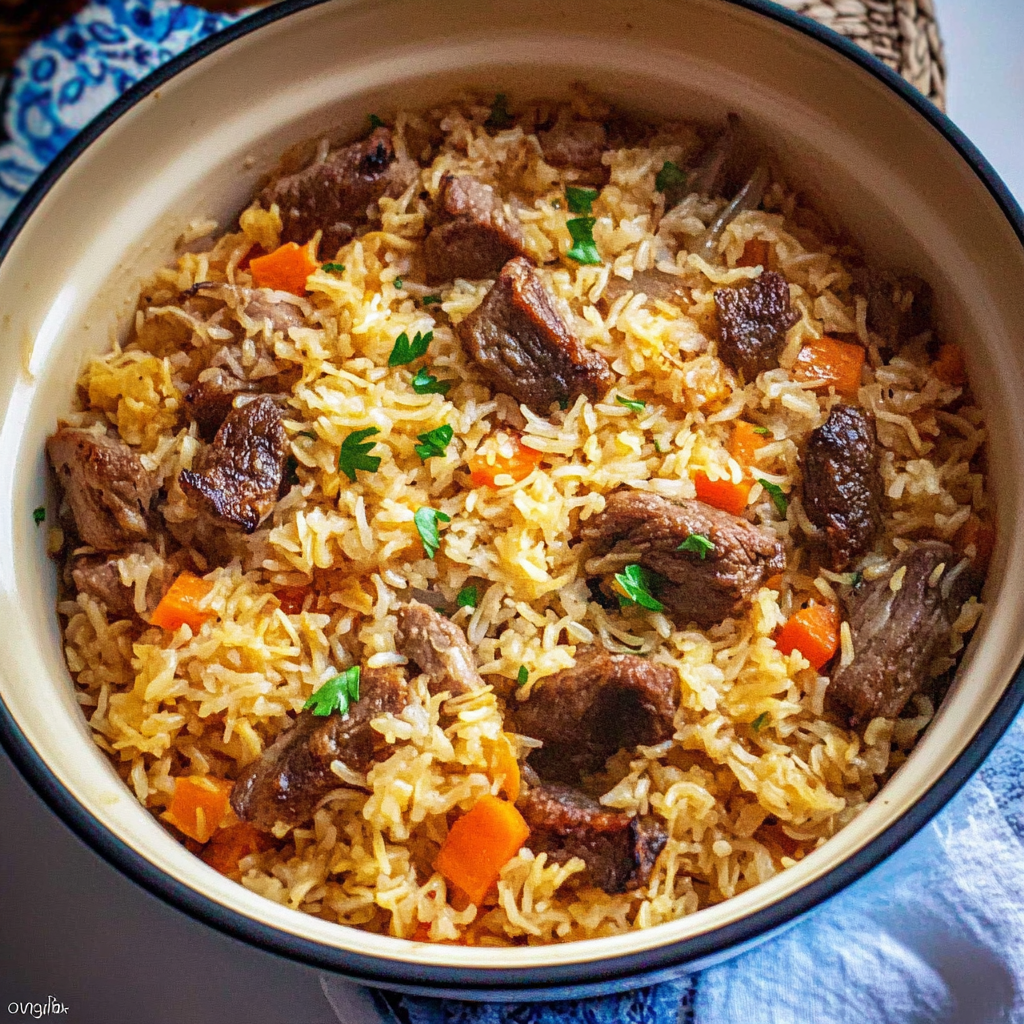
Khorezmian Plov
The Khorezm region has its own version of plov that sets itself apart from Samarkand and Bukhara. It uses cottonseed oil, which gives the rice a deeper, earthier flavor, and is typically cooked with quince or dried fruit alongside the lamb and yellow carrots. Denser and more robustly spiced than other regional versions.
day 2 | Khiva
A second day inside the walls because one is not enough.
Muhammad Amin Khan Madrasa. The largest madrasa in Khiva. Its grand facade and symmetrical courtyard reflect the full power of the Khivan khanate at its height.
Muhammad Rahim Khan Madrasa. Named after a poet and ruler. Admired for its refined architecture and its significance in education and culture.
Islam Khoja Madrasa. Smaller, more elegant, and associated with reformist ideas in the early 20th century. A later chapter of Khiva's history made visible in stone.
Allakuli Khan Madrasa and Caravanserai. Together they tell the story of Khiva as a Silk Road trading hub. This is where merchants once rested and traded goods from across Asia.
Sunset from Kunya Ark Watchtower. Climb the watchtower as the sun goes down over Itchan Kala. The golden light over domes, minarets, and mud brick walls is one of the most memorable scenes in Uzbekistan.
Khiva Folk Dance Performance. An evening performance in a historic madrasa courtyard. Music, costumes, storytelling. The culture here still lives in the buildings.
Farovon Hotel | Breakfast
day 3 | Bukhara
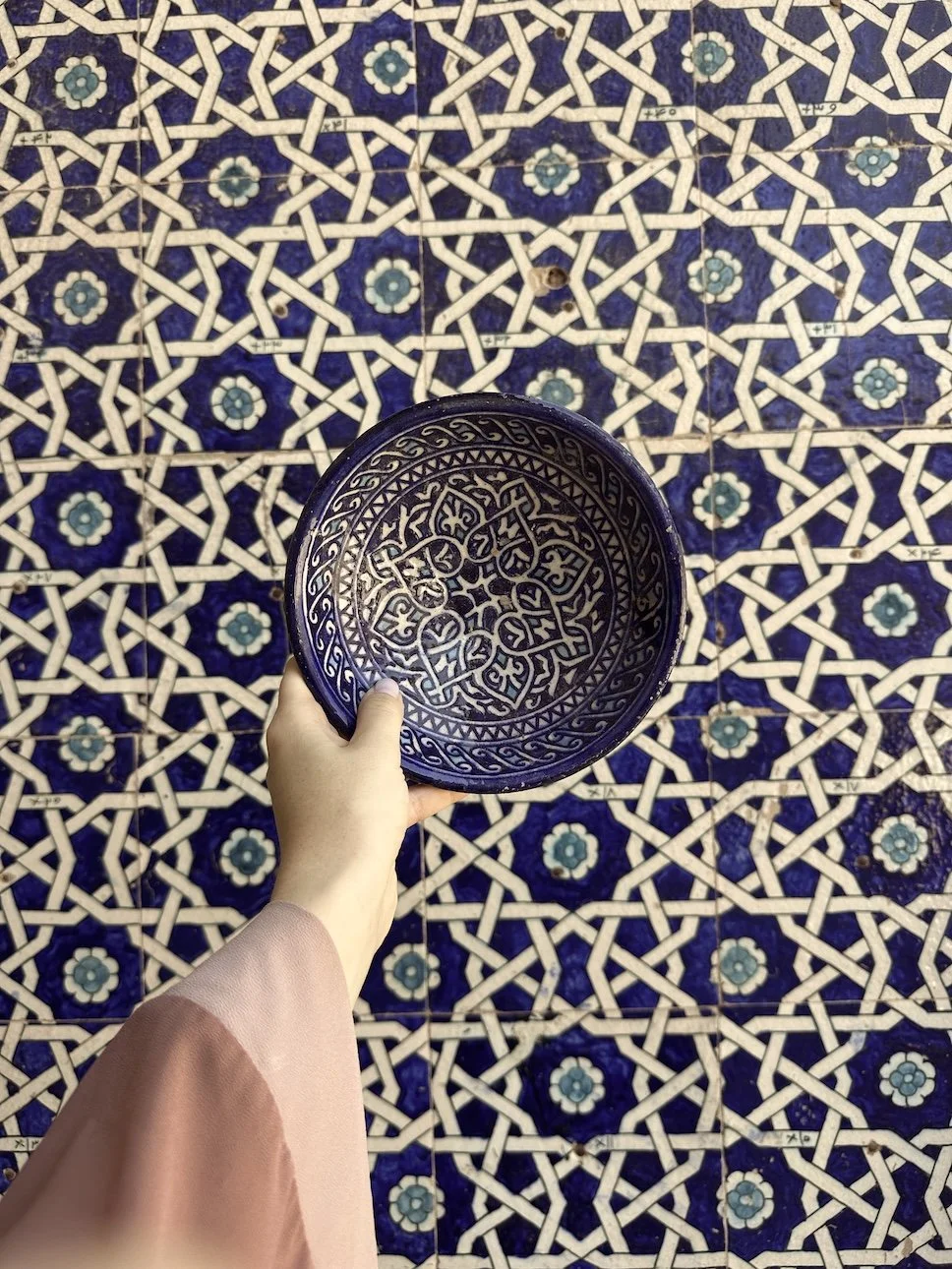
A short flight and everything changes. Bukhara is denser, older, more lived in than Khiva. Two thousand years of trade, faith, and scholarship packed into one walled old town.
The Fortress Walls. Climb the walls, up to 20 meters high, for panoramic views over the city below. The scale of Bukhara becomes clear from up here.
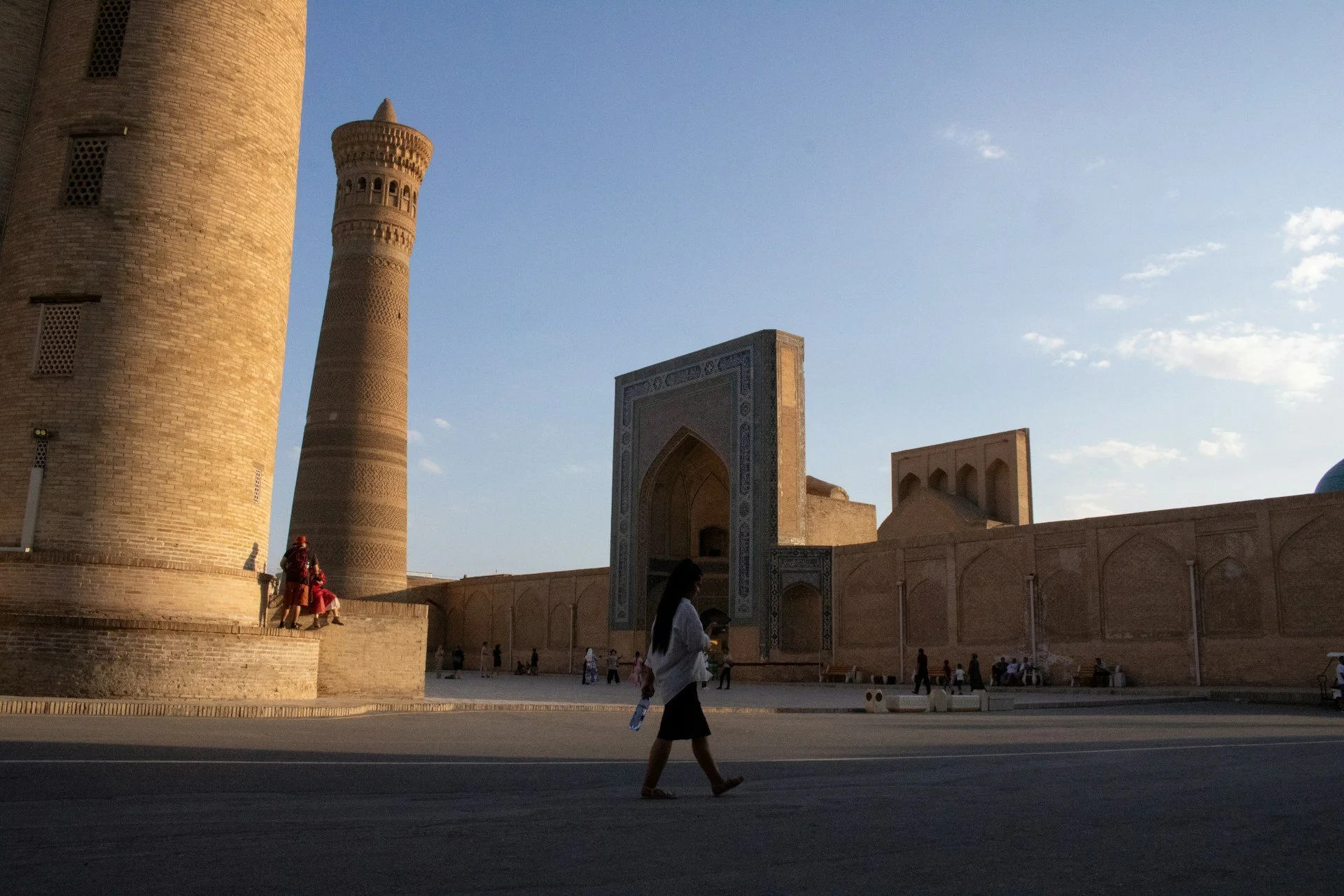
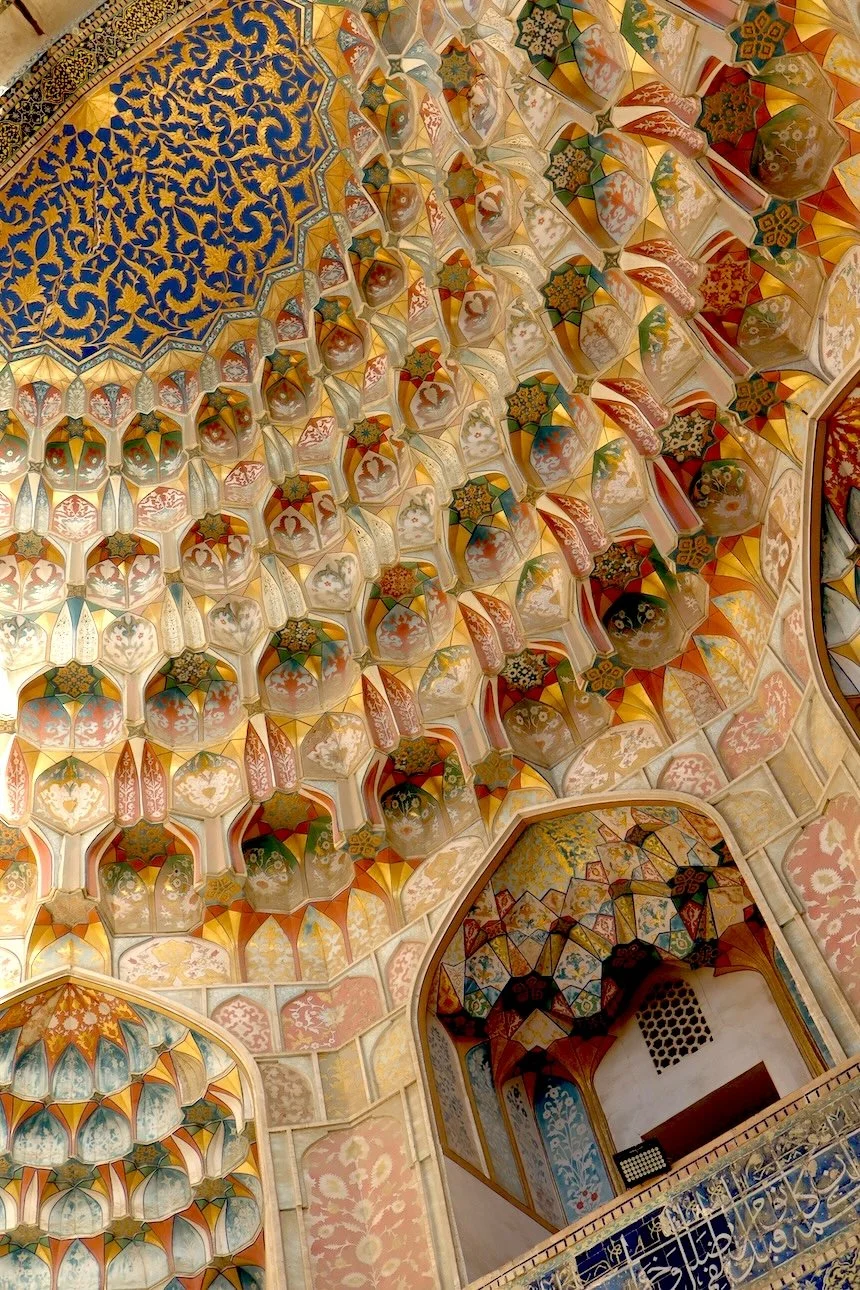
Samanid Mausoleum. One of the oldest surviving Islamic monuments in Central Asia. Its brickwork, laid in patterns that create shadow and texture, is unlike anything built before or after it.
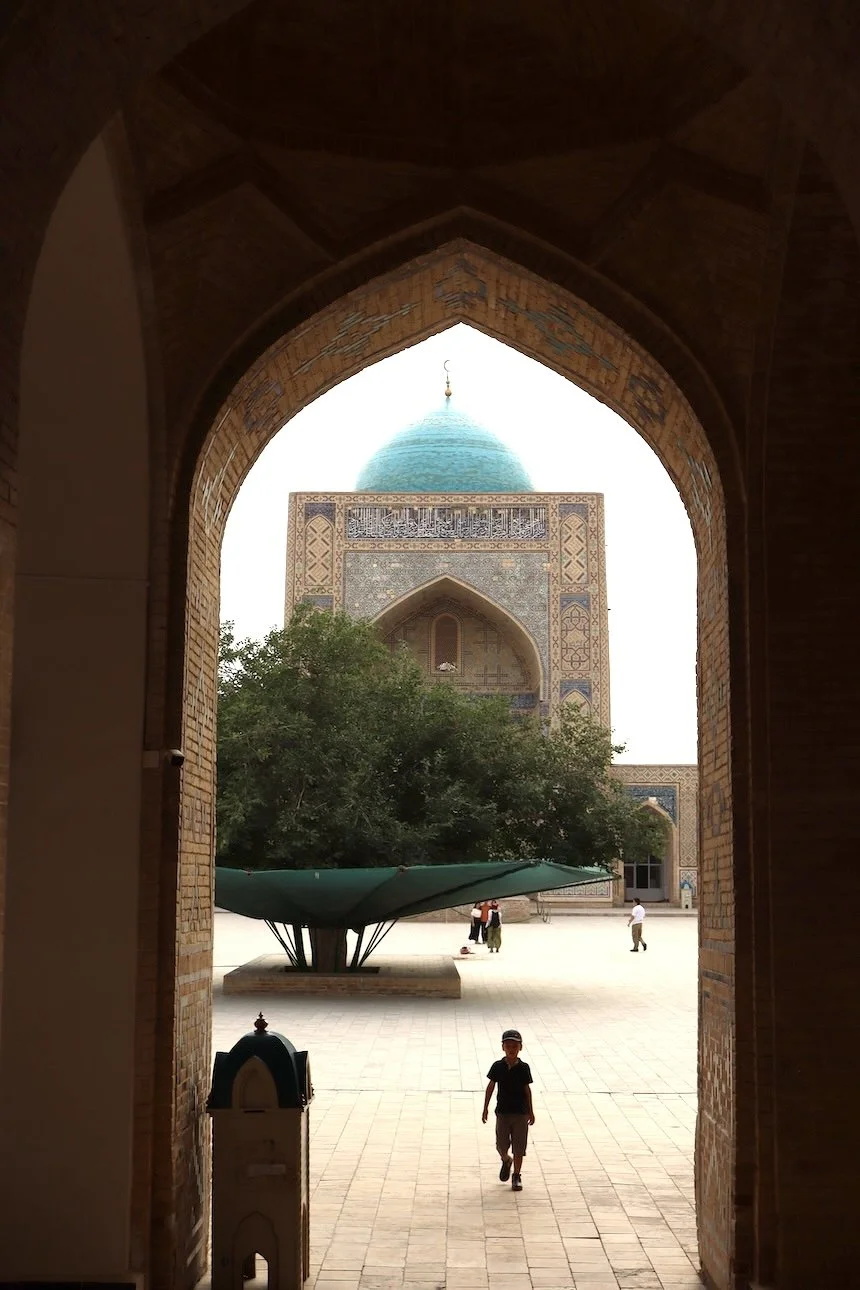
Kalyan Complex. The Kalyan Minaret is so beautiful that Genghis Khan reportedly spared it when he burned everything else. The mosque and the Miri Arab Madrasa facing it complete one of the great architectural ensembles of the Islamic world.
Ark Citadel. The ancient fortress at the heart of Bukhara. Inhabited for over two thousand years. The walls that remain tell the full story of the city.
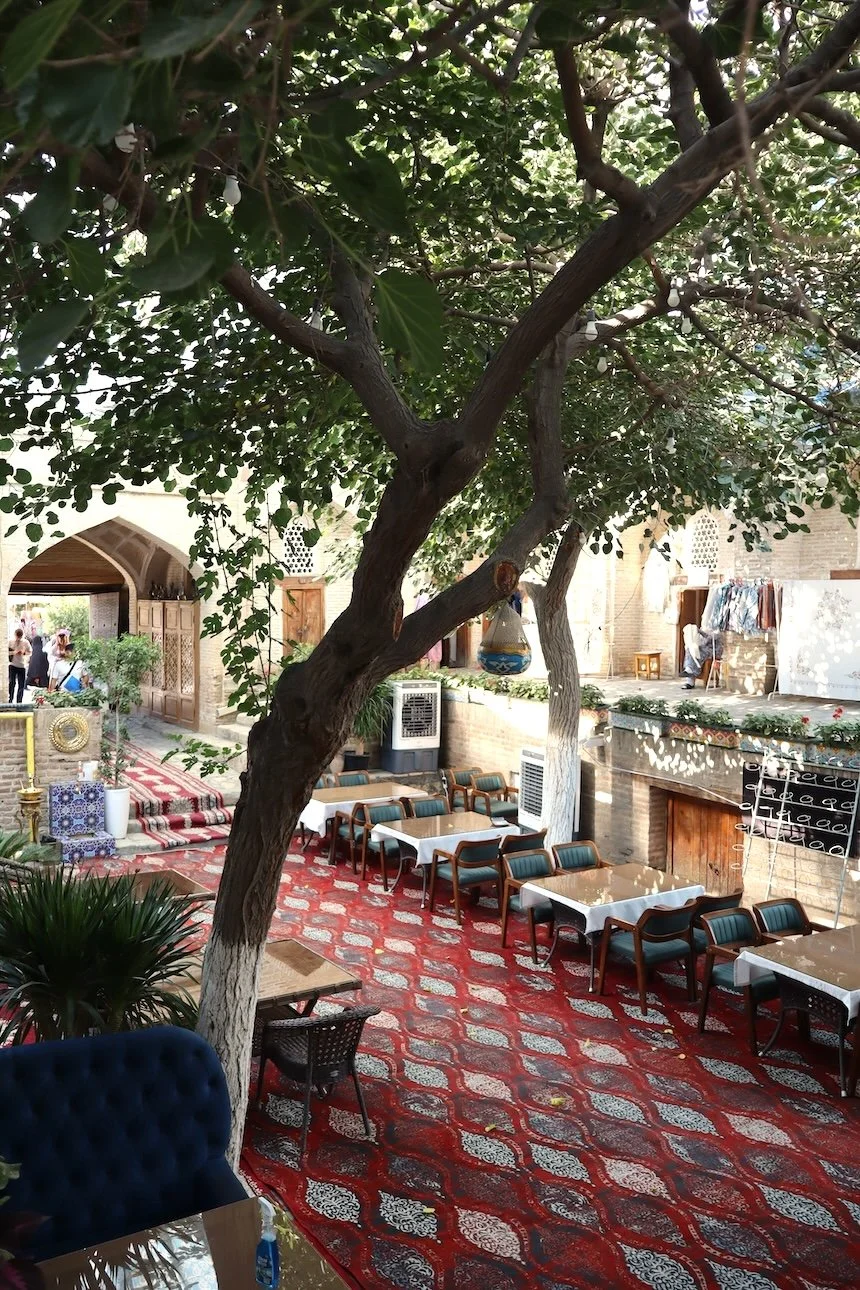
Lyabi-Khauz Square. Men still play chess under the mulberry trees here. Restaurants and teahouses line the pool. This is where Bukhara takes its time.
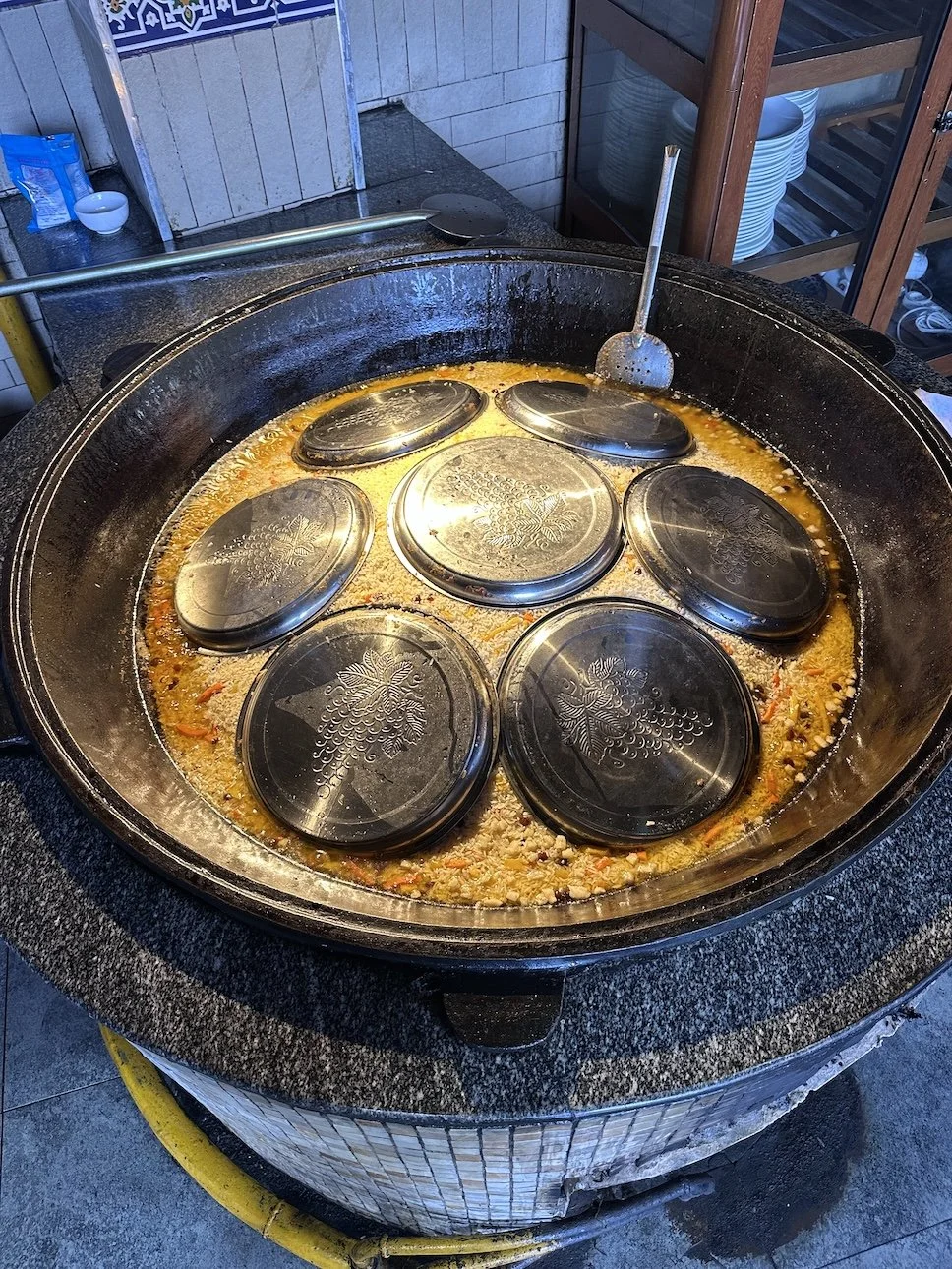
Plov with a Local Family. Dinner with a Bukharan family. Plov cooked in a kazan over an open flame by someone who has been making it this way for forty years. This is what the city tastes like.
Mercure Bukhara | Breakfast, Dinner
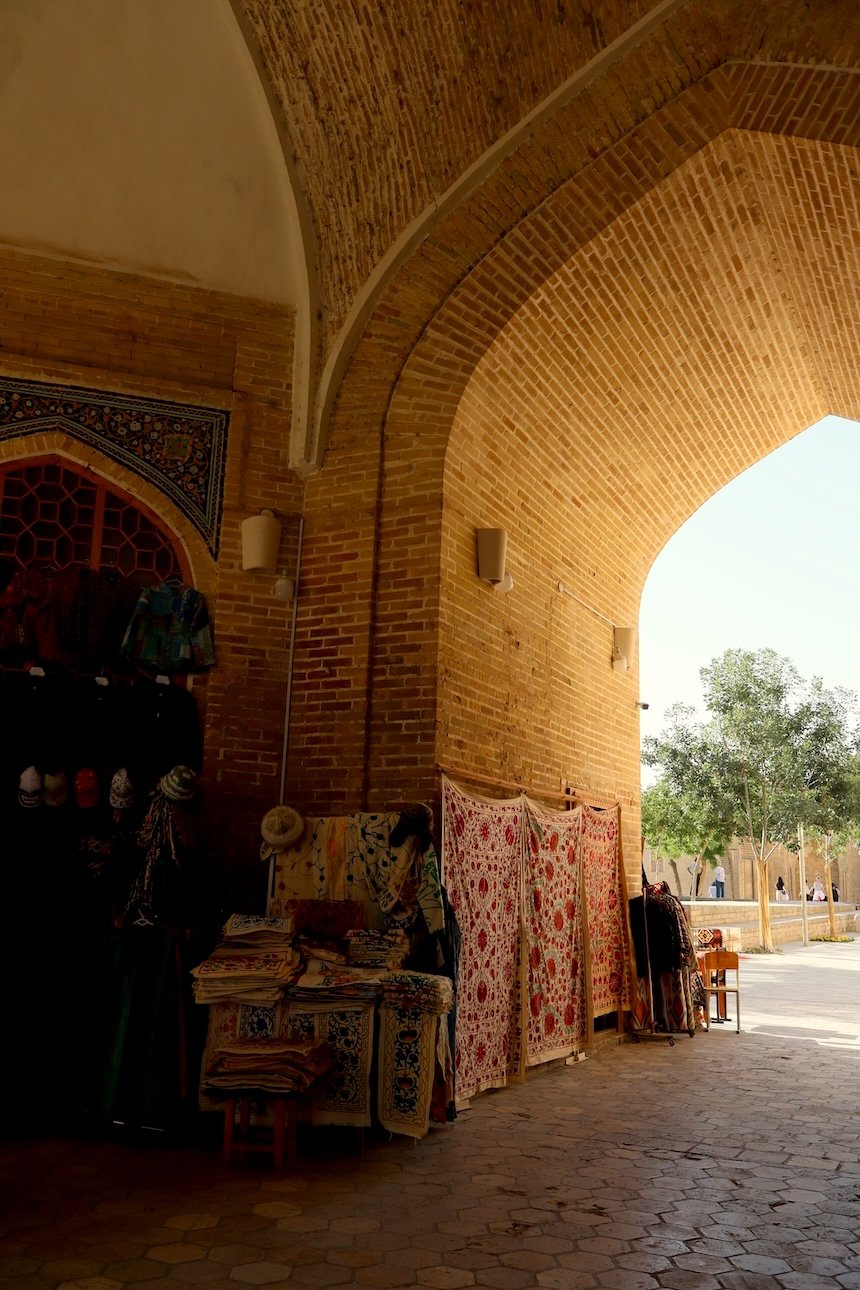
Bukhara’s Famous Dishes
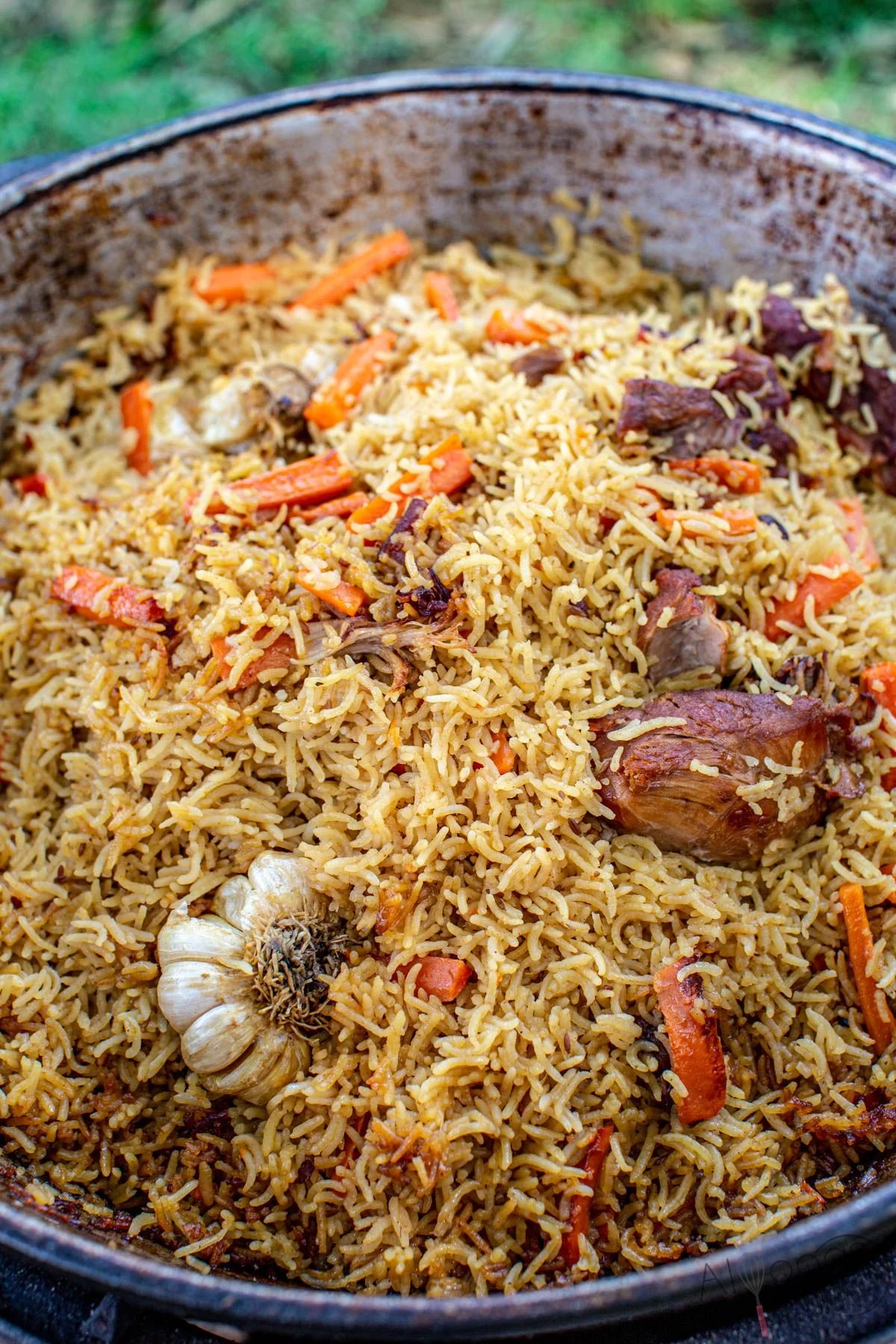
Plov (Bukharan Osh)
Bukhara's version of Uzbekistan's national dish is distinct from others in the country. Cooked in a massive kazan over open flame, it combines lamb, yellow carrots, chickpeas, and raisins with aged rice. The Bukharan variation tends to be slightly sweeter and more aromatic than Samarkand or Tashkent plov.
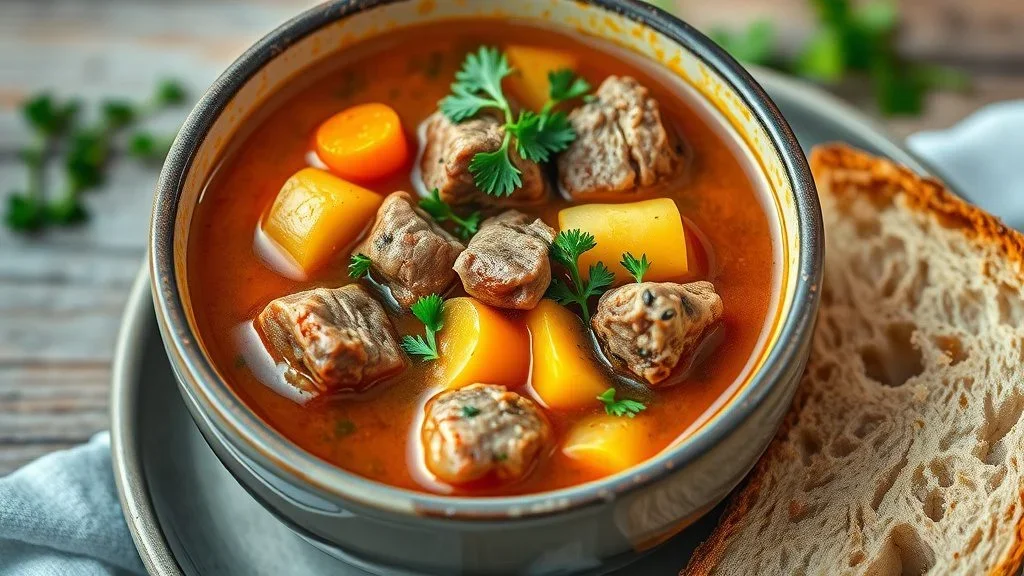
Shurpa
A slow-cooked lamb and vegetable soup that functions more as a full meal than a starter. Large cuts of bone-in meat are simmered for hours with tomatoes, peppers, onion, and potato. In Bukhara it is typically served as two courses: the broth first, then the meat and vegetables separately.
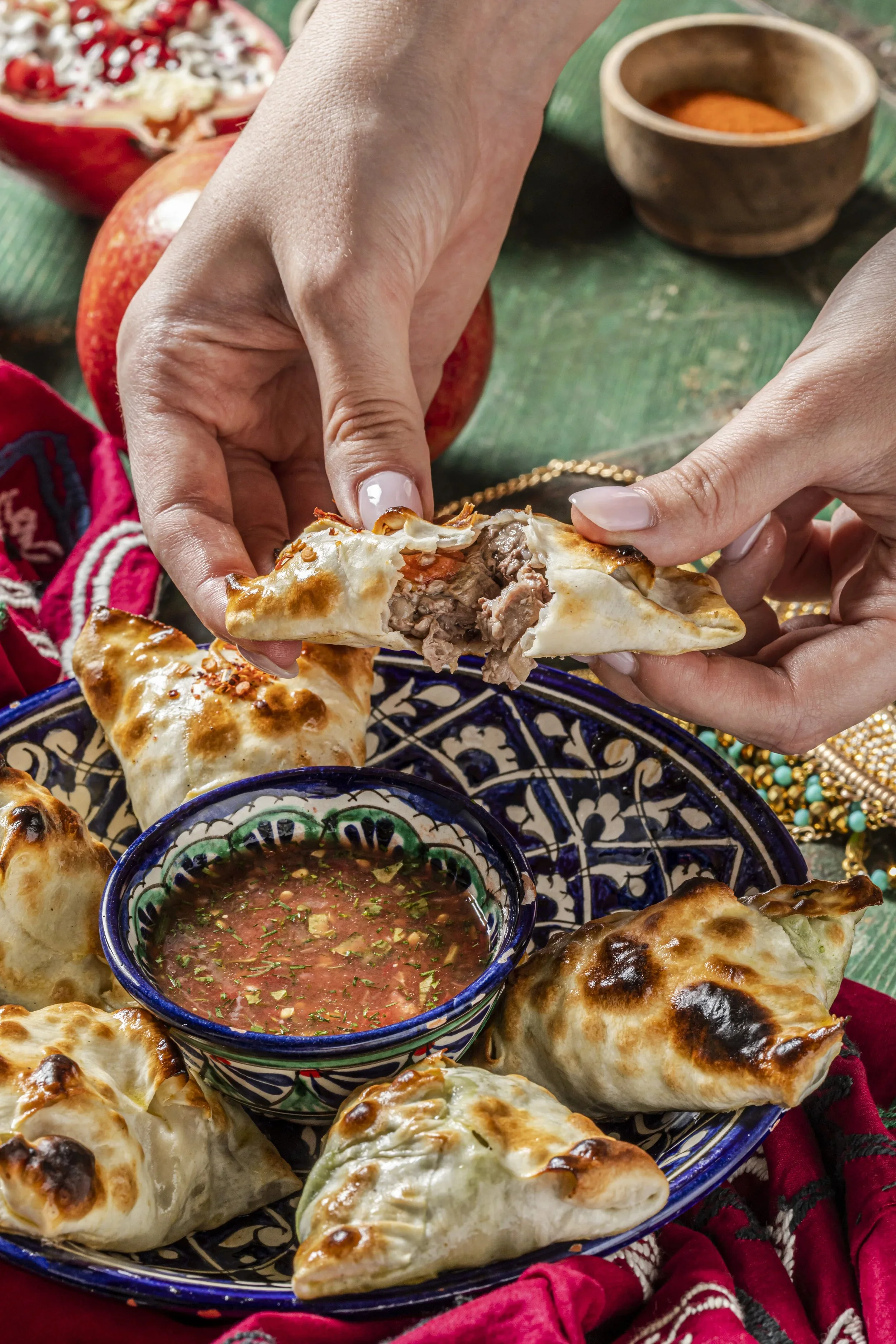
Samsa
Bukhara's samsa are baked in a tandoor rather than fried, giving the pastry a distinct flaky, slightly charred exterior. Filled with minced lamb, onion, and cumin, they are sold fresh from the oven at bakeries throughout the old city and eaten as a street food at any time of day.
day 4 | Bukhara
A full day of craft workshops. Not demonstrations for tourists. Real workshops where the artisans have done nothing else their whole lives.
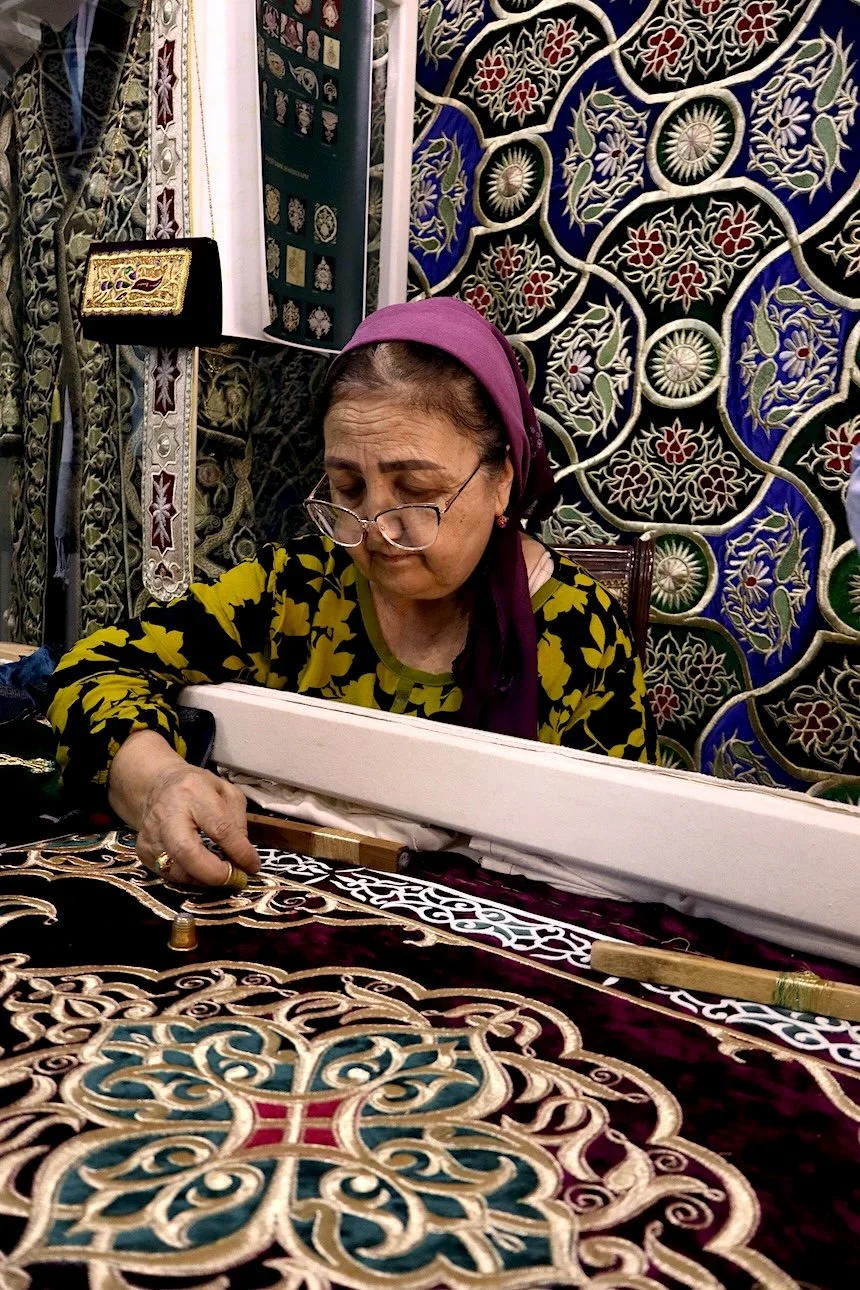
Zardozlik Gold Embroidery Workshop. Traditional Bukharan gold embroidery, a craft that has been practiced in this city for centuries. The materials, the patterns, the techniques. All of it still alive.
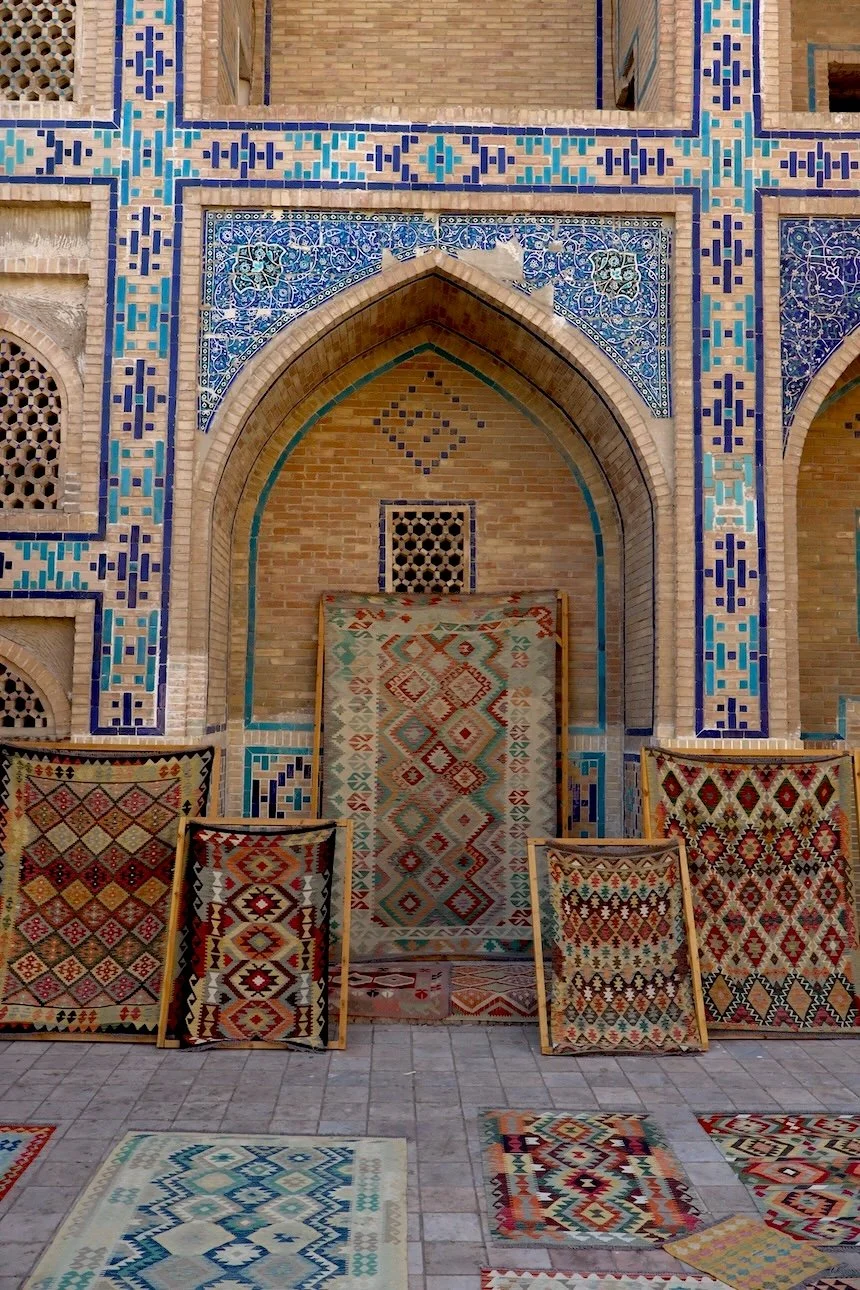
Carpet Making Workshop. The full process. Design, weaving, materials, the story behind each pattern. Uzbek carpet making is not a souvenir industry. It is a living tradition.
Puppet Workshop. Traditional Bukharan puppet making, a folk show, music, dance, and a hands-on paper mache activity. The most unexpected workshop and consistently one of the most memorable.
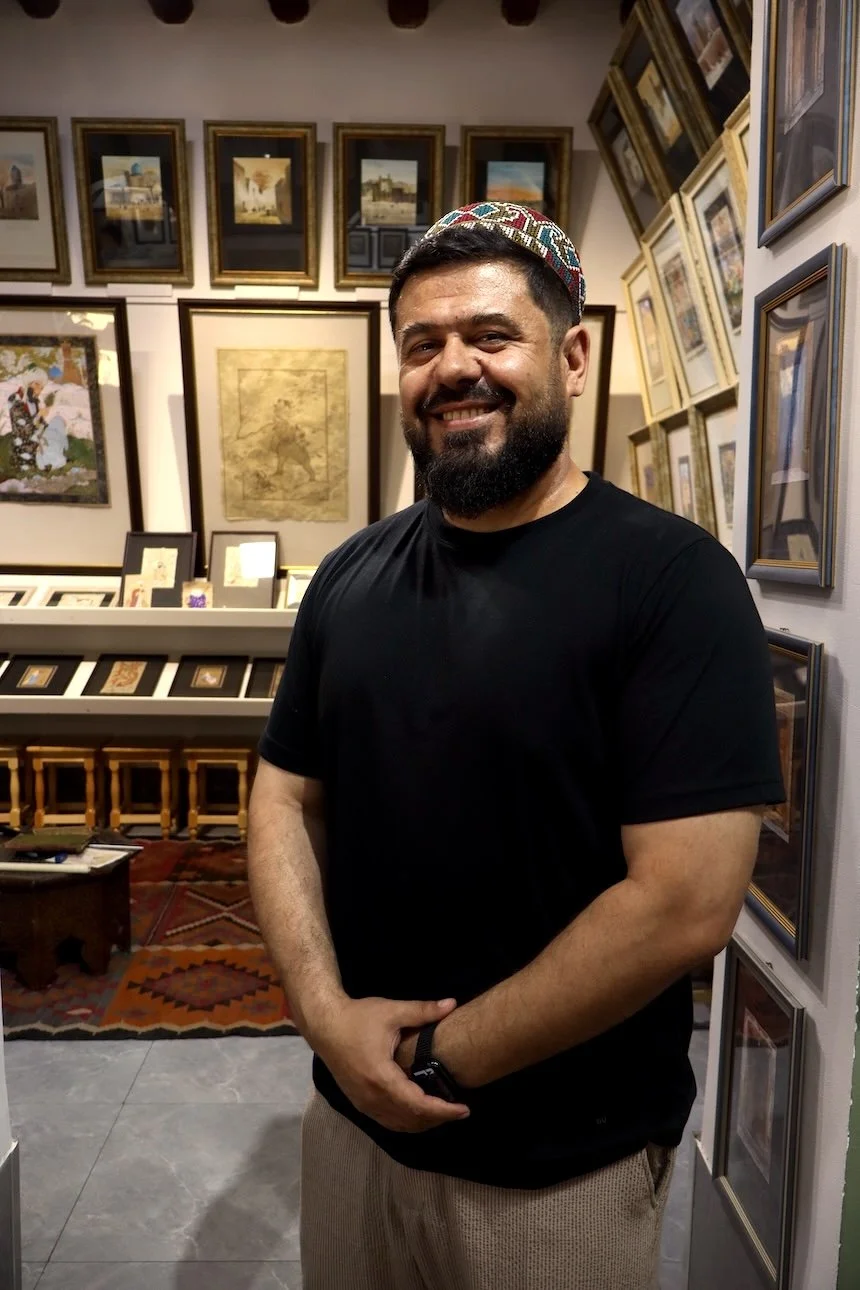
Miniature Painting Workshop. Traditional Bukharan motifs, painting methods, and the chance to make something yourself. A craft that requires the kind of patience that travel tends to restore.
Woodworking Workshop. Tools, carving techniques, materials, and the cultural background of Uzbek woodcraft. The same tradition that produced the columns of the Juma Mosque in Khiva.
Folk Show. An Uzbek dance performance in a madrasa courtyard to close the day.
Mercure Bukhara | Breakfast
day 5 | Samarkand
A morning to finish Bukhara before the train takes you somewhere else entirely.
Chor Minor Mosque. Four minarets, each topped with a different ornamental dome. A 19th century building that looks like nothing else in the country.
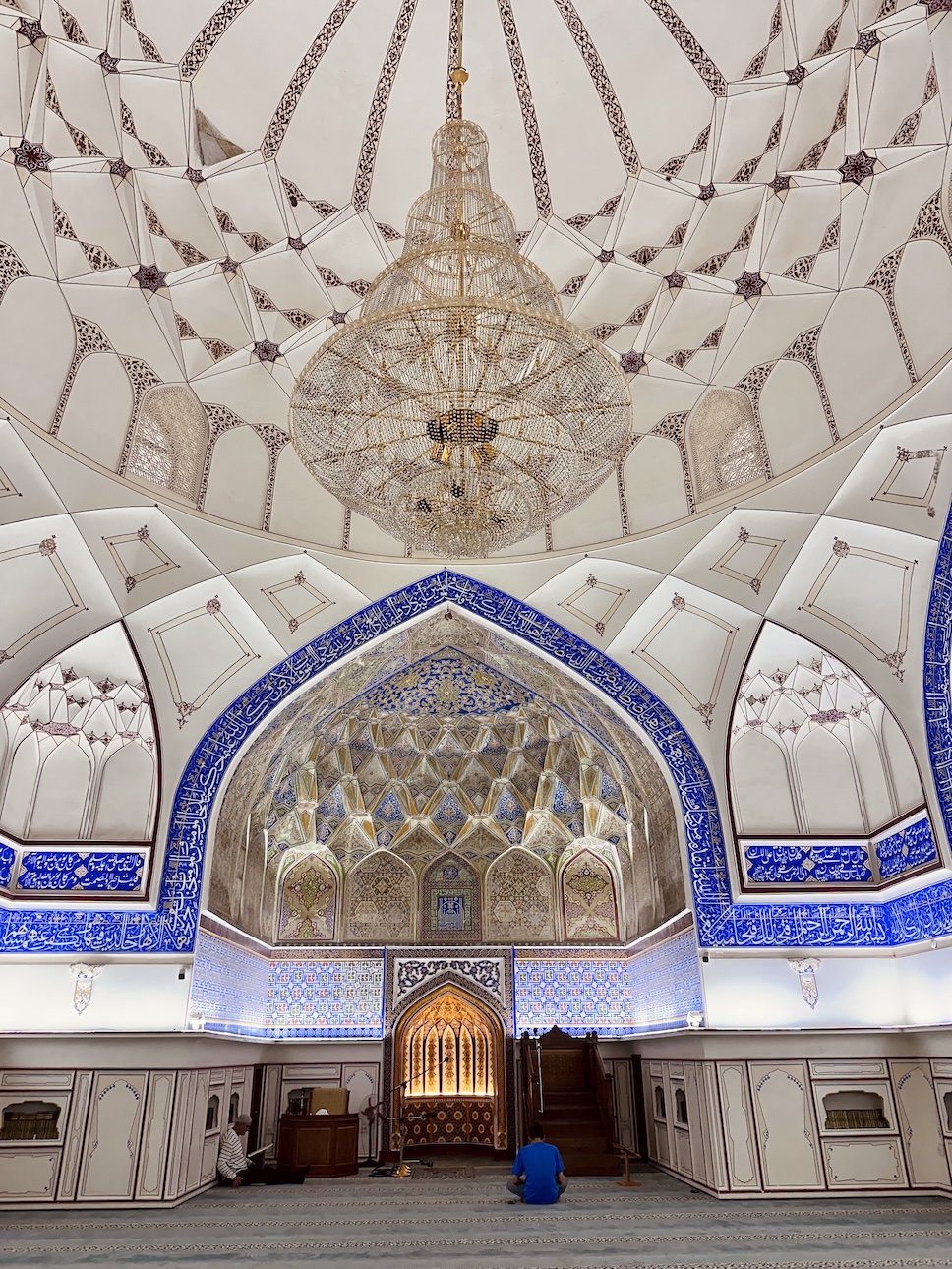
Bahouddin Naqshbandiy Mausoleum. One of the most important pilgrimage sites in Central Asia. The founder of the Naqshbandi Sufi order is buried here. The complex is active, serious, and worth giving time to.
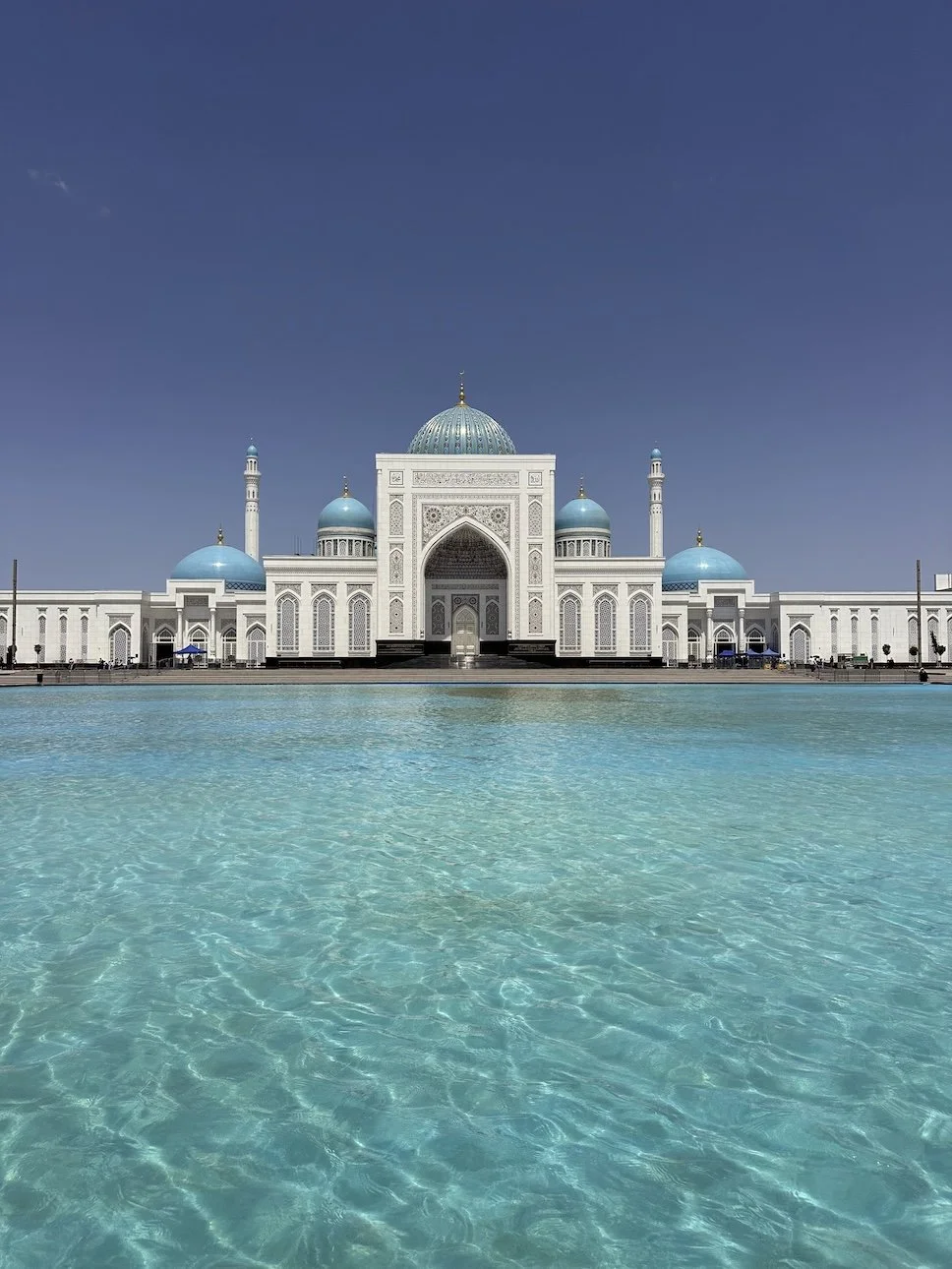
Sitorai Mohi Hosa. The summer residence of the Bukhara emirs. A palace that mixes Russian and Uzbek architectural styles in a way that makes the late 19th century history of the region suddenly legible.
The Afrosiyob Train to Samarkand. A fast train through the Uzbek steppe. Two hours. The landscape through the window is part of the journey.
Arrival in Samarkand.
Kosh Havuz Hotel | Breakfast
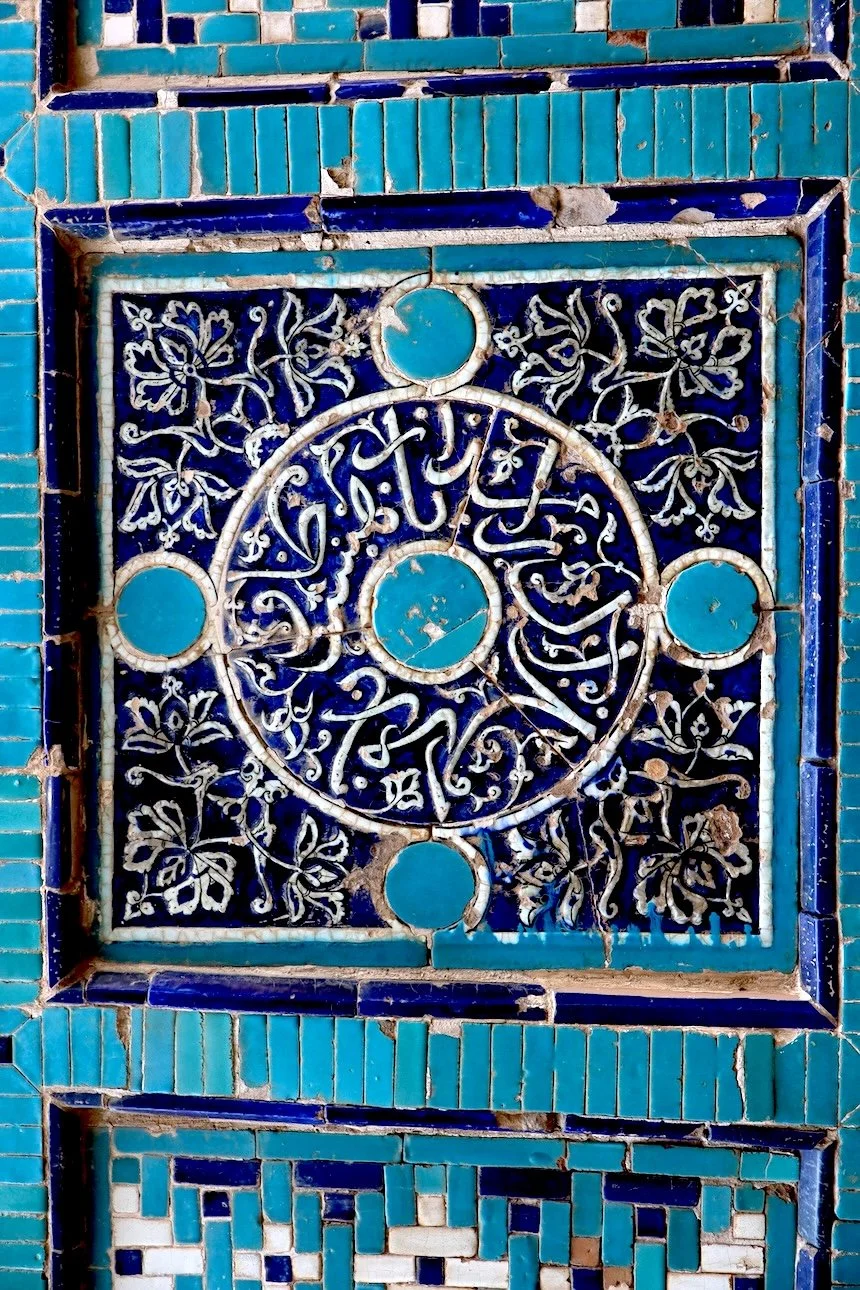
Samarkand’s Famous Dishes
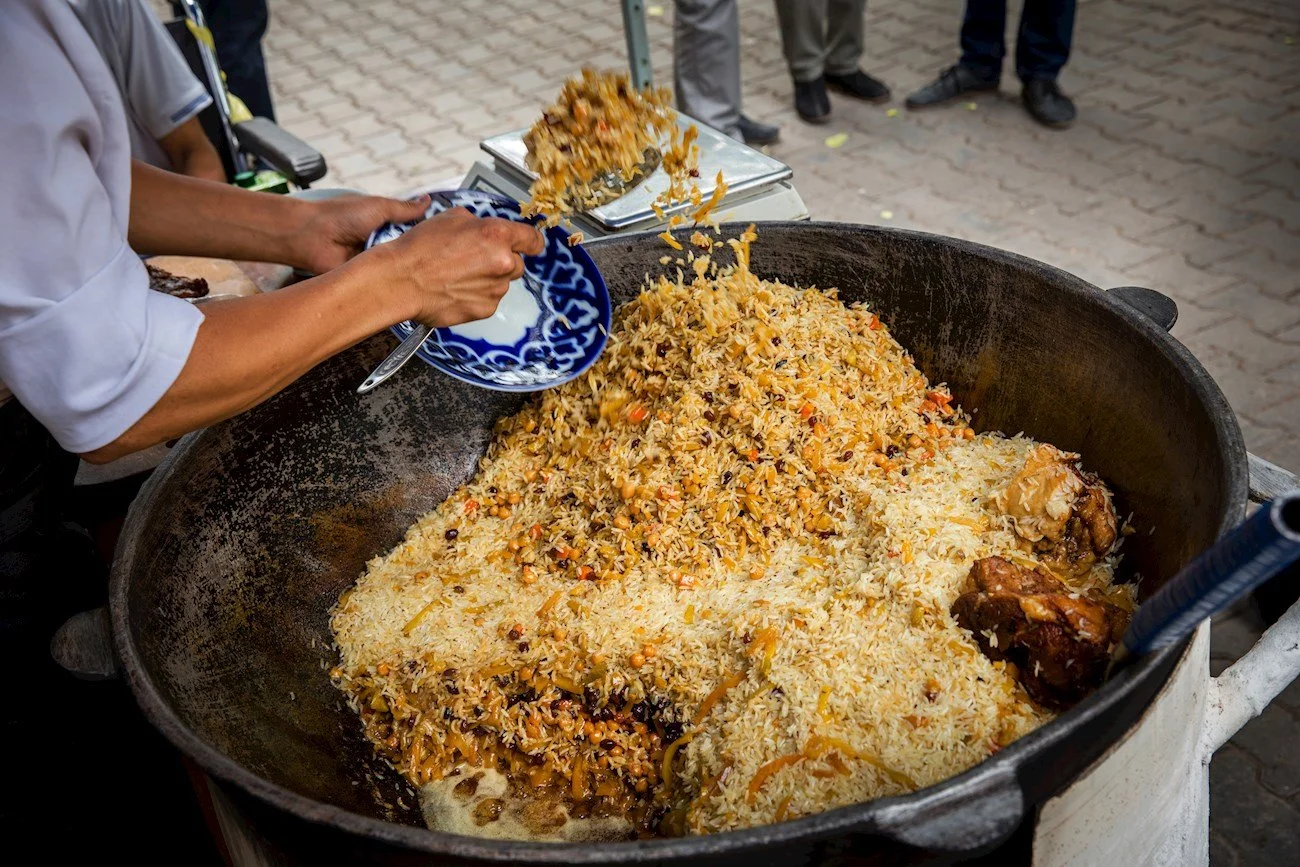
Samarkand Plov
Considered by many Uzbeks to be the definitive version, Samarkand plov is cooked differently from other regions. The rice is layered on top of the meat and carrots rather than mixed in, and the whole kazan is steamed under a lid. The result is drier, more distinct grains with a deeper, smokier flavor.
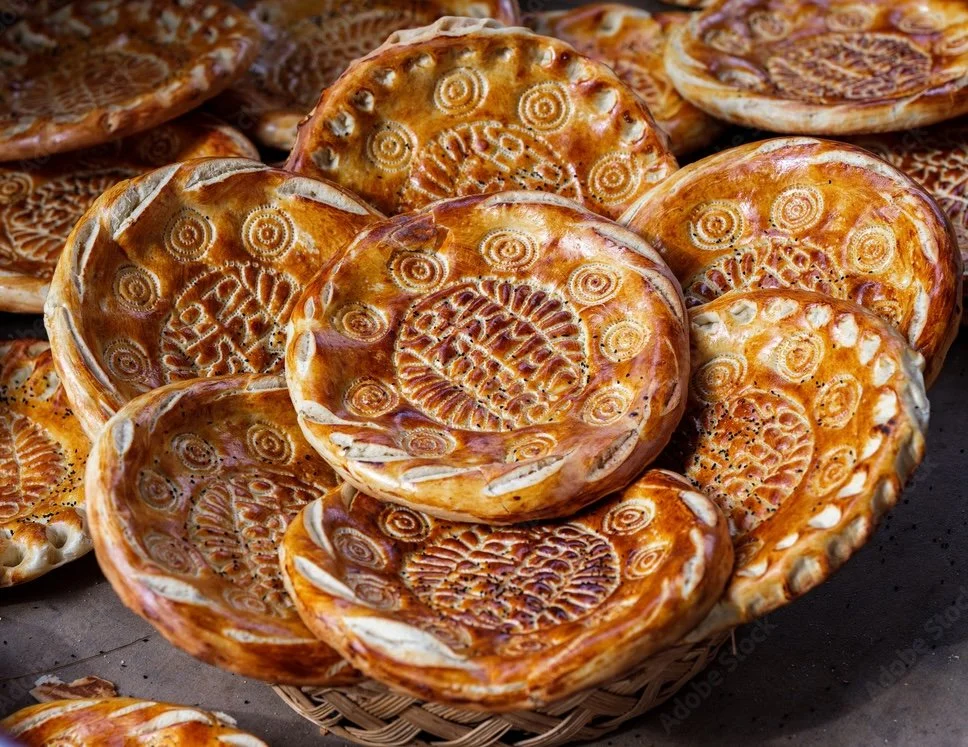
Non (Samarkand Bread)
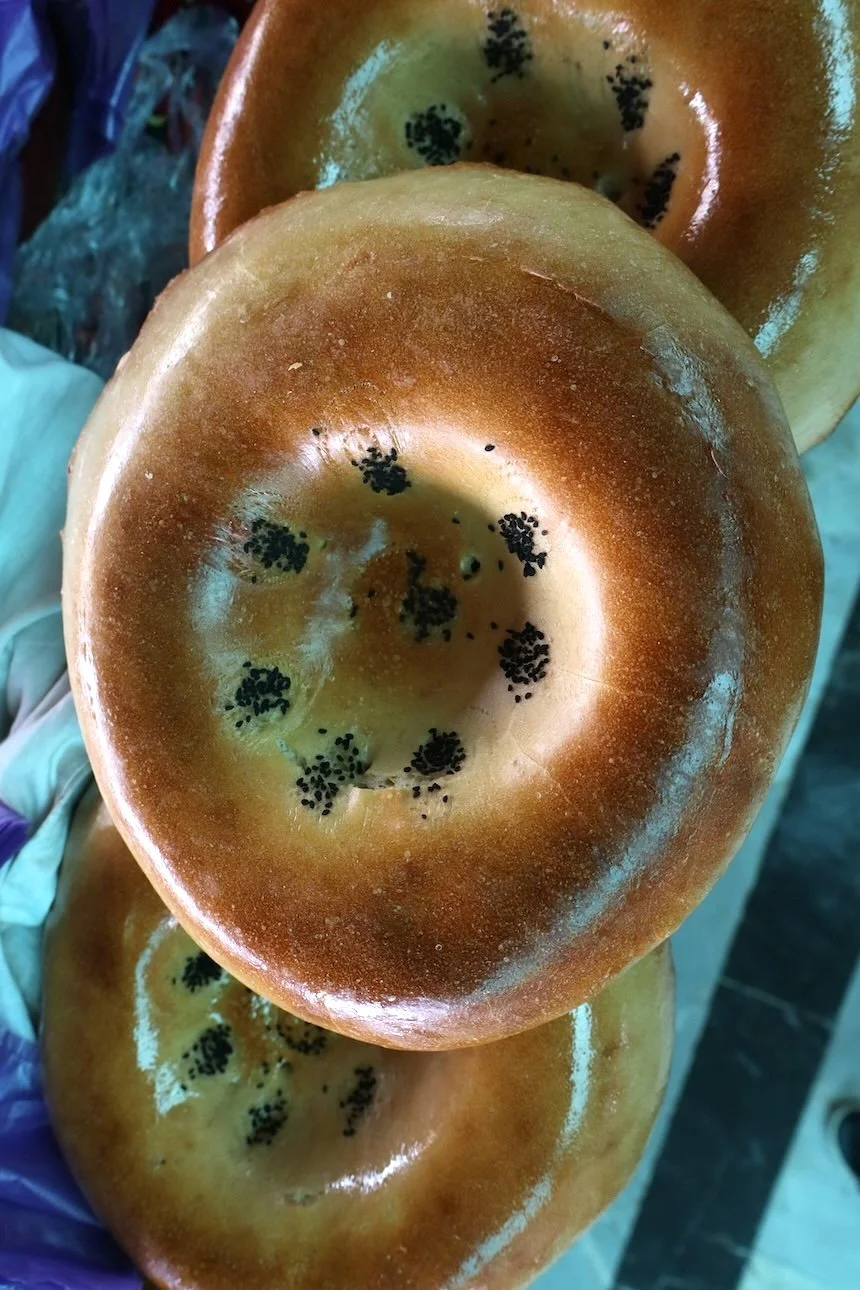
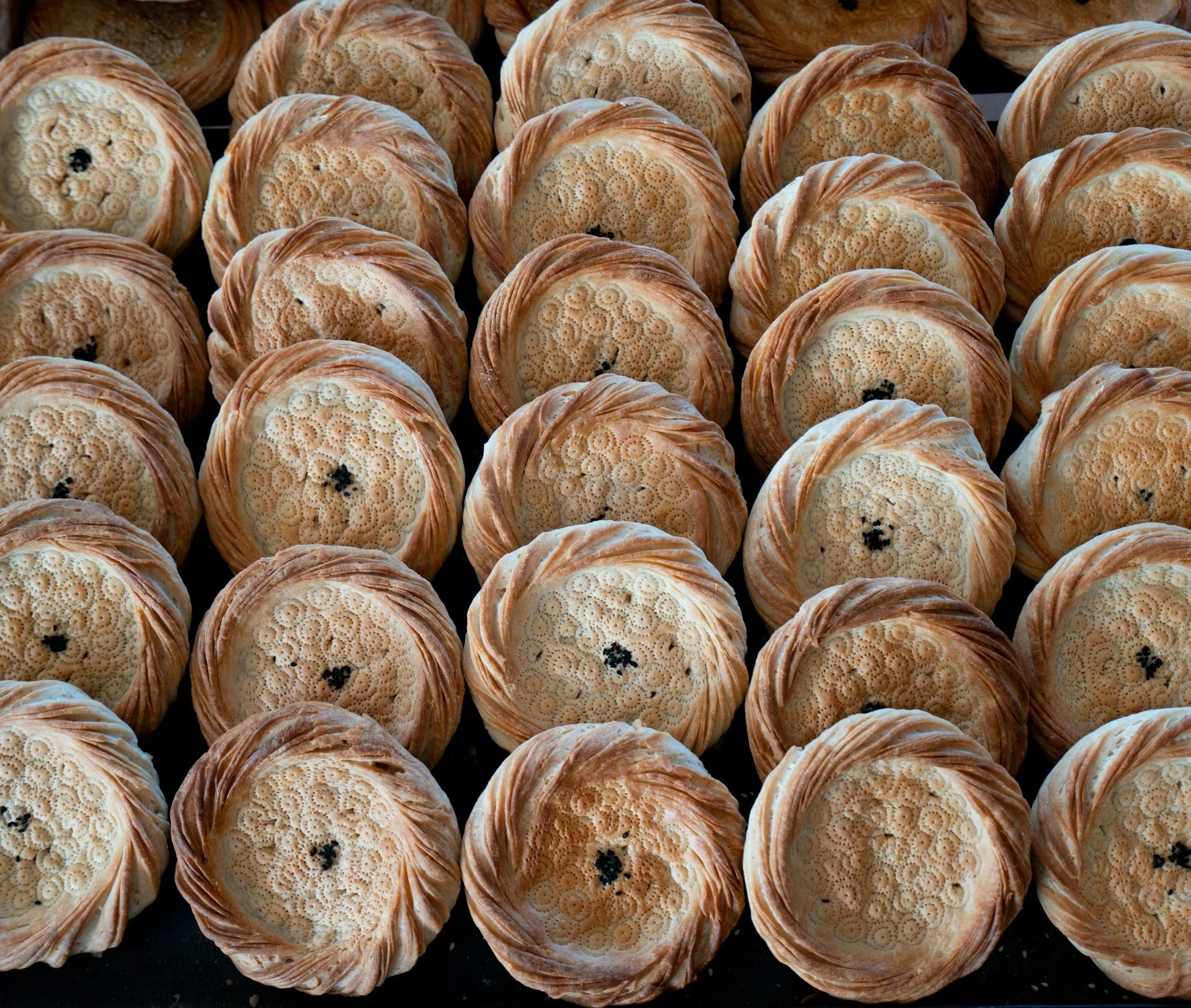
Samarkand's bread is famous across Central Asia and regarded as the best in Uzbekistan. Stamped with intricate patterns using a tool called a chekich and baked directly on the walls of a tandoor, the loaves have a crisp, sesame-seeded crust and a dense, chewy center. Locals say it tastes different anywhere else because of Samarkand's water and air.
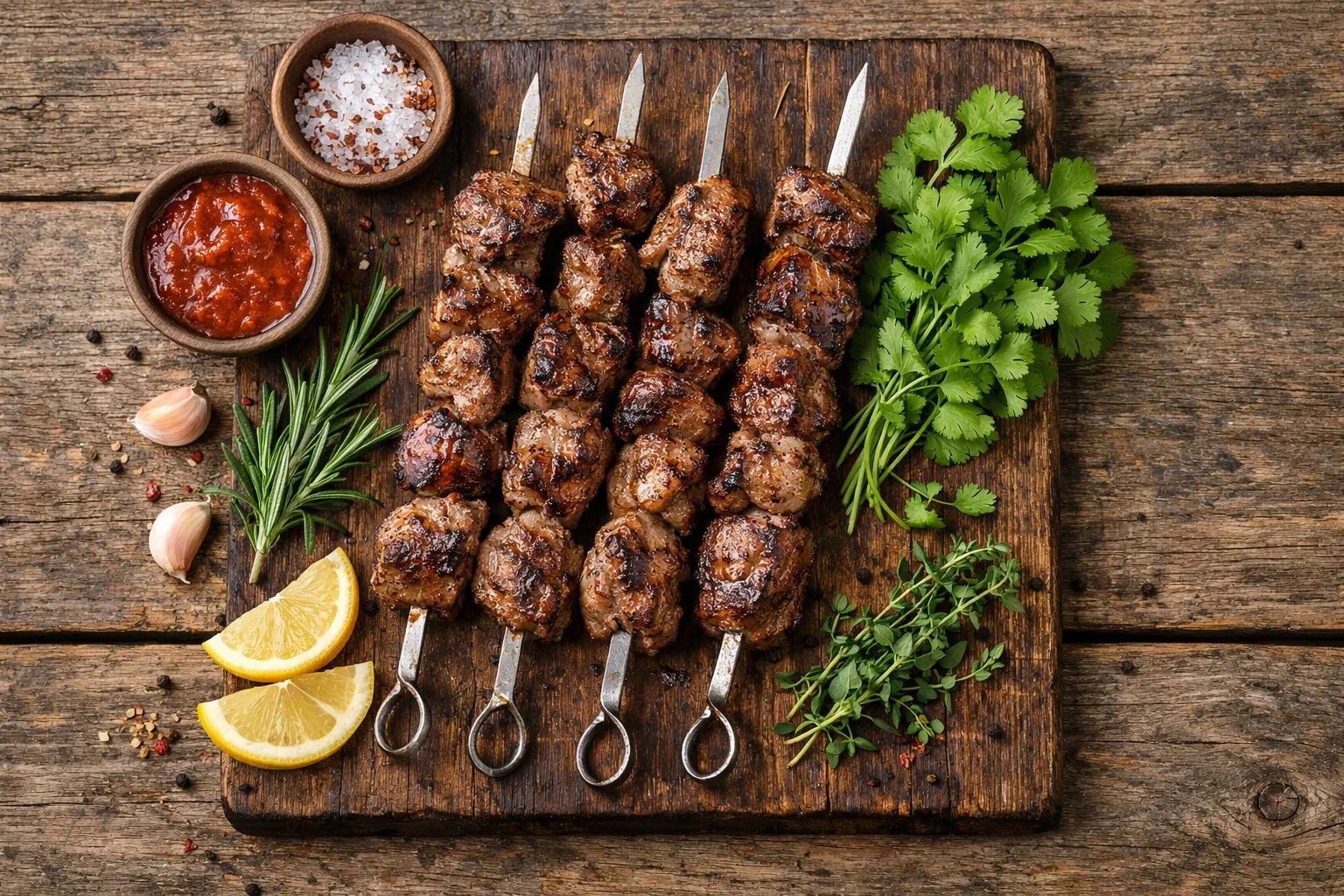
Shashlik
Samarkand's shashlik is a benchmark for the dish across the region. Cubes of lamb, often from the tail fat as well as the meat, are marinated with onion and cumin before being grilled over saxaul wood charcoal. The fat chars at the edges while the meat stays rare in the center. Served with raw onion, vinegar, and fresh non.
day 6 | Samarkand
This is the one that changes people.
Knife Making Workshop. The craft of Uzbek knife making, demonstrated by artisans who have inherited the tradition. The handles are carved from bone, horn, and wood. The blades are forged by hand.
Bread Making Workshop. Traditional Uzbek non, shaped, stamped, and baked in a tandoor. You make it yourself. You eat it warm. This is one of the simplest and most memorable experiences on the journey.
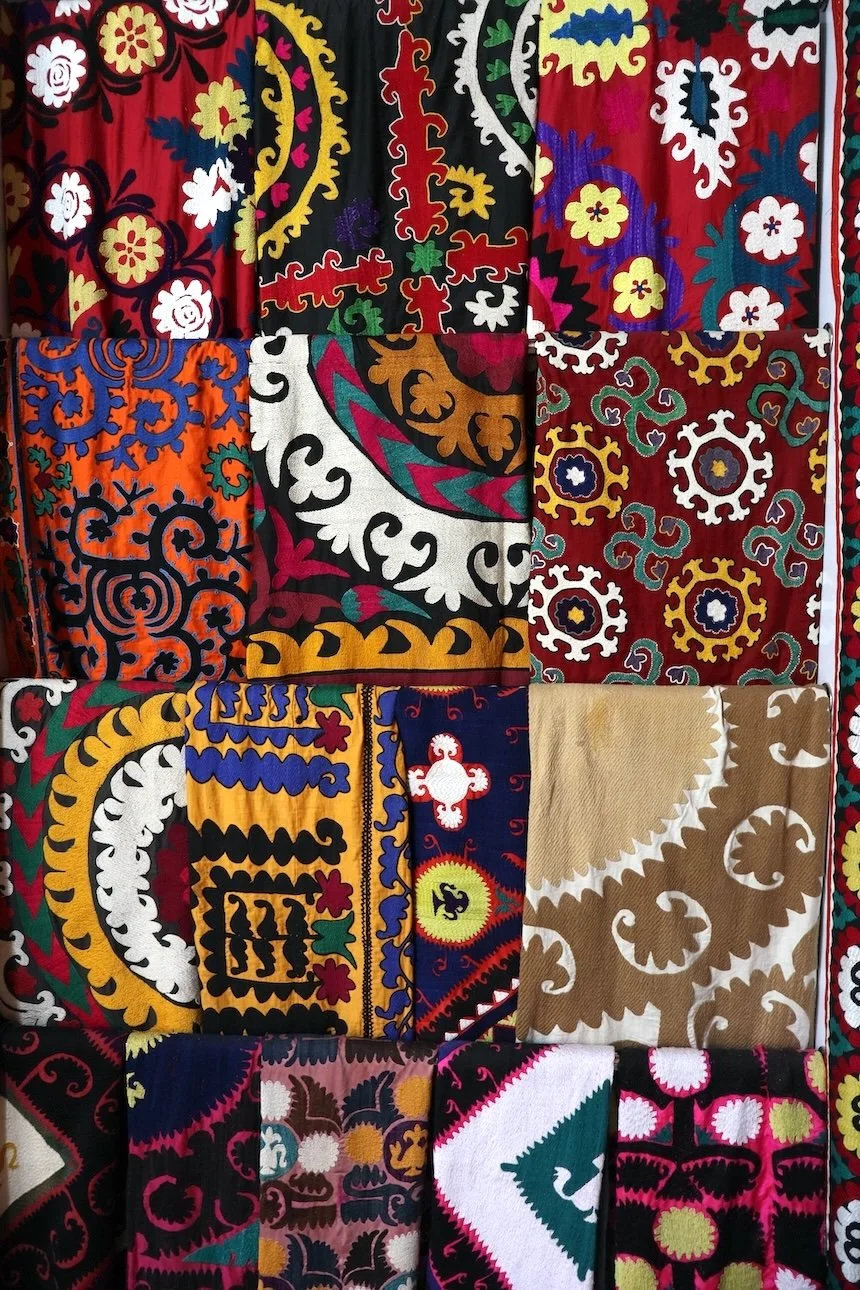
Silk Scarf Painting Workshop. Natural dyes, silk, and traditional Bukharan motifs. A hands-on activity that results in something you will actually want to take home.
Ulugbek Observatory. Built by a 15th century astronomer king who mapped two thousand stars before telescopes existed. The underground marble sextant is still in place. The story of Ulugbek, a scientist murdered by his own son for the crime of curiosity, is one of the most striking in Central Asian history.
Afrosiyab Museum and Ruins. The ancient city that predated Samarkand by millennia is slowly giving up its secrets. The 7th century frescoes in the museum are among the finest surviving examples of Sogdian art.
Kosh Havuz Hotel | Breakfast
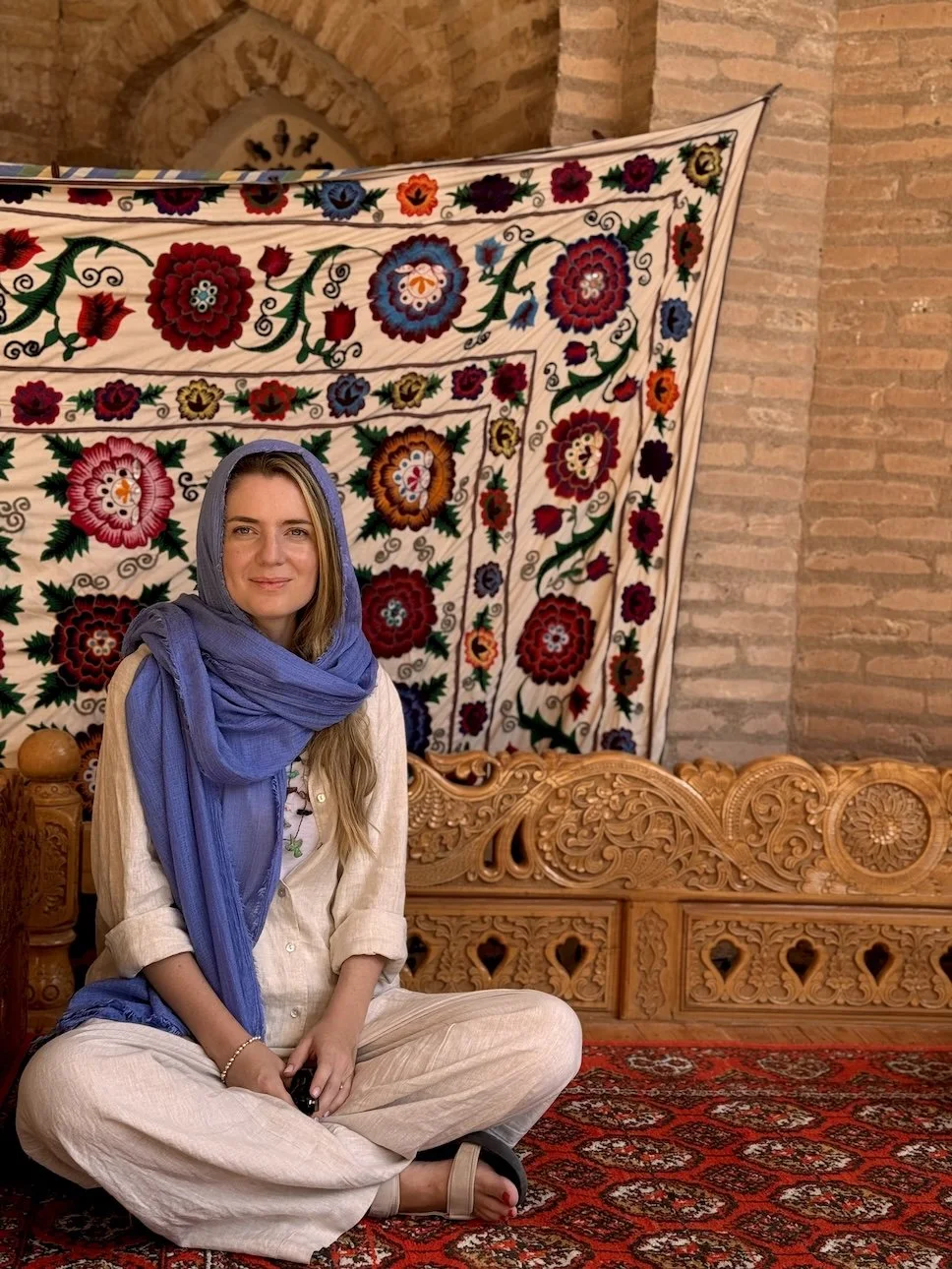
Tashkent’s Famous Dishes
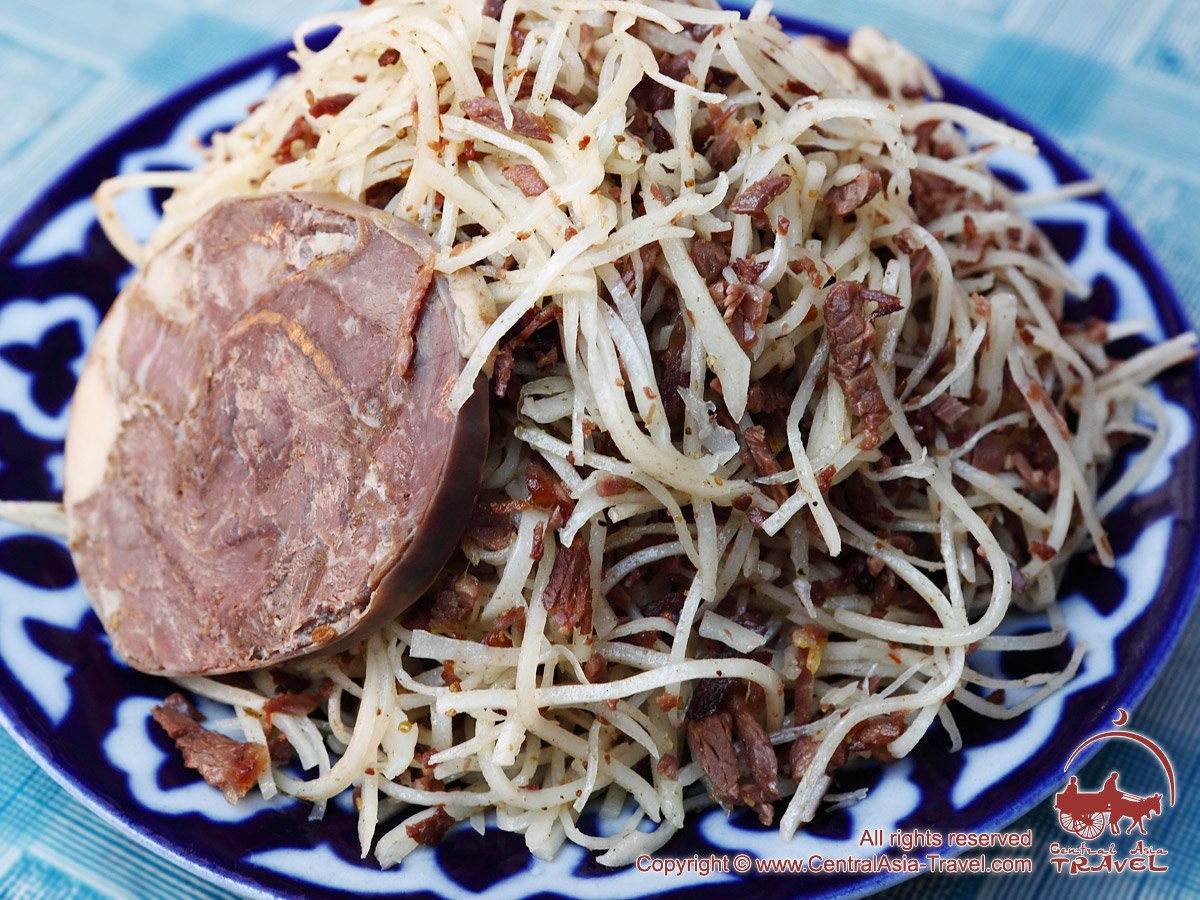
Norin
One of Tashkent's most iconic dishes and rarely found elsewhere. Hand-pulled noodles are served cold, topped with finely shredded boiled horsemeat and lamb, and finished with a pour of rich meat broth. The combination of cold noodles, warm broth, and horsemeat is specific to the capital and carries genuine cultural weight.
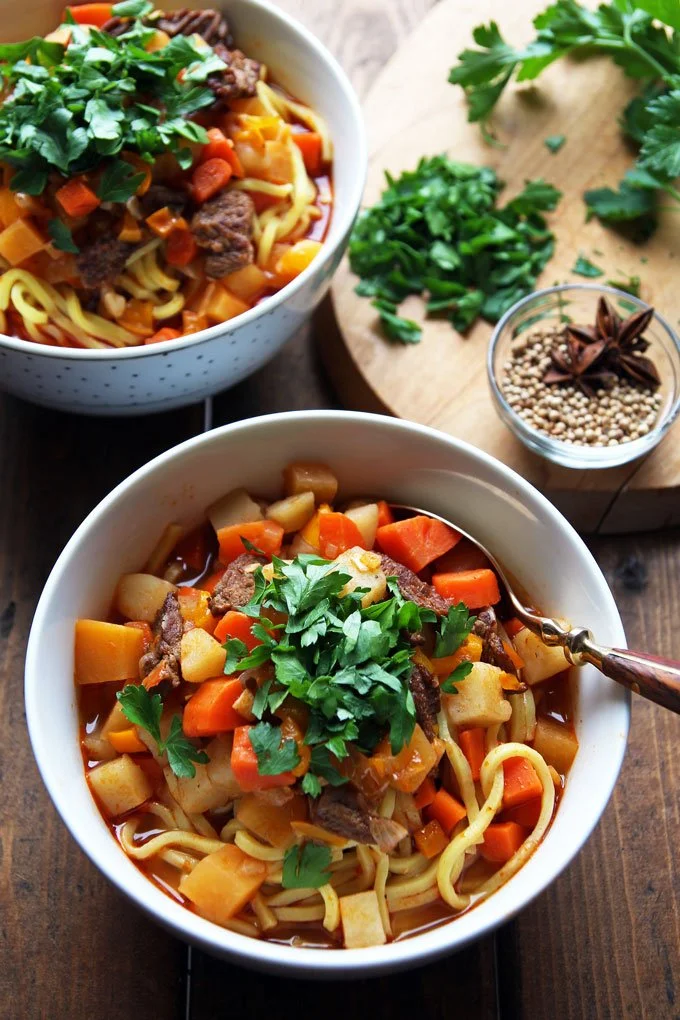
Lagman
A dish with Central Asian and Dungan (Chinese Muslim) roots that Tashkent has made its own. Hand-stretched noodles are served in a deep, spiced broth loaded with lamb, bell peppers, tomatoes, and garlic. The noodles are thick, chewy, and made to order. Every family and restaurant has a slightly different version of the sauce.
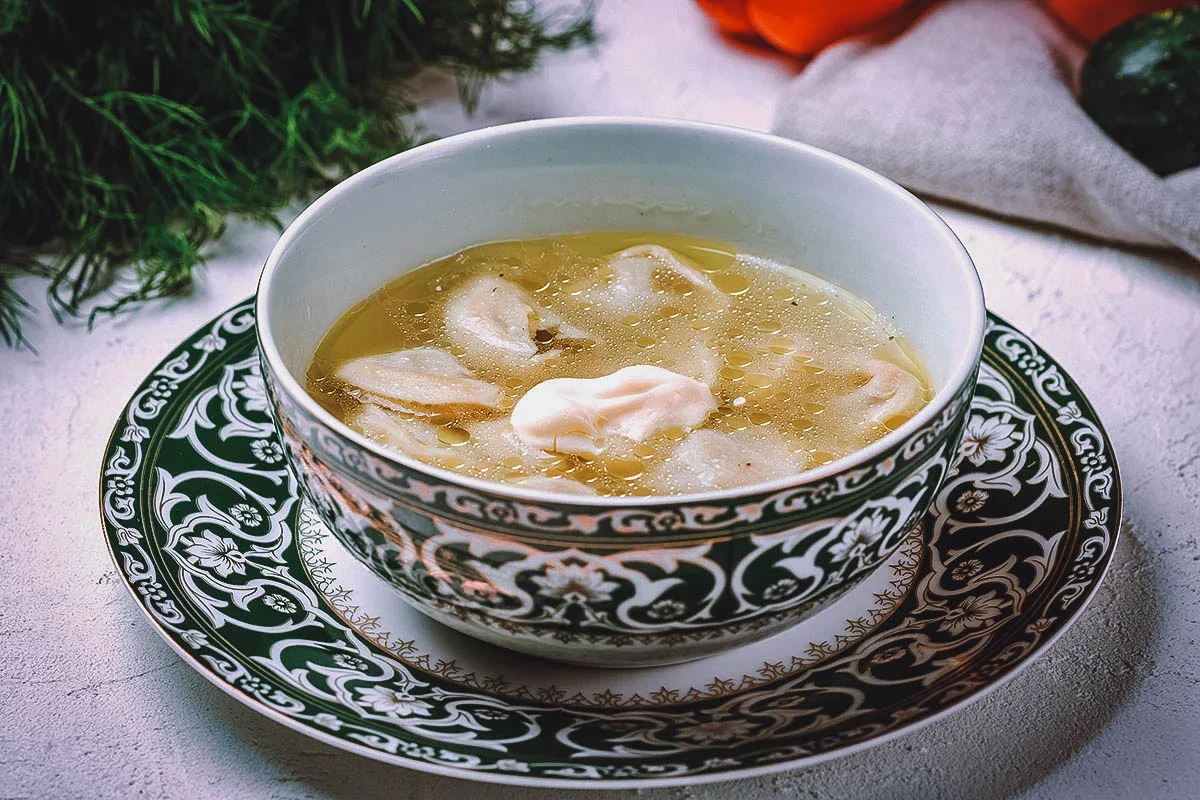
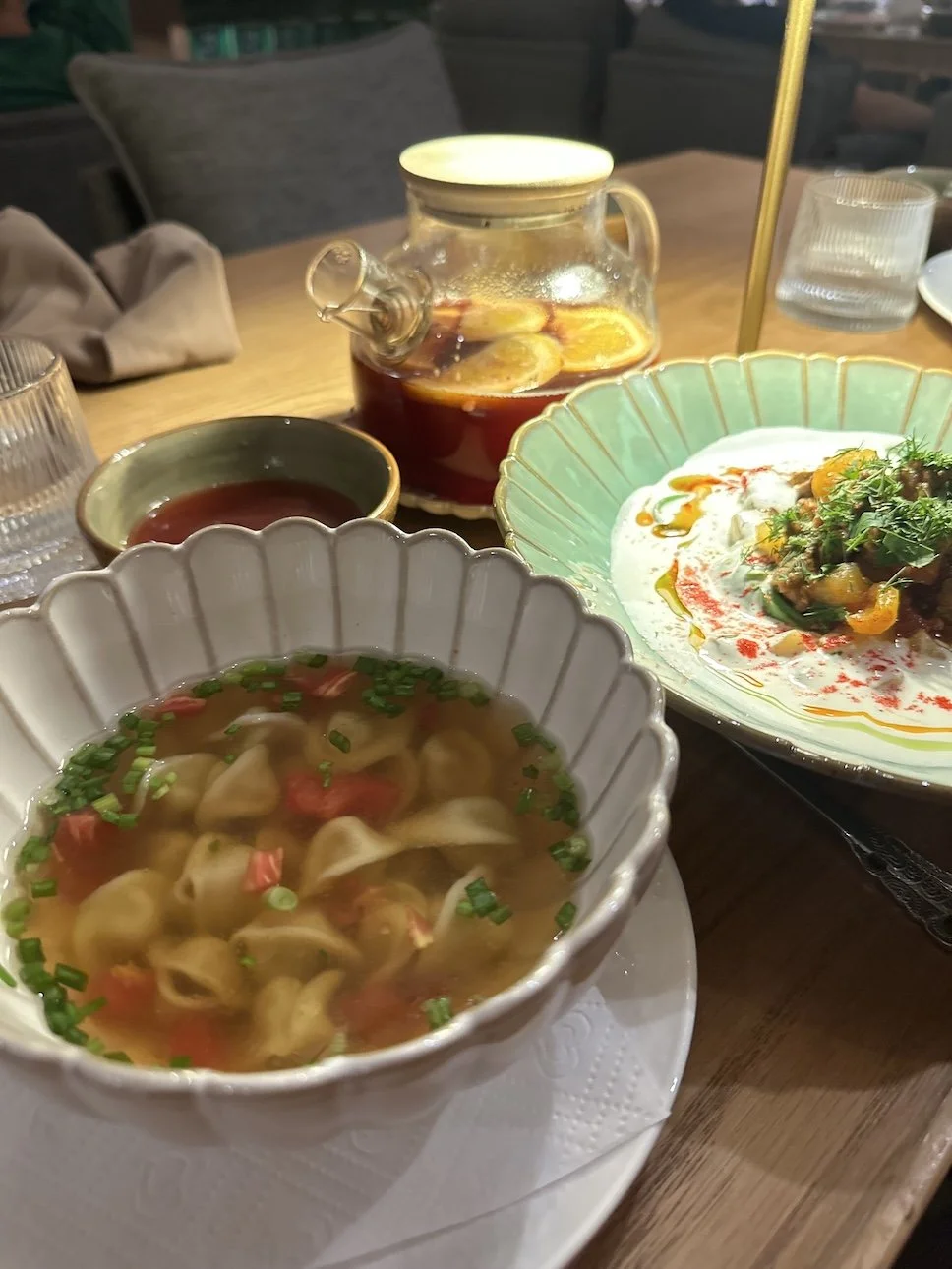
Chuchvara
Tashkent's answer to dumplings. Smaller and more delicate than Russian pelmeni, these are thin dough parcels filled with minced lamb and onion, served in a clear sour broth with a spoonful of katyk on the side. A staple of home cooking and teahouse menus across the city, they are a good measure of a kitchen's attention to detail.
day 7 | Tashkent
A final morning in Samarkand before the train takes you to the capital.
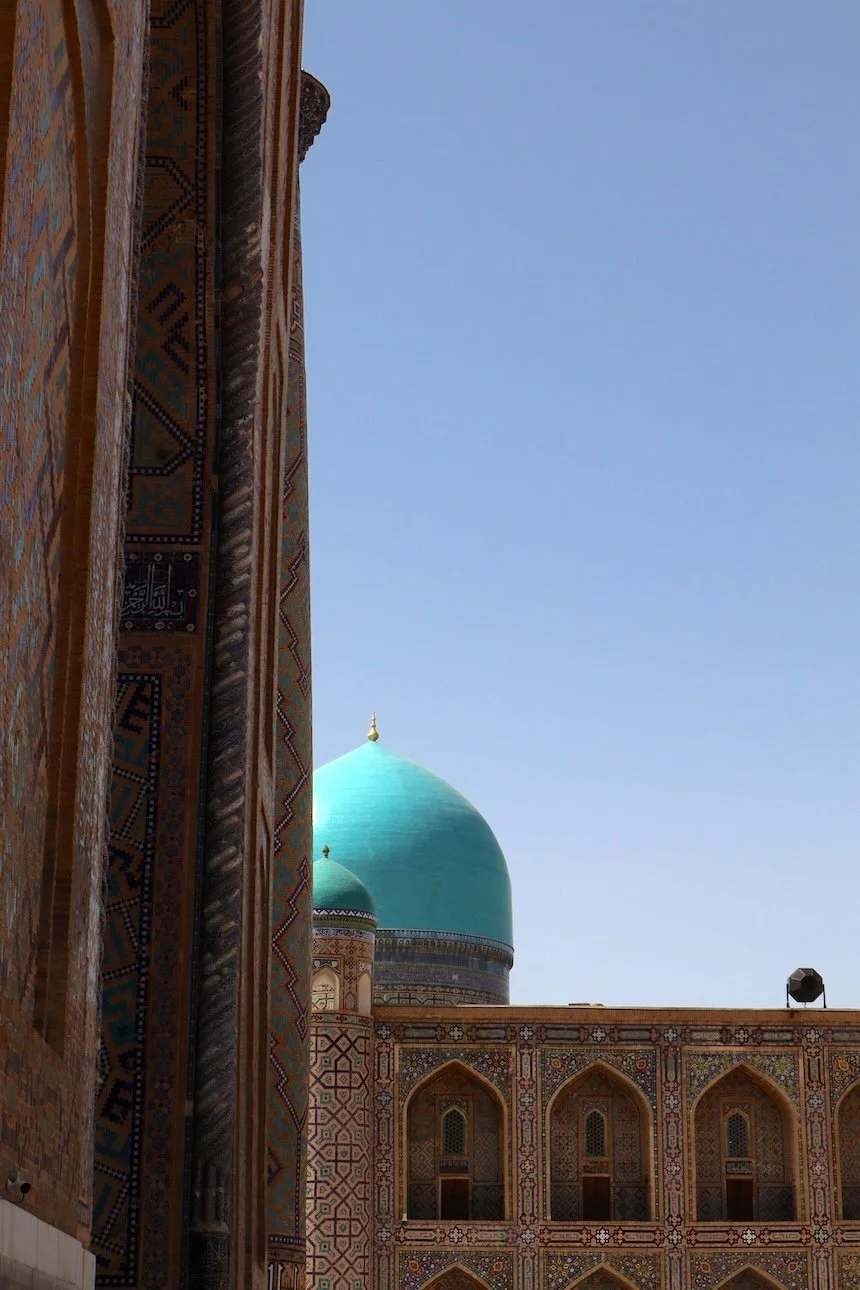
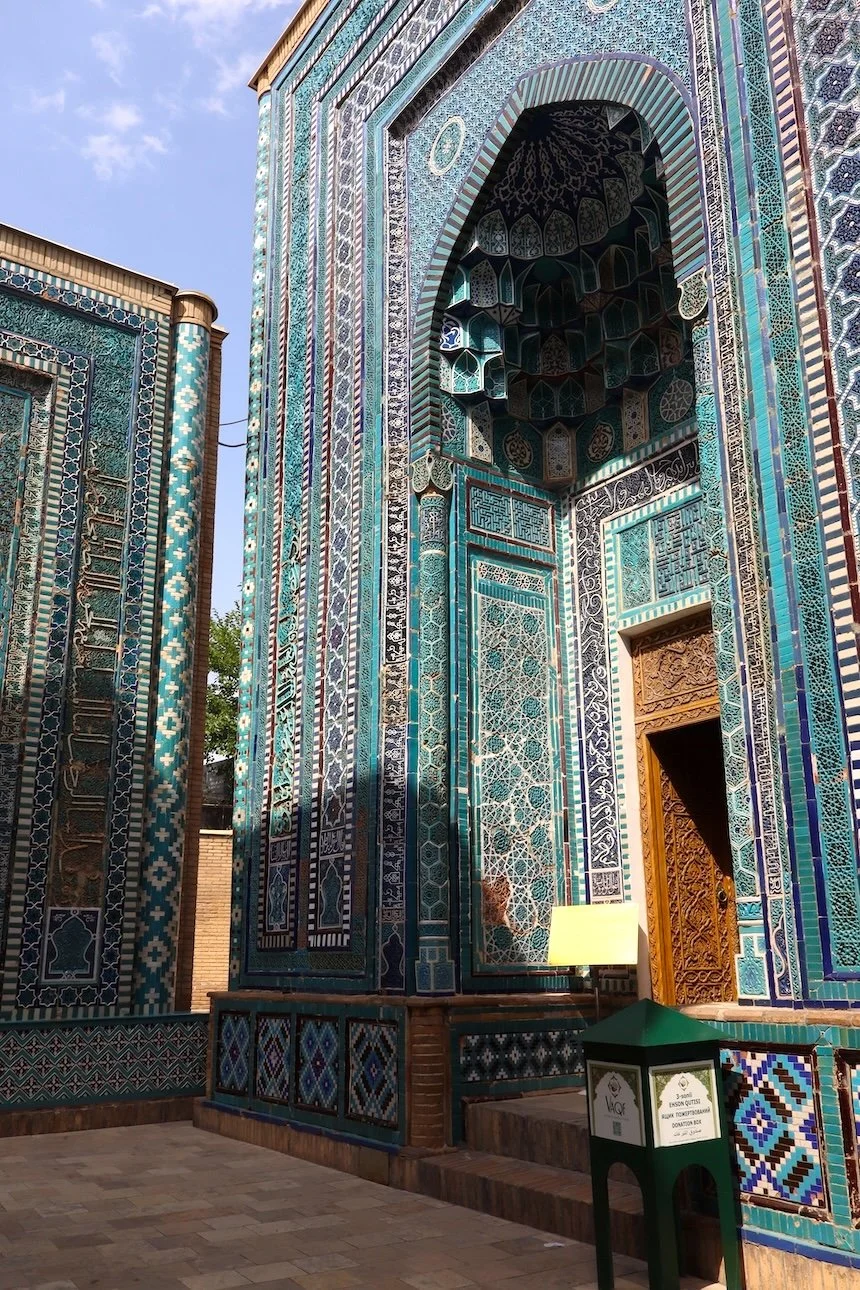
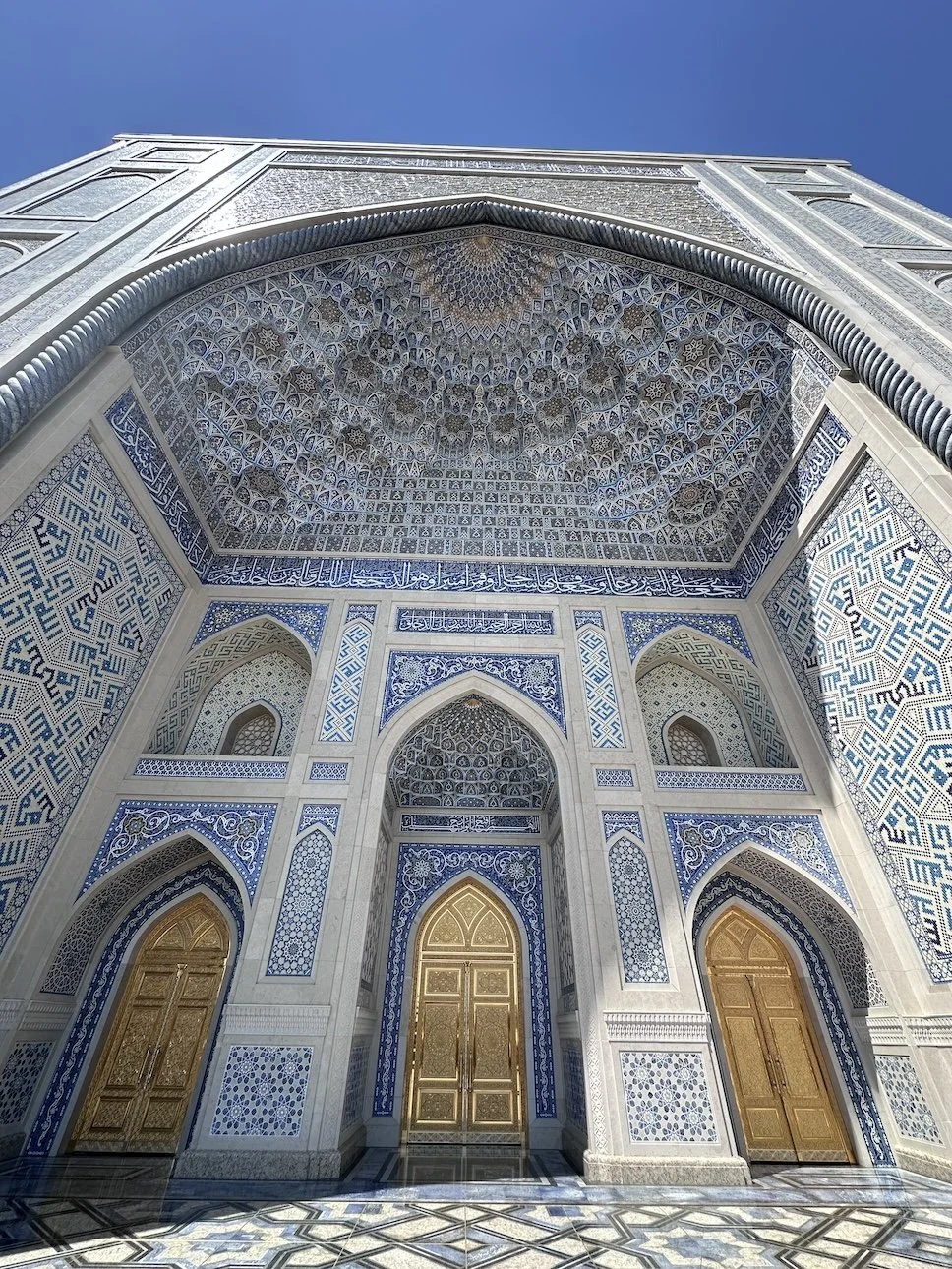
Guri Emir Mausoleum. The resting place of Tamerlane. The ribbed turquoise dome is one of the most recognizable in Central Asia and the interior, covered in onyx and gold, is among the most elaborate of its era.
Siyob Bazaar. Samarkand's main market. Bread, dried fruit, spices, and the particular energy of a bazaar that has been running in the same place for centuries. Go before the train.
The Afrosiyob Train to Tashkent. A fast train. Two hours and twenty minutes. A capital waiting at the other end.
Arrival in Tashkent.
Sapiens Hotel | Breakfast
day 8 | Tashkent
Tashkent is not what most people expect and that is exactly why it works.
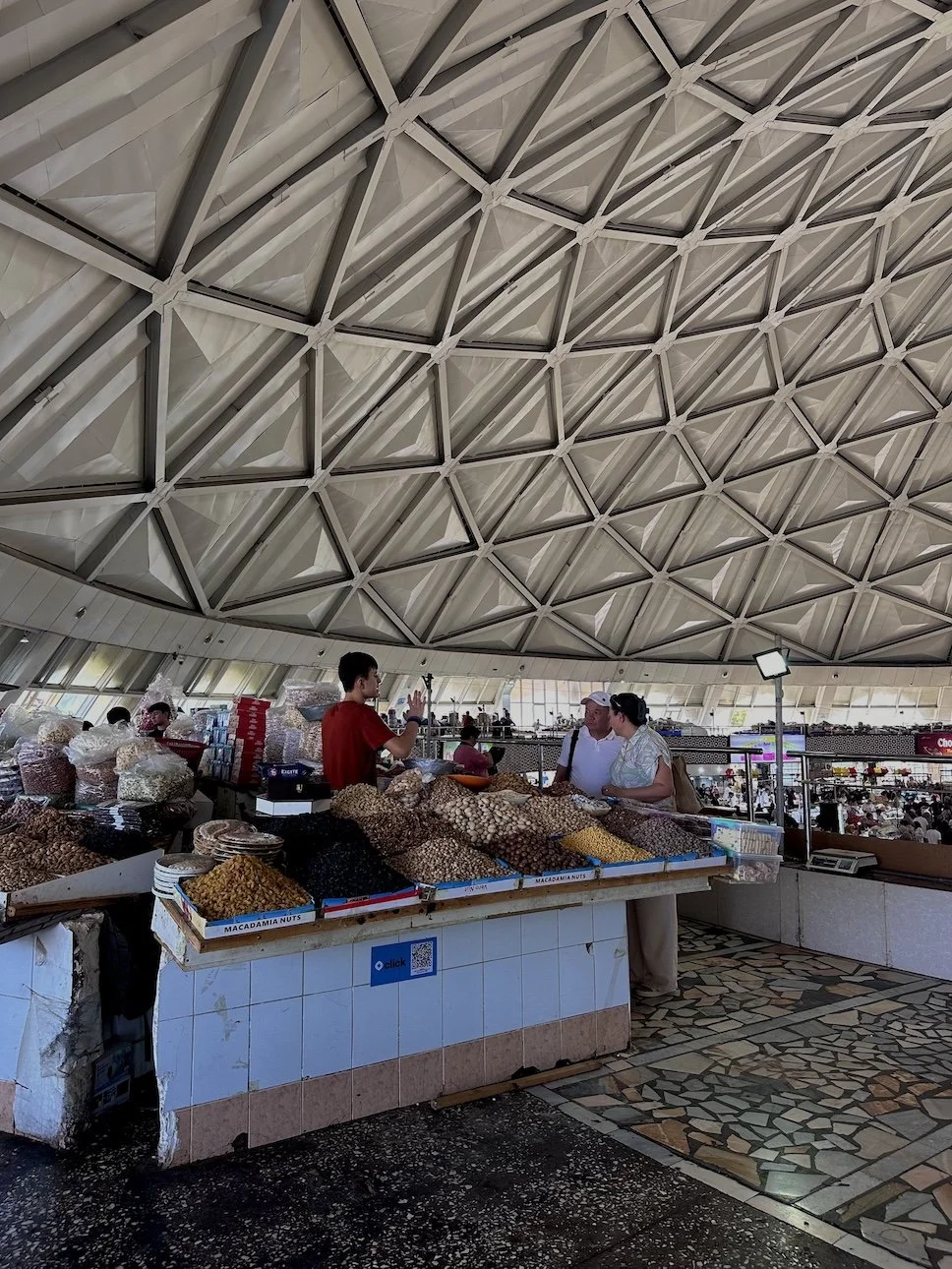
Chorsu Bazaar Food Tour. The covered bazaar has been running in the same structure for centuries. A guided food tour through the stalls: local flavors, market culture, Uzbek snacks, seasonal produce. Your guide knows which stalls matter and why.
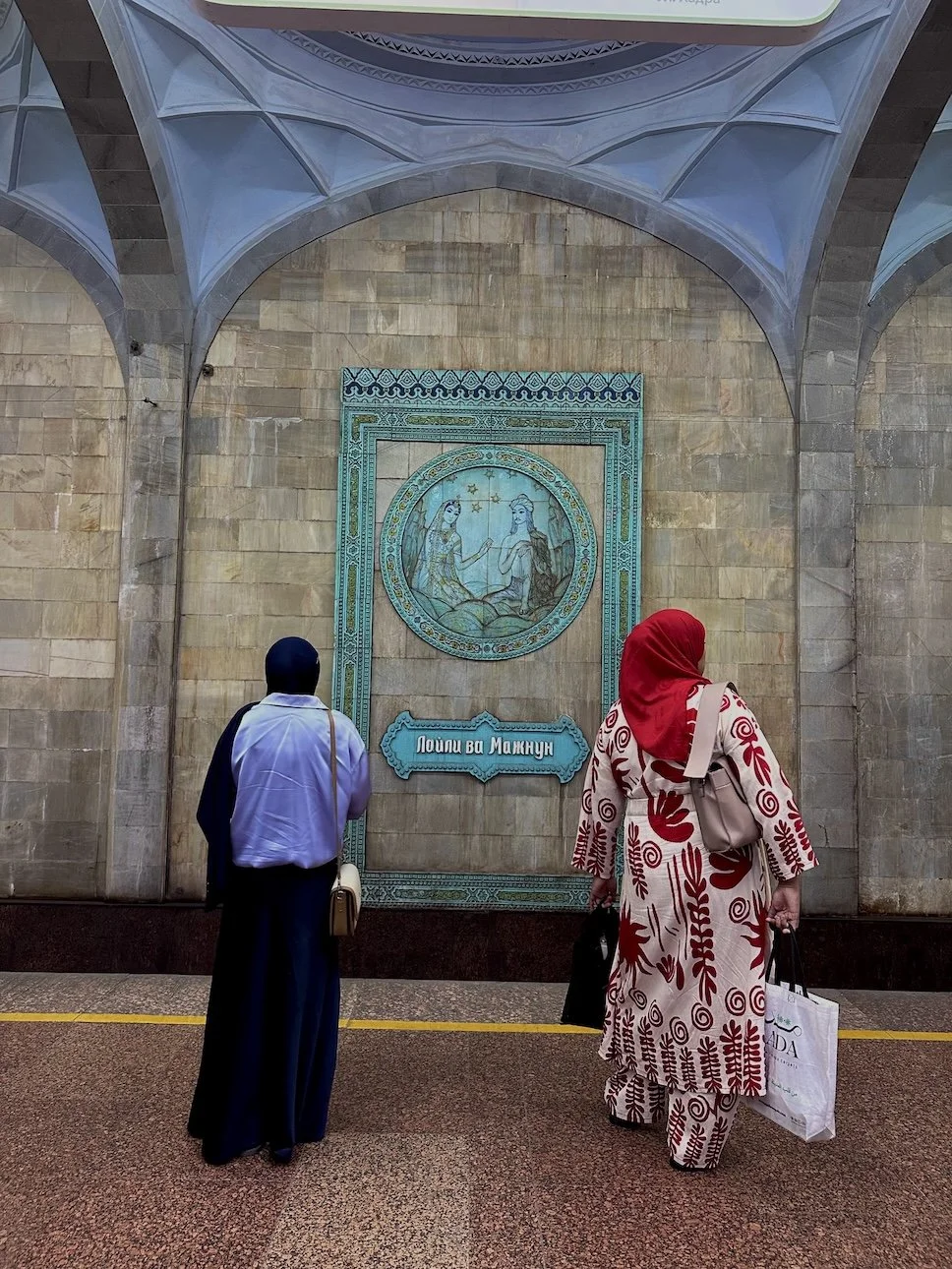
Tashkent Metro. Each station is a different architectural statement, tiled like a palace hall. This is Soviet-era design at its most ambitious and it is still running.
Plov Center Lunch. Where Tashkent's best cooks gather every morning and cook plov in massive cast iron kazan. Go before noon. After that it is gone.
Navruz Park. Pottery workshops, craft stalls, and a good place to find things worth taking home. Handmade jewelry, carpets, pottery, textiles.
Khastimom Complex. The Kaffal Shashi Mausoleum, the Barak Khan Madrasa, and the Muyi Muborak Library, which houses one of the oldest Qurans in the world. A seventh century manuscript that has survived everything.
Independence Square and Amir Temur Square. The public spaces that frame Tashkent's post-Soviet identity. The statue of Tamerlane at the center of the city tells you everything about how Uzbekistan sees itself now.
Intercontinental Tashkent | Breakfast
end of journey
Pricing & Inclusions
See our Booking Terms & Conditions here.
Starting at $1,000 per person per day
Based on two people in double occupancy and subject to increase depending on itinerary specifics and dates.
Accommodation: Boutique hotels and guesthouses throughout, selected for their character, location, and authenticity, plus one night in a traditional yurt.
Transport: All private transfers with a personal guide for the entire trip.
Tours & Activities: All tours, activities, and excursions with an expert English-speaking guide as listed in the itinerary, along with the required entrance fees associated with the tours.
Meals: All breakfasts, some meals.
Other: City taxes associated with your accommodations. Restaurant reservations and coordination.
Exclusions
Flights · Travel insurance · Tips