Mosques Worth Crossing the World For
Some places require more than a plane ticket. They require patience, curiosity, and a willingness to follow roads that narrow into dust, silence and faith. The mosques on this list are not the ones that appear on glossy postcards or guidebook covers. Many are tucked deep within mountain villages, hidden behind unmarked alleyways, or standing quietly in corners of the world where few travelers think to look. Some are small, humble, and almost invisible at first glance, yet their spiritual weight is undeniable.
Over the years, I have been fortunate enough to visit most of these mosques personally, often reaching them through long detours, local advice, and journeys that demanded time and intention. What I found in return was never just architecture, but atmosphere. Stories carried in stone. Communities shaped by devotion. Beauty that feels earned. This is a collection of mosques worth crossing the world for, not because they are famous, but because they stay with you long after you leave.
Larabanga Mosque | Ghana
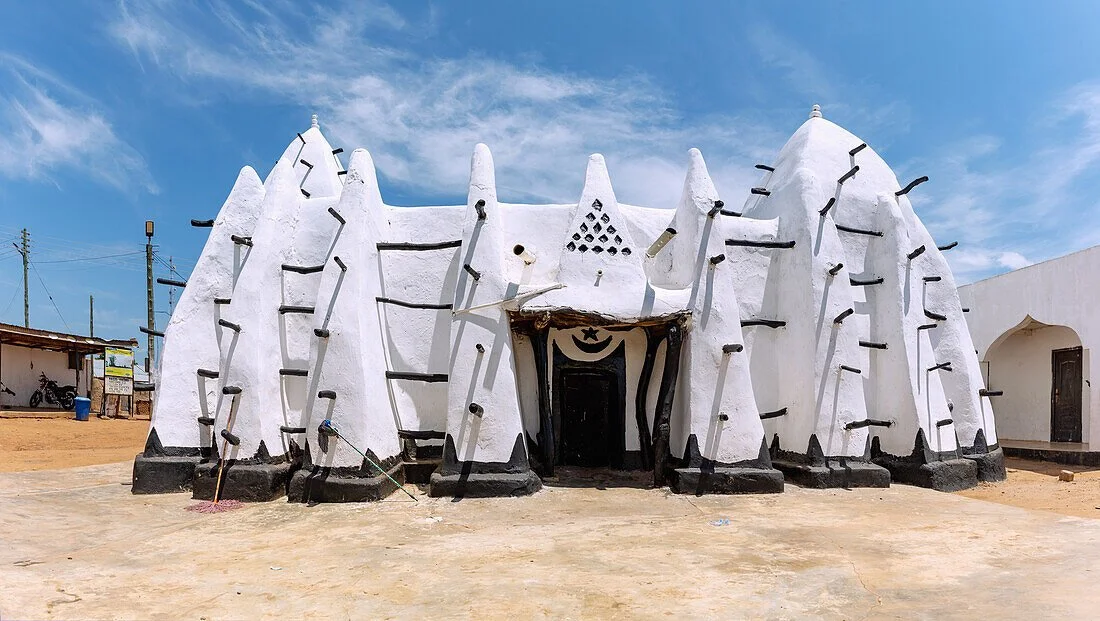
Built in 1421 CE, the Larabanga Mosque is widely considered one of the oldest mosques in West Africa, and without question one of its most hauntingly beautiful. Constructed in the distinctive Sudano Sahelian architectural style, its sculpted mud walls, tapered buttresses, and timber beams feel almost organic, as though the building rose naturally from the earth itself. Located in the village of Larabanga, near the edge of what is now Mole National Park, this mosque has long served as a spiritual anchor for travelers, traders, and local communities moving through ancient trans Saharan routes. Despite centuries of weathering and restoration, it remains deeply atmospheric, a place where time feels suspended and devotion is woven into every curve of clay.
Umayyad Mosque | Damascus, Syria
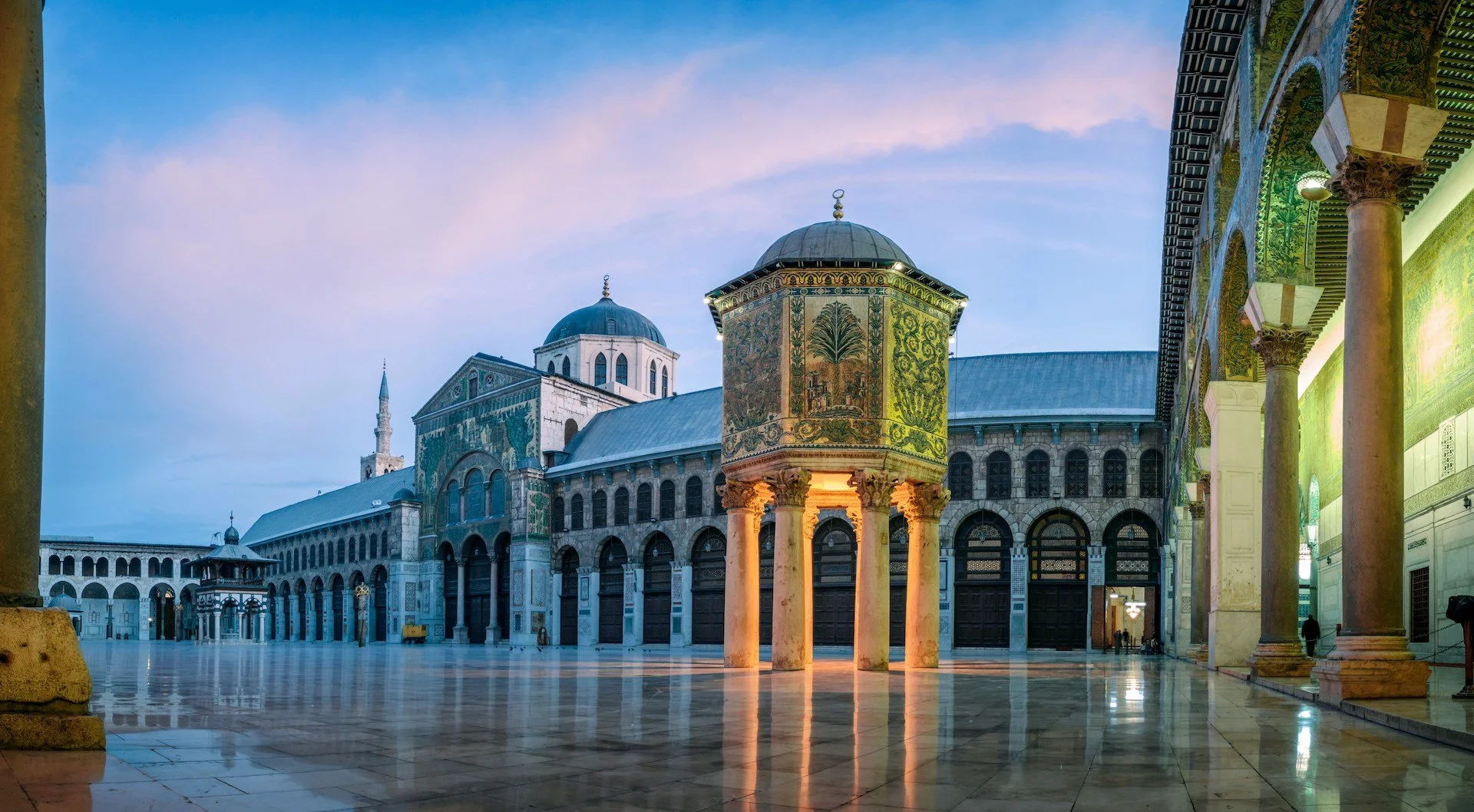
The Umayyad Mosque, also known as the Great Mosque of Damascus, is one of the oldest and most historically significant mosques in the world, dating back to completed construction in 715 CE under the Umayyad Caliph Al-Walid I. Built on the site of a Roman temple and later a Christian basilica, the mosque embodies a rich layering of civilizations, combining Byzantine architectural influences with early Islamic artistry. Its vast prayer hall, elegant mosaics, and monumental courtyard reflect the grandeur and ambition of the early Umayyad empire, which sought to establish Damascus as a spiritual as well as political capital. The mosque also houses the shrine of John the Baptist, linking Christian and Islamic histories in one sacred space. It’s a monument at the crossroads of faith, politics, and art, where over thirteen centuries of devotion, scholarship, and culture have left an indelible mark.
Masjid Quba | Medina, Saudi Arabia
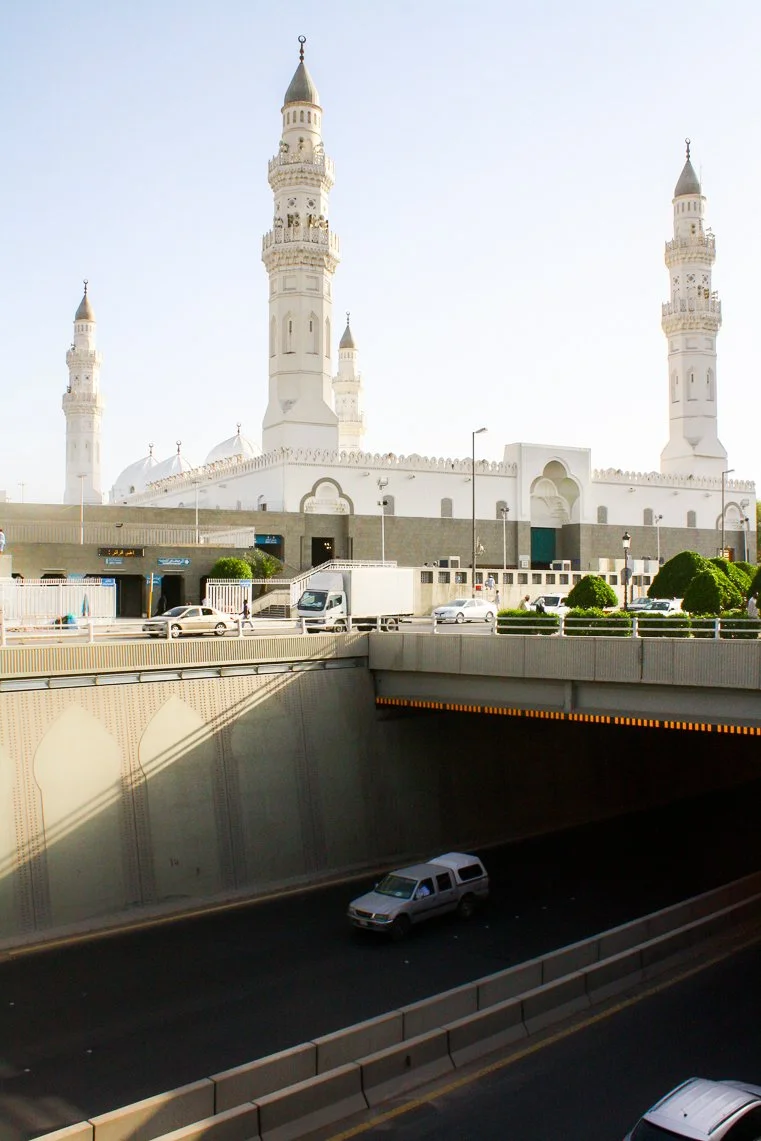
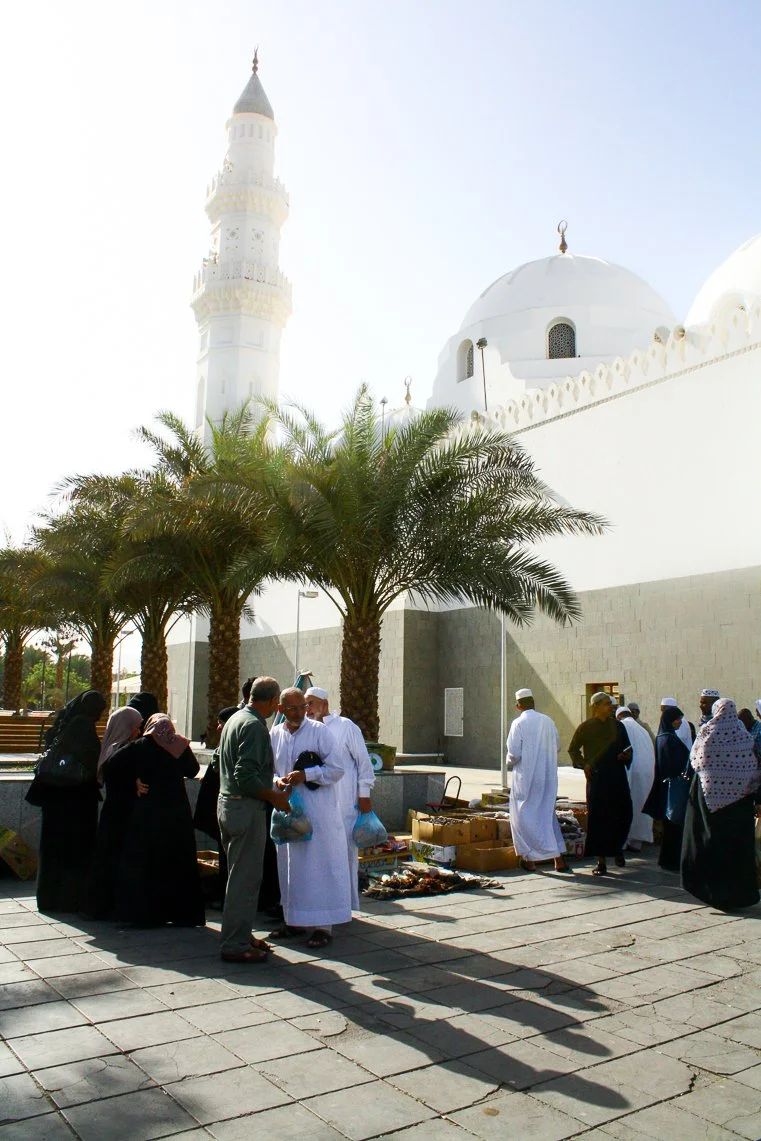
The first mosque in Islamic history, built by the Prophet Mohammed ﷺ in Saudi Arabia upon the Hijra in 622 CE, Al Quba Mosque holds a quiet magnitude that transcends its architecture. Though its earliest form was strikingly simple, its significance is immeasurable. To step into its courtyard is to stand at the very beginning of Islam’s physical and spiritual landscape, a place where devotion took root not through grandeur, but through intention. Even today, it feels less like a landmark and more like a pilgrimage in itself.
Masjid al-Shawadhna | Nizwa, Oman
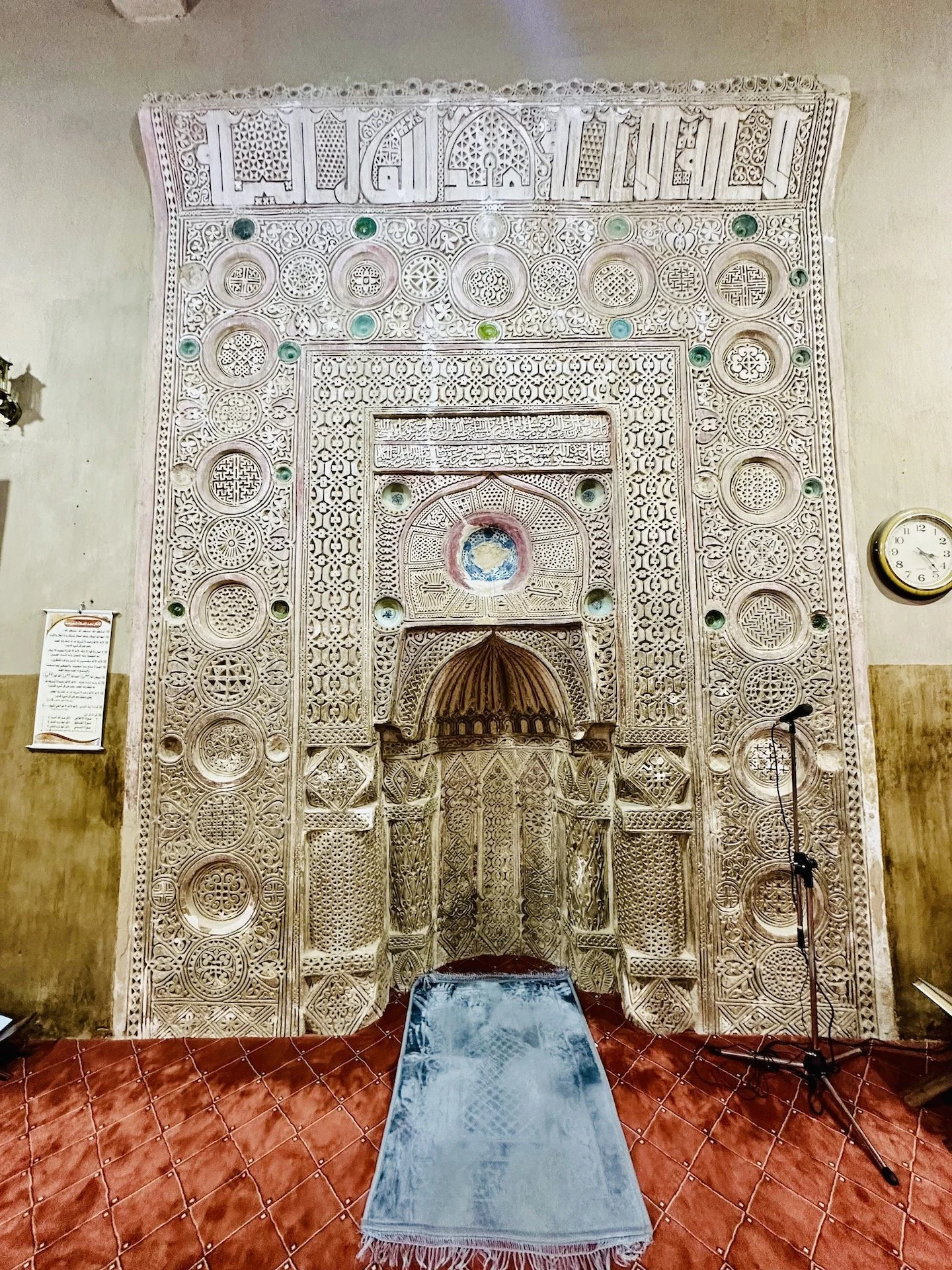
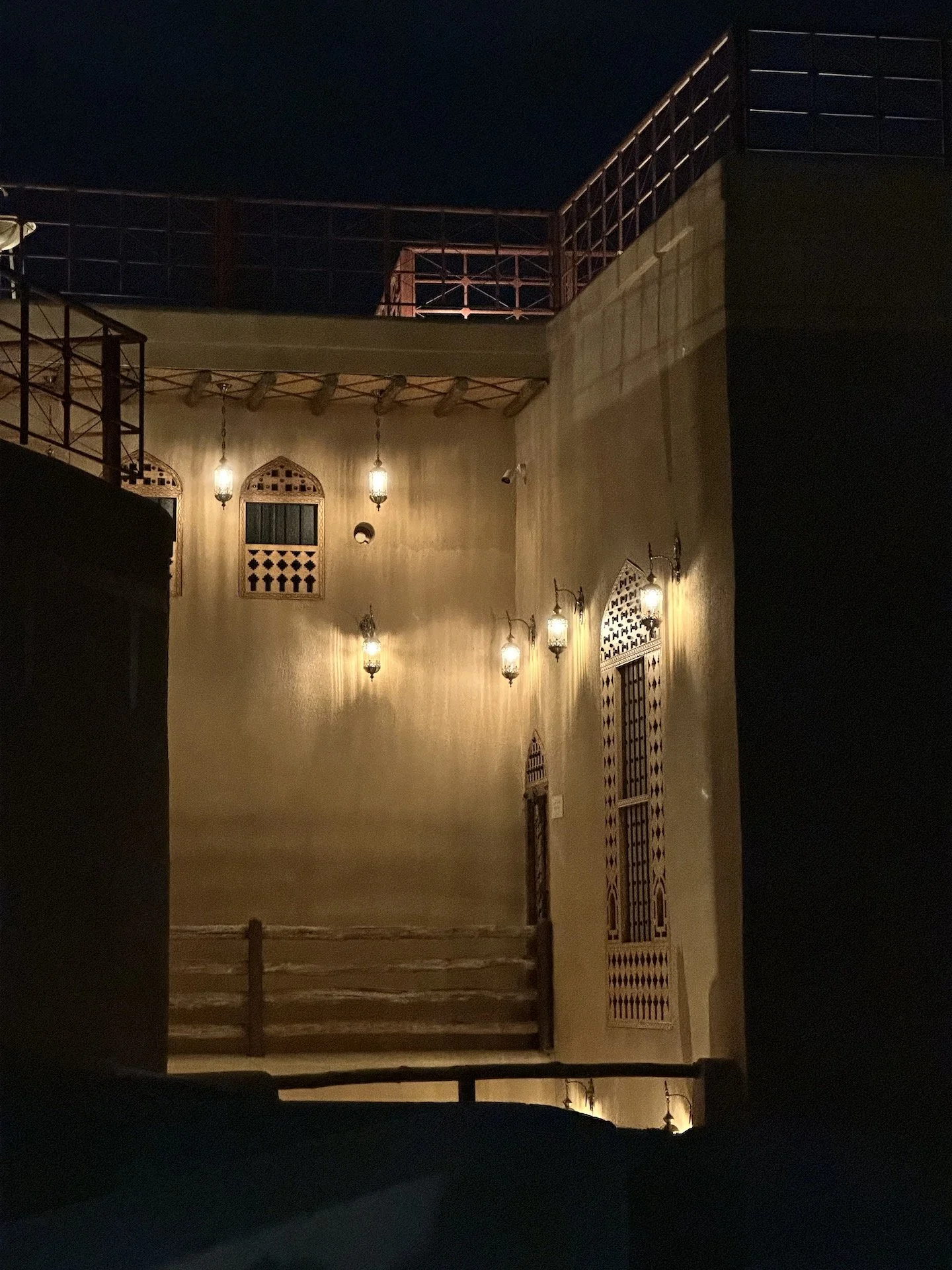
Dating back to Oman’s early Islamic period, Masjid al-Shawadhna stands as one of Nizwa’s most historically significant mosques. Its origins trace to the 7th–8th centuries, a time when Islam was spreading across the Arabian Peninsula and Nizwa was emerging as a center of faith, scholarship, and governance under the Ibadi imamate. Secluded in the heart of the old city, Masjid al-Shawadhna is modest in scale yet profound in presence. It’s hard to find and even harder to access, yet I made it in. Its simple stone walls and quiet courtyard evoke centuries of devotion, offering travelers a tangible connection to the spiritual and architectural heritage of Oman’s earliest Muslim communities.
Mosque of Ahmad ibn Tulun | Cairo, Egypt
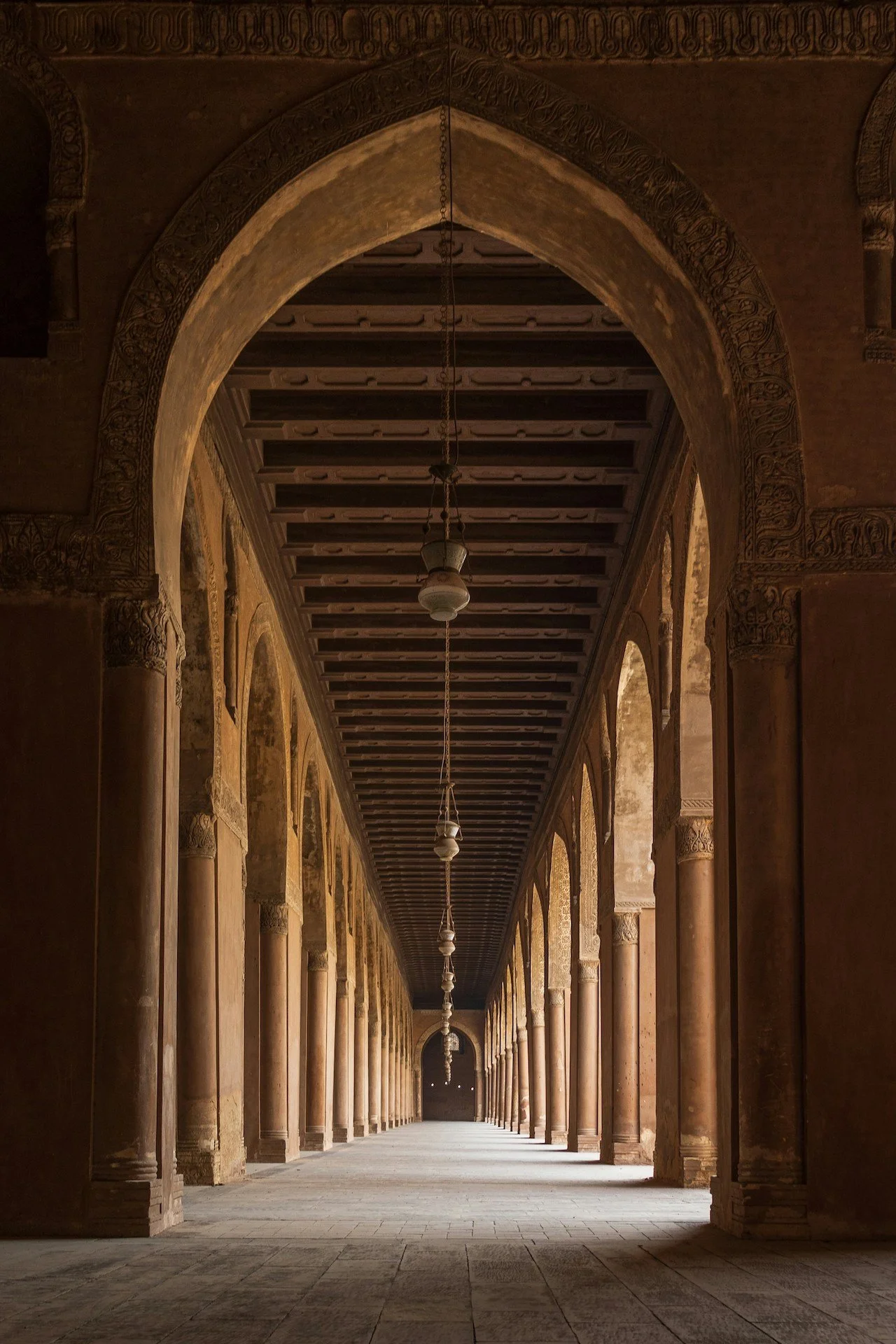
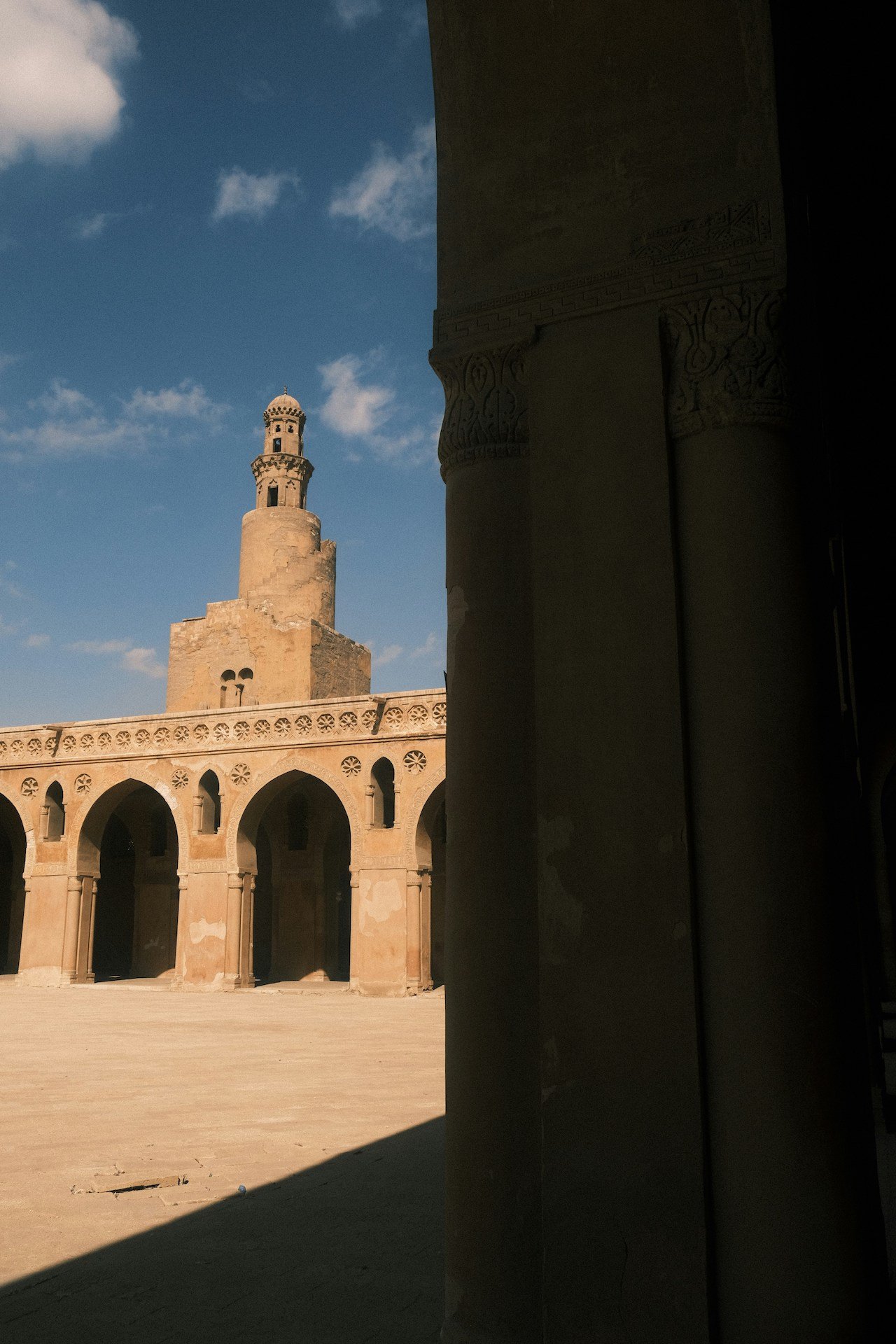
I’ve visited this special mosque in Egypt dozens of times throughout my childhood. Dating to the late 9th century (876–879 AD), the Mosque of Ibn Tulun is one of Egypt’s oldest surviving mosques in its original form, remarkable for both scale and historical significance. Commissioned by Ahmad ibn Tulun, the founder of the Tulunid dynasty, it reflects the emergence of autonomous rule in Egypt following centuries of Abbasid governance. Its vast open courtyards and striking brick spiral minaret—inspired by the Samarra style in Iraq—demonstrate early experimentation in Islamic architecture outside the Arabian Peninsula.
Beyond its architectural grandeur, Ibn Tulun Mosque has played a central role in Cairo’s spiritual and social life for over a millennium. It was not merely a place of worship but also a hub for education, legal discourse, and community gatherings. Its endurance through political shifts, urban growth, and natural wear makes it a living testament to the continuity and adaptability of Islamic practice in Egypt. Visiting the mosque is to witness the origins of a city and faith intertwined, centuries before the modern skyline took shape.
Great Mosque of Djenné | Mali
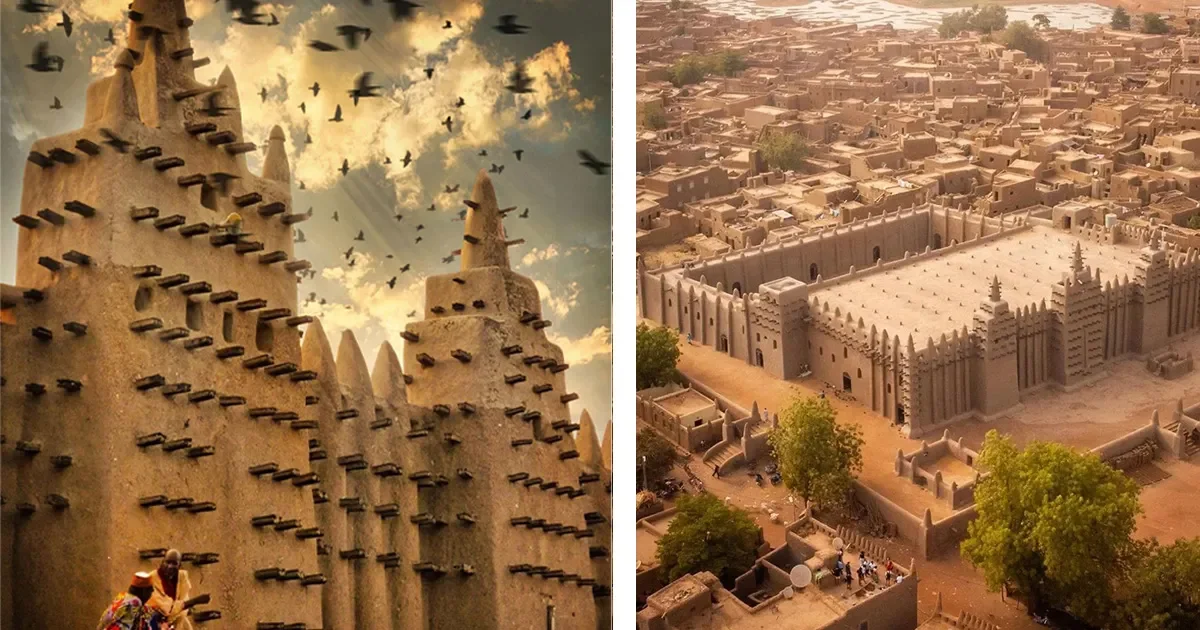
Photos by Alvaro Rojas
The largest mud‑brick mosque in the world with extraordinary silhouette and community presence. The Great Mosque of Djenné, first constructed in circa 13th century and rebuilt in 1907, stands as one of the most iconic examples of Sudano‑Sahelian architecture and a testament to the enduring ingenuity of West African Islamic communities. Built entirely of sun-baked mud bricks with intricately plastered façades and sculpted buttresses, its rhythmic pinnacles and timber scaffolding give the impression of a structure grown from the earth itself.
More than an architectural marvel, Djenné has been a center of learning, commerce, and devotion for centuries, its Friday prayers drawing scholars and traders from across the region. The mosque’s annual maintenance festival, the Crepissage, is both a communal and spiritual ritual, in which locals come together to replaster its walls, ensuring the mosque’s survival against the elements.
Tinmel Mosque | High Atlas Mountains, Morocco
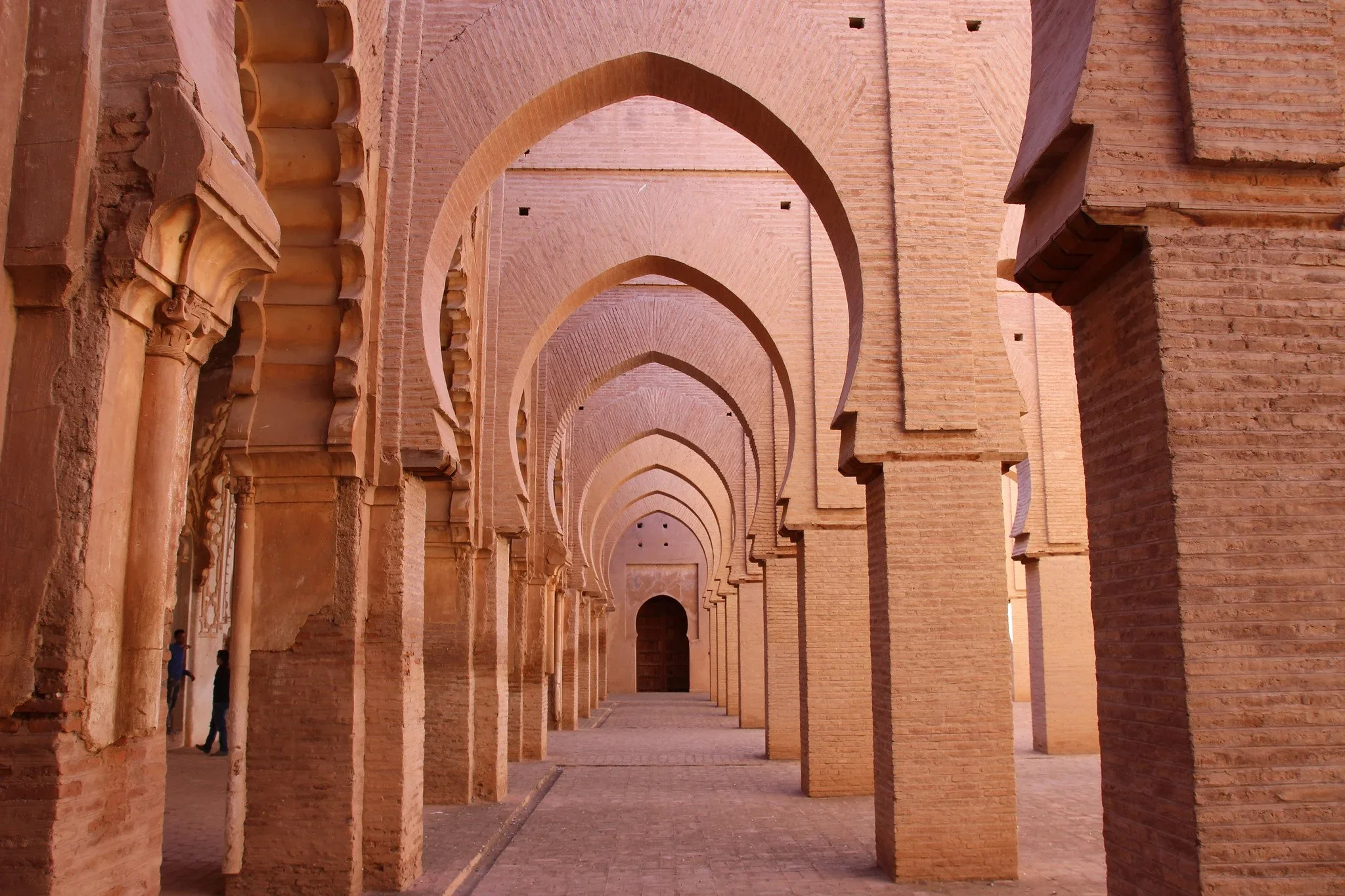
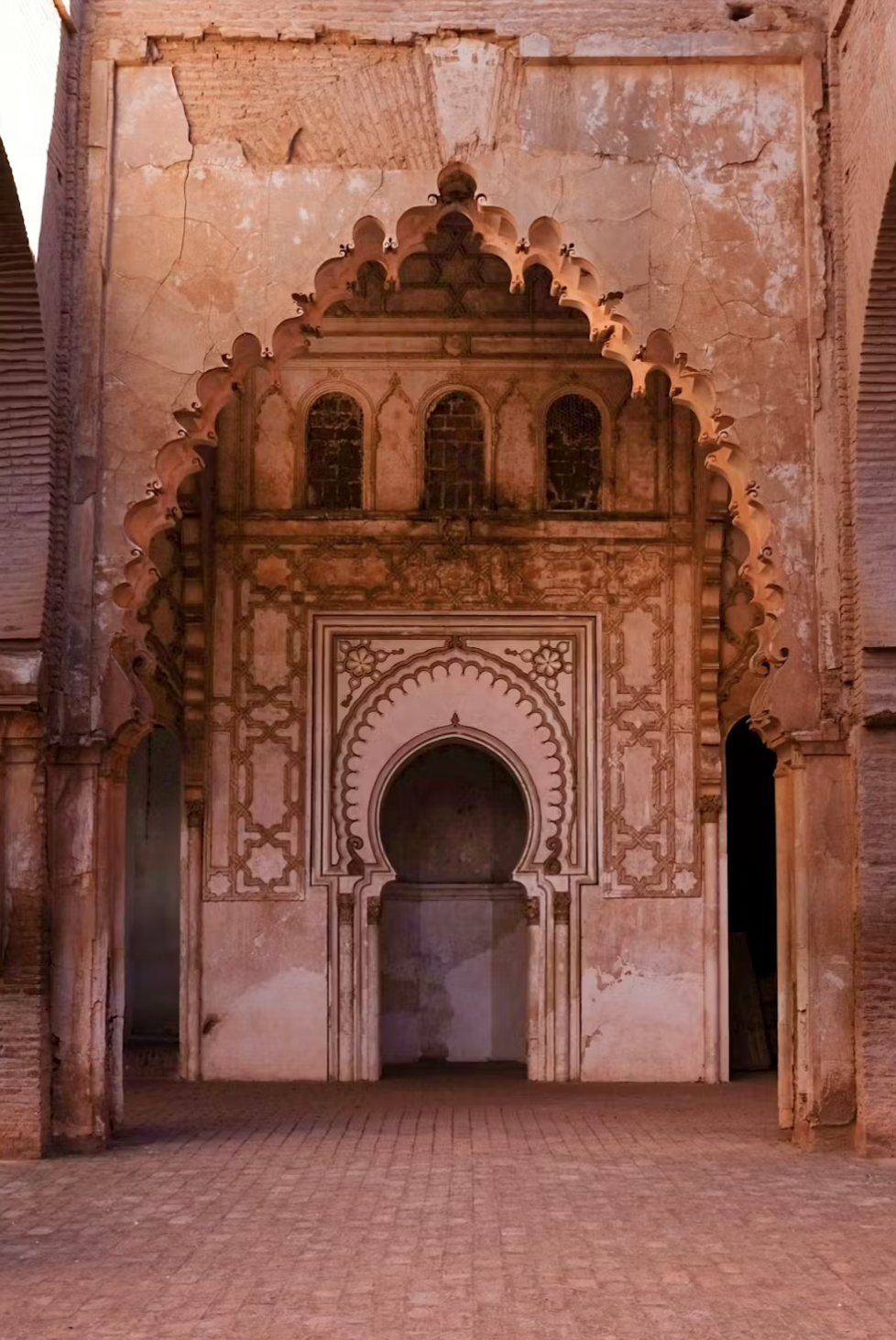
Built in 1156 CE by the Almohad dynasty, the Tinmel Mosque is a remote jewel tucked deep in the High Atlas Mountains, near the village of Tinmel. Unlike the grand city mosques of Marrakech or Fes, Tinmel is small, austere, and hauntingly atmospheric — a place of devotion carved from stone in harmony with its rugged surroundings. It served as the spiritual and political heart of the Almohad movement, marking the rise of a dynasty that would go on to shape much of Morocco and Andalusia. Only Muslims were historically permitted inside, which preserves a sense of sanctity, but its monumental arches, Kufic inscriptions, and understated geometry are a masterclass in early Moroccan architecture.
Great Mosque of Kairouan | Tunisia
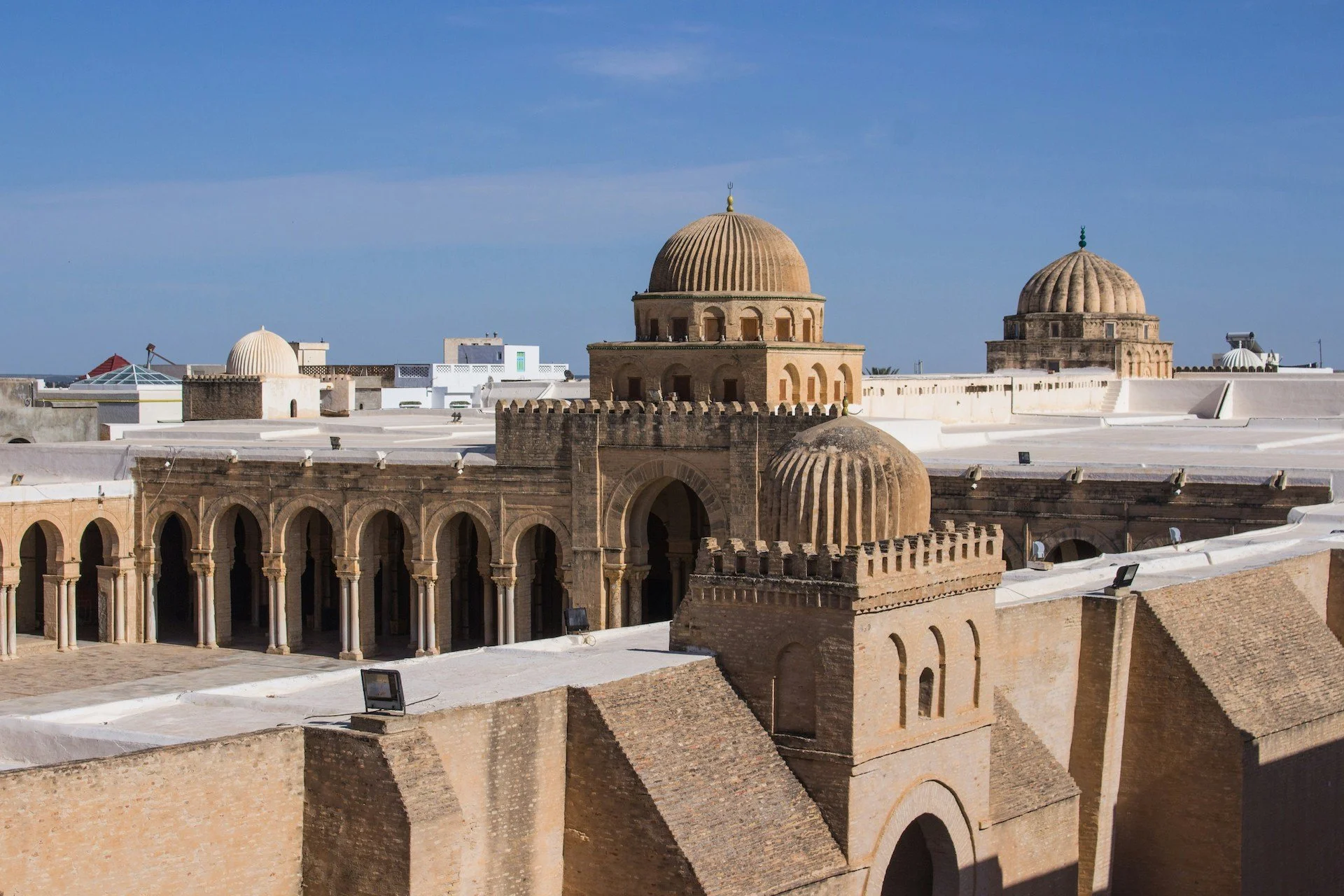
Founded in 670 CE by the Arab general Uqba ibn Nafi, the Great Mosque of Kairouan is widely regarded as the “Mother of All Mosques in the Maghreb” and one of the oldest Islamic monuments in North Africa. Its vast rectangular courtyard, monumental minaret, and intricately carved Kufic inscriptions showcase the early evolution of Islamic architecture outside the Arabian Peninsula. More than an architectural masterpiece, the mosque became a center of learning, jurisprudence, and spiritual life, drawing scholars and pilgrims from across North Africa and beyond. The prayer hall, with its hundreds of columns recycled from Roman and Byzantine ruins, offers a tangible connection to centuries of cultural exchange and devotion.
Sultan Qaboos Grand Mosque | Muscat, Oman


Completed in 2001, the Sultan Qaboos Grand Mosque is a modern masterpiece that embodies both Omani tradition and contemporary Islamic architecture. Commissioned by Sultan Qaboos bin Said, it was designed to reflect Oman’s spiritual heritage while welcoming worshippers and visitors from around the world.
Bibi-Khanym Mosque | Samarkand, Uzbekistan
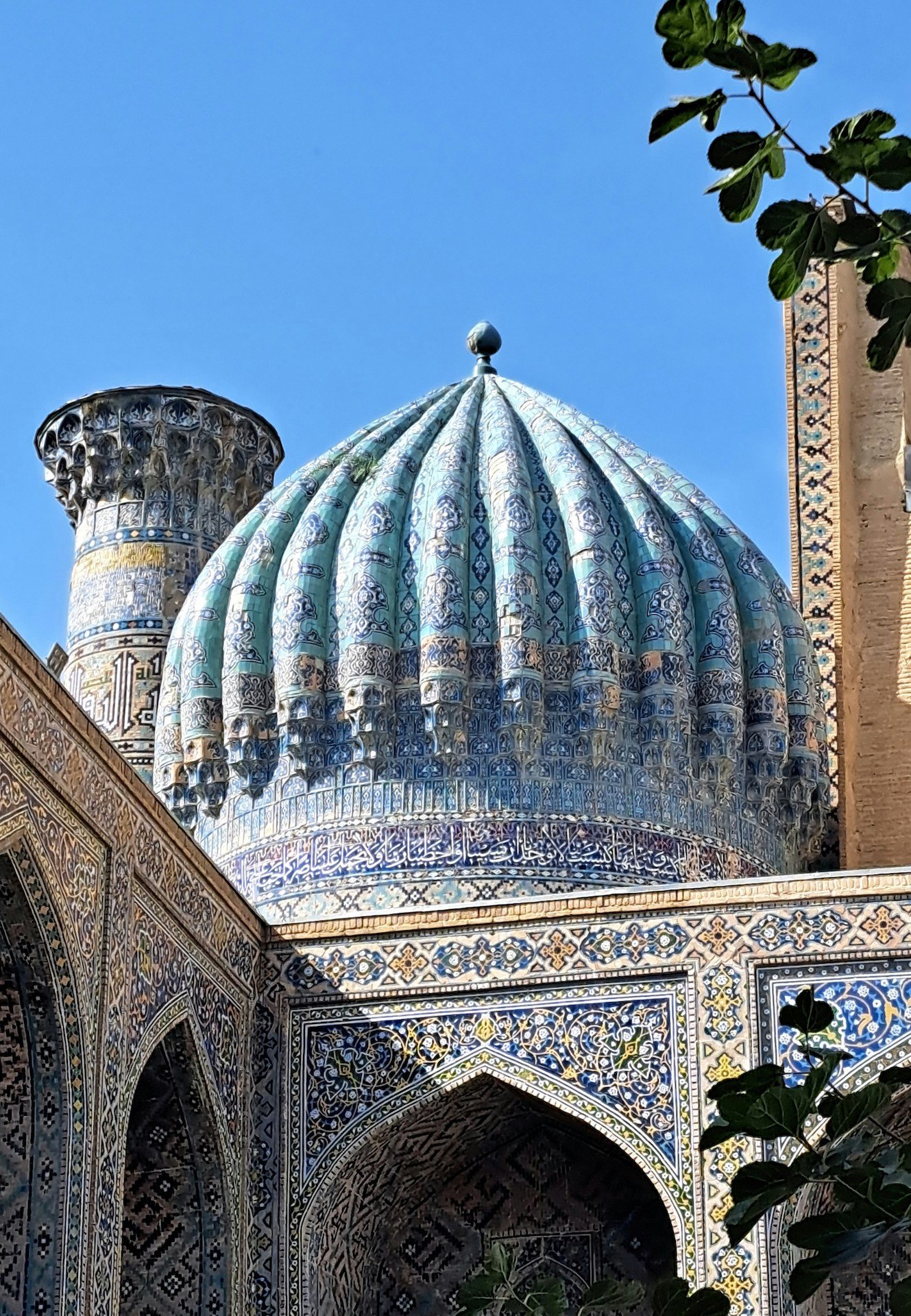
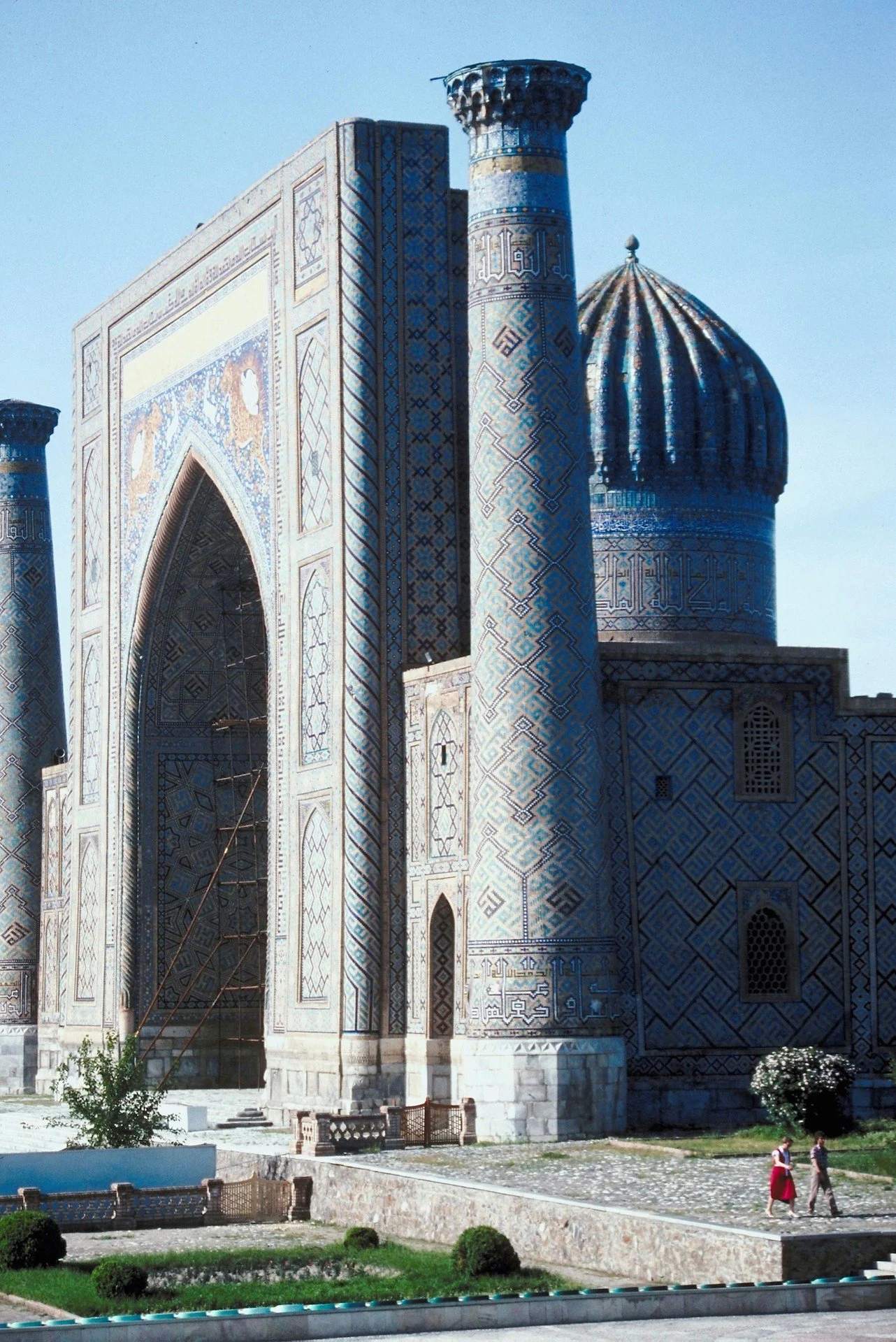
Constructed in 1399 CE under the commission of Tamerlane (Timur), the Bibi-Khanym Mosque in Uzbekistan was envisioned as one of the grandest mosques in the Islamic world, meant to reflect the power and vision of his empire. Once among the largest and most opulent mosques globally, it served as the centerpiece of Samarkand, a city at the crossroads of trade, culture, and Islamic scholarship along the Silk Road. Though partially ruined over centuries due to earthquakes and neglect, the mosque’s monumental turquoise domes, soaring portals, and intricate tilework remain awe-inspiring. The structure’s sheer scale and decorative artistry offer insight into the Timurid architectural style, blending Persian influences with Central Asian innovation. Visiting Bibi-Khanym today is both a journey through history and an encounter with the grandeur and ambition of a bygone empire — a mosque where devotion, artistry, and imperial vision converge.
Travel & Etiquette Tips:
Visit ancient mosques during cooler hours or outside jammah times to photograph light and detail.
Pair mosque visits with local medina walks, markets, and heritage sites, they are often located in the oldest parts of cities.
Respect local norms, many of these are active worship sites with ongoing community life.
Several of these mosques are part of itineraries I have built for clients. If you want to see them in the right context, I can put that together.
More from the Travelogue