

Ibiza Travel Guide
After ten summers, I know Ibiza pretty well. I first came to Ibiza ten years ago. Fresh out of hotel school, my friends and I were scattered across different countries for our internships, and somehow this island was always where we found each other again. Some of those friends never left. They made their homes here, and they are the reason I come back two or three times a year. As if I even needed an excuse. Some trips are all sunrises and no sleep. Others are all swims and no plans.
That is the thing about Ibiza: it is an island of contrasts. On one side are the superclubs, the beach clubs and the biggest names in music. On the other are hippie markets, whitewashed villages, pine forests and little coves you reach on foot. You can dance until it is time for a sun salutation, then sleep until it is time for a swim in the glittering water. After that, have a seafood rice straight from the source.
Ibiza also changed hospitality. It made the party a reason to travel, and the rest of the world copied it. Before all of that, it was a hippie capital, and that free spirit is still its whole energy today. This Ibiza guide covers both sides: the Ibiza we all know, and the Ibiza that came before.
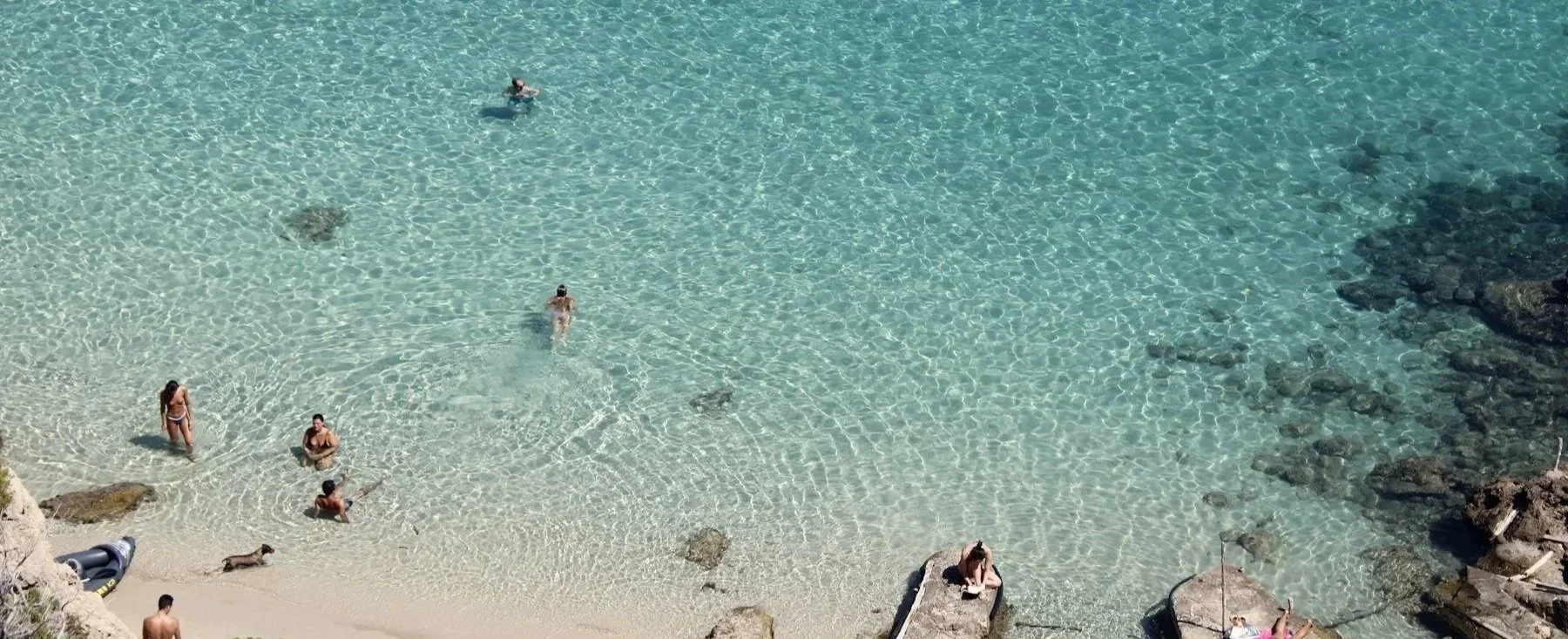
The Ibiza we all know
What the Matutes family and their Palladium Hotel Group have built here is unreal. In 2008 they turned an old hotel on Playa d’en Bossa into the Ushuaïa beach club. Three years later they took it one step further, and Ushuaïa Ibiza Beach Hotel became the first hotel where the party comes to you. The stage is above the pool, and the rooms look straight down onto it. Nobody had done that before.
Ushuaïa is still where the top DJs play. David Guetta has his famous residency there, and Calvin Harris, Martin Garrix and Swedish House Mafia have all had their own nights. Avicii played his last ever show there in 2016. Across the road, the group took over Space and rebuilt it as Hï Ibiza. On the former Privilege site, the team behind Ushuaïa and Hï opened [UNVRS], what they call a hyperclub: the feel of a club with the production of an arena. Every room has its own style, from brutalism to art deco, and there is even a tiny club with its own DJ booth inside the bathrooms. FISHER has his residency there.
Playa d’en Bossa is also the best spot on the island for people watching. It never sleeps, and day or night there is always something going on at the beach clubs, bars and clubs along the strip.
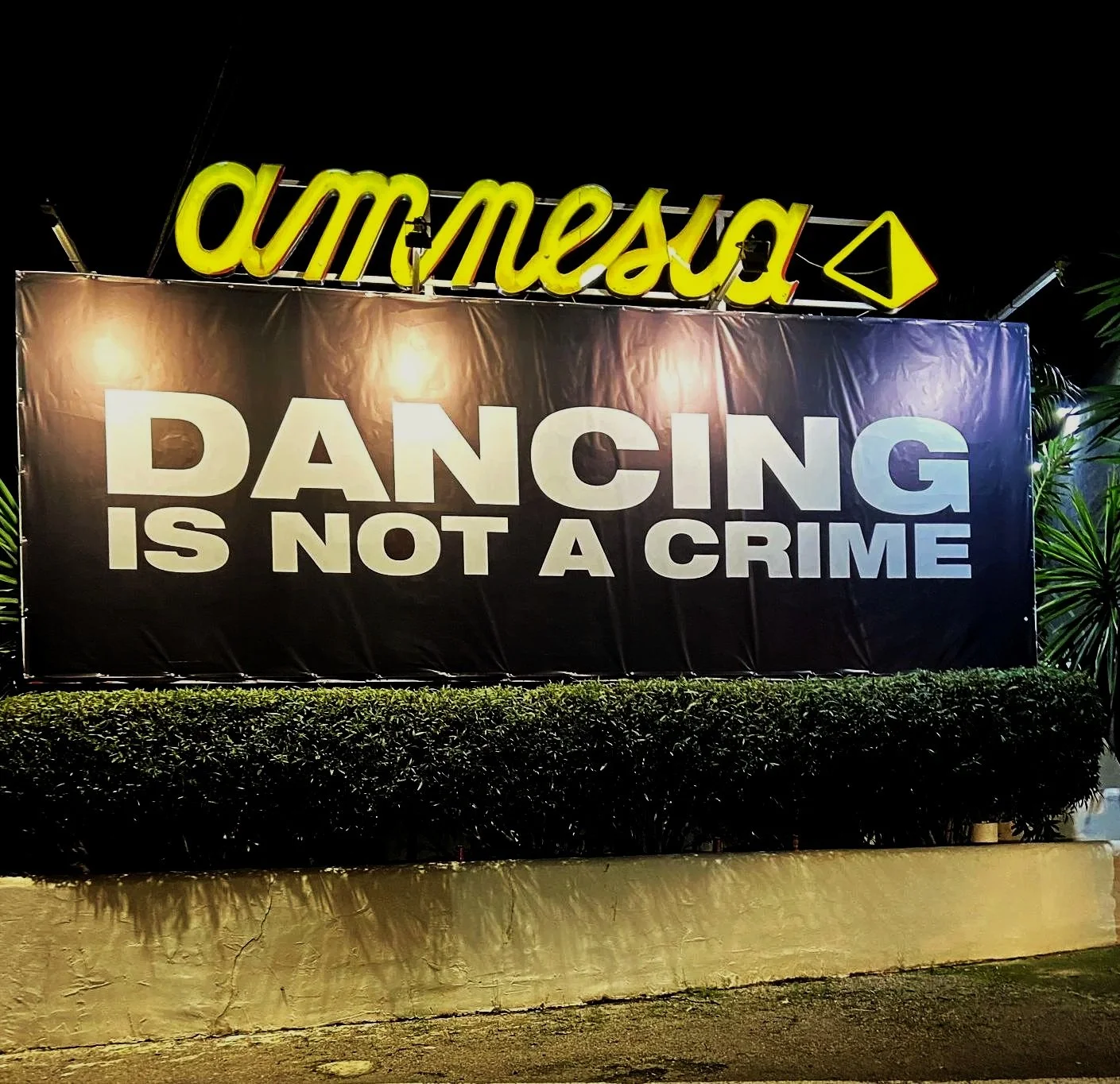
Amnesia opened in 1976, the year after Franco died, when Spain was just coming out of almost forty years of dictatorship. In the 1980s, DJ Alfredo started playing the Balearic sound there, mixing pop, rock and house until sunrise. In 1987 a group of British DJs heard him, took the sound home and started the rave scene in the UK.
Half a century later, the stages are some of the most famous in the world, and the energy never got lost along the way. The feeling is still people from everywhere, together on one dance floor, completely free. You can sense that frequency the moment you land.
The Ibiza that came before
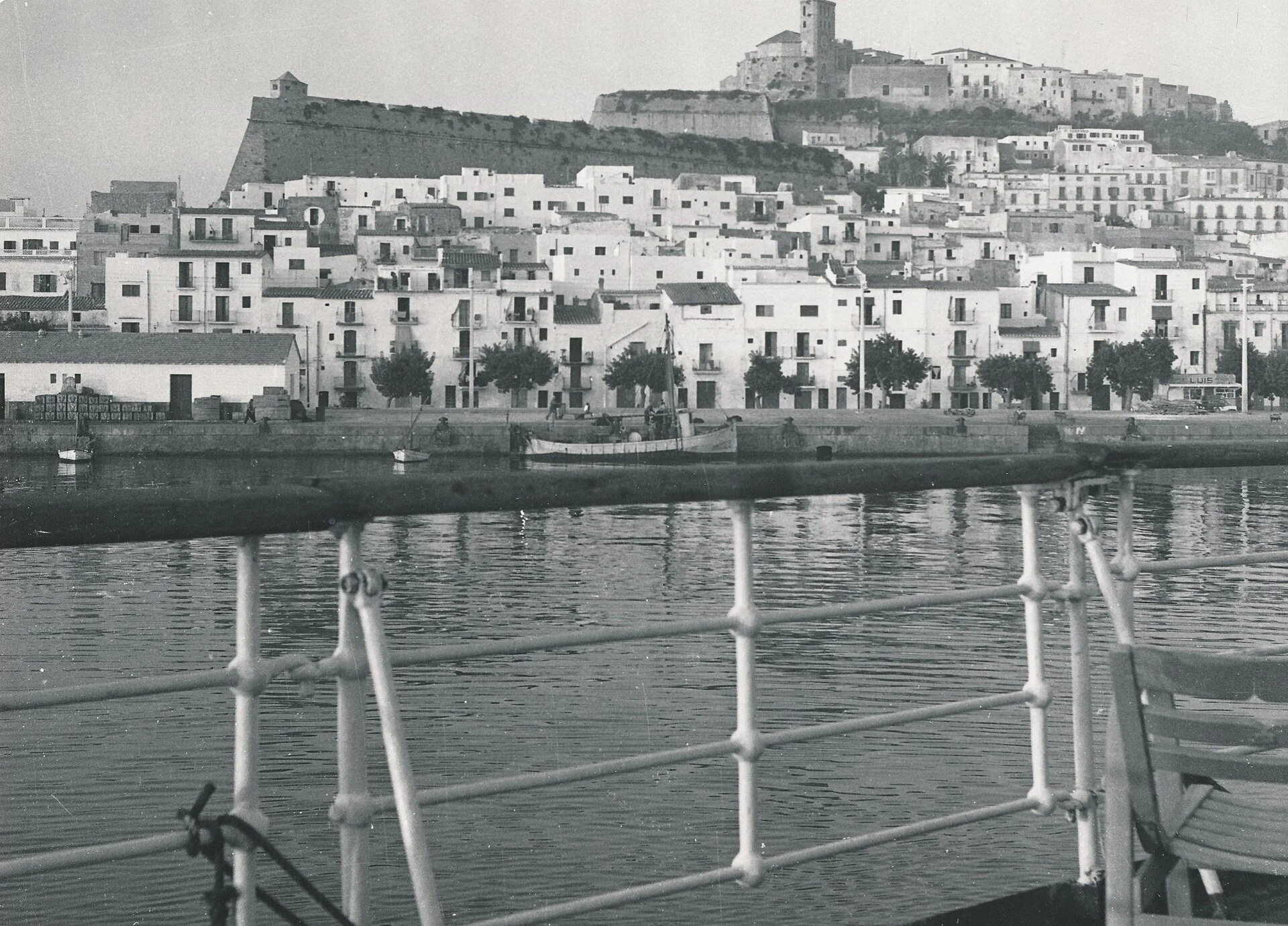
Before the superclubs, Ibiza was a very different place. The Phoenicians founded Ibiza Town in 654 BC, and the Carthaginians, Romans and Arabs all left their mark before the Catalans arrived in 1235. For centuries after that, the island kept to itself, living off farming, fishing and salt. This is exactly what made it a refuge. In the 1930s, while fascism was rising and Europe was heading for war, writers, artists and free thinkers found a safe place here.
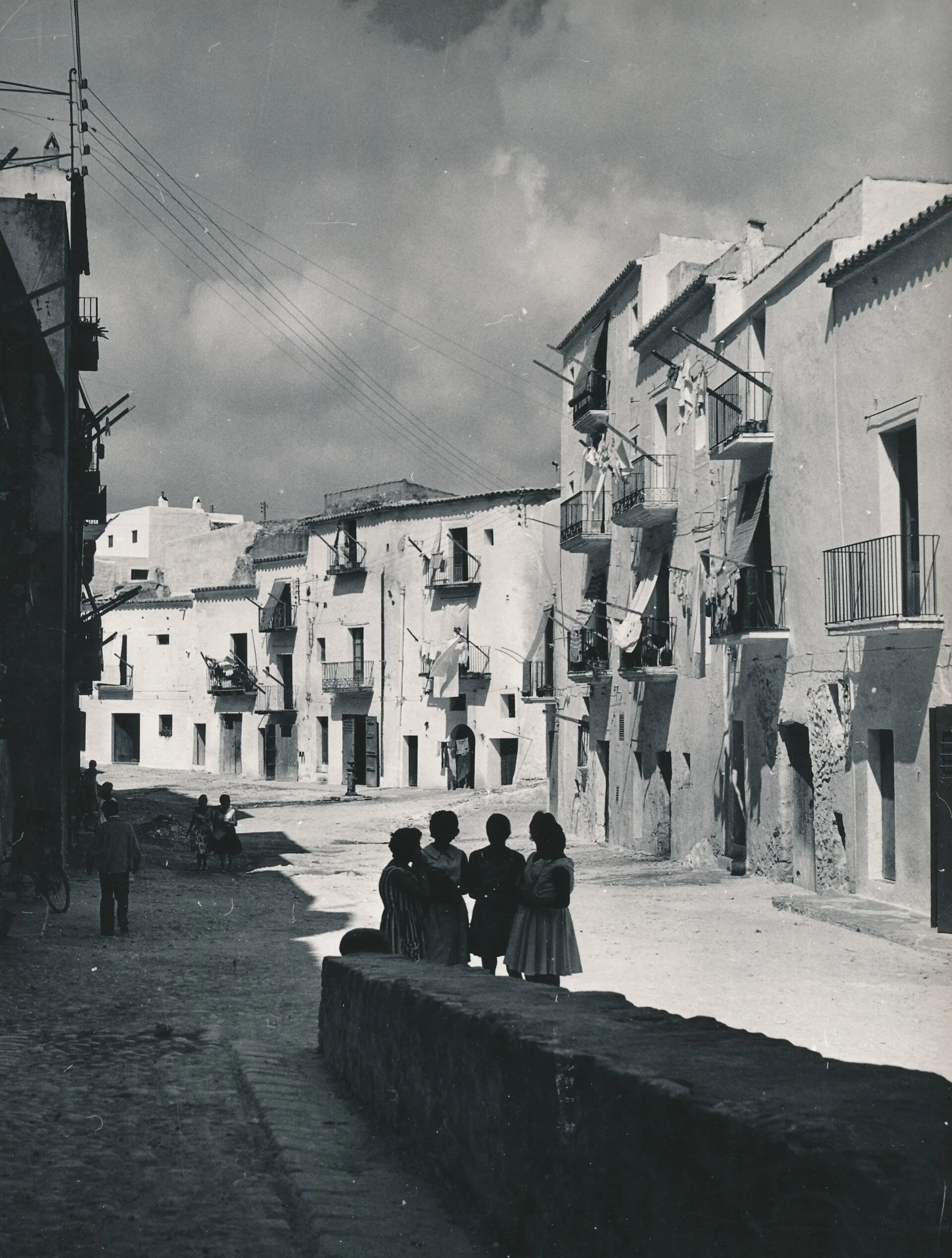
Then came the sixties. The Cold War was on, young Americans were being sent to Vietnam, and across Europe a whole generation was questioning everything. So many of them ended up here, from America, Britain, Germany, France, Holland and Scandinavia, together with artists, musicians and free spirits from all over the world. They arrived with almost nothing and stayed for years, and some never left.
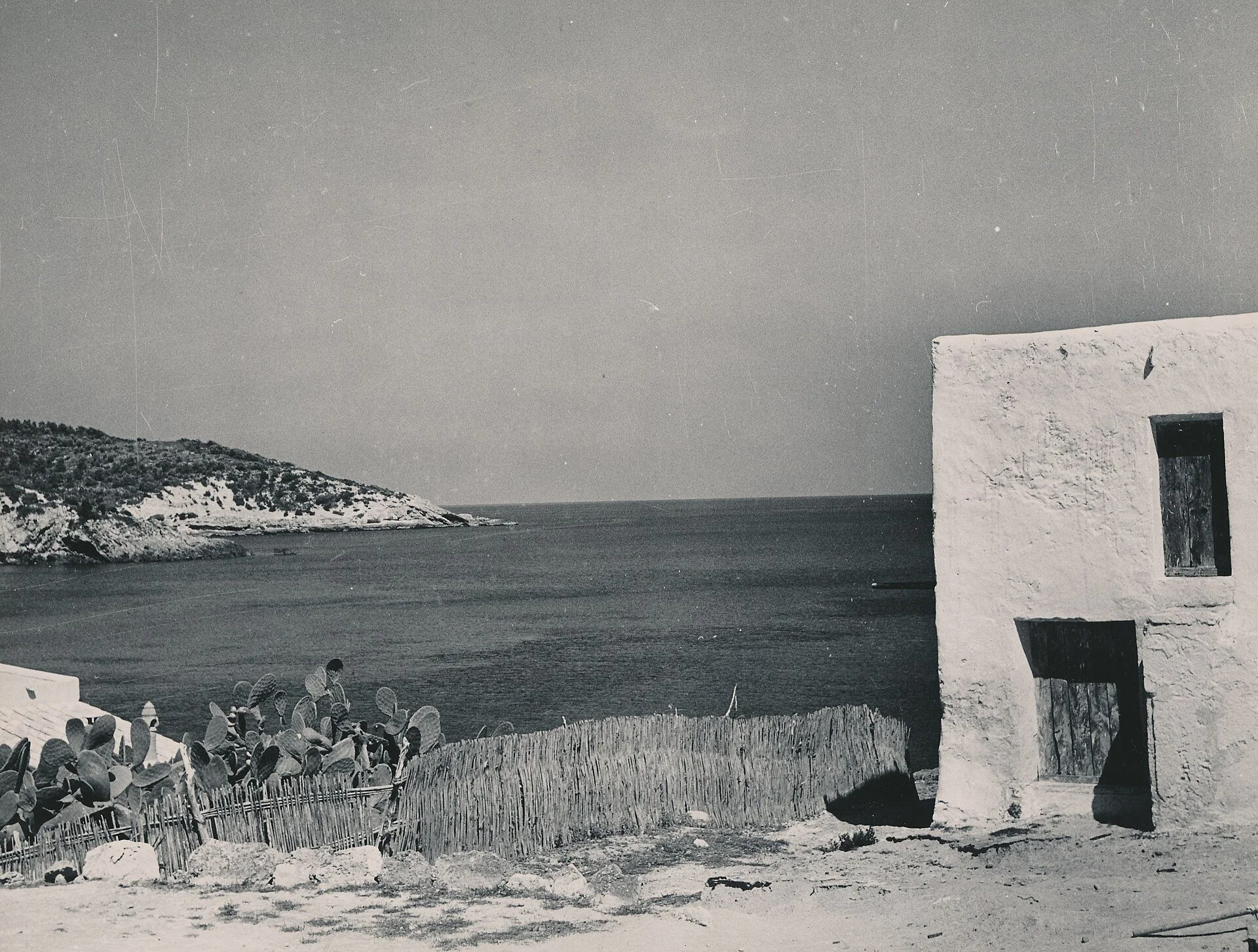
Spain was still a dictatorship, but Ibiza felt like a different world. The newcomers rented old fincas in the countryside, often with no electricity or running water, and lived barefoot, close to nature and to each other. The farming families were used to a simple life, and they mostly let them be. All that music and freedom turned Ibiza into one of the hippie capitals of the world, alongside San Francisco and Goa. In the seventies, the first hippie markets started, and the first clubs opened in old farmhouses, Pacha among them. The party scene we know today was born right there, out of that freedom. You can still feel it in the north, at the markets, in the yoga shalas and at sunset, when everyone stops to watch the sun go down.
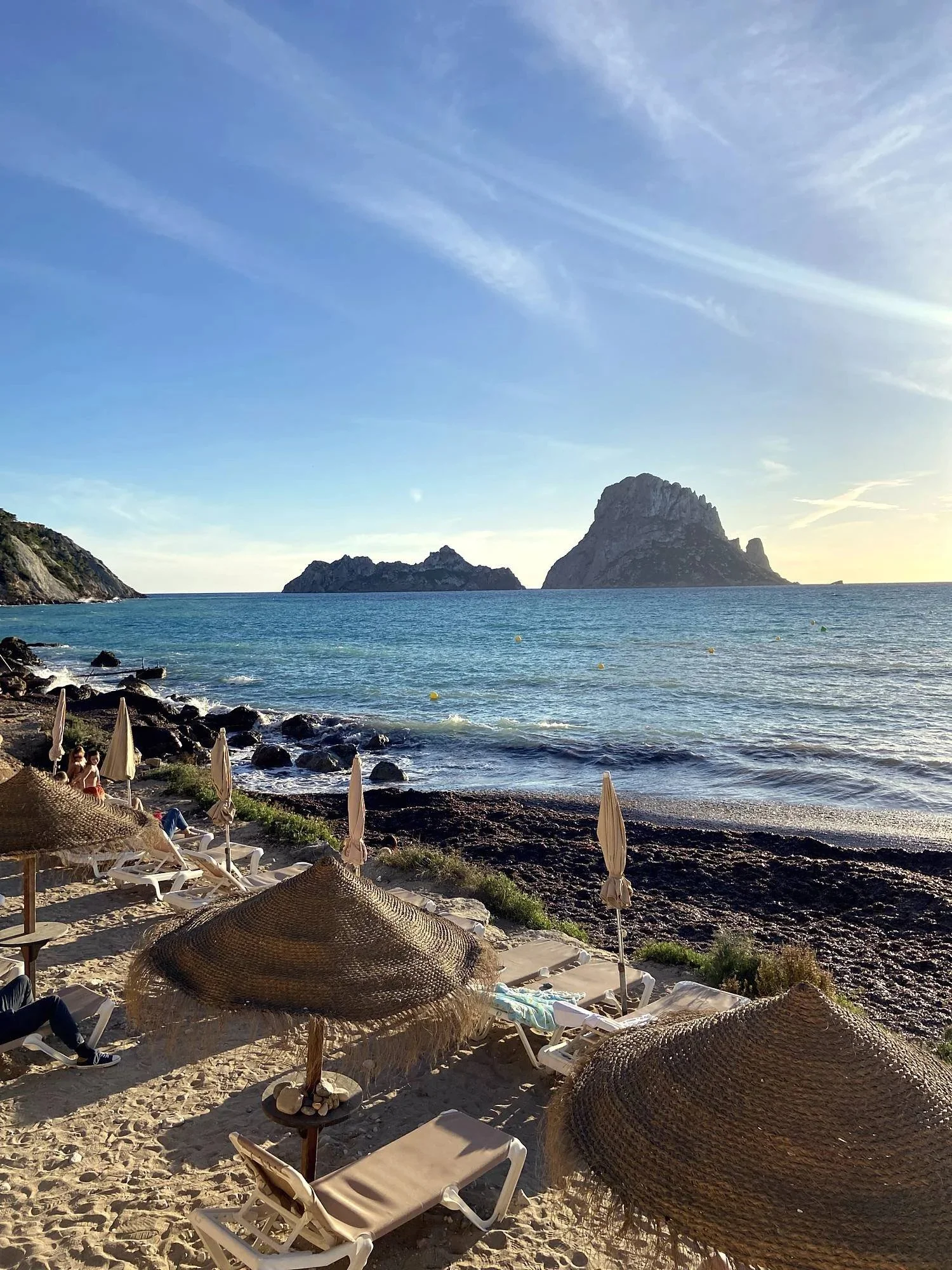
And then there is Es Vedrà, the rock island off the southwest coast posted on every Ibiza trip. Legend says it is one of the most magnetic places on the planet, the birthplace of the Phoenician goddess Tanit and home of the sirens who tried to lure Ulysses. Science has yet to prove it, but watch the sun set behind it once and you will get why everyone talks about its energy.
Things to Do in Ibiza
These are the experiences that make Ibiza different, from dinners that turn into a show to a hike down to a hippie quarry by the sea.
Dinner as a show. Sublimotion, by two Michelin starred chef Paco Roncero, is dinner like you have never seen it. It seats just 12 guests a night at BLESS Ibiza, in a room that changes around you with projections, lights, music and performance. One course is even served through a virtual reality headset.
Cabaret on the marina. At Lío, from the Pacha Group, dancers and singers perform between the tables during dinner, and when the show ends, the night carries on into a club.
Dancing on the chairs. Tatel is a 1920s style supper club on the beach at Playa d’en Bossa, with a live band on stage. My friends took me there twice, and both times by dessert the whole room was up on the chairs, spinning napkins in the air.
A night at a legend. Pikes is the old school hotel in the hills above Sant Antoni. Tony Pike turned a 500 year old finca into a hotel in the seventies. Wham! filmed the Club Tropicana video by its pool, and Freddie Mercury had his 41st birthday party there.
A hike to Atlantis. Atlantis is really Sa Pedrera de Cala d’Hort, an old quarry facing Es Vedrà where the stone for the walls of Dalt Vila was cut. In the sixties the hippies carved Buddhas, faces and peace signs into the rock, and the sea fills little natural pools at the bottom. The path starts by Torre des Savinar and takes about 30 minutes down a steep sandy ravine, and about 45 minutes back up. Wear proper shoes and bring lots of water, because there is no shade.
Saturday at Las Dalias. Las Dalias, near Sant Carles, opened in the fifties as a roadside bar with a dance floor. The hippies made it their hangout in the seventies, and its market has been running since the eighties. You will find handmade jewellery, kaftans, incense and live music. In summer there is a night market too.
Where to Stay in Ibiza
The island opens new hotels every season. To me, these two show the whole picture.
Ibiza Gran Hotel
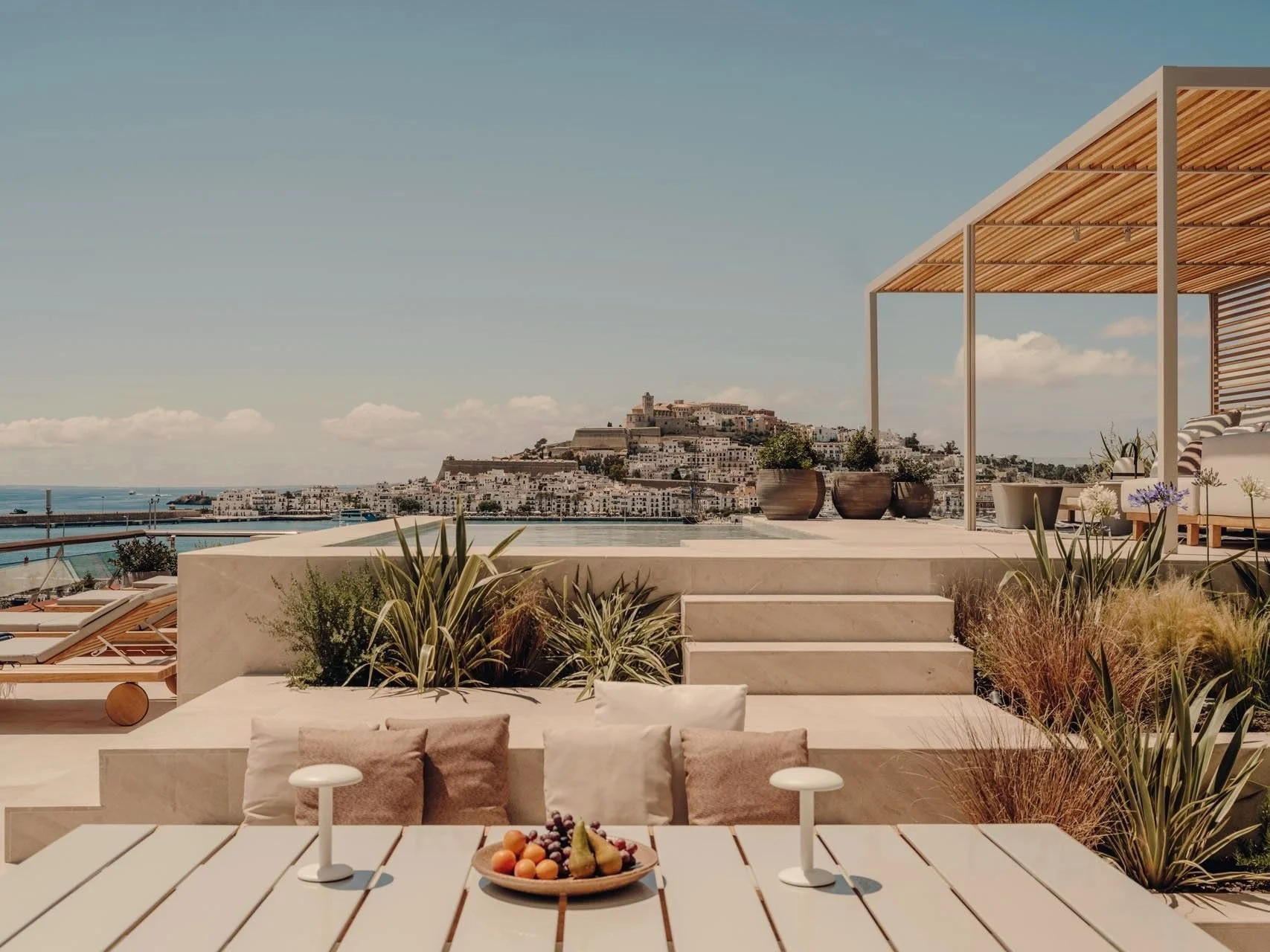
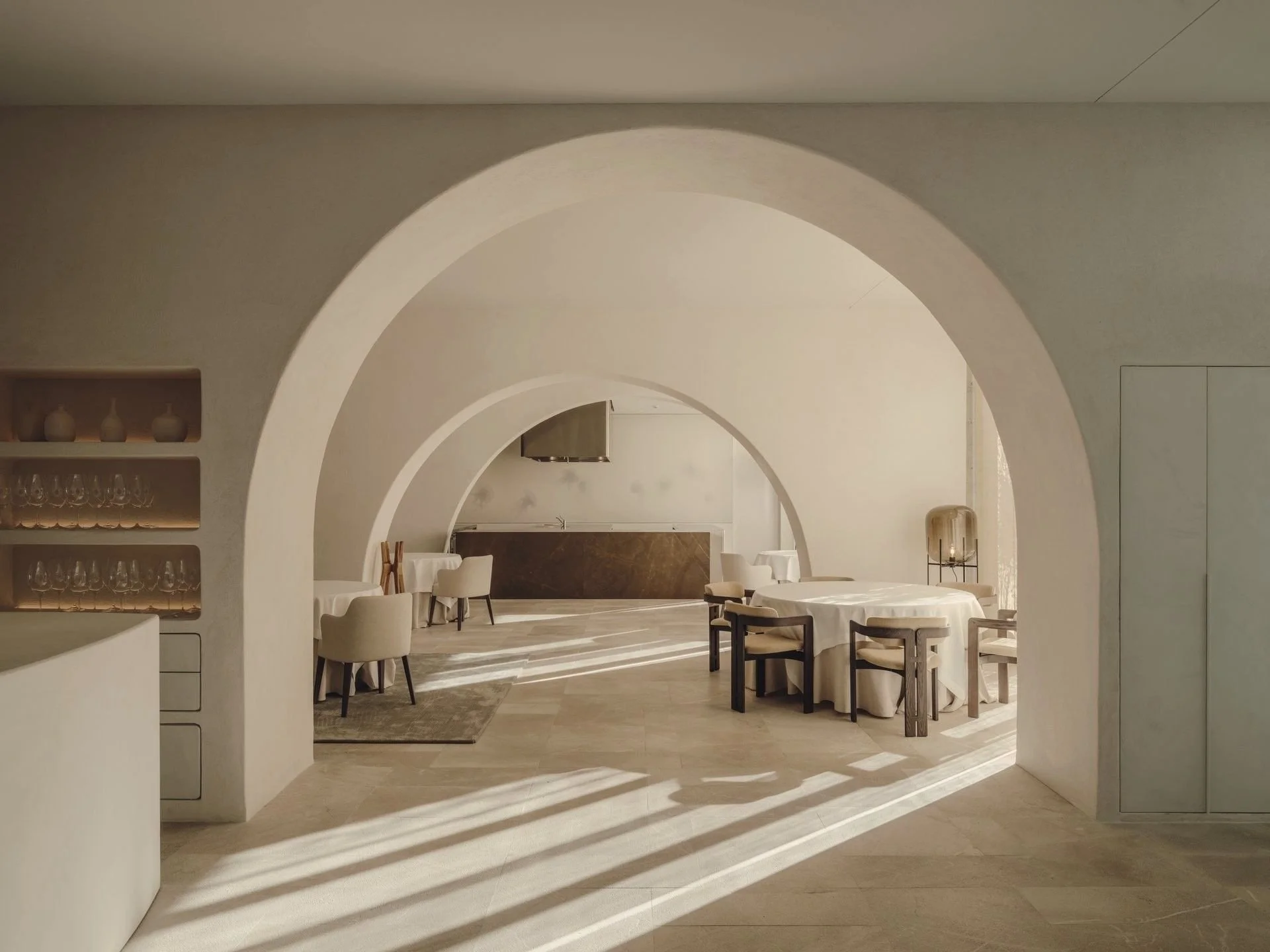
Ibiza Gran Hotel has been a favourite since it opened, facing the marina and the walls of Dalt Vila, a short walk from the old town. It is classic Spanish luxury, with close to 190 suites, more than 400 works of art made for the hotel and its own casino. The restaurants are a roll call of big names. Brula by Óscar Molina, formerly La Gaia, has a Michelin star. Zuma, Cipriani and Club Chinois are all in the building too, so you can go from dinner to dancing without leaving. Its breakfast was named the best hotel breakfast in Spain & Portugal by Condé Nast Traveler.
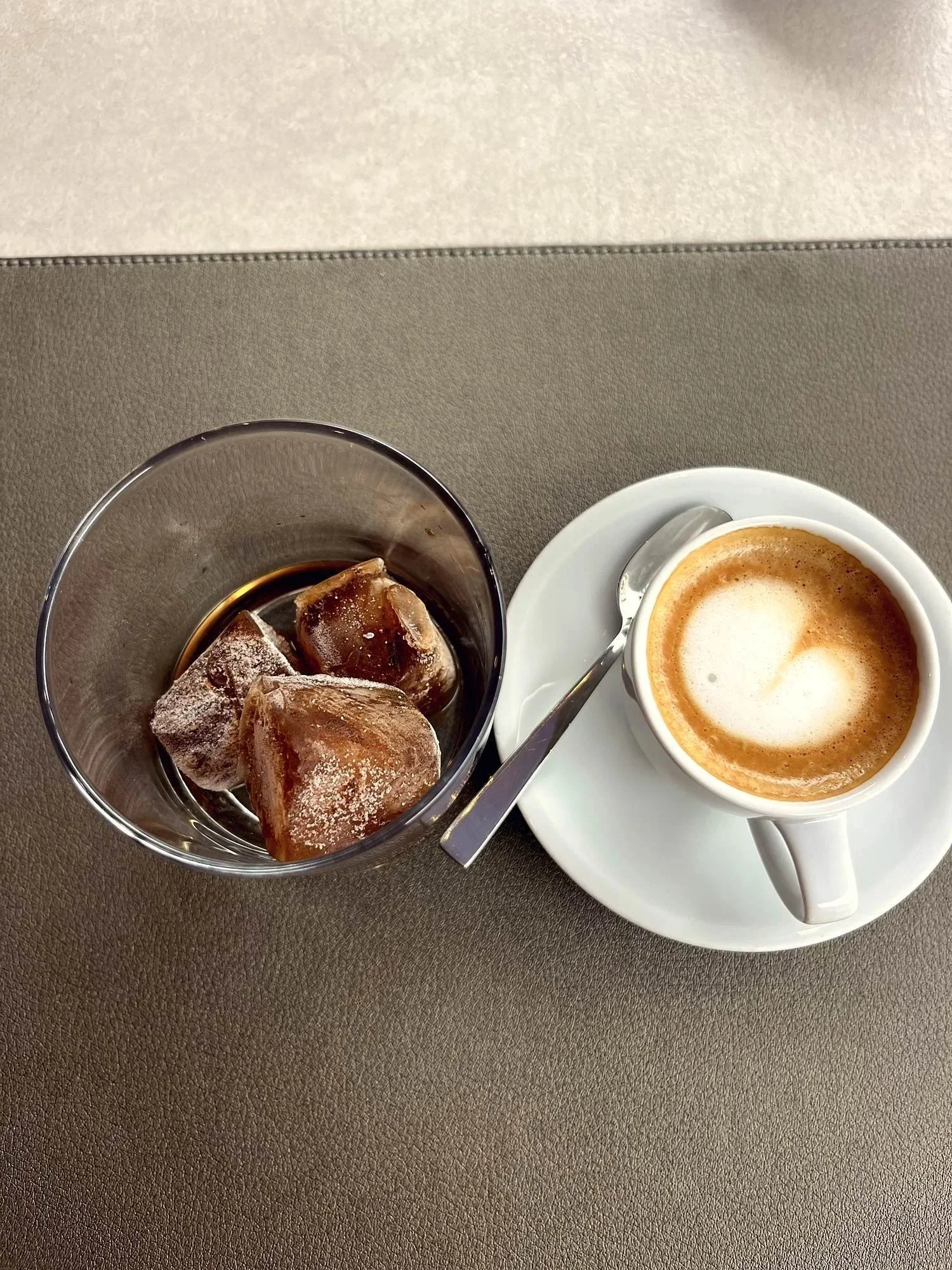
What makes it different, though, is the people. The hotel is a family business, and the team is famously loyal. On an island where everything is seasonal, some of the staff have been there since before it opened its doors, the General Manager included. They even make their ice cubes out of decaf, so your iced coffee never gets watered down. It is Ibiza all grown up.
Nômade Temple Ibiza
Nômade is the total opposite. It began in Tulum and Holbox, in Mexico, and I have visited both. Where else would you find a pineal gland activation at sunset on the daily schedule, right after the swimming class? They recently arrived in Spain, first on the Gran Vía in Madrid and then in Portinatx, on the wild north coast of Ibiza.
Nômade Temple Ibiza has 182 rooms, suites, lofts and villas, part restored from a 1970s hotel and part built new, and the interior design team really outdid themselves. It has a strong Moroccan feel, with rugs hanging on the walls, little corners that feel like cafés in Marrakech, and a bazaar of small boutiques inspired by the souks. Below the hotel is a small cala. In Spain no beach is private, but the way down to it feels like your own secret entrance.
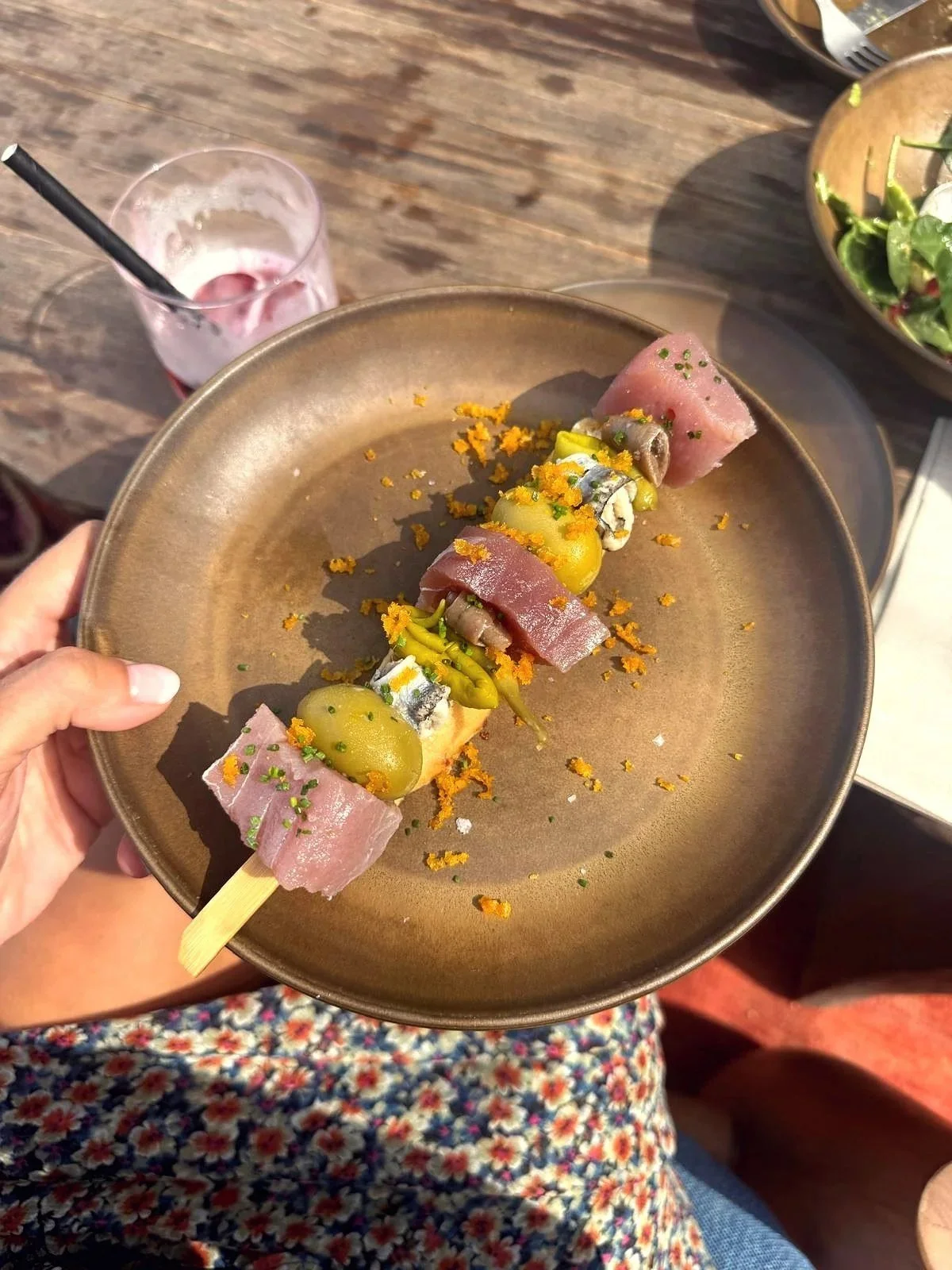
Right there is 4FU3GOS, where I had one of the best lunches of my life, no exaggeration: fresh oysters on the beach, tuna tataki and gildas. Breakfast is all fresh and healthy. GÖN House of Healing is an underground spa, and it is absolutely huge and so well thought out. In the evening there is Dante’s HiFi, a listening bar, and El Templo, a space for yoga, meditation and performances. It is exactly how you imagine Ibiza.
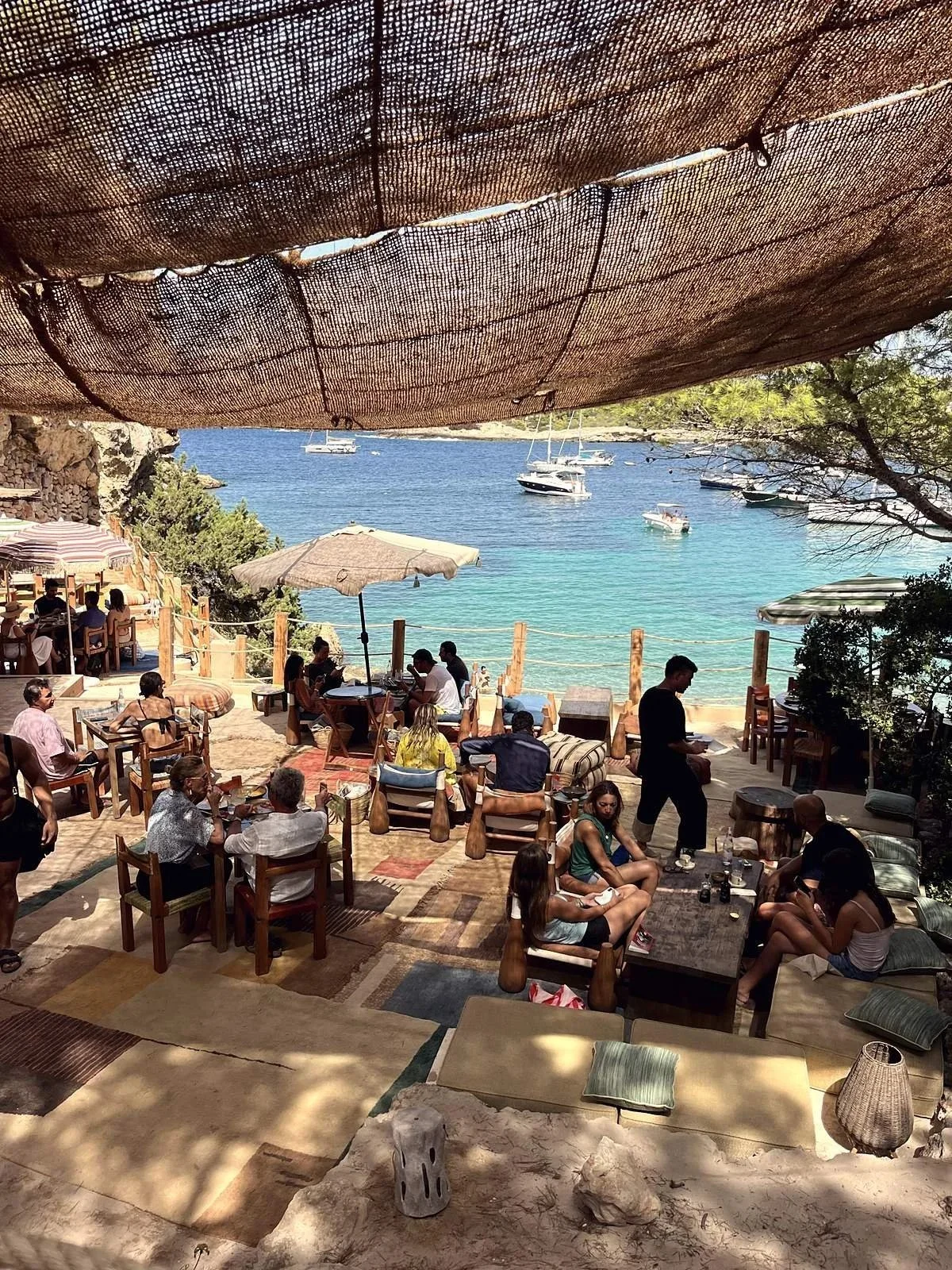
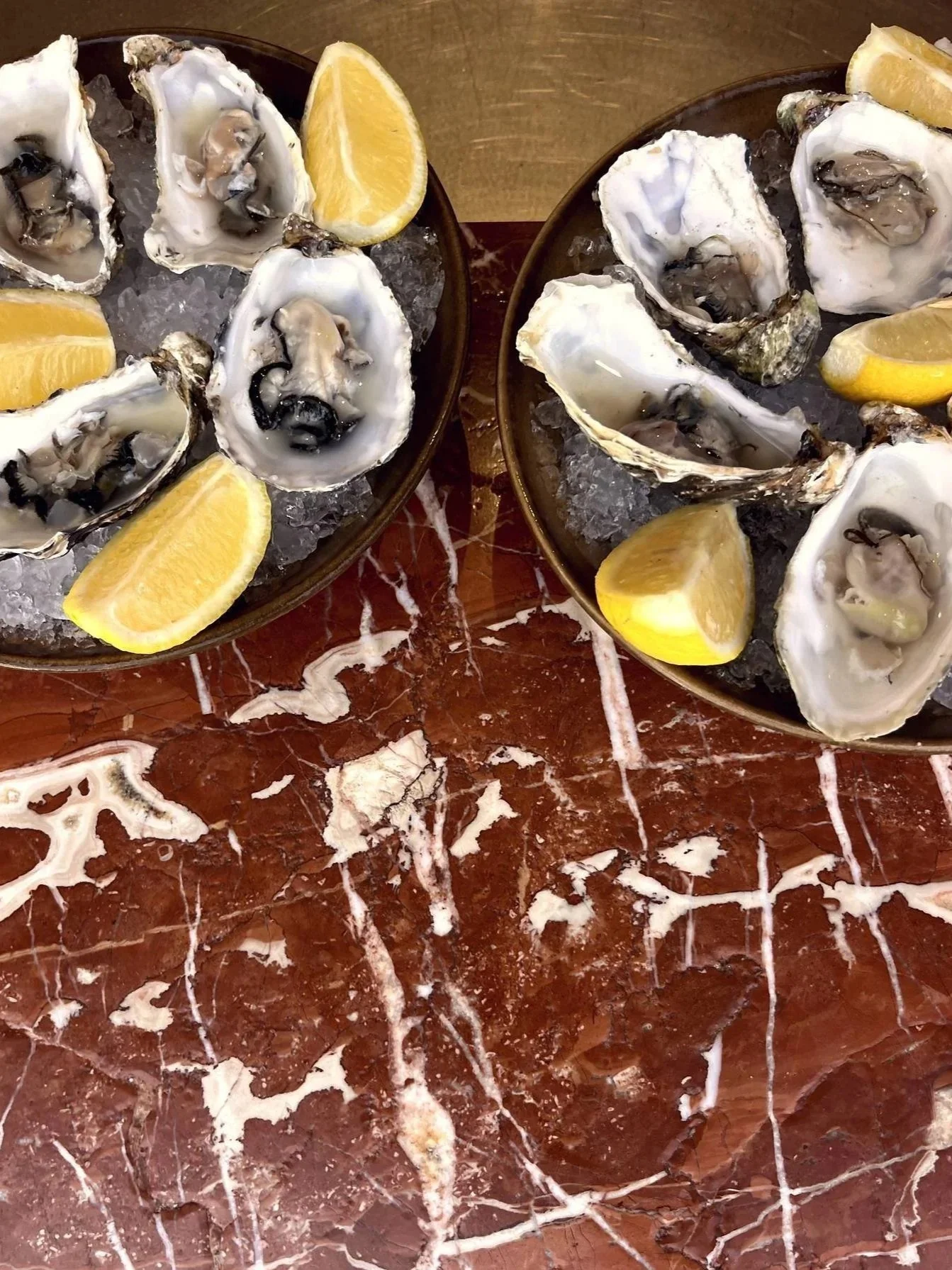
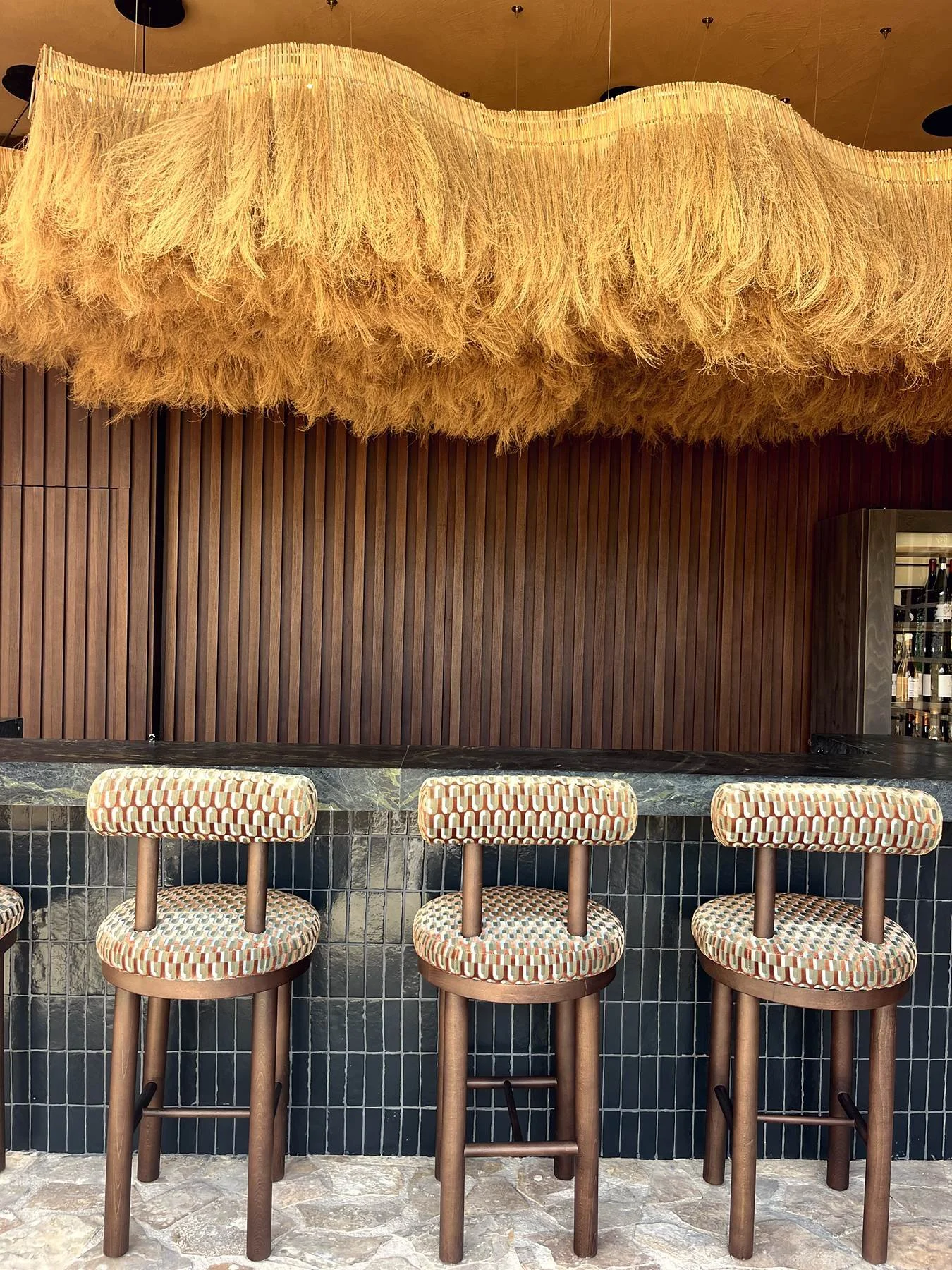
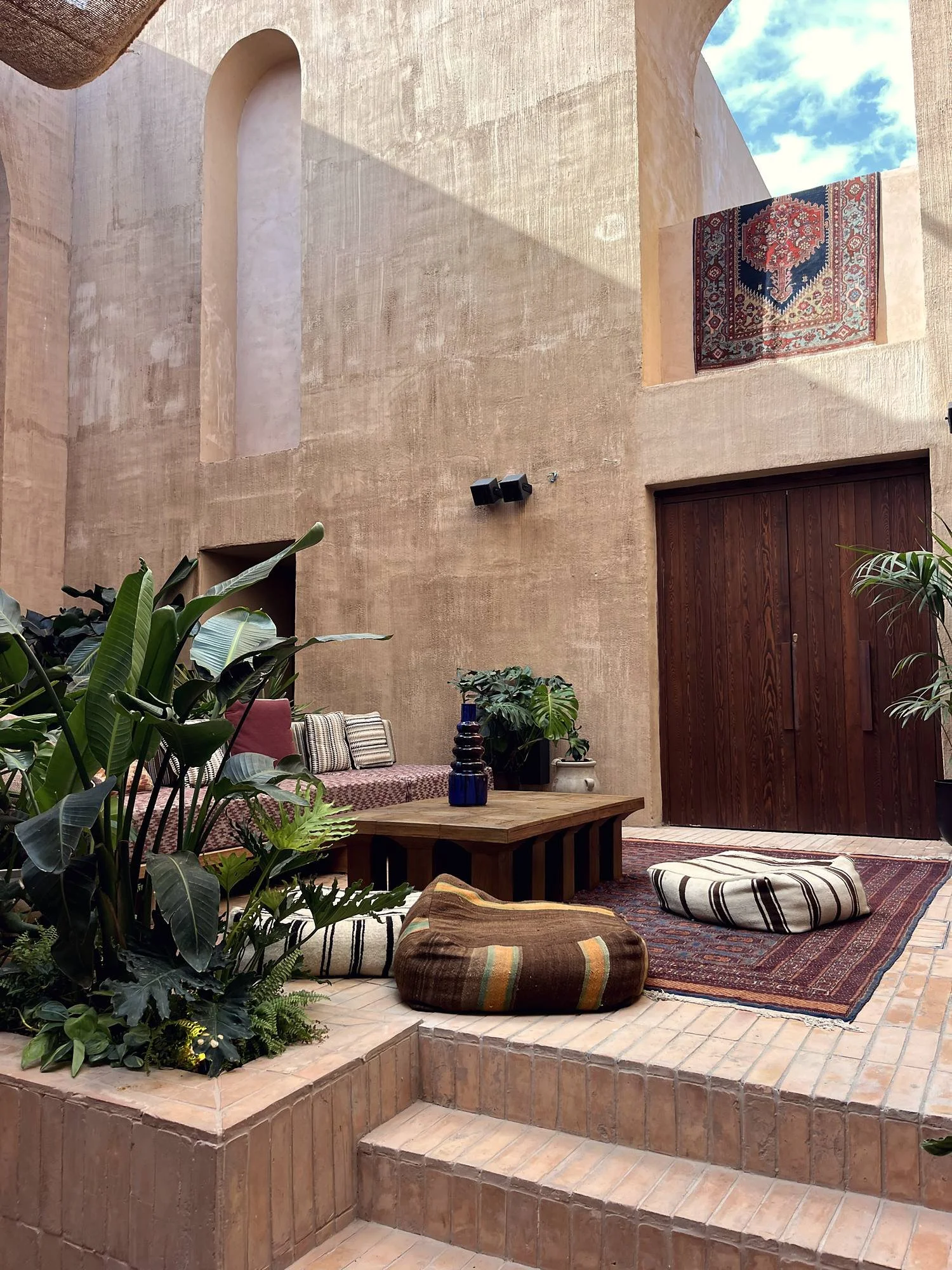
Ibiza Gran Hotel and Nômade could not be more different. One is all white marble by the marina, the other is Moroccan rugs and lanterns up north. Both are the real Ibiza.
The Best Beaches, Restaurants and Towns in Ibiza
The island is small, and nothing is much more than 40 minutes away by car, so it is easy to explore a different area every day.
Ibiza Town
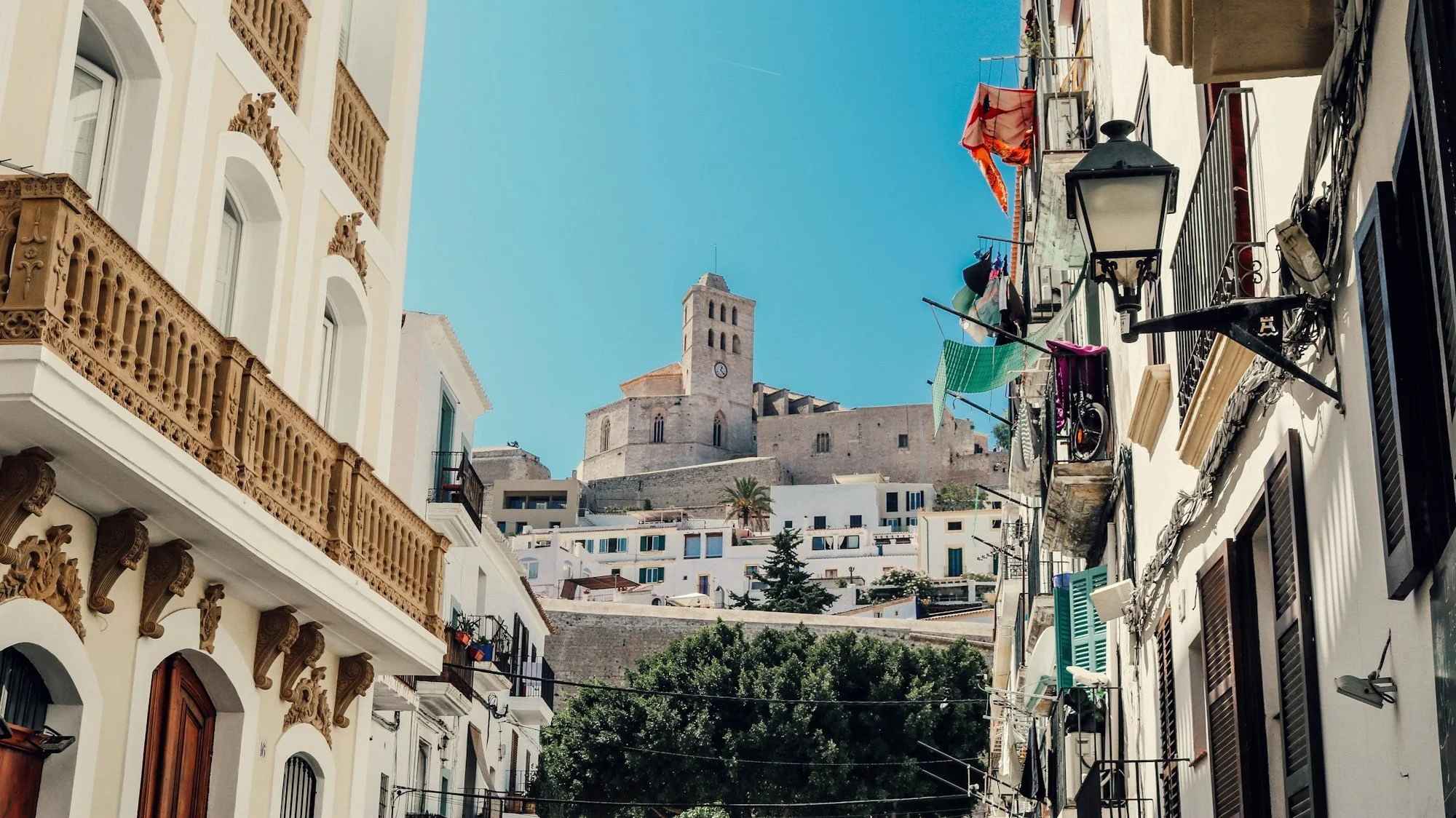
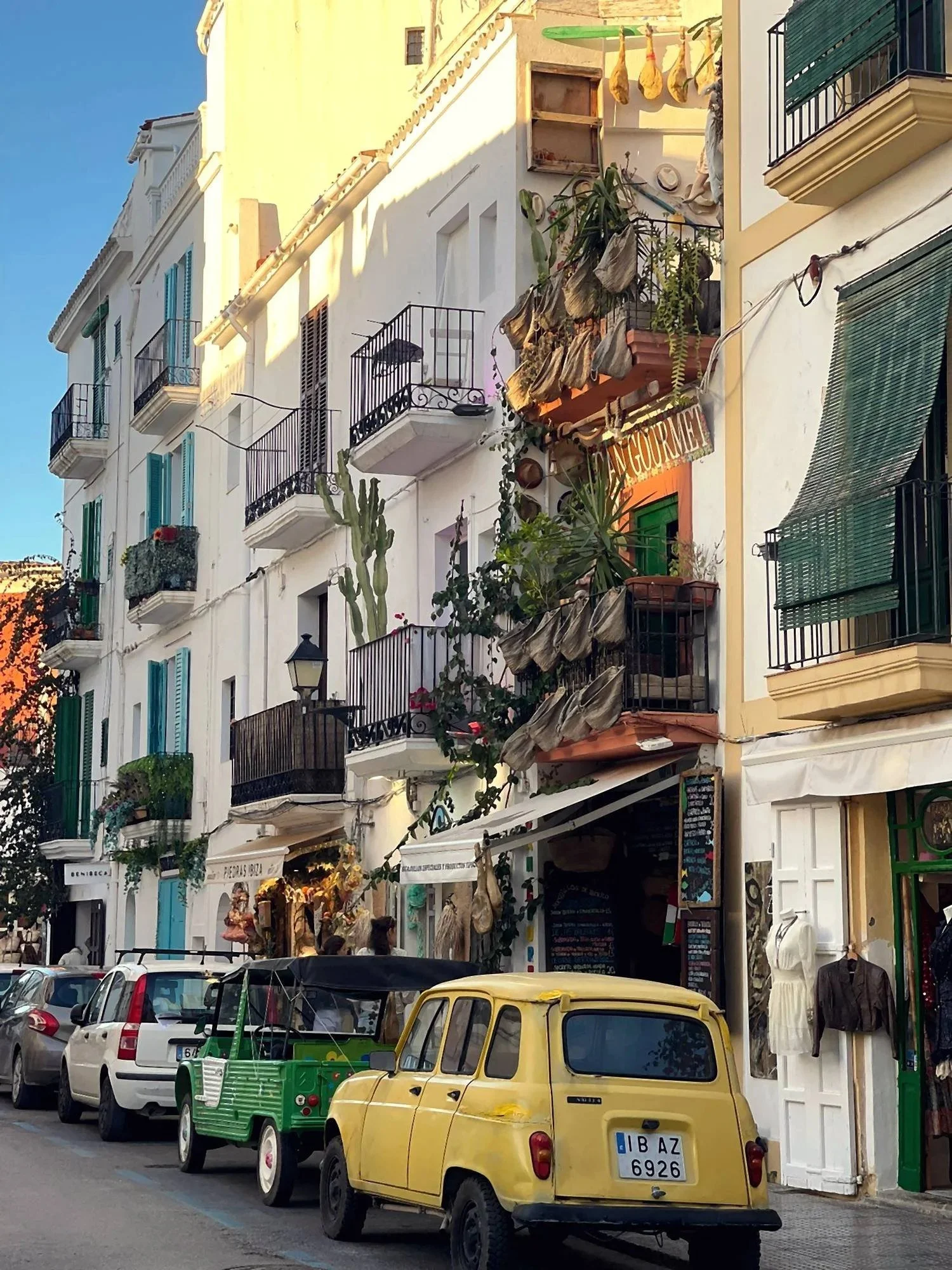
Ibiza Town is best explored on foot, starting at the harbour. La Marina and Sa Penya, the old fishing quarter, are full of little shops. A few local labels stand out: Charo Ruiz for white summer dresses, Ganesha for vintage finds and De La Vali for party dresses.
From there, walk up through the Portal de ses Taules into Dalt Vila, the walled old town. It is a UNESCO World Heritage Site, and the cathedral at the top looks out over the port. On the way, stop at S'Escalinata for cocktails on cushions along a stone staircase, or Annie's Ibiza for something that sparkles. Be warned: in August, the old town gets so busy that there is often no phone signal, like at a festival, on New Year’s Eve or at a big football game. This only started recently. If you are meeting friends for dinner or drinks, pick a time and a place beforehand, because once you are in, you cannot call or text each other.
On the Vara de Rey boulevard, Hotel Montesol has been open since 1933. Today it is Montesol Experimental, with 33 rooms and suites. The café on the ground floor is still the place to have a coffee and watch the town go by. Up on the roof, a sushi bar looks straight at Dalt Vila. Teatro Pereyra, the theatre behind the hotel, now has dinner and live music. A few minutes away, Nobu Hotel Ibiza Bay is right on Talamanca beach.
Playa d'en Bossa and Ses Salines
Playa d’en Bossa is the longest beach on the island, and it has been the centre of the nightlife since the eighties. For a long lunch on the sand, Playa Soleil is one of my favourite beach clubs. It serves Mediterranean food by day, and on some nights it turns into a party with live music and performers.
Further south are the salt flats of Ses Salines, part of a natural park, where the Carthaginians once harvested salt and flamingos still stop on their way through. The view over the salt pans is so impressive and so calming at the same time. Spend the day on Salinas beach and end up at La Escollera, looking across the water to Formentera. It is a local staple that has been serving family paellas for more than 30 years.
Sant Josep and the southwest
This coast is all cliffs and coves, and it is where you can see Es Vedrà and boat around it. Walk up to Torre des Savinar, an old watchtower on the cliffs facing the rock. This is also where the Atlantis hike starts. Cala d'Hort has the best view of Es Vedrà from the sand. Lunch at Restaurante El Carmen, right on the beach with the rock in front of you. Order the fish, the paella or the arroz negro, and the flaó for dessert. Spring is the time to come, when you can spend the whole day in the sun over a seafood lunch. Close by at Sa Caleta, you can see the ruins of the first Phoenician settlement on the island.
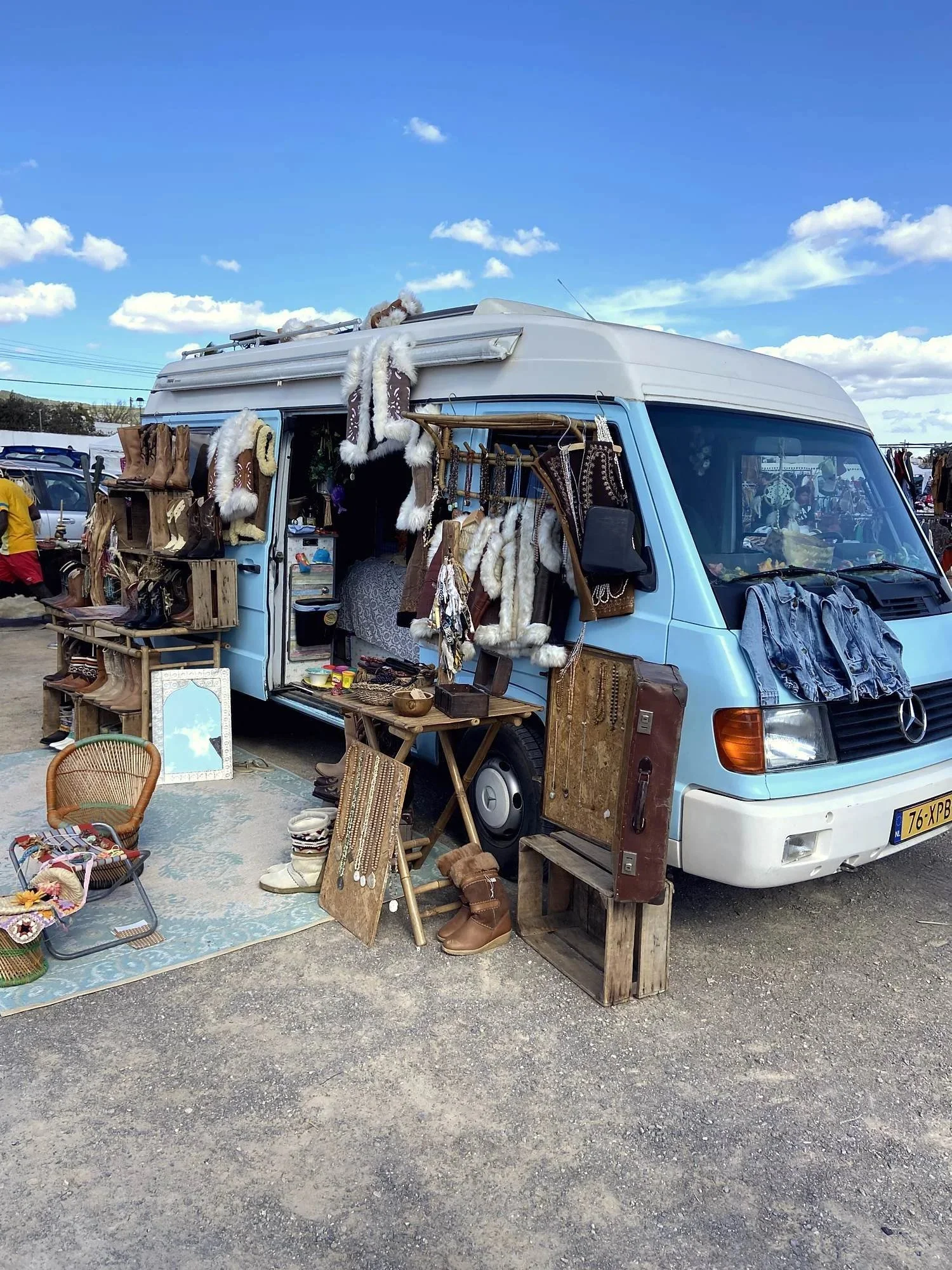
On Saturday mornings, the Sant Jordi flea market fills the car park of the former racetrack near the airport. People sell vintage clothes, records, antiques and furniture out of their vans and caravans, and there is usually someone drumming by the café at midday. The flea market runs all year.
This coast also has two of my favourite hotels on the island. On the cliffs between Cala Conta and Cala Codolar, 7Pines Resort Ibiza, now part of Hyatt, has 186 suites looking out to sea and Es Vedrà. It also has a cocktail bar called the Yacht Terrace. Further south, on a hill above Cala Carbó, Petunia Ibiza feels like a little Ibizan village, with whitewashed houses, gardens and an orchard. It is the first Beaumier hotel in Spain, with 42 rooms and suites, many looking straight at Es Vedrà. The new interiors are inspired by the golden age of the island.
Sant Antoni
Sant Antoni is honestly a bit random. It is packed with tourists, and there is always something to see. A friend of mine once saw a guy strolling down the street completely naked, clearly on his way home from a very big night. Café del Mar opened on the rocks in 1980. In the 1990s its DJ, José Padilla, made the Café del Mar albums, and chill out music went around the world from there. For a more bohemian sunset, go to Kumharas in Cala de Bou, across the bay. It has Balinese beds and a hippie market. As you drive in, look for the giant egg on the roundabout. The egg is a nod to the local legend that Christopher Columbus was born on Ibiza. Ibiza Rocks Hotel is here too, with live concerts by the pool. I would not stay there, but it is so much fun for a sunset drink and the best place to start a boat day. On the edge of town, Sa Capella is a candlelit restaurant in an old chapel, open in the evenings.
Santa Gertrudis
Santa Gertrudis is a village right in the middle of the island, with a white church and a pedestrian square, and galleries and boutiques all around it. Bar Costa has been around since the seventies. A Chilean artist once paid for his drinks by painting a mural, and the owner started collecting. Today there are paintings on every wall, the toasted sandwiches are famous, and Robert Plant used to be a regular. Just outside the village, have dinner at La Paloma under the lemon and orange trees.
Santa Eulària
Santa Eulària is a calmer town on the east coast, with a long seafront promenade, a marina and the river that gives the town its name. The American writer Elliot Paul lived here in the 1930s. His book Life and Death of a Spanish Town tells the story of Santa Eulària at the start of the Spanish Civil War. Walk up to Puig de Missa, the white 16th century church on the hill, for the view over the town and the sea. In summer, the S'Alamera market sells local crafts and jewellery.
Sant Carles
Sant Carles is the heart of hippie Ibiza. Bar Anita, or Ca n'Anneta, has been the meeting point of the village since the sixties. The hippies who lived in the countryside picked up their post from the wooden mailboxes on the wall and called home from its telephone. The mailboxes are still there today. Order a hierbas on ice, like the Ibicencos do. Just outside the village is Las Dalias.
Sant Joan and the north
The north is the greenest and wildest part of Ibiza, with pine forests, small coves and farmland. Sant Joan has a market on Sundays. On summer Sundays, drummers gather at Benirràs beach to drum the sun down, and it is one of the last real traces of hippie Ibiza. Portinatx, at the northern tip, is where you will find Nômade Temple. In the bay of Xarraca, Six Senses Ibiza is the other big wellness address in the north.
Formentera
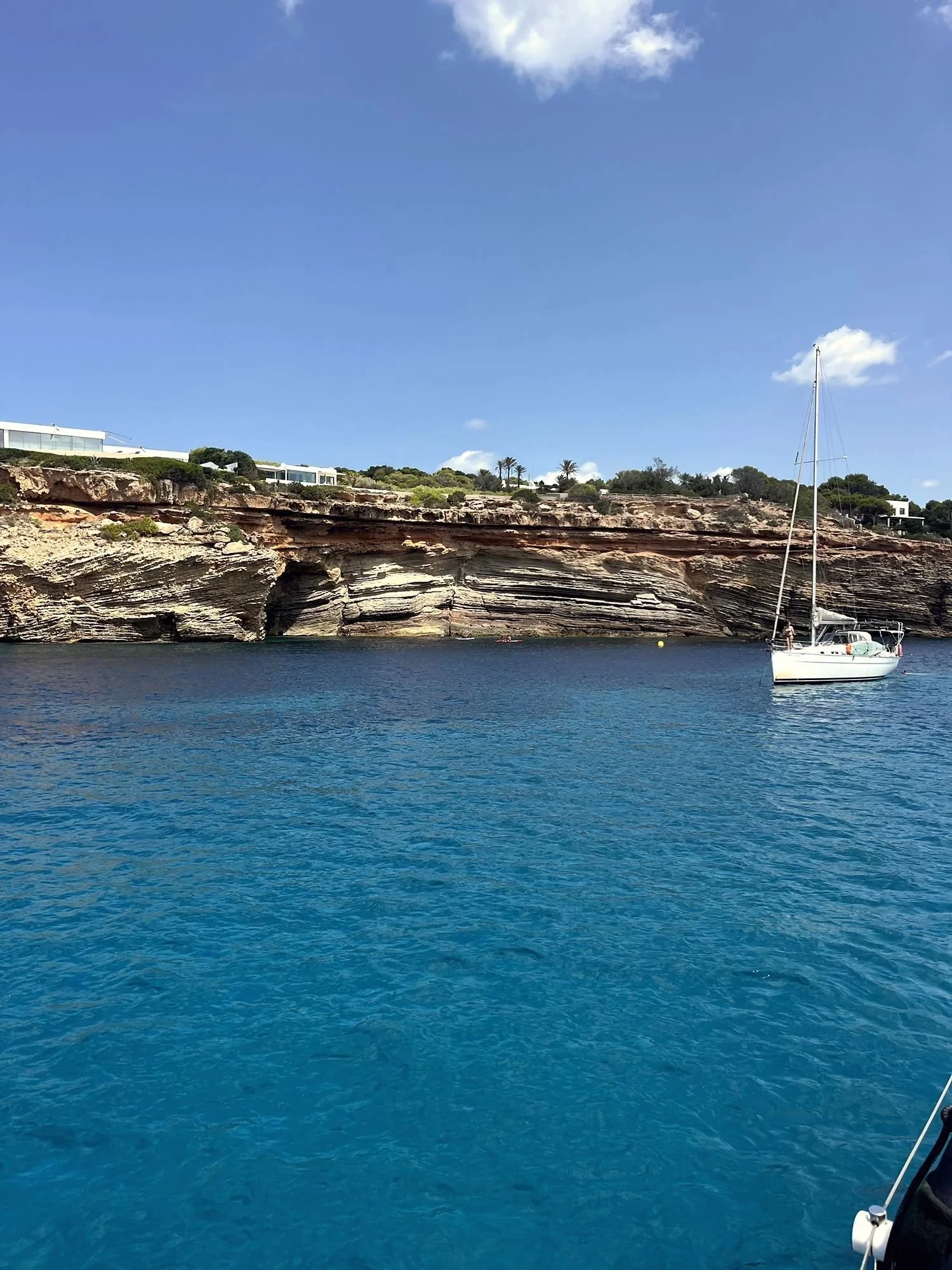
Just south of Ibiza is Formentera. It is a whole different island: flat and wild, and life there is all about the beach. Of the Pitiusas, it is the most low key and hippie. The island is a favourite of Italian travellers, and many live there all year. That is why there are so many very good Italian restaurants and chiringuitos on the sand.
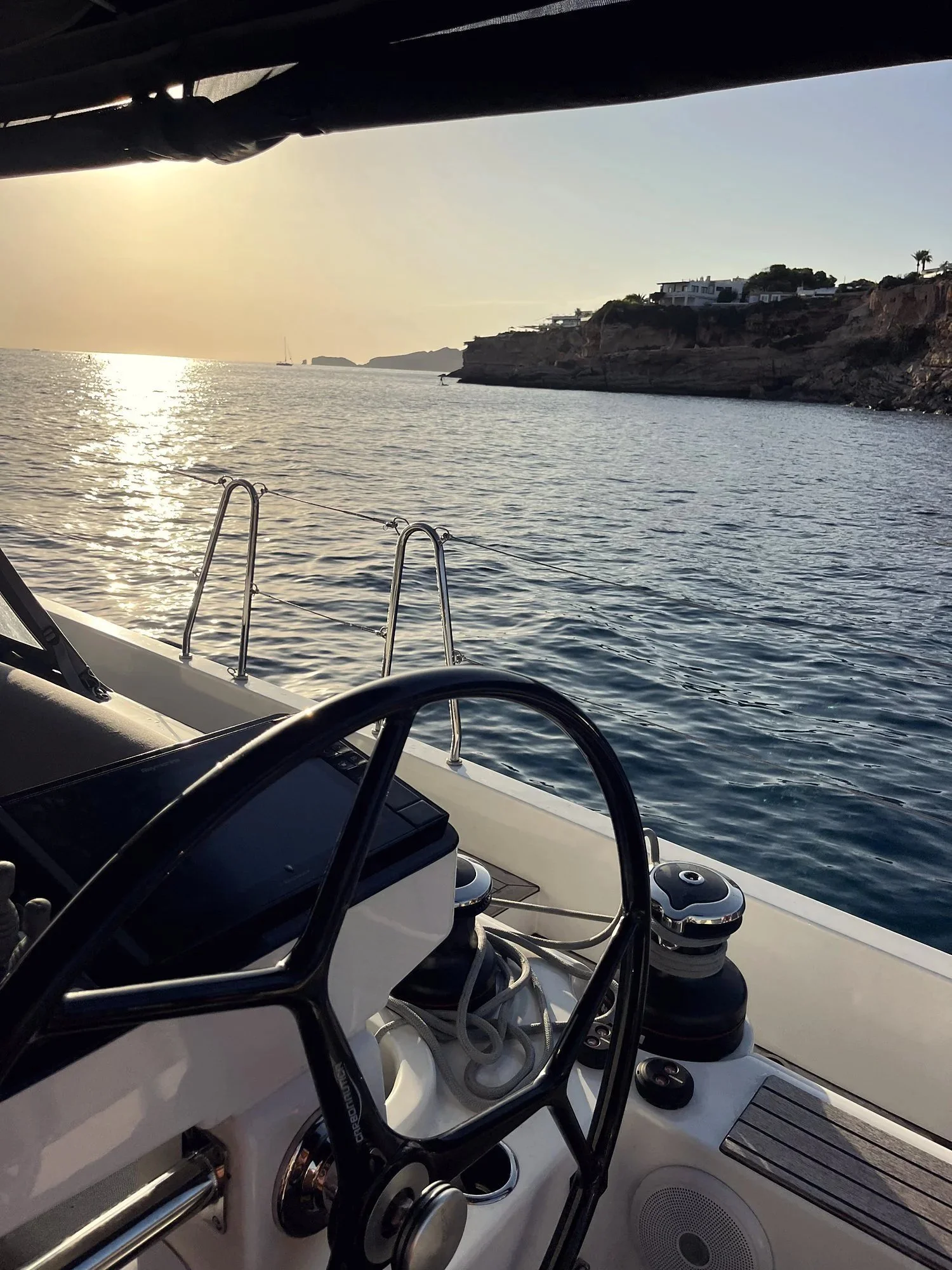
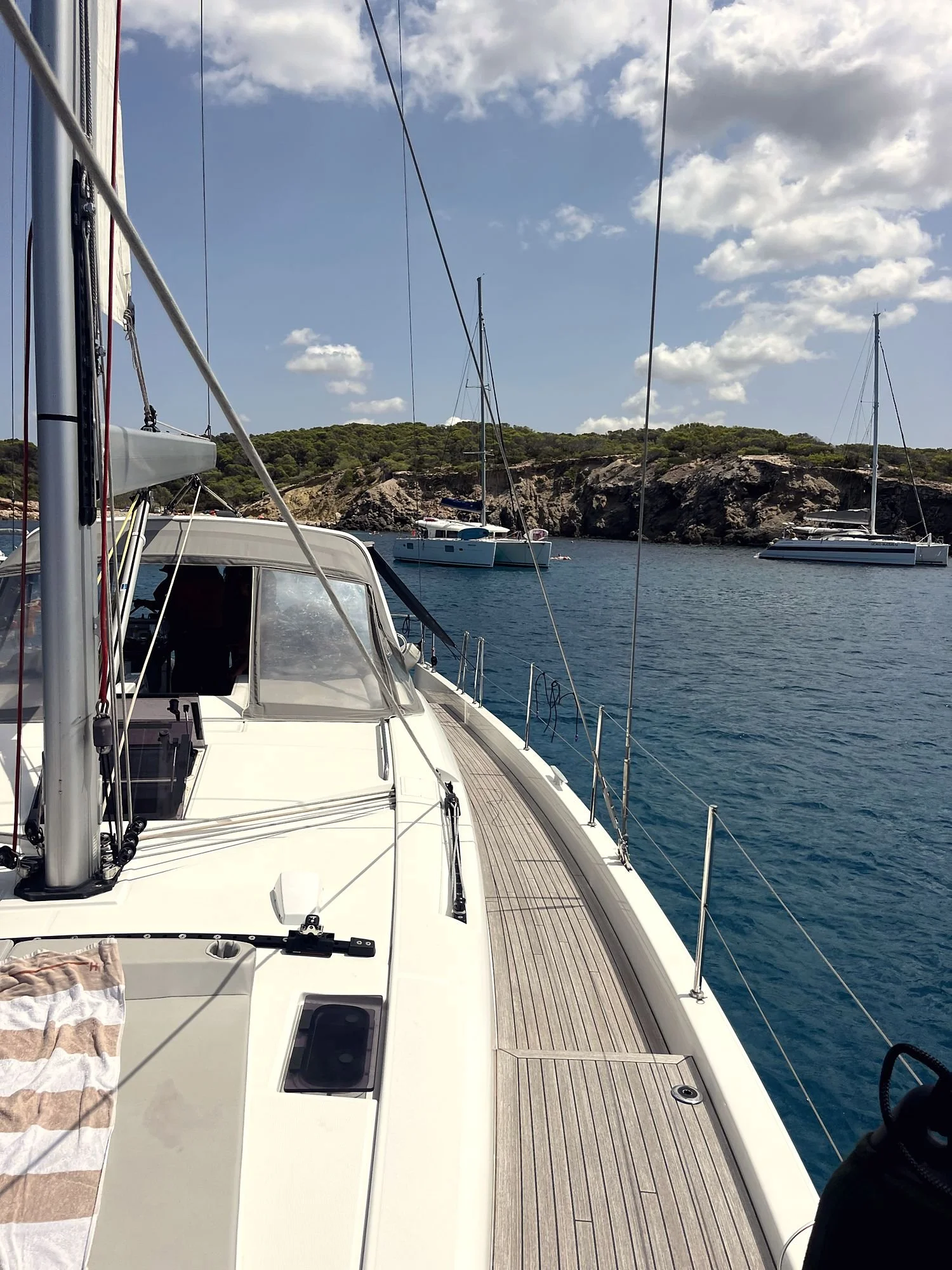
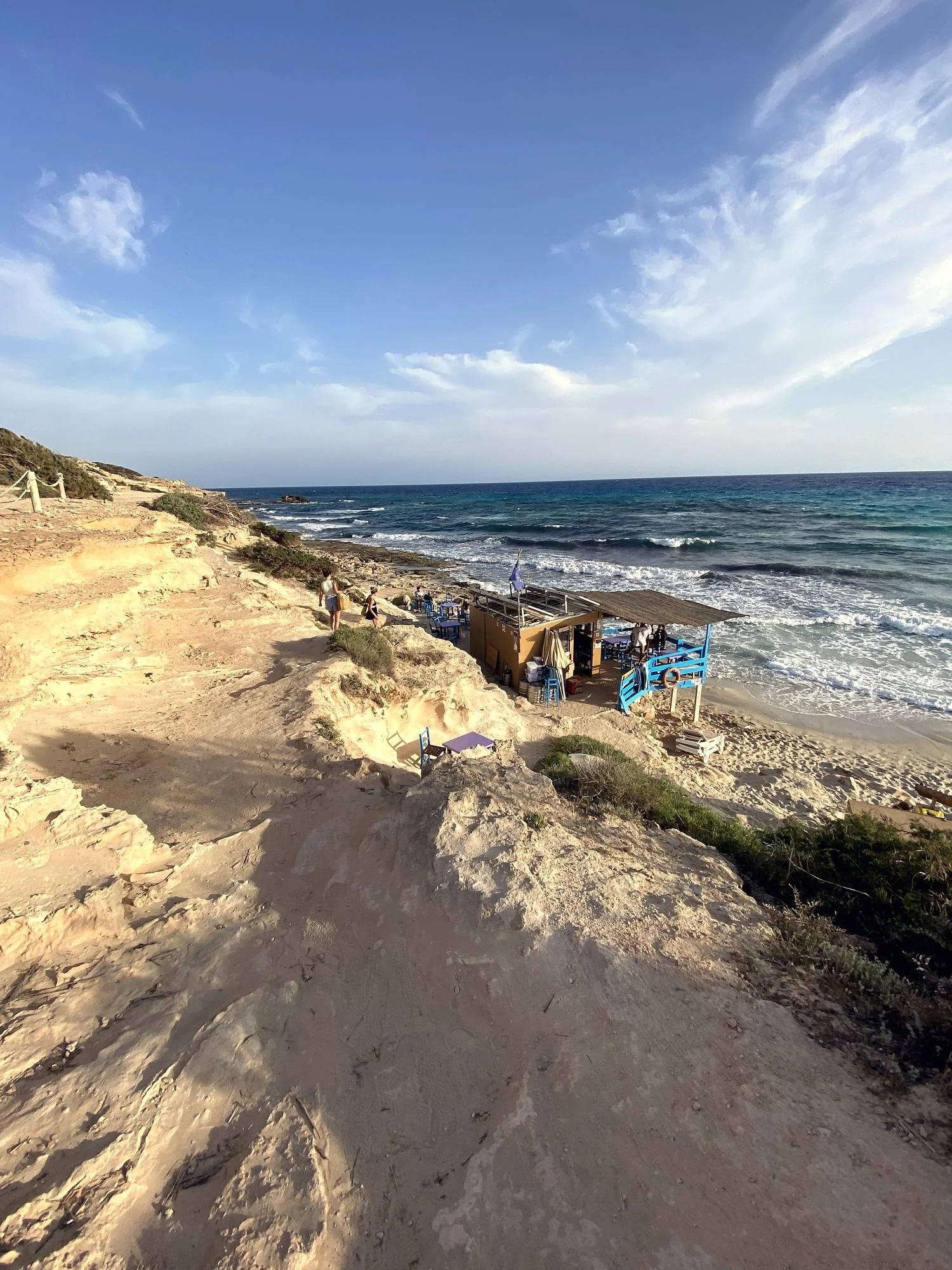
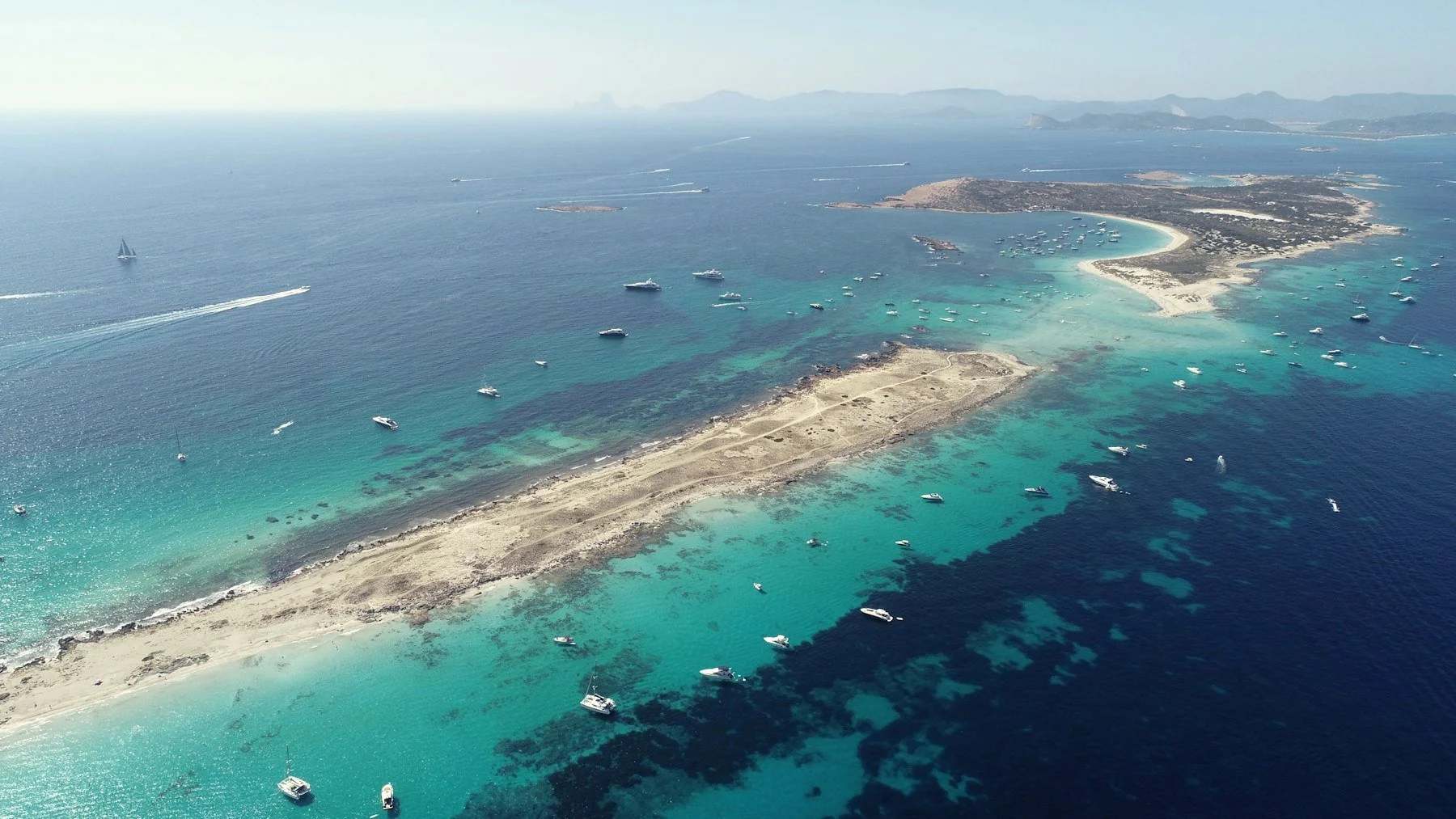
You can go for the day, either on a boat or on the fast ferry from Ibiza Town, which takes about half an hour. The main beach is Ses Illetes, a thin strip of white sand at the north of the island, inside the Ses Salines natural park, with turquoise water on both sides. It is incredible, and in summer the yachts anchor all along it. For lunch, try Juan y Andrea, at Illetes since the 1970s, or Es Molí de Sal, an old salt mill turned seafood restaurant. In Es Pujols, Chezz Gerdi is right on the beach. This is the kind of island where you sit down for lunch, the music starts, people suddenly get up and dance, and the afternoon slips into golden hour.
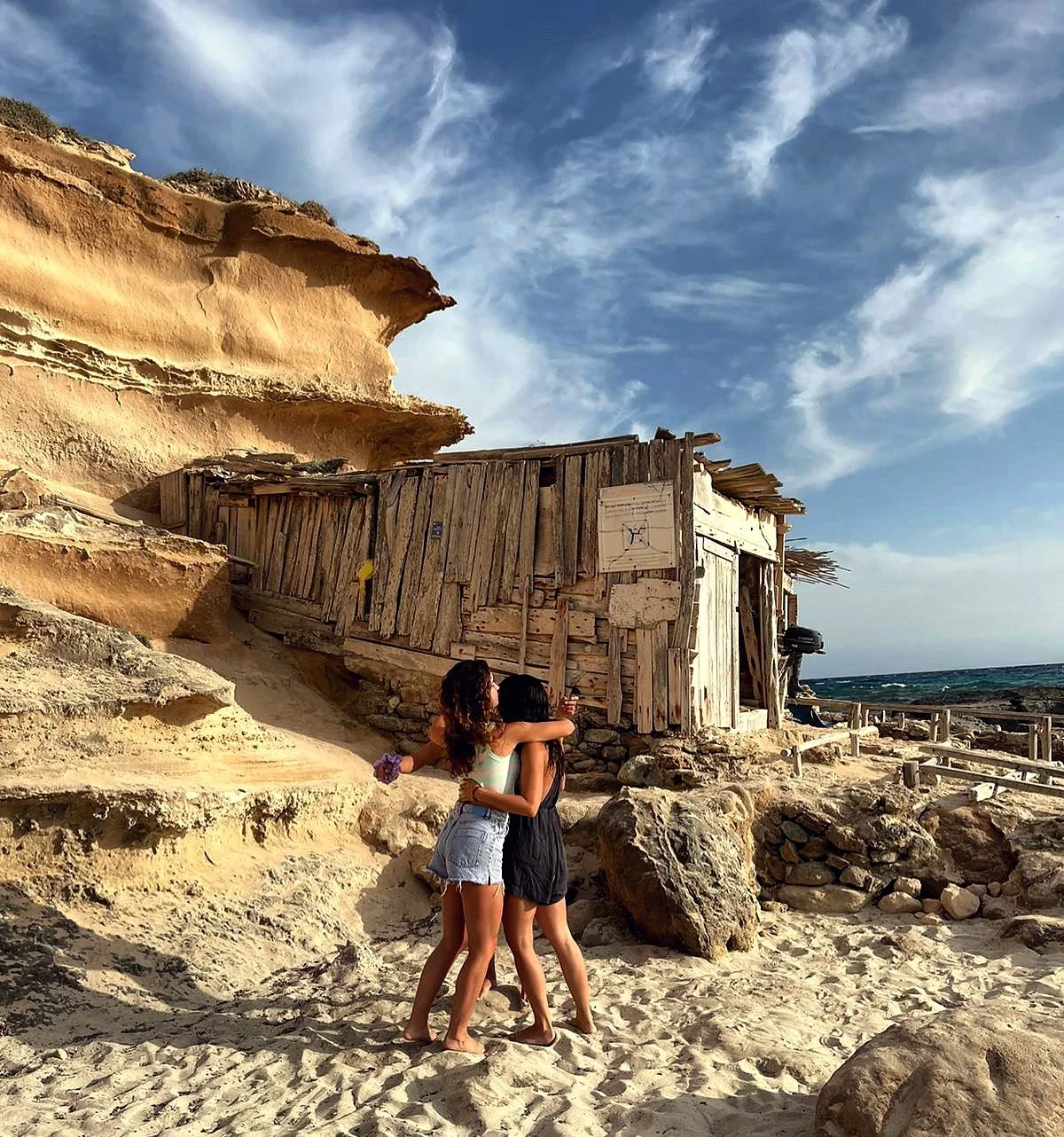
Or stay a couple of nights. Gecko Hotel & Beach Club, on Migjorn beach, is from the same group as Cap Rocat in Mallorca, and they do a really good job. It has 30 rooms, yoga in the morning and a beach club. It books up fast in summer. If you are looking for beach shacks, slow days and good food, Formentera is your place.
If you would like Ibiza planned for your own dates, start your trip request here and we will build it around you.
