
Northern Lights Trips 2026 and 2027: Norway, Iceland and Finland
At first you think you're seeing things. Then you fix your eyes on one spot in the dark sky, the green veils start to dance, and suddenly you remember to breathe.
As a travel advisor for over 15 years, I’ve noticed that something has shifted in how travelers chase the Northern Lights. For years, an aurora trip meant waiting for the deep of winter. Now, travelers are heading north earlier, and they are right to.
New Airbnb data reported by Travel And Tour World shows UK traveler searches for autumn 2026 stays in Tromsdalen, across the water from Tromsø, are up more than 200% year on year. Lofoten in Norway is up 69%, and Hornafjörður in southeast Iceland is up 31%. The official tourism boards of Norway and Finland both point to September and October as months with strong auroral activity.
The window runs from the Autumn until early April. Whether you have a long weekend or a full week, here is where I would send you, and how I would build the trip. Keep in mind that snow on the ground reduces the visibility of the Northern Lights. When you have a dark ground, there’s less light pollution in the sky.
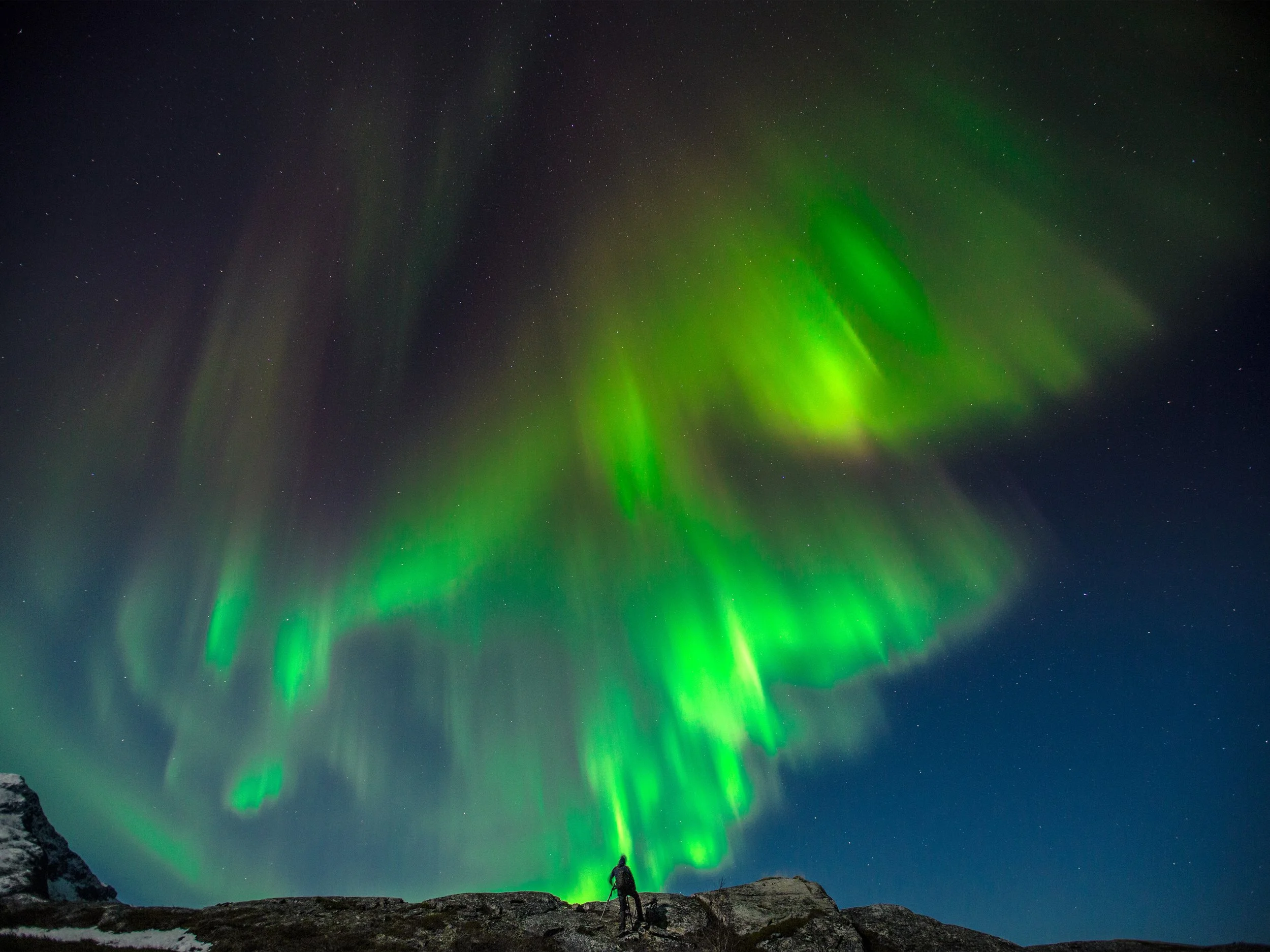
Northern Lights in Lyngen, Norway
When Is the Best Time to See the Northern Lights in Europe?
The aurora happens year round, but you need dark skies to see it. Across northern Norway, Iceland and Finnish Lapland, the viewing season runs roughly from late August to early April. Each part of the season gives you something different:
September and October: Active aurora months, with autumn color on the ground, unfrozen lakes and fjords, and easier hiking. Fewer crowds than December. Residents in the Arctic Circle have sworn by these months and they say these are the best weeks to come see the auroras.
November to January: The longest nights, which means the most hours of viewing time each evening. Snow arrives, along with husky sledding and snowmobiles so you have more to do in these destinations while catching the auroras.
February and March: Deep snow, more daylight for activities, and strong aurora activity around the spring equinox.
The sun is still in a highly active phase following the recent solar maximum, which keeps geomagnetic activity elevated through this season.
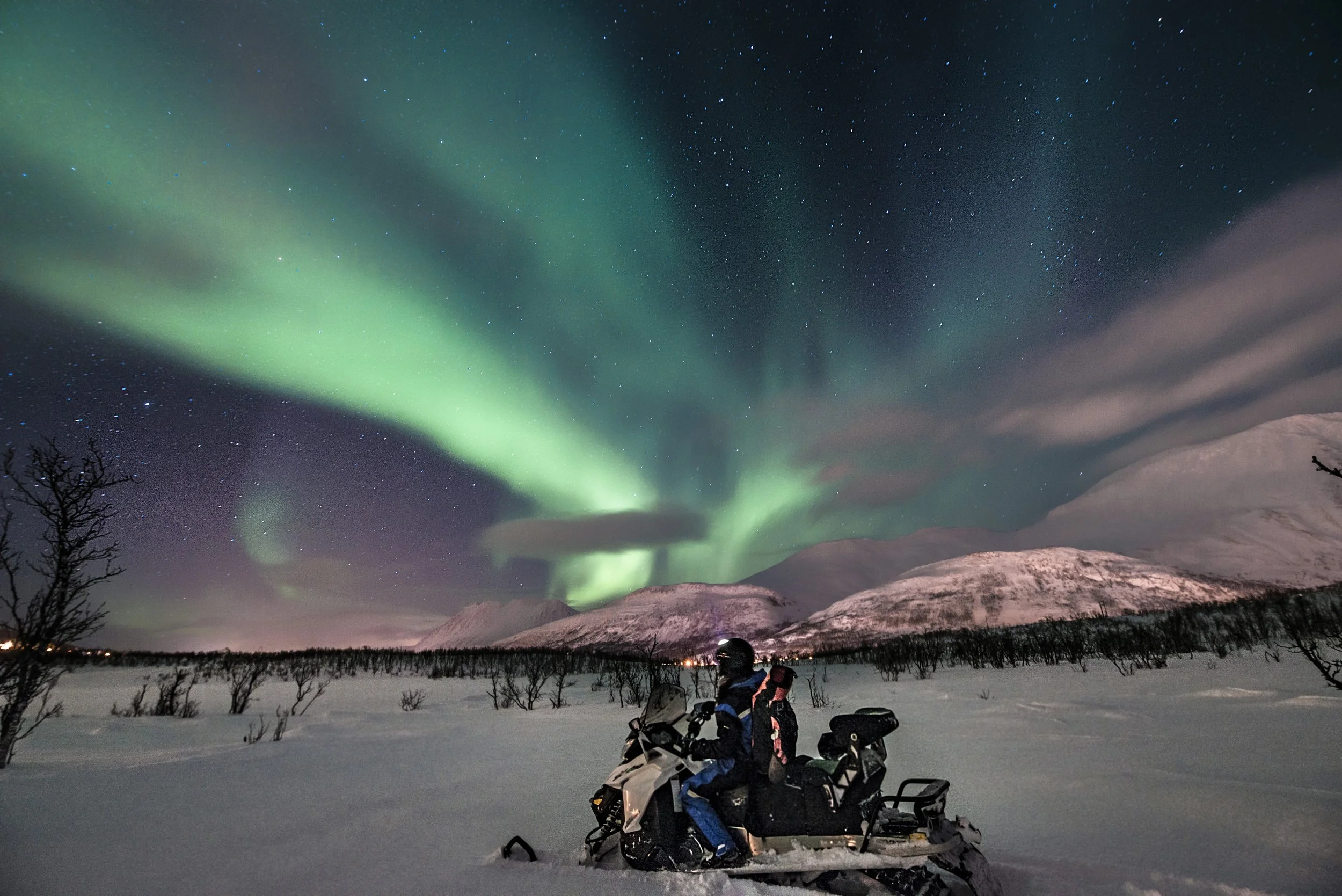
Snowmobile under the Northern Lights.
Where to See the Northern Lights: Four Destinations Worth the Trip
Tromsø, Norway: The Best Base for a Northern Lights Long Weekend
Tromsø is one of my favorite cities in Norway. It sits right under the auroral oval and has the best flight connections in Arctic Norway, which makes it the strongest choice when you have limited days. The real advantage is mobility. When clouds sit over the city, a private guide can drive you inland toward the Finnish border, where the skies are often clearer.
Long weekend (4 nights): Private aurora chase with a photographer guide, a fjord cruise for whales between November and January, a Sami reindeer experience, and a night outside the city in the Lyngen Alps.
Full week: Add Senja or Lyngen for mountain landscapes, dog sledding, and a wilderness lodge far from light pollution. You’ll want us to plan this trip for you as the ferry crossings through the fjords are not straightforward.
Lofoten, Norway: Mountains, Fishing Villages and Aurora Over the Sea
Lofoten is for travelers who want the landscape to be part of the story. Jagged peaks rise straight from the water, and red fishermen's cabins line the harbors. When the aurora appears, it lights up the mountains and reflects on the sea, which is why photographers come here.
Long weekend: Possible, but tight. I recommend it only if you fly directly into Leknes or Svolvær.
Full week: This is where Lofoten shines. Road trip between Svolvær, Henningsvær, Nusfjord and Reine, stay in restored rorbu cabins, eat Arctic cod at the source, and have a different aurora foreground every night.
Southeast Iceland: Glaciers, Ice Lagoons and Northern Lights
Hornafjörður, around the town of Höfn, sits at the foot of Vatnajökull, Europe's largest glacier. Far from Reykjavík's light pollution, it gives you some of Iceland's darkest skies next to Jökulsárlón glacier lagoon and Diamond Beach.
Long weekend: Fly into Reykjavík, take a short domestic flight or a private transfer along the south coast, and base yourself near the glacier lagoon.
Full week: Drive the south coast slowly, with waterfalls, black sand beaches, a glacier hike, and a natural ice cave visit when conditions allow (usually November to March).
Finnish Lapland: Glass Igloos, Ruska Colors and Mirror Auroras
Finland offers something the other destinations cannot: aurora viewing from bed. Glass roof igloos and suites let you watch the sky without standing in the cold. In September and early October, Lapland's autumn color season, called ruska, overlaps with aurora season. On still nights, the lights reflect across dark lakes in what locals call a mirror aurora.
Long weekend: Fly into Ivalo or Rovaniemi, two nights in a glass igloo, one in a wilderness lodge.
Full week: Combine Saariselkä, Inari and the Sami culture of the far north with husky safaris, snowmobiling, reindeer farms and a traditional smoke sauna.
Long Weekend or Full Week: Which Northern Lights Trip Is Right for You?
Nobody can guarantee the Northern Lights. Anyone who tells you otherwise is selling you something sketchy. You need three things at once: darkness, clear skies and enough solar activity. So if you book a trip with more nights, you increase your chances of those three stars aligning.
A long weekend (3 to 4 nights) works well if you base yourself in a destination where a guide can chase clear skies, like Tromsø or Finnish Lapland. Four nights is the minimum I recommend.
A full week (6 to 7 nights) gives you the best odds and lets the aurora become the finale of a trip rather than its only purpose. If the sky stays cloudy one night, your days are still full of glaciers, fjords and wildlife.
How I Plan a Northern Lights Trip
I will help you choose the destination based on weather patterns and flight access, not just photos because know that Northern Lights are very photogenic. What you see on Instagram is not what you’ll see with the naked eye.
You’ll want expert private guides who read cloud cover and space weather forecasts and will drive for hours to find a break in the clouds. That’s where my team comes in.
I will book you in lodges with aurora wake up calls and properties far from light pollution. Some of my favorites are so far you need to take 3 ferries and 2 car rides to get there.
Building every itinerary so the days stand on their own, whatever the sky does. You can’t plan around sunlight and you can expect that lunchtime is in complete darkness.
My team will handle the flights, the transfers, all the gear and the timing of your itinerary so that you arrive ready to go out that first night.
What to Pack for a Northern Lights Trip
Thermal base layers in merino wool
An insulated, windproof outer layer (many lodges provide Arctic suits)
Warm boots with good grip, plus wool socks
Hat, neck warmer, and gloves with liners
A tripod and a camera with manual settings (recent smartphones also do well in night mode)
Spare batteries, kept warm in an inside pocket
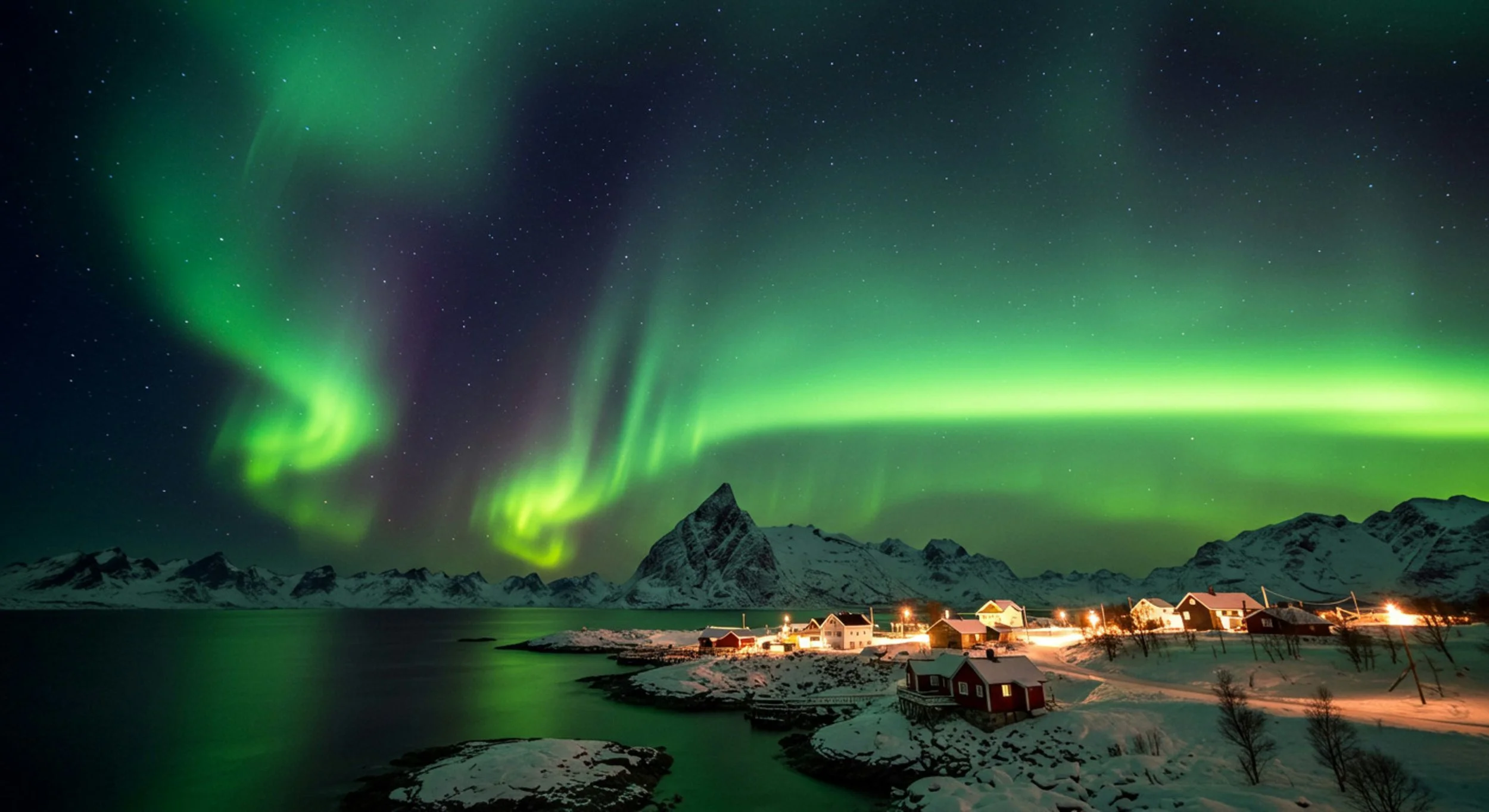
Northern Lights in Lofoten, Norway
Northern Lights FAQ
What is the best month to see the Northern Lights in Europe?
September through March. Autumn offers active aurora months with mild conditions and fewer crowds. November to January gives the longest nights. February and March combine snow, daylight and strong activity around the equinox.
Can I see the Northern Lights on a long weekend trip?
Yes, if you choose the right base. Tromsø and Finnish Lapland give you the best odds on a short trip because guides can move to find clear skies. Plan at least four nights.
Where is the best place to see the Northern Lights in Europe?
Tromsø in Norway for access and reliability, Lofoten for landscapes, southeast Iceland for glaciers, and Finnish Lapland for glass igloos and comfort.
Are the Northern Lights guaranteed?
No. The aurora is a natural phenomenon. A well planned trip improves your chances with more nights, dark locations and guides who follow the forecast.
Is autumn a good time for a Northern Lights trip?
Yes. Norway and Finland both identify September and October as strong aurora months, and autumn lets you pair the lights with hiking, fall color and fjords before winter crowds arrive.

Sarah Casewit in Norway
Plan Your Northern Lights Trip
The best dates for this season go fast, especially the lodges with private aurora viewing. Tell me whether you have a long weekend or a full week, and I will design a Northern Lights trip around the destination that gives you the best odds.