Why I Visit Local Pharmacies Everywhere I Travel
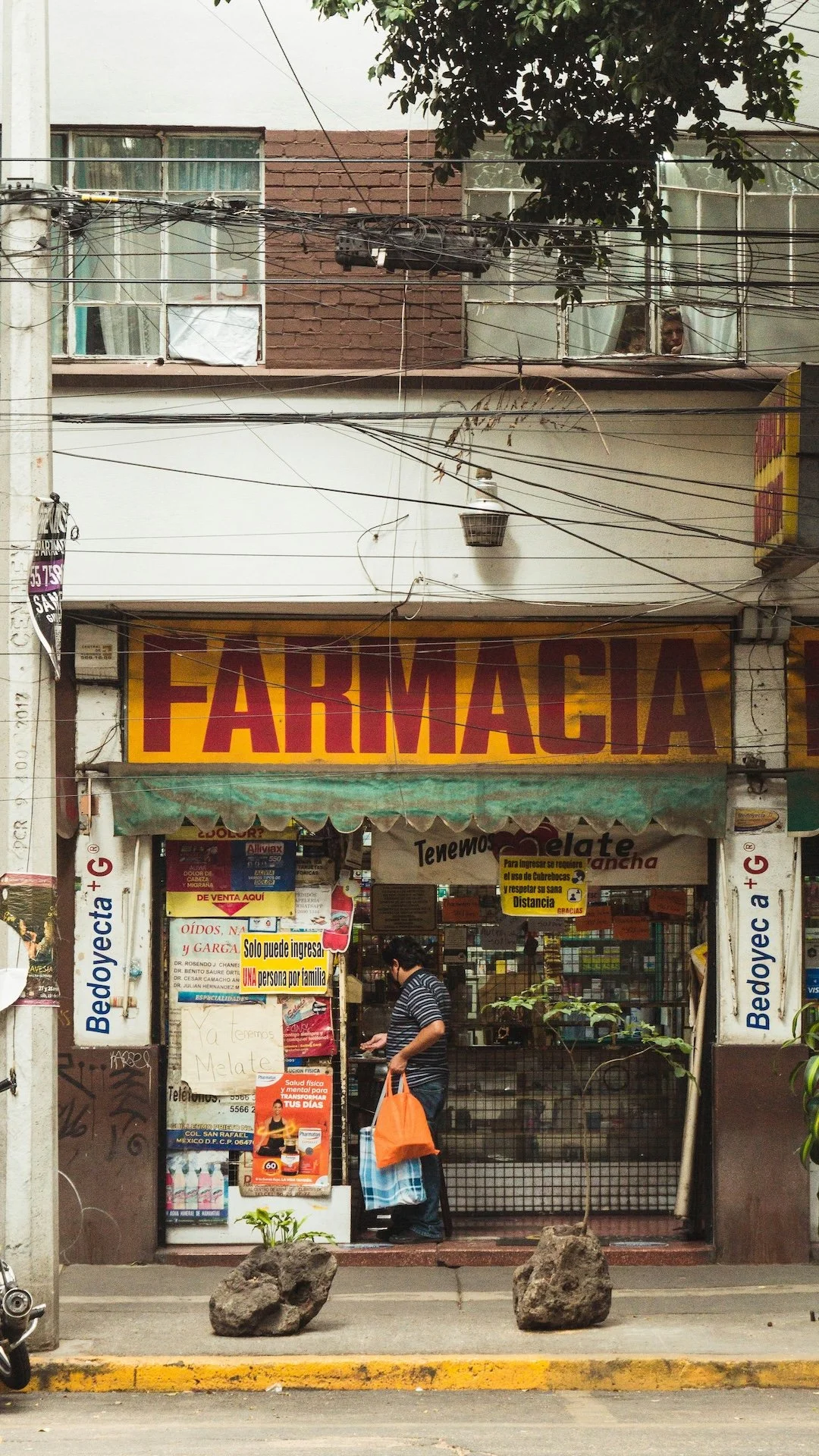
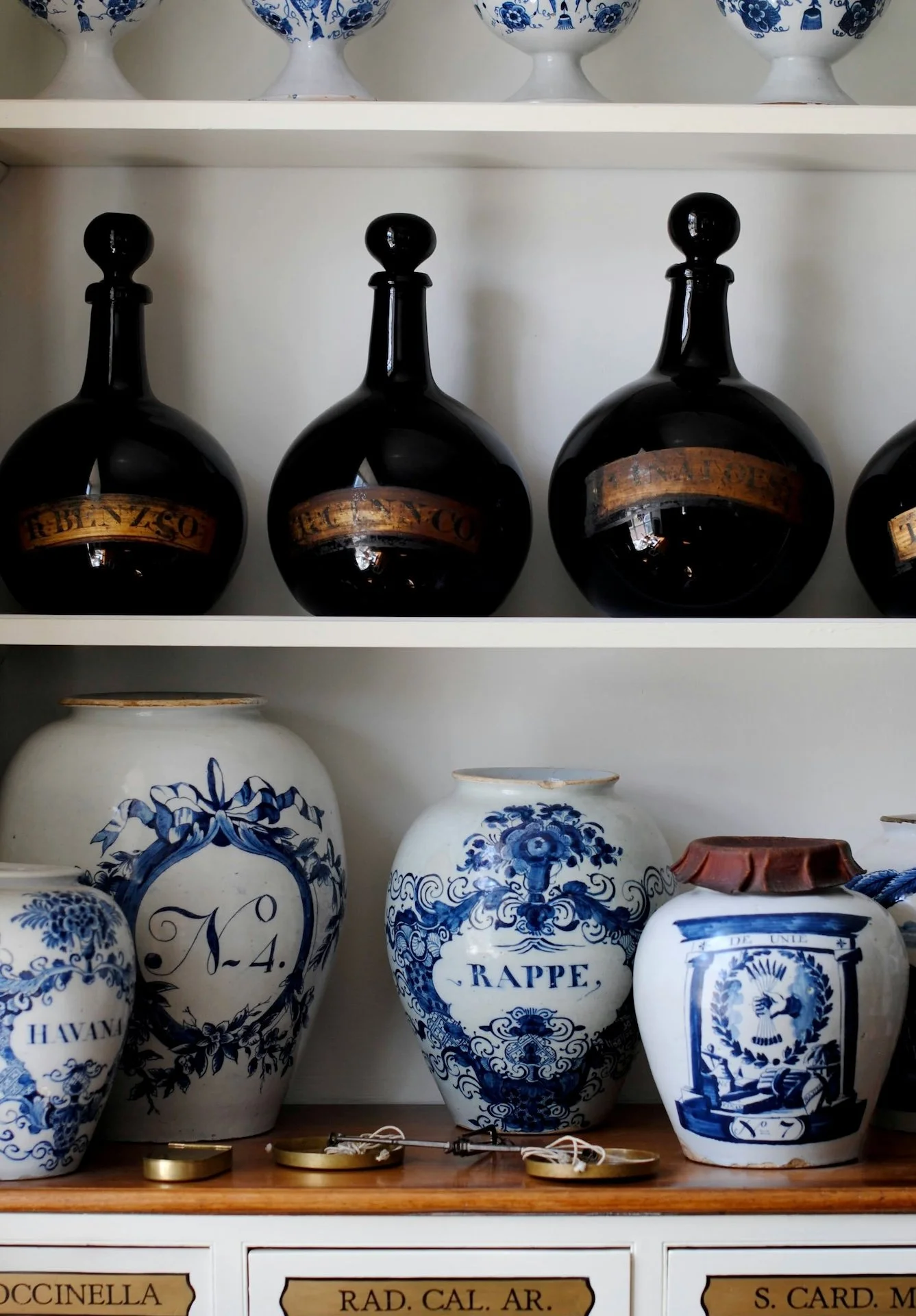
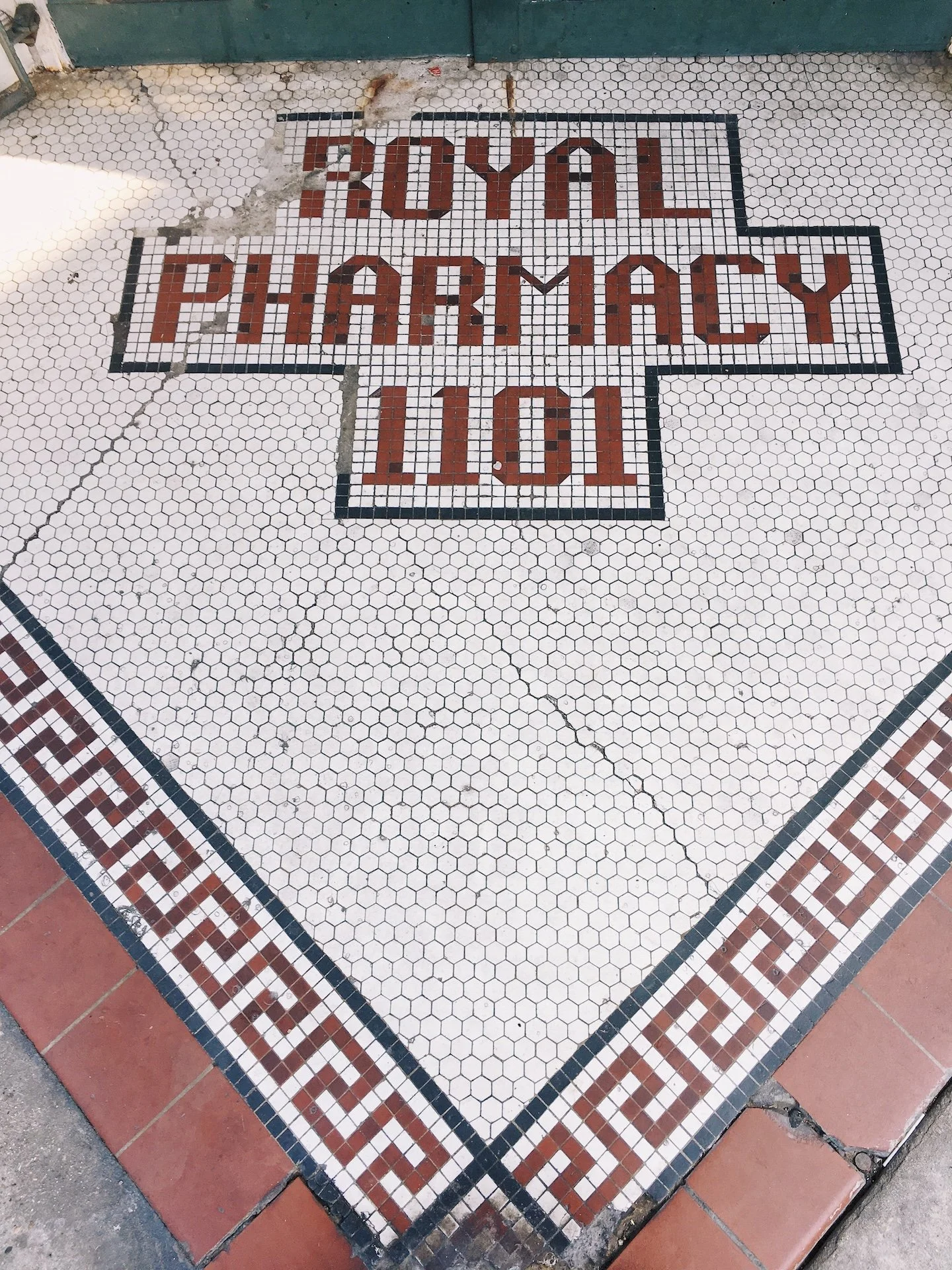
The pharmacy is a diagnostic tool for a country. What's behind the counter, what's on the wall, what people are buying, what you're allowed to buy over the counter, how you're treated and spoken to: all of it tells you a lot about a country's taboos and what it deems normal, sacred or necessary. The pharmacy lays out a tapestry of subculture that can only be witnessed and experienced in understated spaces like this one.
Whenever I travel to Morocco, which thankfully is quite often, my father asks me to buy him a handful of Ventoline inhalers. They're dirt cheap compared to what he pays in the US and they're sold over the counter. This errand takes me to nondescript pharmacies, usually deep in the medina, and every time I step through a portal that shows me Morocco through a completely different lens from that of the fancy new restaurants.
Most recently, the errand took me to a small pharmacy where I immediately noticed a large poster of the 99 Names of God hanging above a wooden shelf laden with little boxes and jars. It was a unique piece of art, hard to find and uncommon in Morocco. Next to it hung a smaller framed piece, hand painted in Arabic calligraphy:
بسم الله الرحمن الرحيم
هذا من فضل ربي
ومن الله التوفيق
In the name of God, the Most Gracious, the Most Merciful. This is from the bounty of my Lord, and success comes from God.
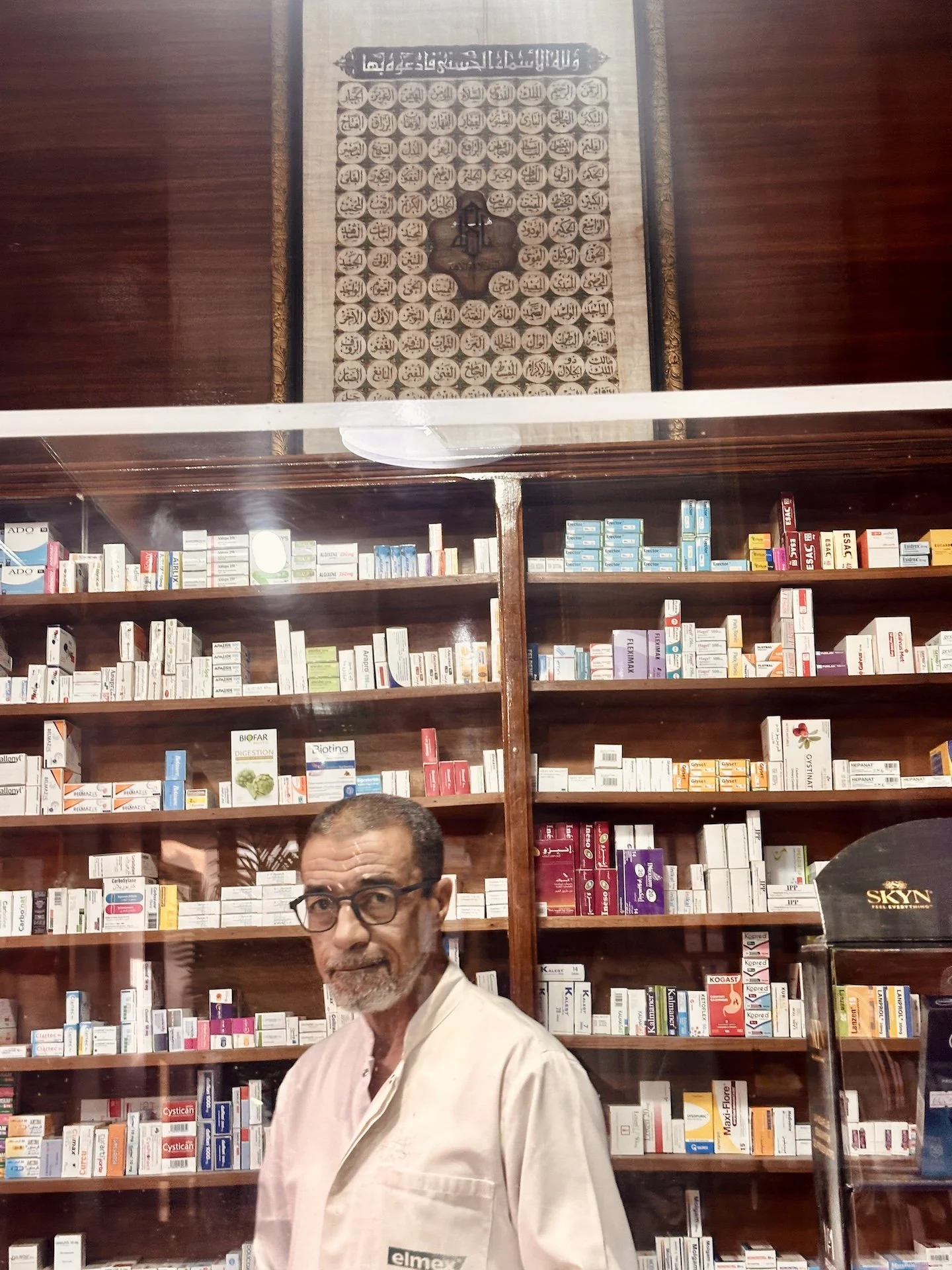
You see this blessing in shops all over Morocco. It's a way of saying that whatever is earned here is a gift, not an achievement. In a pharmacy, it reads differently. The medicine on the shelves is a gift too, and whether it works is up to Him. The pharmacist noticed my intrigue and led me to the other wall of his pharmacy, where he proudly pointed up at a poster of many columns with the entire Quran written in teeny tiny script. I gasped. We had the exact same piece in our home in Fez growing up, and I used to stare at it as a child, wondering how long it took the calligrapher to write the entire Quran on a single sheet of paper.
In this pharmacy, faith held a higher position than the medication. Quite literally, God was on the top shelf. The pharmacist's face was wide and gentle. He looked like someone who would hand you your box of pills and say "InshaAllah this will help you," and mean it. Healing, in that room, was a partnership between the chemist and the divine.
That pharmacy wasn't an exception. Religious symbols live in pharmacies almost everywhere, as if a little help from above is part of the treatment. In India, you'll find images of Lord Dhanvantari, the Hindu god of medicine, healing and Ayurveda, worshipped as an avatar of Lord Vishnu, often garlanded with fresh flowers above the counter. In Egypt and across much of the Arab world, you'll find Quranic verses, prayers and calligraphy about healing, most often "وإذا مرضت فهو يشفين" (And when I am ill, it is He who heals me). In Spain and other parts of southern Europe, you'll find small statues of Jesus and the Virgin Mary, and postcards of Saint Raphael the Archangel, the patron saint of healing, taped to the side of the register. These artifacts aren't decoration. They're a society coming to life in front of you and showing you what it believes: that medicine does its part, and faith does the rest.
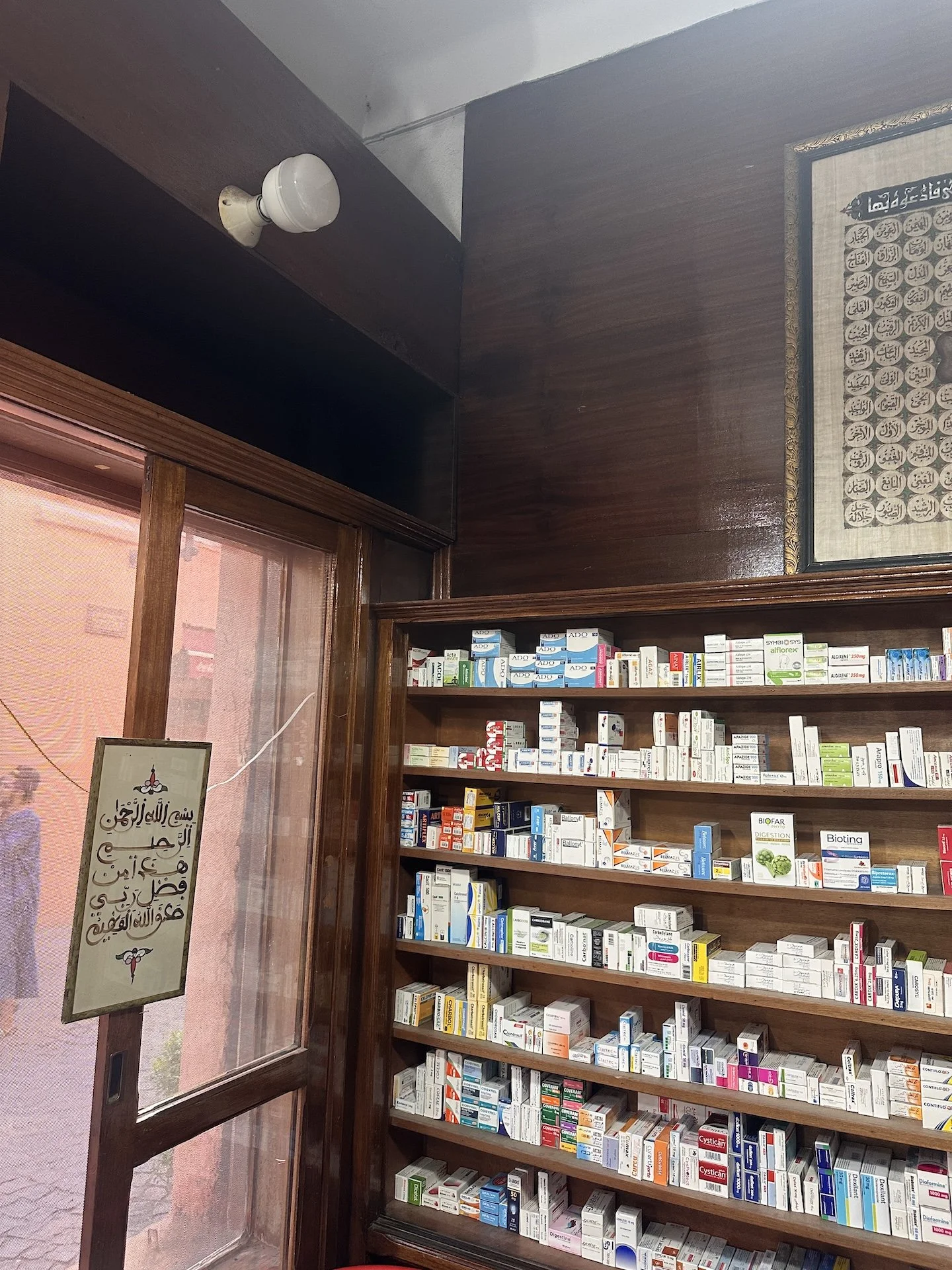
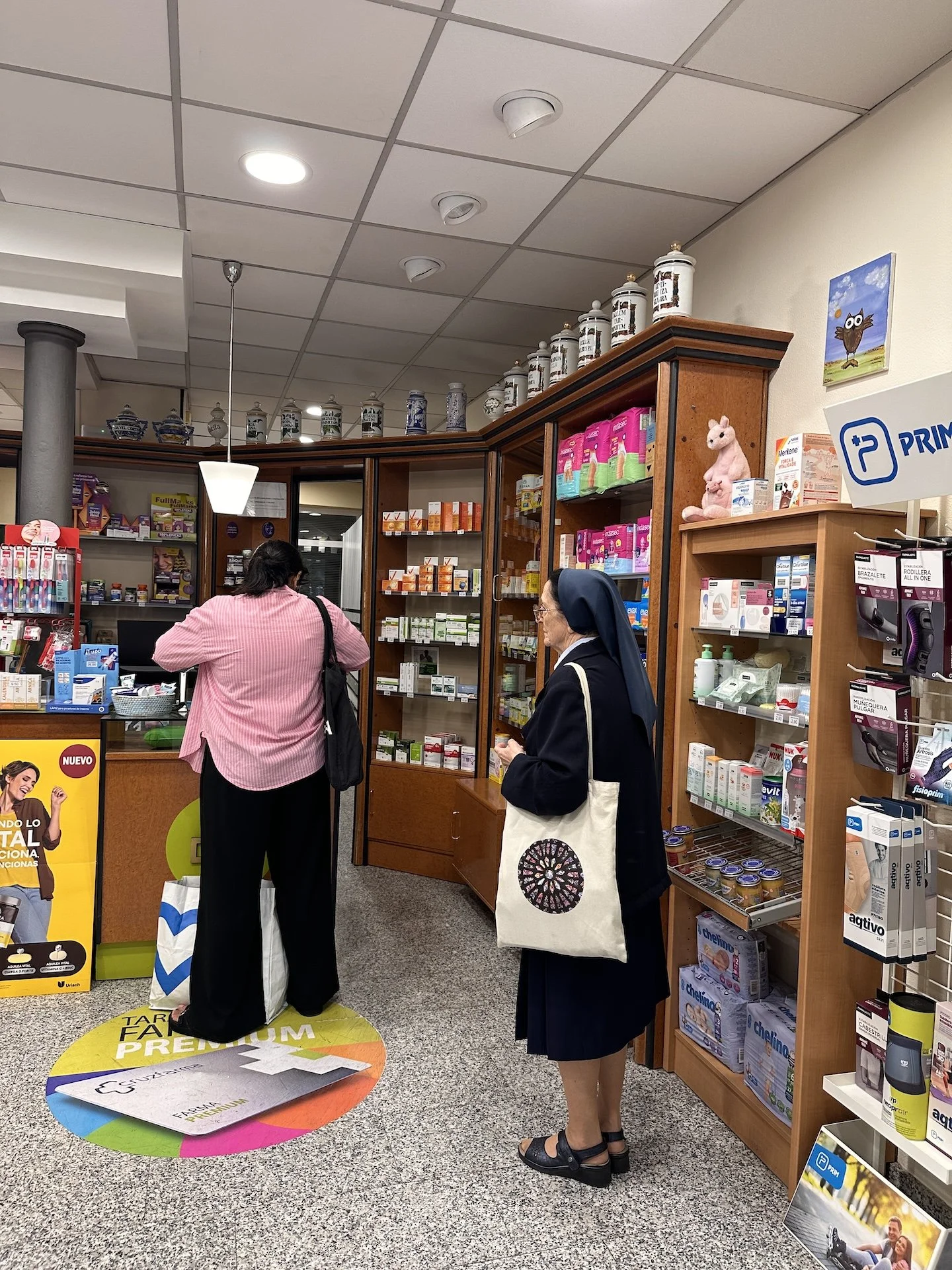
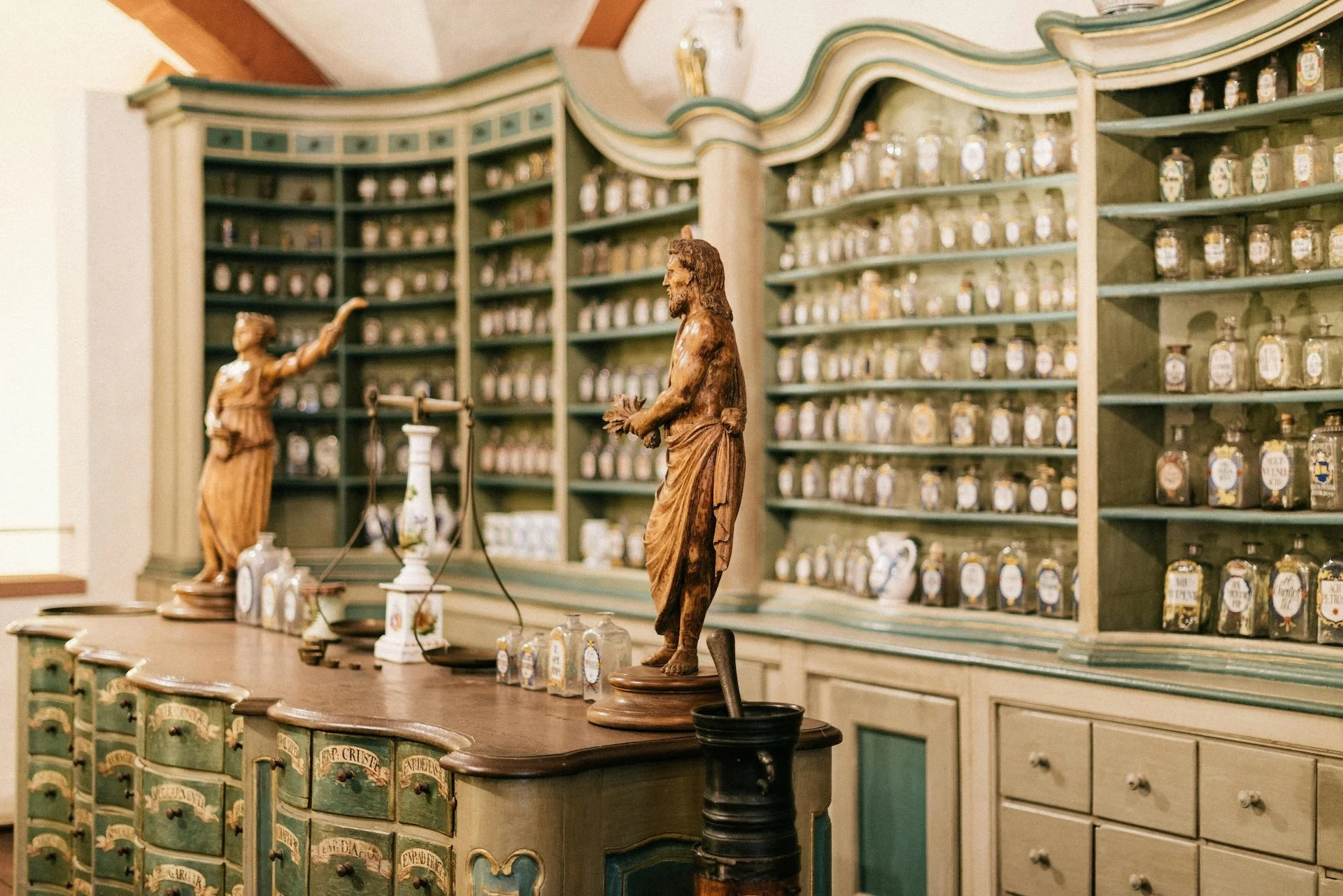
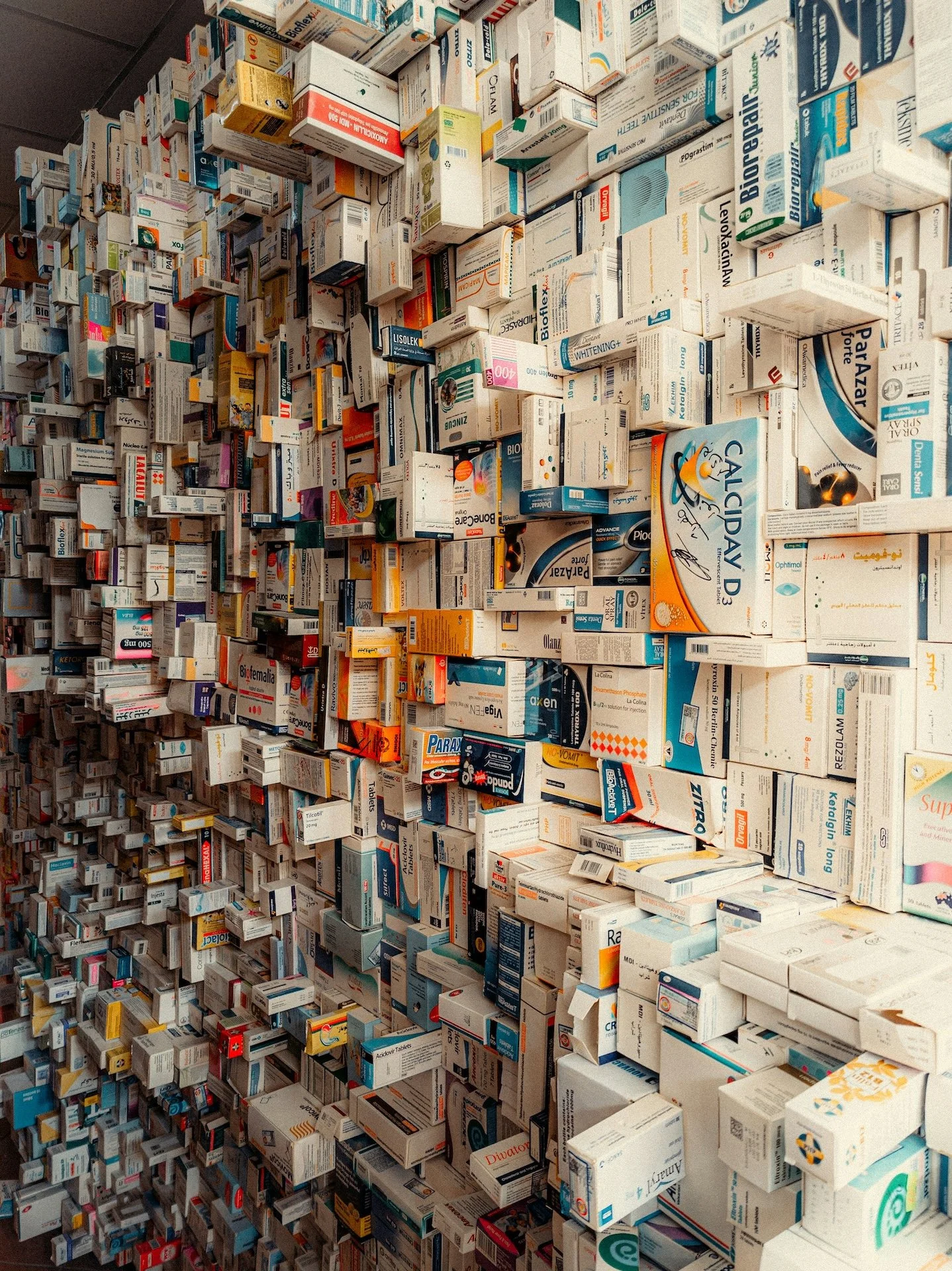
Ever since I wrote about my love for markets and grocery tourism, and how they reveal subcultures, I've been thinking about the other spaces I enter to learn about a place beyond books and monuments. I quickly realized that I always hunt down old pharmacies. Whenever I travel, I seek one out, because a pharmacy is a country's utility, unfiltered. It isn't designed for you, the traveler. There's no brand strategy, no targeted wellness aesthetic, and in that unpolished space you learn what a society decides you need access to.
Every pharmacy gives you clues. The way you're greeted (or not) when you walk in, what they choose to display, how they decorate the space, what you can buy without a prescription, how you're spoken to, how they react to the medication you ask for. It's a space as raw and unfiltered as the loading dock of a local market.
In Kyrgyzstan, I rode a 1969 Russian truck through Issyk Kul. I came out of it with a minor spine inflammation, because the road is mostly boulders and you are literally shaken for two hours each way. Back in the town of Karakol, I went (gleefully) to a local pharmacy and asked for their strongest painkiller. To my surprise, they handed me a box of Diclofenac labeled "Retard," which turned out to mean slow release. That's not the point. The point is I walked out with a drug that requires a prescription in most countries.
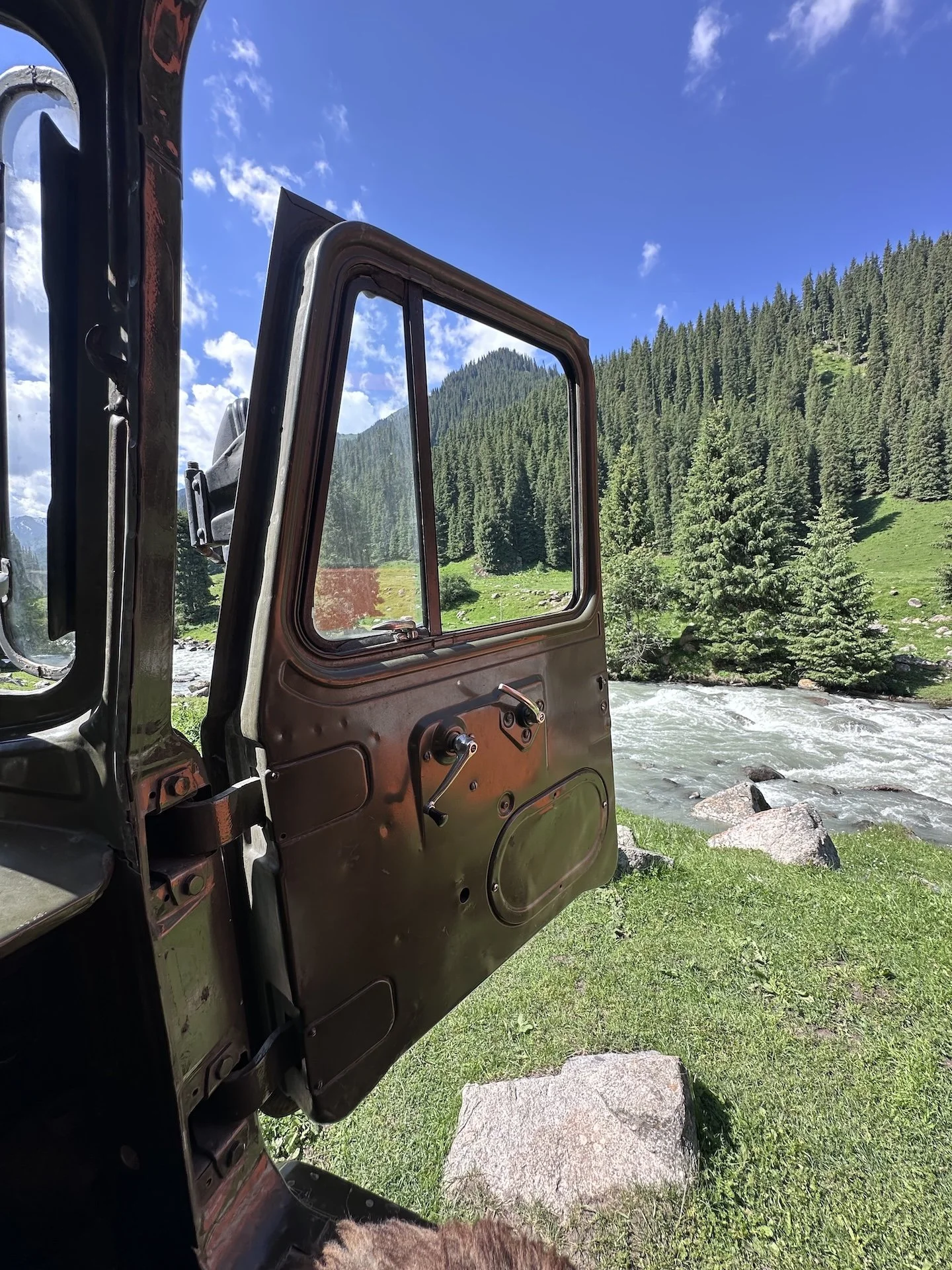
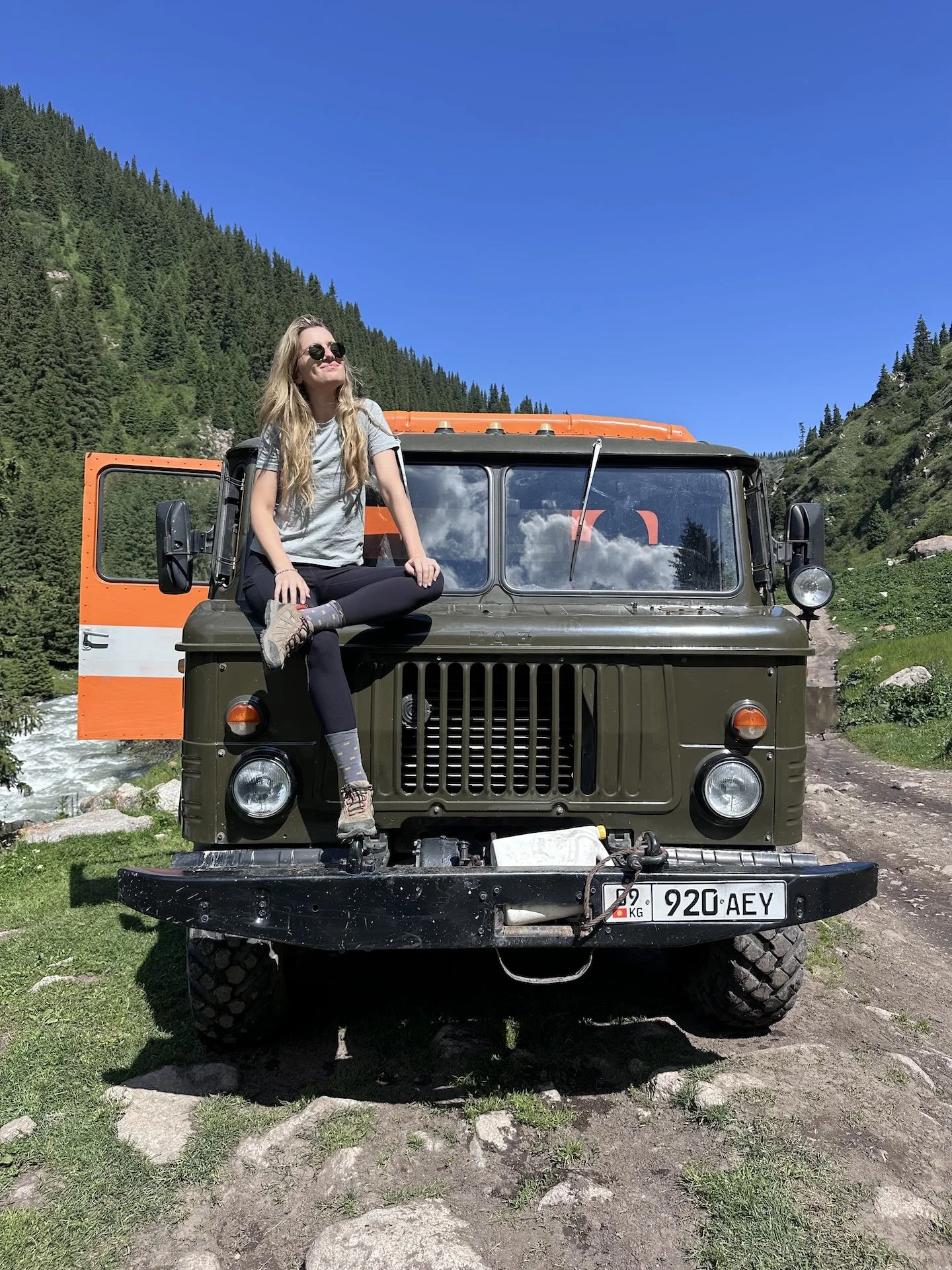
And it made so much sense. Kyrgyzstan is not for the faint of heart. It's a country where you will get hurt: on horseback because the saddles are so thin, on a hike because the trails aren't real paths, or in a Russian shaker because you thought it would be fun. Easy access to Diclofenac tells you that Kyrgyzstan understands its topography and its risks. It understands pain, both physical and administrative. The country kicks your ass and the pharmacy meets you there. The pharmacists were three beautiful Kyrgyz women laughing innocently at my Google translation of my aches. We bonded over my pain, and I was there for it.
In the US, I'm usually visiting my parents in DC or on a solo road trip to clear my head. Either way, I'm always at a CVS. Probably daily. You always end up at a CVS, and you always "need" something. This is where you see America for what it is: efficient, abundant, built for convenience. There are twelve brands of the same allergy pill, and the one you want is often locked behind plexiglass. Everything is clean, well lit and predictable. You check yourself out, and the human interaction is often a friendly "have a good one" on your way out the door. There's a kind of comfort in that. You know exactly what you'll find in a CVS in DC or in a small town in Utah. It tells you a country that values choice and independence, where you're trusted to figure out what you need on your own, and where health has become something you shop for.

In Mallorca, pharmacies are stocked with straw hats, UV sunglasses, locally produced skincare and handmade soaps, all sold alongside heavily regulated medication. The pharmacist will happily talk you through which sunscreen suits your skin before handing you anything stronger. It's a pharmacy that doubles as a shop for the climate you live in, not just the ailments you might get. It tells you an island that lives outdoors and takes the sun seriously.
In Japan, I had a painful period and needed strong painkillers to keep going on our snowy road trip through Nagano. We were driving through a small town on the outskirts of Matsumoto. It does not get more local than this. I found a pharmacy and walked in, phone ready with my translator app. The experience was unlike any pharmacy I had been to. It was hushed, and the pharmacists stood at attention, waiting to see what this foreigner would ask for. To my surprise, they had no Japanese medication specifically designed for period cramps. They simply did not carry it. So they gave me the next best thing, a general painkiller. It struck me that in a society like Japan, periods are as taboo as they are in Morocco, where they hand you your pads in a black plastic bag so no one sees you're on your period. Two very different countries, the same silence.
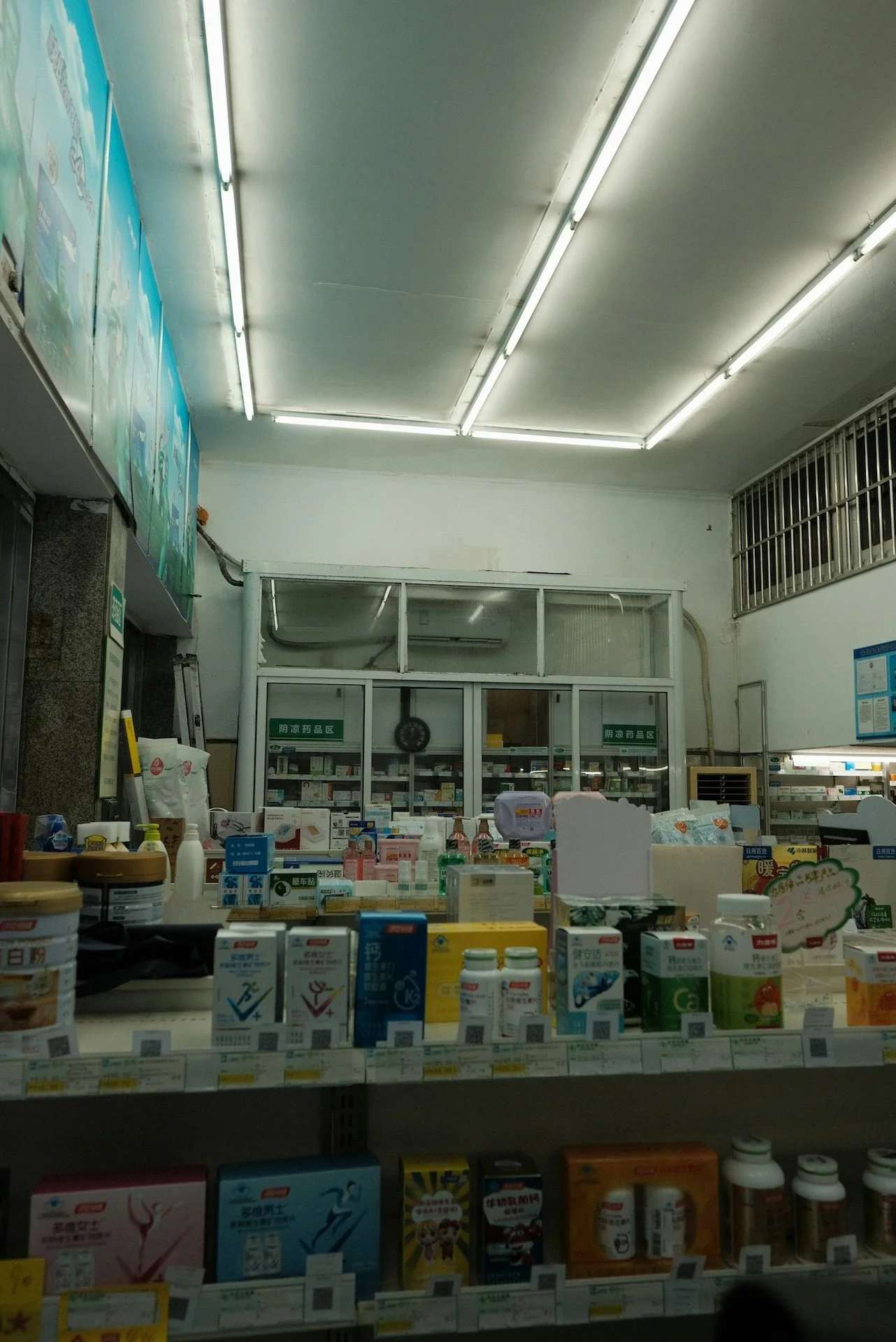
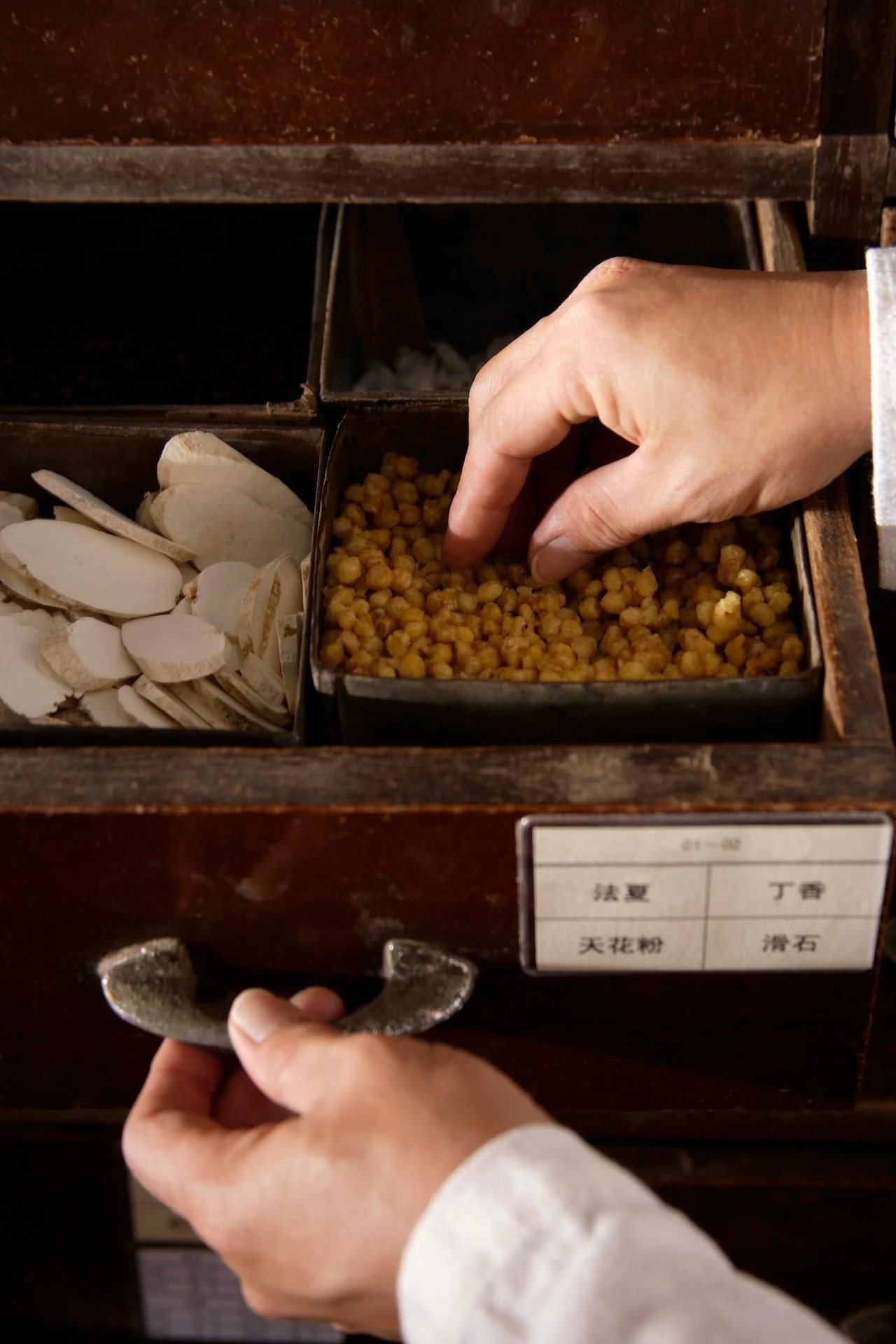
In Thailand, I walked into a local pharmacy in Phuket. They asked me to take off my shoes at the door, which at first felt concerning, given that this is a place where sick people come for relief. But then you walk in barefoot and it feels… normal. I felt grounded and calm. Soft traditional Thai music played, and the shelves held every Western medicine you can think of over the counter, alongside rows of traditional Chinese herbs, Thai remedies for every ailment, and an entire aisle of teas. Not loose leaf tea, but bags and bags of dried flowers. I was so drawn to their delicacy that I bought butterfly pea flower tea, which turns bright blue in water, and another red flower that steeped into the most beautiful scarlet. Here, Western and traditional medicine sat side by side without competing. It tells you a culture that treats healing as something you do with your whole body, starting at the door.
Each of these pharmacies revealed a world my itinerary never could. If markets are a lens into a country's subcultures, pharmacies are a lens into its relationship with pain: who is allowed to feel it, who is allowed to treat it, and what a society is willing to talk about out loud. Next time you travel, skip one monument and walk into a pharmacy instead. Buy something small. Watch how you're treated. The country will tell you who it is.
Plan your new trip
(with a pharmacy visit).
Looking to plan a trip somewhere with a funky pharmacy? Send in a trip request and I’ll be happy to help you plan the perfect itinerary.